Mouth Tape for Travel: Sleep Better Anywhere
Share
Travel wrecks sleep. You already know this. The recycled cabin air dries out your throat before you hit cruising altitude. The hotel pillow is either a brick or a pancake. Jet lag resets your internal clock to a time zone your body has never heard of. And if you're trying to sleep upright in economy, your mouth falls open before the drink cart reaches row 12.
Mouth tape for travel is the simplest thing you can throw in a carry-on that addresses the biggest variable in all of these situations: how you breathe. When your mouth stays closed, your nose filters and humidifies every breath. Your throat stays hydrated. Your body shifts toward the kind of calm, nasal breathing that supports actual rest — whether you're reclined at 35,000 feet or face-down in a hotel bed three time zones from home.
Here is why travel sleep falls apart, how mouth tape fixes the most controllable part of it, and practical tips for using it on flights, in hotels, and across time zones.
Why Travel Sleep Is Worse Than Sleep at Home
The obvious answer is "everything is different." But the specific reasons matter, because some of them are fixable and others are not.
Dry, recirculated cabin air. Commercial aircraft cabin humidity sits around 10 to 20 percent — roughly the same as the Sahara. Your body is used to sleeping in 30 to 50 percent humidity at home. At altitude, every breath through an open mouth pulls moisture from your throat, nasal passages, and lips. You wake up parched, with a sore throat that feels like the early stage of getting sick but is really just dehydration of your airway.
Unfamiliar sleep environment. Research on what scientists call the "first-night effect" shows that one hemisphere of the brain stays more alert when you sleep somewhere new. It is a survival mechanism — your brain doesn't fully trust the environment. The result is lighter, more fragmented sleep on the first night in any hotel, Airbnb, or guest room. You cannot override this with willpower. You can only reduce the other factors that stack on top of it.
Upright or semi-reclined position. Sleeping sitting up changes airway mechanics. Gravity pulls the jaw down. The tongue slides backward. Both of these make mouth breathing more likely, which starts the cascade of dry mouth, throat irritation, and disrupted sleep. Even in a fully flat business class seat, the unfamiliar angle encourages the mouth to open.
Stress and schedule disruption. Travel carries cognitive load — connections, logistics, unfamiliar routines. Elevated cortisol makes it harder to fall asleep and easier to wake up. Layer jet lag on top and your circadian rhythm is fighting you at every stage.
You cannot fix the humidity in a pressurized cabin. You cannot trick your brain into treating a hotel room like home on the first night. But you can control whether your mouth stays closed — and that single variable touches almost every other factor on this list.
Mouth Tape on Airplanes
Airplane cabins are the single worst environment for mouth breathing. The air is dry, pressurized, and recirculated. Your body is upright. You're likely exhausted. And the moment you relax enough to doze off, your jaw drops open and your mouth becomes a moisture exhaust vent.
Applying Titan Mouth Tape before a flight — or as soon as the cabin lights dim — keeps your lips sealed and forces nasal breathing for the duration of your sleep. Here is what that changes:
Your throat stays hydrated. Nasal breathing warms, filters, and humidifies incoming air before it reaches your throat. In a cabin running at 15 percent humidity, the difference between breathing through your nose and breathing through your mouth is the difference between waking up with a normal throat and waking up feeling like you swallowed sandpaper.
You actually stay asleep longer. Dry mouth is one of the most common reasons people wake up on flights. They don't realize why — it just registers as discomfort. Keeping the mouth sealed reduces the frequency of those micro-awakenings and lets you string together longer stretches of real rest.
You avoid the post-flight sore throat. That scratchy feeling after a long flight is almost never illness. It is dehydration of the airway caused by hours of mouth breathing in artificially dry air. Mouth tape prevents it.
If you have ever landed after a red-eye and spent the first half of your day wondering whether you are getting sick, there is a good chance the answer was just dry cabin air and an open mouth. Taping solves both.
Hotel Sleep With Mouth Tape
Hotels present a different challenge than airplanes. The environment is more comfortable — you're lying down, the air is usually closer to normal humidity — but the first-night effect and unfamiliar surroundings still degrade sleep quality.
Mouth tape helps here by keeping one part of your sleep routine consistent. Your body recognizes the tape. It signals that this is sleep time, that you are going through the same ritual you go through at home. That small anchor of familiarity can reduce the time it takes to fall asleep in a strange room.
Climate-controlled hotel rooms. Hotel HVAC systems often run dry, especially in winter or in arid climates. The forced air blowing through the room can drop humidity well below comfortable levels. With mouth tape, your nose handles the humidification rather than leaving your mouth exposed to whatever the thermostat produces.
Unfamiliar pillows and mattresses. A different pillow height or firmness changes your head and neck position, which can shift your jaw alignment. This makes mouth breathing more likely even if you normally breathe through your nose at home. The tape keeps your breathing pattern consistent regardless of the pillow.
If you already have a nighttime routine that works, mouth tape is the one piece of it that packs flat, weighs nothing, and works exactly the same in a hotel room as it does in your own bed.
TSA, Packing, and Logistics
One of the most common questions about mouth tape for travel: can you bring it on a plane?
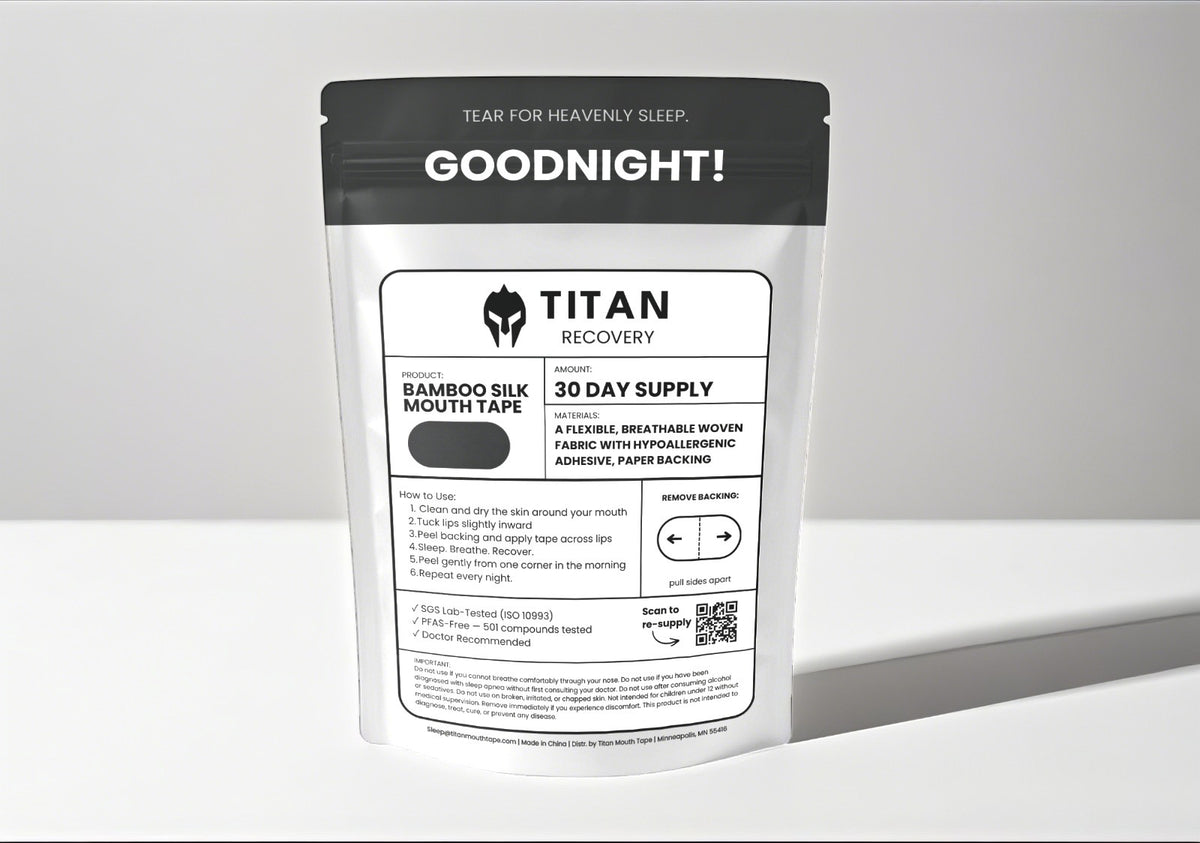
Yes. Mouth tape is not a liquid, gel, or aerosol. It does not trigger any TSA restrictions. Pack it in your carry-on, your personal item, or even your pocket. A 30-day supply of Titan Mouth Tape is a small, flat pouch that takes up less space than a pack of gum.
A few practical notes:
Keep it in your carry-on, not checked luggage. If your checked bag gets delayed or lost, you still have your tape. Since the whole point is using it on the flight and during your first hotel night, you need it accessible.
The 30-day supply is perfect for travel. A single pouch covers a two-week trip with strips to spare. No bulk, no bottles, no batteries. It is the lowest-maintenance sleep tool you can pack.
No special storage needed. Mouth tape doesn't expire quickly, doesn't need refrigeration, and isn't affected by altitude or pressure changes. Throw it in your bag and forget about it until you need it.
If you are new to mouth taping and want to start before a trip, the step-by-step guide to getting started covers the first few nights at home so you are comfortable before you travel.
Pairing Mouth Tape With Nasal Strips for Flights
Airplane cabins are pressurized to the equivalent of roughly 6,000 to 8,000 feet of elevation. That is enough to cause mild nasal congestion in some people — the same effect you might notice driving up a mountain pass. Add dry air on top and you have an environment that can make nasal breathing feel restricted even if you breathe through your nose easily at sea level.
This is where pairing TitanAir Nasal Strips with mouth tape makes the biggest difference. The nasal strip physically opens the nasal valve — the narrowest part of the airway inside your nose — so each breath draws in more air with less effort. In a pressurized cabin with dry, recirculated air, that mechanical support removes the last excuse for mouth breathing.
The combination works the same way it does at home. Mouth tape keeps the mouth sealed. The nasal strip keeps the nose wide open. Together, they create a single, clean airway path that filters, warms, and humidifies every breath. If you already use the Titan Sleep System at home, pack both for flights — the benefit is even more pronounced at altitude than it is in your bedroom.
For people who deal with allergies or congestion, the nasal strip is especially useful during travel. New environments expose you to unfamiliar allergens — different pollen, different dust, different hotel cleaning products. A nasal strip keeps the airway mechanically open even when mild swelling wants to narrow it.
Travel-Specific Tips for Better Sleep
Adjust to the destination time zone before you leave. Start shifting your bedtime by 30 to 60 minutes per day in the direction of your destination two or three days before departure. Mouth tape on these pre-trip nights reinforces nasal breathing during the transition, supporting deeper sleep even as you move your schedule.
Use mouth tape on the outbound flight, not just at the hotel. The flight is where your sleep quality takes the hardest hit. Tape before you try to sleep on the plane, not just once you arrive. Every hour of nasal breathing at altitude is an hour your body spends hydrated and breathing calmly instead of drying out.
Bring enough for the full trip plus a buffer. Running out of mouth tape on day four of a ten-day trip defeats the purpose. A single 30-day pouch handles most trips easily. For longer stretches, Subscribe and Save gives you an 11% discount and makes sure your supply is always current before you pack.
Combine with a dark, cool room. Hotel blackout curtains vary wildly. A sleep mask and mouth tape together cost less than a cup of airport coffee and address two of the biggest hotel sleep problems: light leaks and dry-air mouth breathing.
Skip the nightcap. Alcohol relaxes the muscles around the airway, making mouth breathing and snoring worse. On a night when you are already dealing with jet lag and an unfamiliar bed, adding alcohol on top makes mouth tape work harder than it needs to. Give your body a fair chance to adapt.
Frequently Asked Questions
Can you wear mouth tape on an airplane?
Yes. Mouth tape is not restricted by any airline or TSA regulation. It is a small adhesive strip — not a liquid, gel, or aerosol. You can apply it before takeoff or anytime during the flight. Flight attendants and seatmates generally do not notice or care. If anyone asks, it is a breathing strip for sleep.
Does mouth tape help with dry mouth after flights?
Directly. Dry mouth after sleeping — whether on a plane or in a hotel — is almost always caused by breathing through an open mouth in dry air. Mouth tape keeps your lips sealed so every breath passes through the nose, which warms and humidifies the air before it reaches your throat. Most people who tape on flights report no post-flight dry mouth or sore throat at all.
Is mouth tape safe to use while sleeping in a different position?
Yes. Mouth tape works in every sleeping position — on your back, side, or even upright in an airplane seat. The tape does not restrict emergency breathing; your lips can part if your body needs to mouth-breathe urgently. It simply discourages the default habit of letting the mouth hang open during sleep. If you are new to mouth taping, try a few nights at home first so you are comfortable before using it in an unfamiliar position on a plane.
What is the best mouth tape to pack for travel?
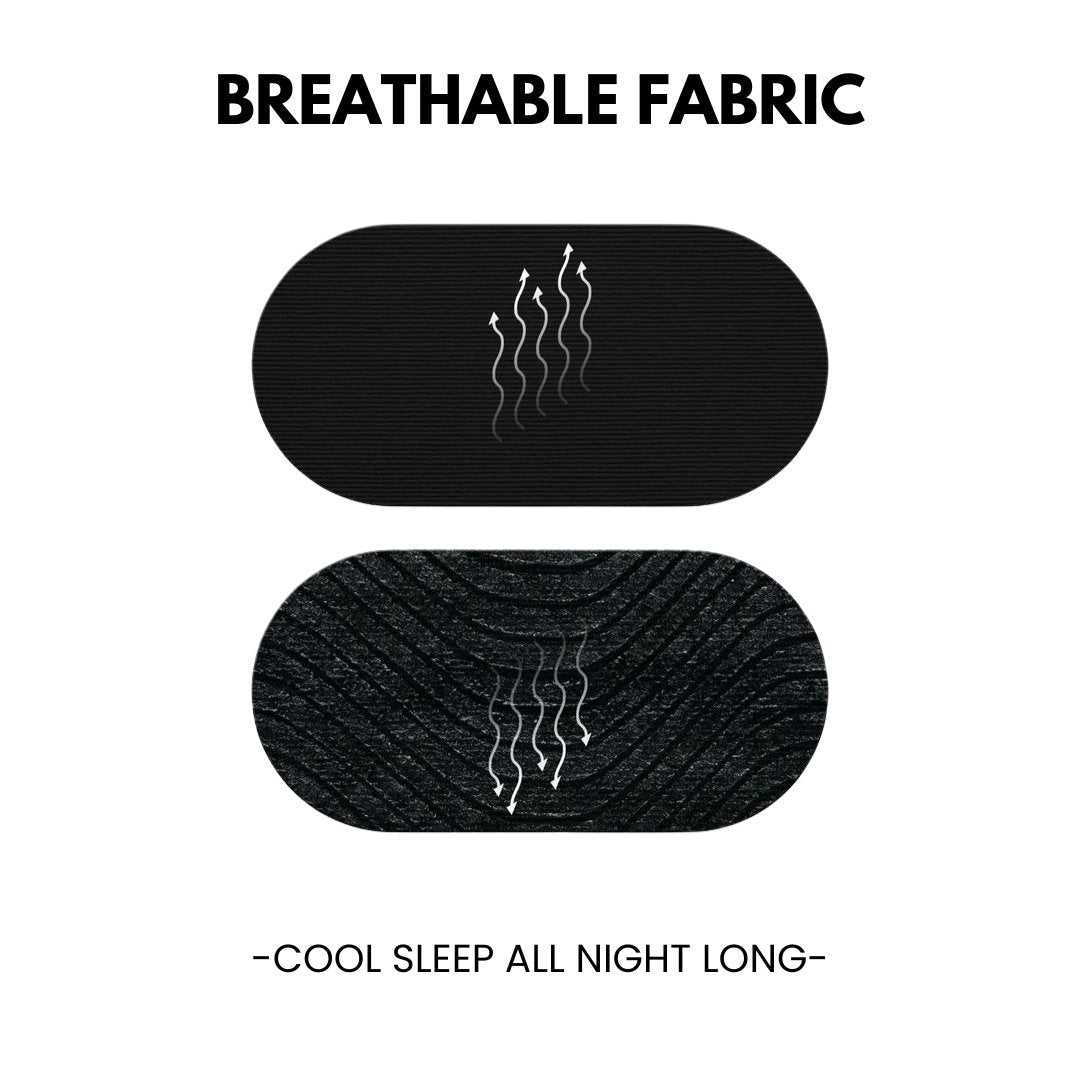
Titan Mouth Tape is designed with travel in mind. The 30-day supply comes in a flat, lightweight pouch that fits in any carry-on pocket. The adhesive is medical-grade and comfortable for sensitive skin, so it works just as well after a long day of travel as it does on a normal night at home. No special storage or preparation needed — just peel and apply.
The Bottom Line
Travel sleep is bad because almost every variable changes at once — humidity, position, environment, schedule, stress. You cannot fix all of them. But you can fix how you breathe, and that one change cascades into less dry mouth, fewer mid-sleep awakenings, better hydration, and calmer rest whether you are in seat 24C or a hotel bed across the world.
Mouth tape is the smallest, lightest, cheapest sleep tool that travels with you. A single pouch handles an entire trip. It goes through TSA without a second glance. It works the same at altitude as it does at home. And when you pair it with a nasal strip for flights, you're covering both the airway and the humidity problem in one move.
Pack it like you pack your charger — because once you've slept through a red-eye without waking up with a sandpaper throat, you won't leave home without it.
Doctor Recommended: "As a maxillofacial surgeon and dentist, I recommend Titan Mouth Tape. Nasal breathing during sleep is essential for airway health and deep restorative rest. Titan's bamboo silk design is the most comfortable and effective mouth tape I have tested. If you struggle with snoring, dry mouth, or poor sleep quality, this is the simplest change you can make for your health." — Dr. Francois P., MD, DDS — Maxillofacial Surgeon
Lab-Tested Safety: Titan's adhesive is independently tested to ISO 10993 medical device standards. Non-toxic (95% cell viability). Non-allergenic (0% reaction rate). Non-irritating (score 0.0/8.0). PFAS-free — 501 compounds tested, zero detected. See full test results →
Try the complete system tonight. Titan Mouth Tape (bamboo silk, SilkSeal™ adhesive) + TitanAir Nasal Strips. Free shipping. 30-night Better Sleep Guarantee. Shop Titan Mouth Tape → · Shop TitanAir Nasal Strips →