Mouth Tape After 50: Better Sleep as You Age
Share
Sleep quality in older adults declines naturally with age, but the decline is steeper than it needs to be. After 50, deep sleep shrinks from roughly 20% of total sleep to as little as 5-10%, and mouth breathing accelerates every part of that decline. The good news: nasal breathing during sleep is one of the simplest, most effective interventions for maintaining sleep quality as you age, and mouth tape is what makes it happen consistently through the night.
If you've noticed your sleep getting lighter, more fragmented, or less restorative over the past few years, you're not imagining it. But you're also not stuck with it. Understanding why sleep changes after 50 — and what you can do about it — starts with the airway.
Why Sleep Changes After 50
Sleep architecture shifts with age, and the changes are well-documented. The body produces less melatonin. Circadian rhythms shift earlier (the classic "early to bed, early to rise" pattern). And the amount of time spent in deep, slow-wave sleep — the stage responsible for physical repair, immune function, and memory consolidation — drops significantly decade over decade.
Muscle tone loss in the airway. The soft tissue in the throat and palate gradually loses firmness with age. This means the airway is more collapsible during sleep, making snoring and upper airway resistance more likely even in people who never snored in their 30s or 40s. Mouth breathing compounds this — when the jaw drops open, the tongue falls backward, further narrowing the airway.
Increased nighttime awakenings. Older adults tend to wake more frequently during the night, often without a clear reason. Airway disruption is one of the most common — and most overlooked — causes. Partial obstruction triggers micro-arousals that pull the brain out of deep sleep without fully waking you up. You may not remember these events, but your body registers every one.
Medication-related dry mouth. Many medications commonly prescribed after 50 — blood pressure medications, antihistamines, antidepressants, diuretics — list dry mouth as a side effect. When mouth breathing is layered on top, the dryness becomes severe enough to cause nighttime waking, throat irritation, and increased susceptibility to oral health problems.
The Mouth Breathing Problem Gets Worse With Age
Here's what often happens: age-related changes reduce sleep quality by a few percentage points. The person compensates with mouth breathing — not consciously, but because the jaw relaxes more easily as muscle tone decreases. The mouth breathing then introduces its own set of problems, creating a compounding effect.
Snoring intensifies. Mouth breathing positions the tongue and soft palate in a way that creates more vibration and turbulence in the airway. Research consistently shows that mouth breathing is one of the strongest predictors of snoring severity. For older adults with reduced airway muscle tone, the effect is amplified. Mouth tape addresses snoring directly by keeping the airway in its most stable configuration — jaw closed, tongue on the palate, breathing routed through the nose.
Dry mouth becomes chronic. Breathing through the mouth for 7-8 hours strips moisture from the oral cavity. For older adults already dealing with medication-induced dry mouth, this combination creates genuine health risks: increased cavities, gum disease, cracked lips, and persistent sore throat. Waking up with dry mouth every morning isn't just uncomfortable — it's a signal that the airway isn't being managed properly during sleep.
Sleep fragmentation accelerates. Mouth breathing reduces the efficiency of gas exchange in the lungs. The body compensates by increasing respiratory rate, which keeps the nervous system in a slightly more activated state. For older adults already sleeping lighter, this subtle sympathetic arousal can be the difference between staying in a sleep cycle and breaking out of one.
How Mouth Tape Helps Older Adults Sleep Better
Mouth tape isn't a medical device or a cure for age-related sleep changes. It's a mechanical tool that holds the lips gently closed during sleep, ensuring all breathing happens through the nose. For older adults, this single change addresses several problems at once.
Maintains nasal breathing all night. Nasal breathing produces nitric oxide in the sinuses, which supports oxygen absorption and keeps blood oxygen levels more stable through the night. The science behind nasal breathing is well-established — it humidifies and filters air, supports diaphragmatic breathing, and keeps the nervous system in a calmer parasympathetic state. For older adults, these benefits are more important, not less, because the margin for error is smaller.
Reduces snoring without devices. Many older adults have tried nasal strips, chin straps, or positional pillows with limited success. Mouth tape works differently — it addresses the root cause (jaw opening) rather than a downstream symptom. The tongue stays forward on the palate, the airway stays wider, and airflow stays quieter. It's not a replacement for medical evaluation if snoring is severe, but for the garden-variety snoring that worsens with age, it's remarkably effective.
Protects oral health. By keeping the mouth closed, mouth tape maintains the moisture environment that teeth and gums need. Saliva is the mouth's natural defense against bacteria, decay, and gum disease. Older adults on medications that reduce saliva production get the most benefit from eliminating the additional drying effect of mouth breathing.
Supports deeper sleep stages. When the airway stays stable and nasal breathing continues uninterrupted, the body can descend more reliably into deep, slow-wave sleep. The micro-arousals that fragment sleep — many of which are caused by subtle airway disruption — become less frequent. You may not get the deep sleep percentages of your 30s, but you can significantly improve on where you are now.
Addressing Safety Concerns for Seniors
It's reasonable to have questions about putting tape over your mouth at night, especially if you have health conditions or take medications. Here are the concerns that come up most often, addressed directly.
Dentures or dental appliances. If you wear dentures at night, mouth tape works fine — the tape is on the outside of the lips and doesn't interfere with anything inside the mouth. If you remove dentures at night, the tape is even more helpful, since the changed shape of the mouth can increase the tendency for the jaw to drop open. Night guards and retainers are similarly unaffected.
Nasal congestion. This is the one legitimate reason to pause before using mouth tape. If you cannot breathe comfortably through your nose, address the nasal congestion first. Nasal strips can mechanically open the nasal passages enough to make nasal breathing comfortable. For chronic congestion, a conversation with your doctor about underlying causes — allergies, a deviated septum, or medication side effects — is worth having before adding mouth tape.
Feeling panicked or claustrophobic. This is common across all age groups, not just older adults, and it almost always resolves with a gradual introduction. Start by wearing the tape for 20-30 minutes while watching television or reading. Get comfortable with the sensation while you're awake and in control. Once it feels unremarkable, try it during a nap. Then move to overnight use. Most safety concerns about mouth taping resolve once you experience how gently the tape holds and how easily it comes off if you need it to.
CPAP users. If you use a CPAP machine, mouth tape can actually improve the effectiveness of your therapy. Mouth leak is one of the most common problems with CPAP — air escapes through the mouth, reducing pressure and causing dry mouth. Some sleep specialists recommend mouth tape as a complement to CPAP for exactly this reason. That said, discuss it with your prescribing physician first.
Medications that affect breathing. Sedatives, muscle relaxants, and certain pain medications can depress respiratory drive. If you take any of these, talk to your doctor before using mouth tape. For the vast majority of common medications — blood pressure meds, statins, thyroid medications, SSRIs — there's no interaction or concern.
Getting Started: A Gentle Approach
The best approach for older adults is a gradual one. There's no rush, and building comfort with the process matters more than starting overnight immediately.
Week one: Wear mouth tape for 30 minutes during the evening while relaxing. Breathe normally through your nose. Notice how it feels. Remove it whenever you want.
Week two: Extend to an hour during the evening, or try it during an afternoon nap. Pay attention to how naturally you breathe through your nose when the mouth is gently held closed.
Week three: Use it for a full night. You'll likely notice the difference in the morning — less dry mouth, less grogginess, a more rested feeling. If you have a sleep tracker, compare your numbers.
If nasal congestion is an issue, pair the mouth tape with nasal strips. The Deep Sleep Bundle includes both and is designed for exactly this kind of gradual introduction.
Frequently Asked Questions
Is mouth tape safe for people over 60?
For most adults over 60, mouth tape is safe and well-tolerated. The tape holds the lips gently closed — it's not restricting airflow through the nose, and it comes off easily with a light tug. The main precaution is ensuring you can breathe comfortably through your nose before using it. If you take medications that depress respiratory function (sedatives, certain muscle relaxants), check with your doctor first.
Will mouth tape help if I already use a CPAP?
It can. One of the most common issues with CPAP therapy is mouth leak — air escaping through the mouth reduces the effectiveness of the pressure and causes severe dry mouth. Mouth tape can help maintain the seal and improve CPAP performance. Some sleep physicians actively recommend it. Always discuss any changes to your CPAP setup with your prescribing provider.
What if I have dentures or a dental bridge?
Mouth tape goes on the outside of the lips, so it doesn't interact with dentures, bridges, crowns, or any dental work inside the mouth. Whether you wear your dentures overnight or remove them, the tape functions the same way. Many older adults with dental appliances find mouth tape especially helpful because the altered jaw shape can increase the tendency for the mouth to fall open during sleep.
Can mouth tape replace a sleep aid or supplement?
Mouth tape is not a sleep aid — it doesn't induce drowsiness. What it does is optimize the airway during sleep so that your body can achieve deeper, less fragmented sleep on its own. Some people find that once they're breathing properly through the night, they need fewer or no sleep supplements. It addresses a mechanical problem, which is different from a chemical one.
How do I know if I'm mouth breathing at night?
The most reliable signs: waking up with dry mouth, dry or cracked lips, a sore throat that clears up by mid-morning, or a partner reporting snoring. If you use a sleep tracker, look for frequent brief awakenings that you don't remember. You can also do a simple test — place a small piece of tape over your lips before bed and check if it's still in place in the morning. If it's come off, your mouth was opening during sleep.
The Bottom Line
Aging changes sleep, but it doesn't have to ruin it. The decline in sleep quality that many people accept as inevitable after 50 is driven partly by biology and partly by mechanical problems — like mouth breathing — that are entirely fixable. Mouth tape is a low-cost, non-invasive tool that helps older adults maintain nasal breathing all night, reducing snoring, protecting oral health, and supporting the deeper sleep stages that matter most for daytime energy and long-term health.
Start slowly, address any nasal congestion first, and give your body a couple of weeks to adjust. The people who get the most from mouth tape are the ones who approach it with patience and consistency. Better sleep after 50 isn't about fighting your biology — it's about removing the obstacles that make it harder than it needs to be.
Doctor Recommended: "As a maxillofacial surgeon and dentist, I recommend Titan Mouth Tape. Nasal breathing during sleep is essential for airway health and deep restorative rest. Titan's bamboo silk design is the most comfortable and effective mouth tape I have tested. If you struggle with snoring, dry mouth, or poor sleep quality, this is the simplest change you can make for your health." — Dr. Francois P., MD, DDS — Maxillofacial Surgeon
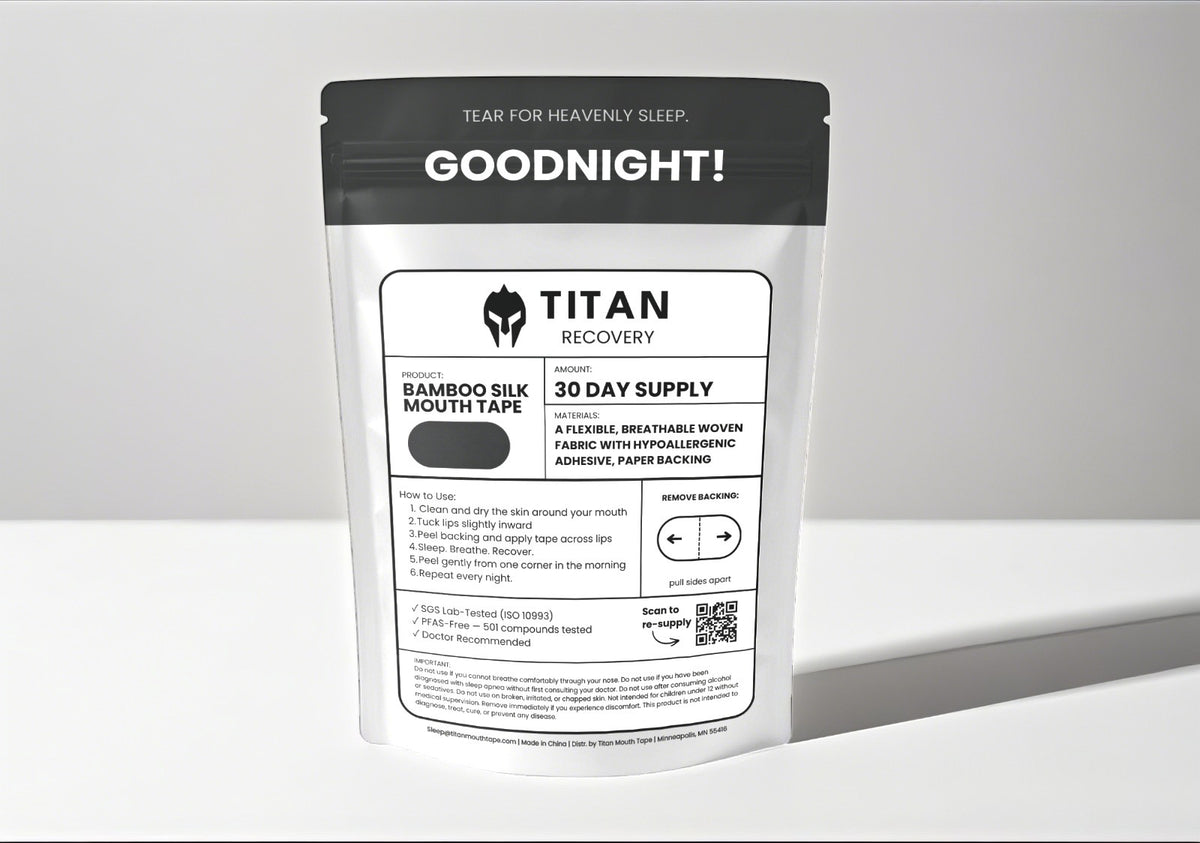
Lab-Tested Safety: Titan's adhesive is independently tested to ISO 10993 medical device standards. Non-toxic (95% cell viability). Non-allergenic (0% reaction rate). Non-irritating (score 0.0/8.0). PFAS-free — 501 compounds tested, zero detected. See full test results →
Try the complete system tonight. Titan Mouth Tape (bamboo silk, SilkSeal™ adhesive) + TitanAir Nasal Strips. Free shipping. 30-night Better Sleep Guarantee. Shop Titan Mouth Tape → · Shop TitanAir Nasal Strips →