Mouth Tape With a Breathing Hole: Does It Actually Work?
Share
If you've been researching mouth taping, you've probably noticed that some products feature a small hole or vent in the center of the tape. The idea sounds reasonable at first: mouth tape with a breathing hole lets you seal your lips while keeping an emergency airway open. It feels like a safety net — a way to ease into the practice without fully committing. But when you understand why mouth taping works in the first place, that little hole starts to look less like a safety feature and more like a design flaw that undermines the entire purpose of the product.
What Is a Breathing Hole in Mouth Tape?
A breathing hole is exactly what it sounds like: a small opening — usually round or slit-shaped — cut into the center of the tape strip. Some brands punch a single hole. Others use a mesh vent or a series of small perforations. The opening sits over the lips and allows a limited volume of air to pass through the mouth even when the tape is applied.
The marketing pitch is straightforward: a safety feature for beginners, a way to prevent panic, and an emergency air passage in case nasal congestion occurs during the night. On the surface, that framing makes sense. In practice, it creates a problem most buyers don't consider until they've spent weeks wondering why their mouth taping experiment isn't producing the results they expected.
Why Some Brands Include a Vent
The breathing hole exists primarily to reduce buyer hesitation. Mouth taping is a practice that challenges a deeply ingrained habit — sleeping with the mouth open — and many people feel anxious the first time they try it. That anxiety is normal. The idea of sealing your mouth shut before falling asleep triggers a natural resistance, especially for people who have been mouth-breathing for years and aren't confident in their ability to breathe through the nose all night.
A visible hole in the tape addresses that psychological barrier. It tells the buyer: you can still breathe through your mouth if you need to. It lowers the perceived risk and makes the first purchase easier. From a marketing standpoint, it's effective. From a physiological standpoint, it's counterproductive.
There is also a liability angle. Certain brands include the vent to distance themselves from any suggestion that their product completely seals the mouth — a cautious design choice driven more by legal positioning than by sleep science.
The Problem: A Breathing Hole Defeats the Purpose
Mouth taping works because it keeps the mouth closed. That is the entire mechanism. When your lips are sealed, air is forced through the nasal passages. Nasal breathing triggers a cascade of physiological benefits that mouth breathing simply cannot replicate:
- Nitric oxide production. The paranasal sinuses produce nitric oxide during nasal breathing, a gas that dilates blood vessels and improves oxygen absorption in the lungs. Mouth breathing bypasses this entirely.
- Air filtration and humidification. The nasal passages warm, humidify, and filter incoming air before it reaches the lungs. Air entering through a hole in the tape skips every one of those steps.
- Tongue posture. Nasal breathing encourages the tongue to rest against the palate, which supports the upper airway and reduces the likelihood of soft tissue collapse — the primary mechanical cause of snoring.
- Deeper sleep cycles. Nasal breathing activates the parasympathetic nervous system, promoting relaxation and deeper transitions into restorative sleep stages.
When there is a hole in the tape, your body takes the path of least resistance. If nasal breathing requires even slightly more effort — due to mild congestion, a deviated septum, or simple habit — air will route through that hole instead. You may not even realize it's happening. You'll fall asleep thinking you're nasal breathing, but the moment your body relaxes fully, the jaw drops slightly, and air starts leaking through the vent. The tape is still on your face in the morning, so you assume it worked. But the benefits of mouth taping depend on a complete seal, not a partial one.
This is why many people who start with vented mouth tape report modest results at best. They notice slightly less dry mouth, maybe a marginal reduction in snoring, but they don't experience the real improvements in sleep quality, morning energy, and breathing patterns that full-coverage users describe. The hole is doing just enough to prevent the practice from working as intended.
The Safety Argument Doesn't Hold Up
The most common defense of breathing holes is safety: "What if I can't breathe through my nose?" It is a fair question, and it deserves a direct answer.
If you genuinely cannot breathe through your nose — due to severe congestion, polyps, or structural obstruction — you should not be mouth taping at all, with or without a hole. Mouth taping is a nasal breathing tool. It assumes functional nasal airways. Applying tape of any kind over your mouth while your nasal passages are fully blocked is not a scenario any responsible brand should encourage.
For the vast majority of people, however, nasal obstruction during sleep is partial, not total. The nose feels "stuffed" because of inflammation, allergic swelling, or positional congestion — conditions that can be addressed directly. Nasal strips physically open the nasal valve, the narrowest point of the airway, and increase nasal airflow without medication. TitanAir Nasal Strips are designed specifically for this purpose: to open the nasal passages so that full-coverage mouth tape can do its job.
The real solution to nasal congestion is opening the nose, not poking a hole in the tape. A breathing hole doesn't treat the underlying issue. It just gives your body permission to avoid dealing with it.
It's also worth noting what actually happens if you wear full-coverage mouth tape and experience a sudden need to breathe through your mouth — your lips will part. Quality mouth tape uses a gentle, skin-safe adhesive that yields under pressure. You are not being sealed shut with industrial tape. If your body needs to open the mouth, it will. The adhesive is designed to keep the mouth closed during normal sleep, not to resist a conscious or reflexive effort to open it. For more on this topic, see our guide on whether mouth taping is safe.
The Psychological Comfort Factor
None of this is to dismiss the anxiety that new users feel. That anxiety is real, and it is the primary reason breathing holes exist in the market. If you have never mouth taped before, the idea of a full seal can feel intimidating. Some people need a transition period.
But the transition should be from no tape to full-coverage tape — not from vented tape to full-coverage tape. A more productive approach for beginners is to wear full-coverage tape during the day for short periods while awake. Watch television, read, or do light activity with the tape on. This lets you experience the sensation and confirm that you can breathe comfortably through your nose without the stakes of nighttime use. Once you are confident during the day, nighttime use becomes a much smaller step. We cover this process in detail in our guide on how to breathe through your nose while sleeping.
A breathing hole doesn't build nasal breathing confidence. It avoids it. You never learn to trust your nose because the hole is always there as a fallback. Weeks or months later, you're still relying on the vent instead of having developed the habit and airway strength that come from consistent full-seal nasal breathing.
What Full-Coverage Mouth Tape Actually Looks Like
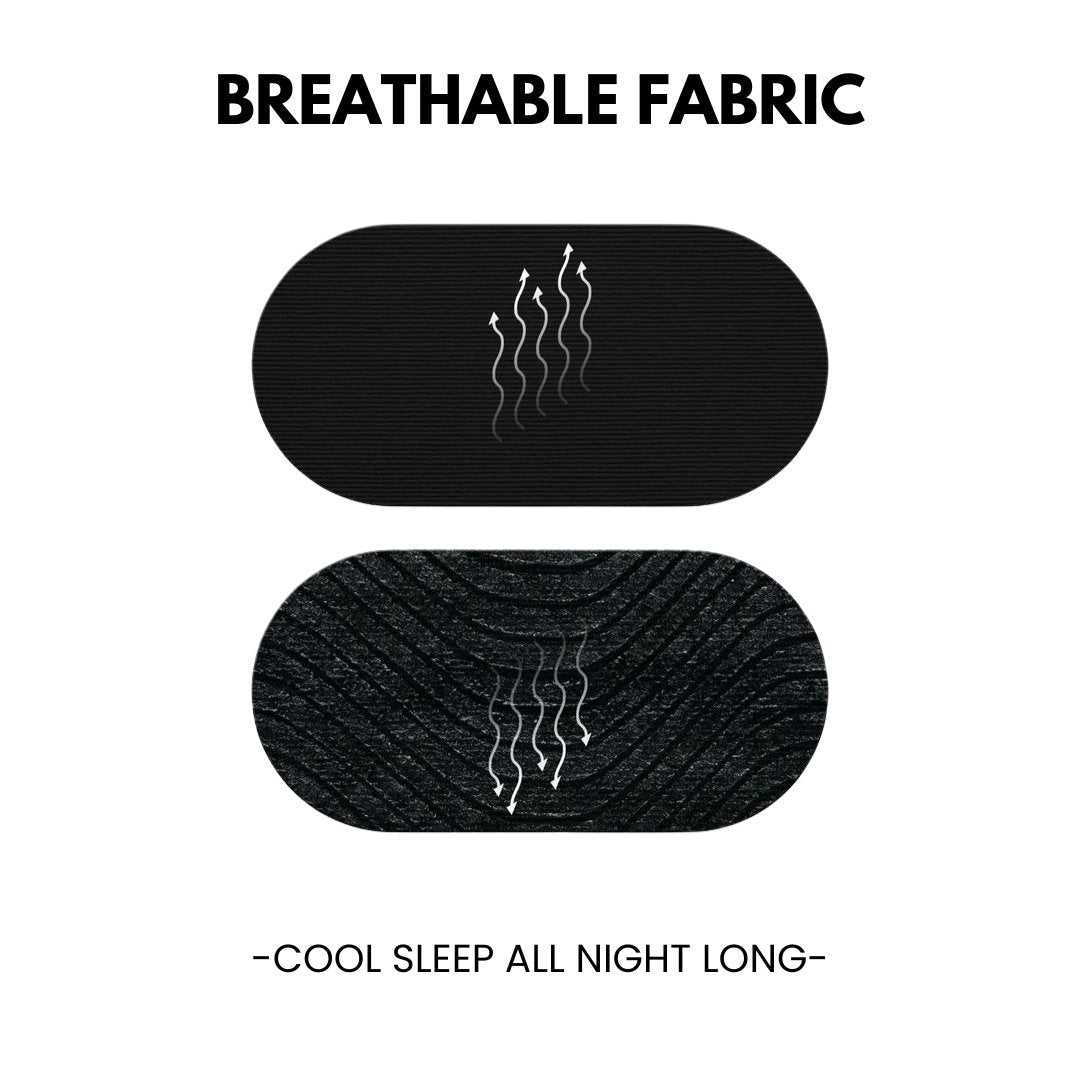
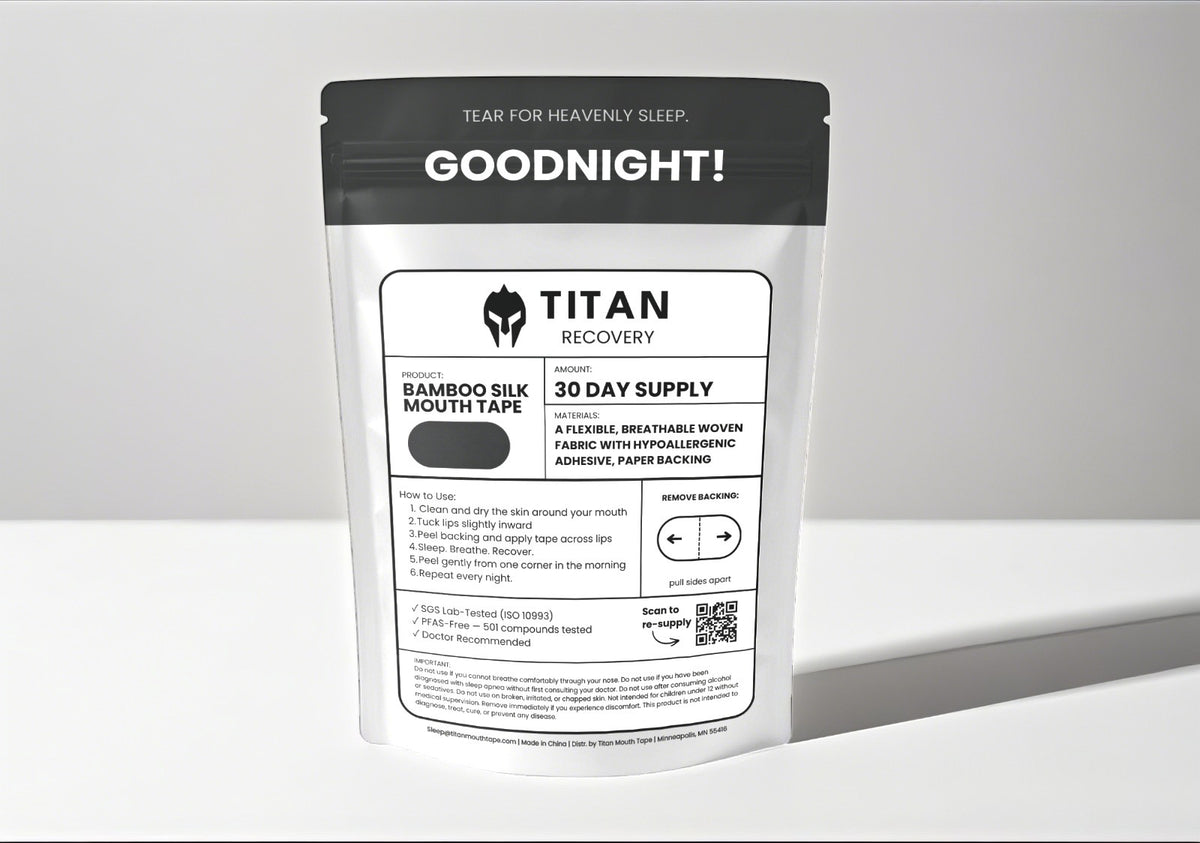
Titan Mouth Tape uses a bamboo silk strip with a full-coverage design and no breathing hole. The material is lightweight and flexible — it moves with your face rather than pulling against the skin. The SilkSeal adhesive is a medical-grade formulation that holds reliably through the night but releases cleanly in the morning without irritation or residue.
The design philosophy is simple: if the goal is nasal breathing, the tape should promote nasal breathing completely, not partially. A full seal means your body adapts. Your nasal passages respond to consistent use by reducing inflammation over time. Your tongue learns to rest in the correct position against the palate. Your jaw stays in alignment. These adaptations compound over weeks and months, producing the kind of results that make mouth taping one of the most impactful changes people make for their sleep.
For users who experience nasal congestion, the answer is not a hole in the tape. The answer is a nasal strip. Pairing Titan Mouth Tape with TitanAir Nasal Strips addresses both sides of the equation: the strips open the nasal valve to maximize airflow, and the tape keeps the mouth sealed so that airflow stays routed through the nose. It's a complete system, not a compromise.
The Bottom Line
Mouth tape with a breathing hole is a product designed to feel safe, not to work optimally. The vent gives beginners psychological comfort, but it allows the very behavior — mouth breathing — that the tape is supposed to prevent. If you've been using vented tape and wondering why the results feel underwhelming, this is likely the reason.
Full-coverage tape works because it eliminates the option. Your body is remarkably good at adapting when the alternative is removed. Within a few nights of full-seal taping, most users find that nasal breathing during sleep feels natural. The anxiety fades, the benefits accumulate, and the breathing hole, in hindsight, looks like what it always was: a marketing feature, not a health feature.
If nasal congestion is your concern, address it at the source. Use a nasal strip. See an ENT if you suspect structural issues. Clear the airway instead of working around a blocked one.
Disclaimer: This article is for informational purposes only and does not constitute medical advice. If you have sleep apnea, severe nasal obstruction, or any respiratory condition, consult your physician before using mouth tape or nasal strips.
Doctor Recommended: "As a maxillofacial surgeon and dentist, I recommend Titan Mouth Tape. Nasal breathing during sleep is essential for airway health and deep restorative rest. Titan's bamboo silk design is the most comfortable and effective mouth tape I have tested. If you struggle with snoring, dry mouth, or poor sleep quality, this is the simplest change you can make for your health." — Dr. Francois P., MD, DDS — Maxillofacial Surgeon
Lab-Tested Safety: Titan's SilkSeal™ adhesive is independently tested to ISO 10993 medical device standards. Non-toxic (95% cell viability). Non-allergenic (0% reaction rate). Non-irritating (score 0.0/8.0). PFAS-free — 501 compounds tested, zero detected. See full test results →
Try it tonight. Bamboo silk. SilkSeal™ adhesive. Beard-friendly. No logo on the tape. Free shipping. 30-night Better Sleep Guarantee. Shop Titan Mouth Tape → · Shop TitanAir →
Doctor Recommended: "As a maxillofacial surgeon and dentist, I recommend Titan Mouth Tape. Nasal breathing during sleep is essential for airway health and deep restorative rest. Titan's bamboo silk design is the most comfortable and effective mouth tape I have tested. If you struggle with snoring, dry mouth, or poor sleep quality, this is the simplest change you can make for your health." — Dr. Francois P., MD, DDS — Maxillofacial Surgeon
Lab-Tested Safety: Titan's adhesive is independently tested to ISO 10993 medical device standards. Non-toxic (95% cell viability). Non-allergenic (0% reaction rate). Non-irritating (score 0.0/8.0). PFAS-free — 501 compounds tested, zero detected. See full test results →
Try the complete system tonight. Titan Mouth Tape (bamboo silk, SilkSeal™ adhesive) + TitanAir Nasal Strips. Free shipping. 30-night Better Sleep Guarantee. Shop Titan Mouth Tape → · Shop TitanAir Nasal Strips →