Is Bamboo Mouth Tape Safe for Sensitive Skin?
Share
Bamboo or silk mouth tape with a gentle, skin-safe adhesive is generally a good option for sensitive skin, because breathable natural materials trap less heat and moisture against the face than synthetic tapes. But no adhesive is completely risk-free for everyone. If your skin reacts easily, patch-test on your arm first, choose gentle breathable materials, and stop if irritation persists.
Below is a safety-first look at how sensitive skin responds to overnight tape, why bamboo silk tends to be friendlier, and how to use it without redness or breakouts.
Is bamboo mouth tape safe for sensitive skin?
For most people with sensitive skin, bamboo or silk mouth tape paired with a gentle adhesive is a reasonable choice — but "gentle" depends on both the material and the glue. Reactive or barrier-compromised skin (eczema, rosacea, or skin that simply flushes at new products) has less tolerance for anything pressed against it for seven to nine hours a night. Two things decide whether tape is comfortable or irritating: the fabric on your skin, and the adhesive that holds it there.
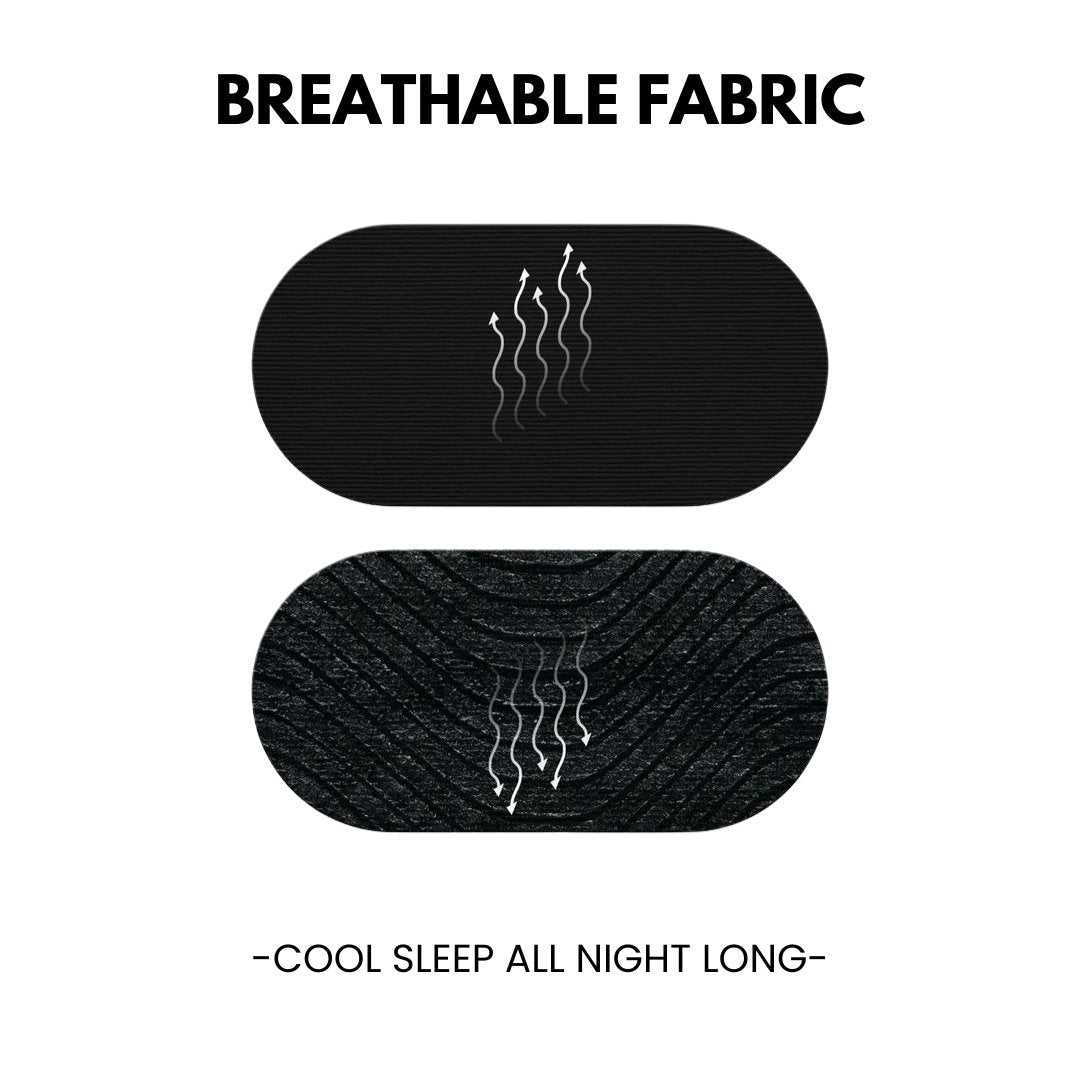
Breathable bamboo silk lets more air and moisture pass through than solid plastic or foam, so heat and sweat don't build up under the tape. That matters for reactive skin, where a warm, sealed patch is often what tips things into a flare. A softer natural fabric also tugs less than a stiff synthetic strip. None of this makes tape guaranteed-safe for everyone; it makes it lower-risk. If your skin has reacted to bandages or medical tape before, treat mouth tape the same way and test carefully first.
How does sensitive skin react to tape adhesives?
When sensitive skin reacts to tape, it usually shows up as redness, itching, small bumps, or a faint outline where the tape sat. These reactions come from a handful of predictable causes:
- Adhesive irritation. Aggressive, industrial-style adhesives are built to stick hard, not to be kind to facial skin. Peeled off in the morning, they can leave a pink rectangle or a stinging patch.
- Trapped oil, sweat, and bacteria. A non-breathable strip seals in the skin's overnight moisture and oil — a warm, occluded environment where clogged pores and breakouts form, especially if you're acne-prone.
- Mechanical stress on removal. Ripping tape off pulls at the skin barrier. Night after night, that micro-trauma can trigger irritation cycles in eczema-prone skin.
- True adhesive allergy. Less common, but real. Some people are genuinely sensitized to specific adhesives and react to almost any tape — a patch test catches this early.
The takeaway: most "my skin hates mouth tape" stories trace back to a harsh adhesive, a non-breathable material, or rough removal — not to taping itself. For a deeper look, our guide on mouth tape side effects covers the full list and who's actually at risk.
Can mouth tape cause acne or irritation?
Mouth tape can contribute to breakouts and irritation, but almost always because of the product or the prep — not because taping is inherently bad for skin. The main cause is occlusion: a solid, non-breathable strip covering the skin around your mouth all night traps oil, sweat, and bacteria against the pores underneath — a recipe for the small clogged bumps sometimes called "mask-ne." A breathable bamboo silk fabric reduces this because air and moisture can still move.
Applying tape over dirty or product-heavy skin makes it worse — leftover makeup, sunscreen, or the day's oil gives bacteria more to feed on and can make the tape grip unevenly. Clean, dry skin at application solves most of this. If breakouts are your main worry, we cover it fully in does mouth tape cause acne or rashes. The short version: breathable material plus clean skin plus gentle removal prevents the large majority of cases.
Why is bamboo silk friendlier for reactive skin?
Bamboo silk is friendlier for reactive skin because it's breathable, soft, and less likely to create the trapped-heat microenvironment that drives flares. Compared with polyester, nylon, or foam tapes, a natural woven fabric does three helpful things:
- It breathes. Air and moisture pass through rather than pooling under a plastic seal, so skin stays drier and cooler — a meaningful difference for rosacea, where trapped heat triggers flushing.
- It's softer. A pliable fabric conforms to your lips and moves with your face, reducing the friction stiff strips cause when you shift in your sleep.
- It pairs with gentler adhesives. Bamboo silk tapes made for the face tend to use a lighter, skin-oriented adhesive rather than industrial glue, so removal is cleaner.
Material is only half the equation, though. A breathable fabric with a harsh adhesive can still irritate, and a gentle adhesive on a non-breathable backing can still trap heat — you want both. For more, see why bamboo silk is the best material for mouth tape.
How do you mouth tape with sensitive skin?
The safest way to start is to test first, keep the skin clean and dry, use as little adhesive as the job needs, and remove gently. A practical routine for reactive skin:
- Patch-test on your arm first. Stick a piece to your inner forearm for 30 to 60 minutes before you put it on your face. Redness, itching, or bumps mean that tape isn't for you; nothing after an hour is a good sign.
- Apply to clean, dry skin. Wash and fully dry the lip area before bed. Skip heavy moisturizer or oil where the tape grips — apply skincare to the rest of your face and leave the lip zone clean.
- Don't over-stick. Use the smallest amount of tape that keeps your lips gently together. A vented style or smaller strip is a good starting point.
- Remove gently. Peel slowly from one corner, parallel to the skin, never straight up. If it fights you, the adhesive is too aggressive for nightly use. Rinse in the morning and, if you're prone to dryness, moisturize with a fragrance-free product after removal.
- Start a few nights a week. Give reactive skin time to adjust instead of jumping to every night, and watch how it looks after the first week.
If congestion is what pushes you to mouth-breathe, taping alone won't fix it — opening the nose first makes it more comfortable. TitanAir Nasal Strips lift the nasal passages open so nose breathing feels natural, and our step-by-step guide to starting mouth taping covers checking your nasal breathing before night one.
What should you look for in a tape for sensitive skin?
For sensitive skin, look for a breathable natural material, a gentle skin-oriented adhesive, clean painless removal, and honest labeling. A quick checklist before you buy:
- Breathable, natural fabric like bamboo silk rather than solid plastic, foam, or non-porous synthetics.
- A gentle, latex-free adhesive made for facial skin and prolonged contact — not a repurposed packaging tape.
- Clean removal that peels away without residue, scrubbing, or pulling at facial hair.
- Right-sized shape that sits on the skin around the lips instead of smothering the lip surface.
- Straight-talking labeling. "Hypoallergenic" has no regulated meaning alone, so weigh it against the material, the adhesive, and a return policy that lets you test risk-free.
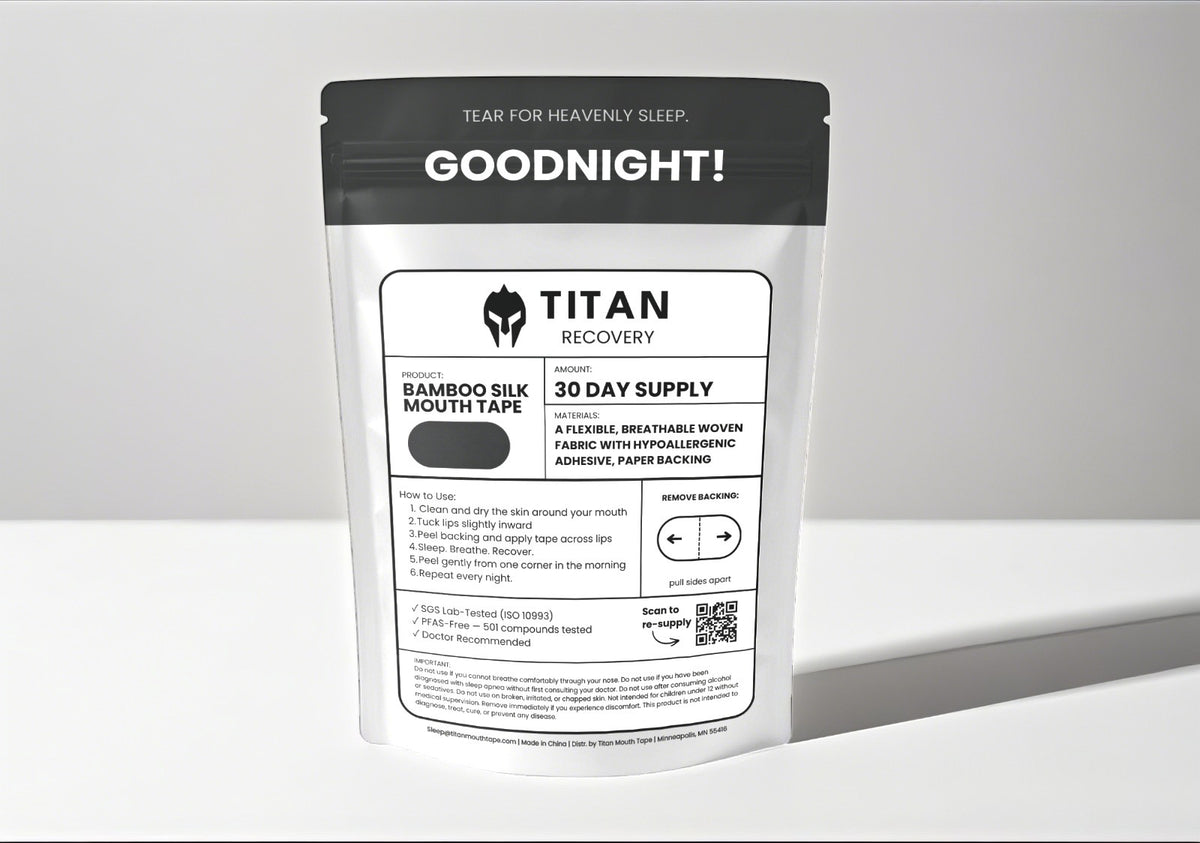
Titan Mouth Tape is built around these priorities: breathable bamboo silk fabric with a gentle, latex-free adhesive designed for nightly facial use and clean morning removal — aimed at people who want nasal breathing without the redness and residue harsher tapes leave behind. For a broader comparison, see our roundup of the best mouth tape for sensitive skin.
When should you stop or see a dermatologist?
Stop taping if you get a reaction that doesn't settle, and see a dermatologist if it keeps happening despite switching products. Mild pinkness that fades within half an hour of removal is usually just brief pressure. What warrants stopping and getting advice:
- Redness, itching, or bumps that persist well past removal or return every time you tape.
- Blistering, weeping, swelling, or a spreading rash — signs of a stronger contact reaction.
- Breakouts or irritation that continue even after you switch to a breathable tape and clean your skin properly.
- Any reaction on skin already managing active eczema or rosacea.
A dermatologist can help identify whether you're reacting to a specific adhesive and what alternatives make sense. Honestly, no adhesive is zero-risk for everyone, and for a small number of people the answer is that overnight tape isn't the right tool — nasal strips alone and treating congestion can still help.
Frequently Asked Questions
Is bamboo mouth tape hypoallergenic?
Bamboo silk tapes are often described as hypoallergenic because the natural fabric is breathable and usually paired with a gentle, latex-free adhesive. But "hypoallergenic" isn't a regulated term, so it's not a guarantee. Patch-test on your arm first and judge by how your own skin responds over the first week.
Does mouth tape cause acne?
It can, but usually because a non-breathable tape traps oil and bacteria against the skin, or because tape was applied over unwashed skin. A breathable bamboo silk material and clean, dry skin at application prevent most breakouts. If acne persists after those changes, stop and reassess the product.
What's the best mouth tape for sensitive skin?
The best option for sensitive skin is a breathable natural fabric like bamboo silk with a gentle, latex-free adhesive and clean, painless removal. Prioritize material and adhesive over marketing words, and choose a product with a return policy so you can test it risk-free.
How do I know if I'm allergic to mouth tape?
Patch-test a piece on your inner forearm for 30 to 60 minutes. Redness, itching, or raised bumps mean that tape isn't right for you. If your face reacts repeatedly despite switching to a gentle, breathable tape, see a dermatologist.
Can I use mouth tape if I have eczema or rosacea?
Sometimes, with caution. Breathable bamboo silk reduces the trapped-heat effect that triggers flares. But active eczema or rosacea in the tape area is a reason to patch-test carefully, start slowly, and check with a dermatologist before making it a nightly habit.
The Bottom Line
Bamboo mouth tape with a gentle, breathable adhesive is generally a good option for sensitive skin — friendlier than stiff synthetic strips with harsh glue, because it traps less heat and removes more cleanly. Most irritation and breakouts trace back to the product, the prep, or rough removal, all of which you control: patch-test first, keep the skin clean and dry, don't over-stick, remove gently, and ease in a few nights a week. And honestly, no adhesive is risk-free for everyone, so stop and see a dermatologist if reactions persist. For a tape designed with reactive skin in mind, Titan Mouth Tape pairs breathable bamboo silk with a gentle, latex-free adhesive — and the Deep Sleep Bundle adds nasal strips so you can keep the nose open and the mouth closed from night one.
Doctor Recommended: "As a maxillofacial surgeon and dentist, I recommend Titan Mouth Tape. Nasal breathing during sleep is essential for airway health and deep restorative rest. Titan's bamboo silk design is the most comfortable and effective mouth tape I have tested. If you struggle with snoring, dry mouth, or poor sleep quality, this is the simplest change you can make for your health." — Dr. Francois P., MD, DDS — Maxillofacial Surgeon
Lab-Tested Safety: Titan's adhesive is independently tested to ISO 10993 medical device standards. Non-toxic (95% cell viability). Non-allergenic (0% reaction rate). Non-irritating (score 0.0/8.0). PFAS-free — 501 compounds tested, zero detected. See full test results →
Try the complete system tonight. Titan Mouth Tape (bamboo silk, SilkSeal™ adhesive) + TitanAir Nasal Strips. Free shipping. 30-night Better Sleep Guarantee. Shop Titan Mouth Tape → · Shop TitanAir Nasal Strips →