How to Actually Stop Snoring (What Works, What Doesn't, and What to Try First)
Share
You've tried nudging them. Rolling them over. Sleeping in the guest room. Wearing earplugs so tight they hurt by morning.
Nothing works. They're still snoring. You're still exhausted.
If you're reading this, you're probably not the one who snores. You're the one who has to live with it. And you're looking for something — anything — that actually works.
Here's the honest breakdown. What causes snoring, what actually stops it, and what's a waste of money.
Why Snoring Happens
Snoring is mechanical. When you sleep, the muscles in your throat relax. The airway narrows. Air flowing through that restricted space vibrates the soft tissue — the soft palate, the uvula, the tongue base — and produces the sound.
That's all snoring is. Vibration caused by restricted airflow.
The restriction can come from several places: the tongue falling backward (most common when the mouth opens during sleep), excess tissue around the throat (common with weight gain), nasal congestion blocking airflow through the nose, or alcohol and sedatives relaxing throat muscles more than normal.
The reason snoring matters beyond the noise is that it signals partial airway obstruction. In mild cases, it's just annoying. In more significant cases, the obstruction becomes severe enough that breathing actually stops — sometimes dozens of times per hour. That's obstructive sleep apnea, and research has linked it to high blood pressure, heart disease, stroke, type 2 diabetes, and depression.
Not every snorer has sleep apnea. But every snorer has a partially obstructed airway. And the approach depends on what's causing the obstruction.
What Actually Works
1. Close the Mouth
This is the one most people skip — and it's often the most effective.
When your mouth falls open during sleep, your tongue drops backward toward the throat. This narrows the airway at exactly the point where snoring originates. The open mouth also changes the airflow dynamics — air rushes in through both the nose and mouth, increasing turbulence and vibration.
Closing the mouth — and keeping it closed all night — repositions the tongue against the palate, may help maintain the airway opening, and encourages air through the nose where it belongs. Nasal breathing is slower, more controlled, and produces far less tissue vibration.
Mouth taping is the simplest way to do this. A strip of tape across the lips holds them gently together. The tongue stays forward. The airway stays more open. Snoring may stop — or drop dramatically.
This doesn't work for everyone. If the snoring is caused primarily by nasal obstruction (deviated septum, chronic congestion, polyps), closing the mouth won't help because air can't get through the nose either. But for the majority of snorers — the ones whose mouths fall open at night — this single change can be significant.
2. Change Sleep Position
Back sleeping is the worst position for snoring. Gravity pulls the tongue and soft tissue directly backward into the airway. Research suggests that 60-80% of positional snorers may reduce or eliminate snoring simply by switching to side sleeping.
The classic hack: sew a tennis ball into a pocket on the back of a sleep shirt. It makes back sleeping uncomfortable enough that you'll roll to your side without waking up. It's crude, but it works.
Elevating the head 30-45 degrees also helps — a wedge pillow or an adjustable bed base shifts gravity in your favor and may reduce airway collapse. If your partner only snores on their back, position is likely the primary cause.
3. Address Weight
Excess weight — especially around the neck — compresses the airway. Fat deposits around the throat narrow the air passage and may increase the likelihood of tissue collapse during sleep.
Weight loss is one of the most well-documented snoring interventions. Research suggests even modest weight loss (10-15 pounds) can measurably reduce snoring frequency and volume. It's not an overnight fix, but it's a long-term one.
4. Cut Alcohol Before Bed
Alcohol relaxes throat muscles more than normal sleep does. Even moderate drinking within 3-4 hours of bedtime has been shown to increase snoring volume and frequency. If the snoring is worse on nights they drink, this is the cause. The approach is straightforward: finish drinking by dinner.
5. Treat Nasal Congestion
If snoring is seasonal (worse during allergy season or cold weather), nasal congestion is likely contributing. Saline rinses before bed, nasal strips to physically open the nostrils, a bedroom humidifier, or a nasal corticosteroid spray for chronic allergies can all improve nasal airflow and reduce the tendency to mouth breathe.
6. See a Doctor (When Necessary)
If the snorer also experiences daytime exhaustion, witnessed breathing pauses during sleep, gasping or choking episodes, or morning headaches — a sleep study is warranted. These are signs of obstructive sleep apnea, which requires medical evaluation.
CPAP (continuous positive airway pressure) remains the gold standard for sleep apnea. A dentist-fitted mandibular advancement device can also help by pulling the lower jaw forward to open the airway. These are medical interventions for a medical condition — not DIY territory. Mouth tape is not a treatment for sleep apnea.
What Doesn't Work
Essential oils and aromatherapy. No mechanism, no evidence. Lavender might smell nice, but it doesn't change airway geometry.
Throat sprays. Short-term lubrication doesn't address the structural cause of snoring. The effect, if any, wears off within minutes.
Over-the-counter boil-and-bite mouthpieces. Poorly fitting mandibular devices can cause jaw pain, bite misalignment, and TMJ issues. If you need a mouthpiece, get one custom-fitted by a dentist.
"Anti-snoring" pillows (most of them). A standard pillow that keeps your head elevated can help. But the $80 "smart anti-snoring pillow" with vibration feedback isn't backed by evidence beyond basic elevation. Save your money.
Chin straps. These try to hold the jaw closed, but they often shift during sleep, compress the jaw uncomfortably, and don't address tongue position. Mouth tape is more effective, more comfortable, and less cumbersome.
The Approach Most People Haven't Tried
Here's what's interesting about snoring solutions: people will try pillows, sprays, nasal strips, position changes, and even surgery before they try the simplest intervention available.
One strip of tape. Applied to the lips in five seconds before bed. Holds the mouth gently closed all night. Repositions the tongue. May help maintain an open airway. Encourages nasal breathing.
It sounds too simple to work. But the mechanism is sound — and the reason it works for so many snorers is that the most common cause of snoring is the mouth falling open during sleep. Close the mouth, and the airway physics change immediately.
Mouth taping is not a treatment for sleep apnea. If you suspect apnea, see a doctor first. But for the millions of people whose snoring is associated with mouth breathing during sleep — and whose partners are losing sleep because of it — it may be the fastest, cheapest, most effective first step available.
What to Look for in Mouth Tape
If you're going to put something on your face (or your partner's face) for eight hours every night, the material and adhesive matter.
Avoid anything made from kinesiology tape or generic athletic tape — these adhesives are designed for arms and legs, not the sensitive skin around your lips. Avoid tape with strong synthetic adhesives that leave residue or cause irritation.
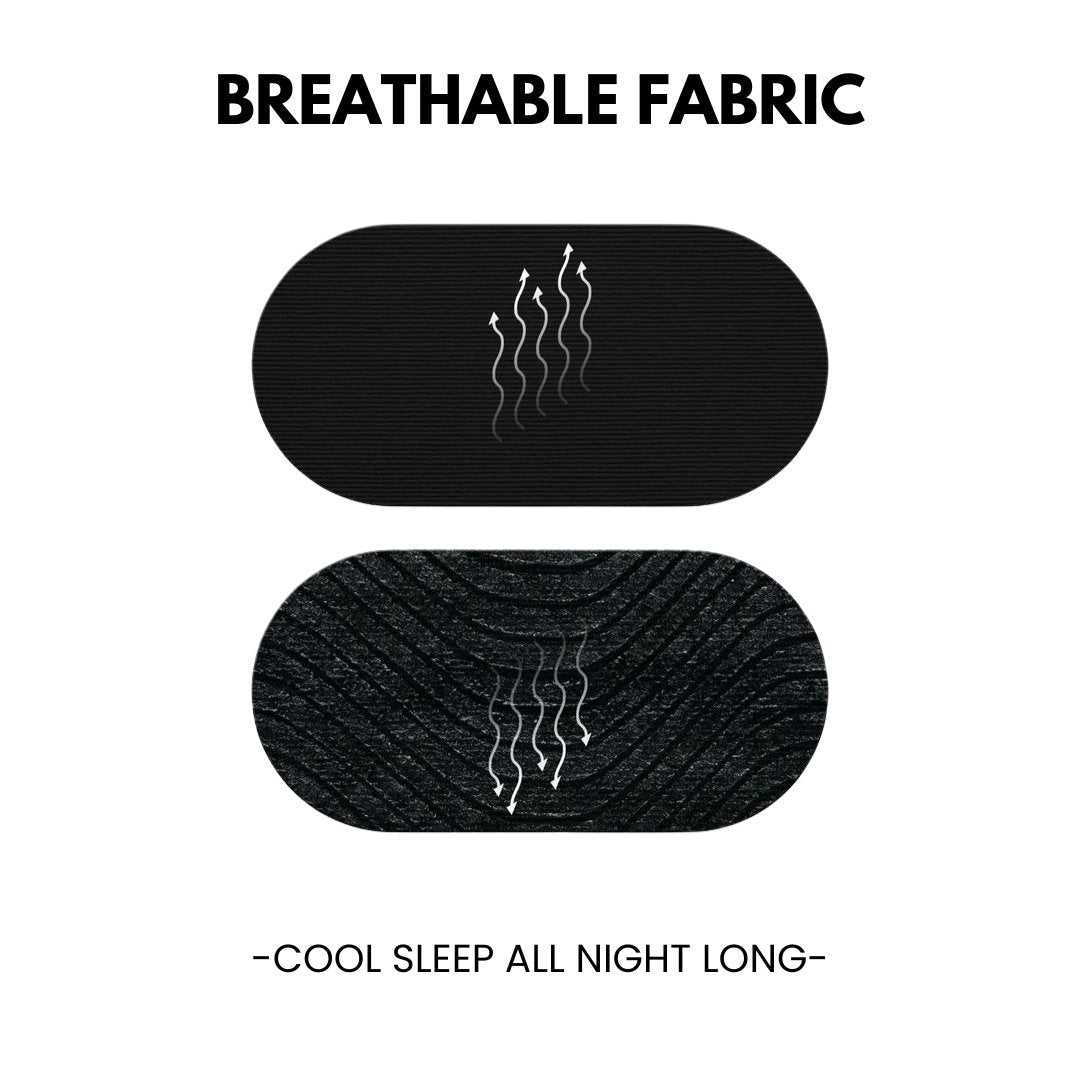
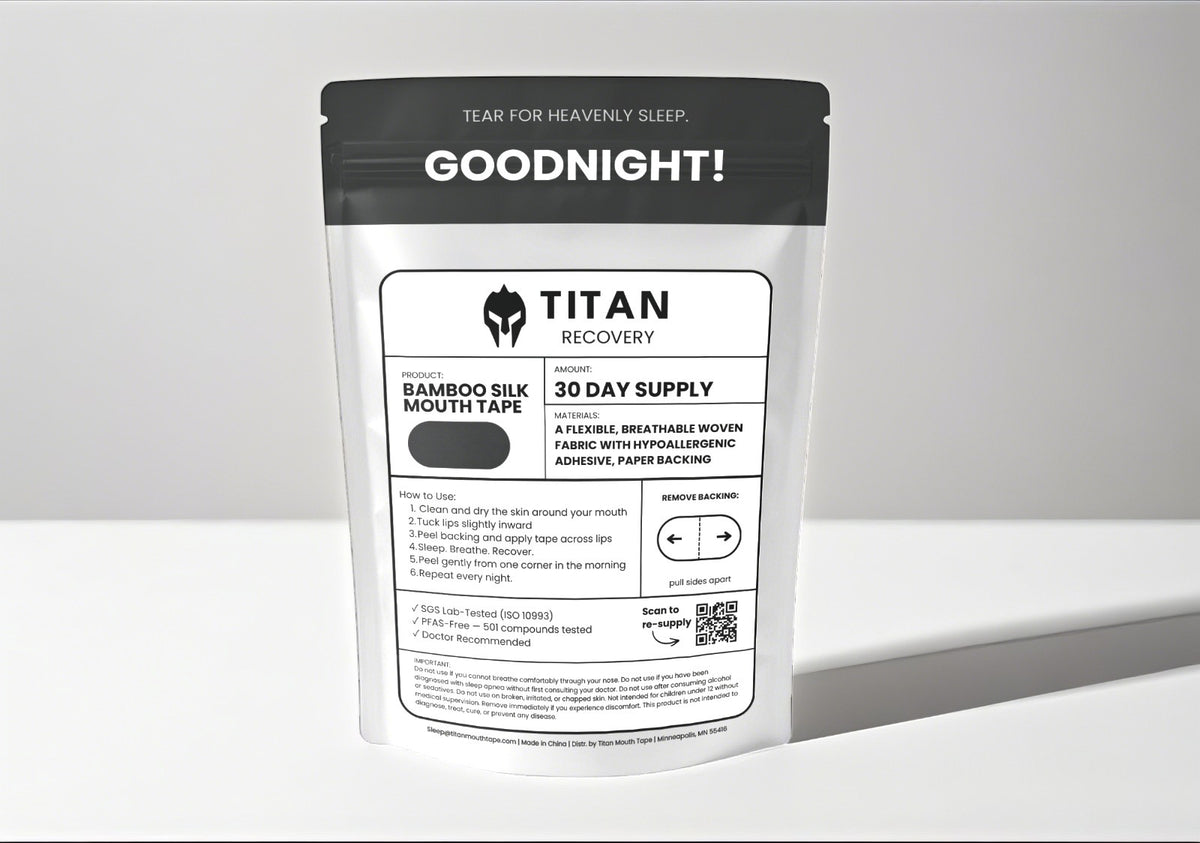
Look for tape made from breathable, skin-friendly material (bamboo silk is ideal). Look for an adhesive that has been tested for biocompatibility — specifically cytotoxicity, skin sensitization, and skin irritation under ISO 10993 standards. And look for a product that's been screened for PFAS (forever chemicals), since the adhesive sits on one of the most absorbent areas of your body for a third of your life.
If a brand can't tell you what's in their adhesive, or hasn't published any safety testing data, consider whether you want that on your face every night. Here's the full buyer's checklist →
Start Here
If your partner snores — or if you're the one snoring — start with the intervention that matches the most likely cause:
If the snorer's mouth falls open at night (dry mouth in the morning, lips parted during sleep): try mouth taping first. If the snorer only snores on their back: switch to side sleeping. If snoring is worse after drinking: cut alcohol by dinner. If snoring is seasonal: treat nasal congestion. If there are signs of apnea (gasping, breathing pauses, extreme daytime fatigue): see a doctor.
Most snoring has an addressable cause. The hard part isn't finding the solution — it's actually trying it. For a detailed breakdown of two of the most common options, see how mouth tape compares to chin straps for snoring.
Doctor Recommended: "As a maxillofacial surgeon and dentist, I recommend Titan Mouth Tape. Nasal breathing during sleep is essential for airway health and deep restorative rest. Titan's bamboo silk design is the most comfortable and effective mouth tape I have tested. If you struggle with snoring, dry mouth, or poor sleep quality, this is the simplest change you can make for your health." — Dr. Francois P., MD, DDS — Maxillofacial Surgeon
Lab-Tested Safety: Titan's adhesive is independently tested to ISO 10993 medical device standards. Non-toxic (95% cell viability). Non-allergenic (0% reaction rate). Non-irritating (score 0.0/8.0). PFAS-free — 501 compounds tested, zero detected. See full test results →
Try it tonight. Bamboo silk. SilkSeal™ adhesive. Beard-friendly. No logo on the tape. Free shipping. 30-night Better Sleep Guarantee. Shop Titan Mouth Tape → · Shop TitanAir →
This article is for informational purposes only and does not constitute medical advice. If you have or suspect a sleep disorder or other medical condition, consult a qualified healthcare provider before making changes to your routine.