How to Mouth Tape With a Beard: Step-by-Step
Share
To mouth tape with a beard, start with clean, dry, product-free skin around your mouth, then choose a beard-friendly woven tape with a gentle-but-strong adhesive. Place it over your closed lips and press it into the skin at the corners of your mouth, where the seal matters most. Hold for 10 to 15 seconds, and in the morning remove it slowly in the direction of hair growth.
That is the whole method. Bearded men need a slightly different approach for one reason: facial hair changes where the adhesive grips. Get the skin contact right at the corners of your mouth and the beard mostly takes care of itself. Below is the full step-by-step, plus fixes for heavy beards and the safety basics worth knowing first.
How do you mouth tape with a beard?
You tape the skin, not the hair. A beard does not stop mouth tape from working, but it moves the job to the parts of your face where skin is still exposed: your lips and the narrow band right at the corners of your mouth. That is where the seal forms. The rest of the strip can rest over facial hair, as long as the ends are anchored to skin. Here is the sequence, start to finish:
- Start with a clean, dry, product-free face. Wash and pat the area around your mouth completely dry. Skip beard oil, balm, and wax at night. Oils are the single most common reason tape slides off a bearded face, so move that part of your routine to the morning.
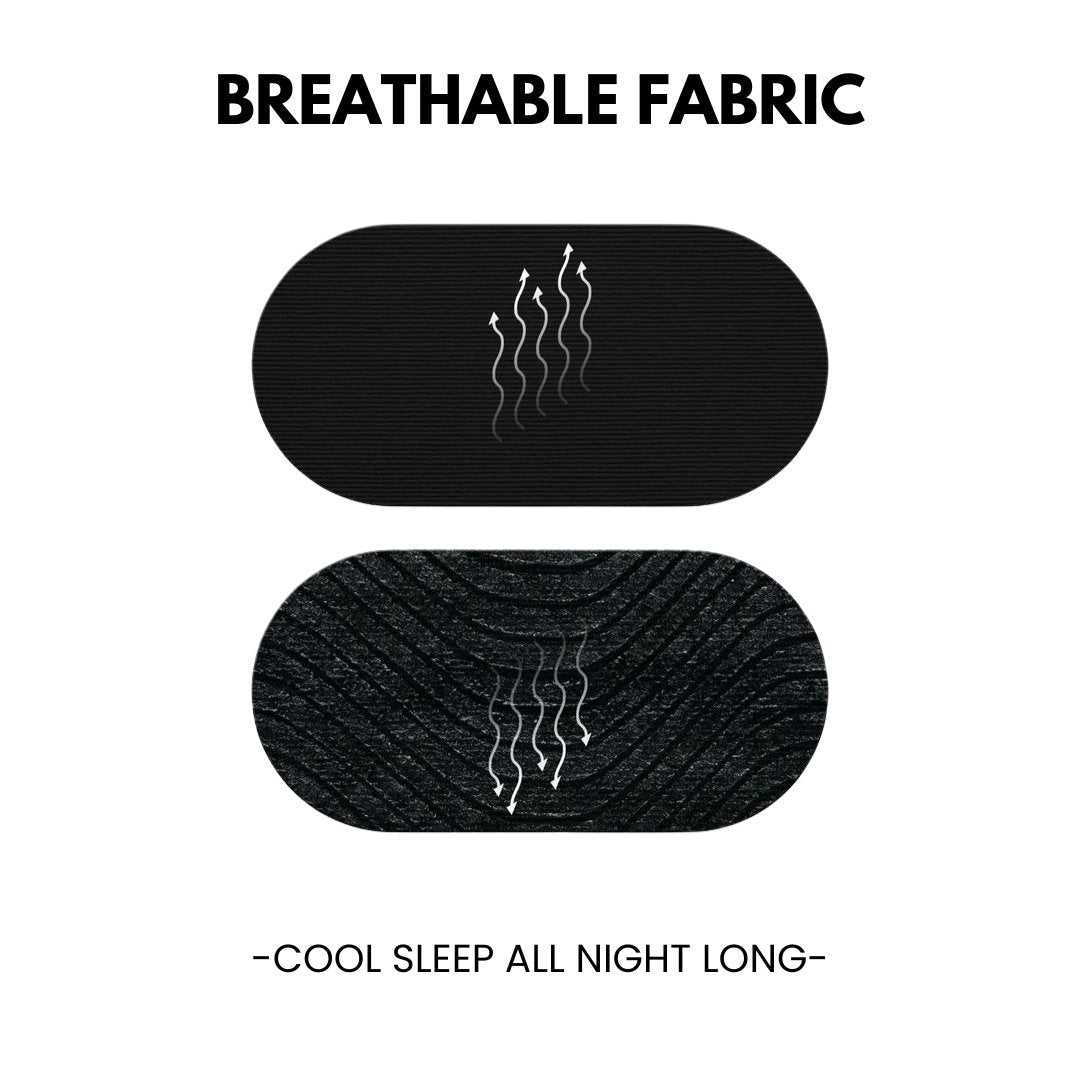
- Choose a beard-friendly woven tape. You want a flexible fabric strip with a gentle-but-strong adhesive, not a rigid plastic die-cut or a scrap of drugstore surgical tape. Flexibility lets the strip conform around hair instead of sitting on top.
- Position it over your closed lips. Press your lips together in a relaxed, natural seal. Do not clench. Lay the tape across the center of your lips first, then smooth it outward toward the corners.
- Press into the skin at the corners of your mouth. This is the step that matters most for beards. Use a fingertip to push the ends of the tape down into the skin at each corner of your mouth, where facial hair is thinnest and a real seal can form.
- Press firmly for 10 to 15 seconds. Warm the strip with your fingers as you hold it. The heat and pressure help the adhesive grip through short hairs and bond to the skin underneath.
- In the morning, remove it slowly. Peel gently in the direction your hair grows, not against it. If it tugs, dampen the tape with warm water first and give it a few seconds to loosen.
If you are brand new to taping, ease in with our step-by-step guide to mouth taping before layering a beard on top of the learning curve.
How do you keep mouth tape on over facial hair?
Three things decide whether tape survives the night on a bearded face: a dry oil-free surface, a flexible tape, and firm pressure at the corners. Miss any one and the strip works loose the first time your jaw moves. The quick checklist:
- Dry the skin, and wait a minute. Even slightly damp skin cuts adhesion. Pat dry, then give it 60 seconds before applying.
- Cut the oils. Beard oil, balm, and heavy moisturizer create a slick barrier that nothing sticks to. Oil in the morning instead.
- Anchor the corners to skin. Push the ends into the skin at the corners of your mouth. Tape that only touches hair has nothing solid to hold onto.
- Use a big enough strip, handled by the edges. A tiny piece has too little adhesive area to hold through facial hair, and finger oils on the sticky side weaken the bond.
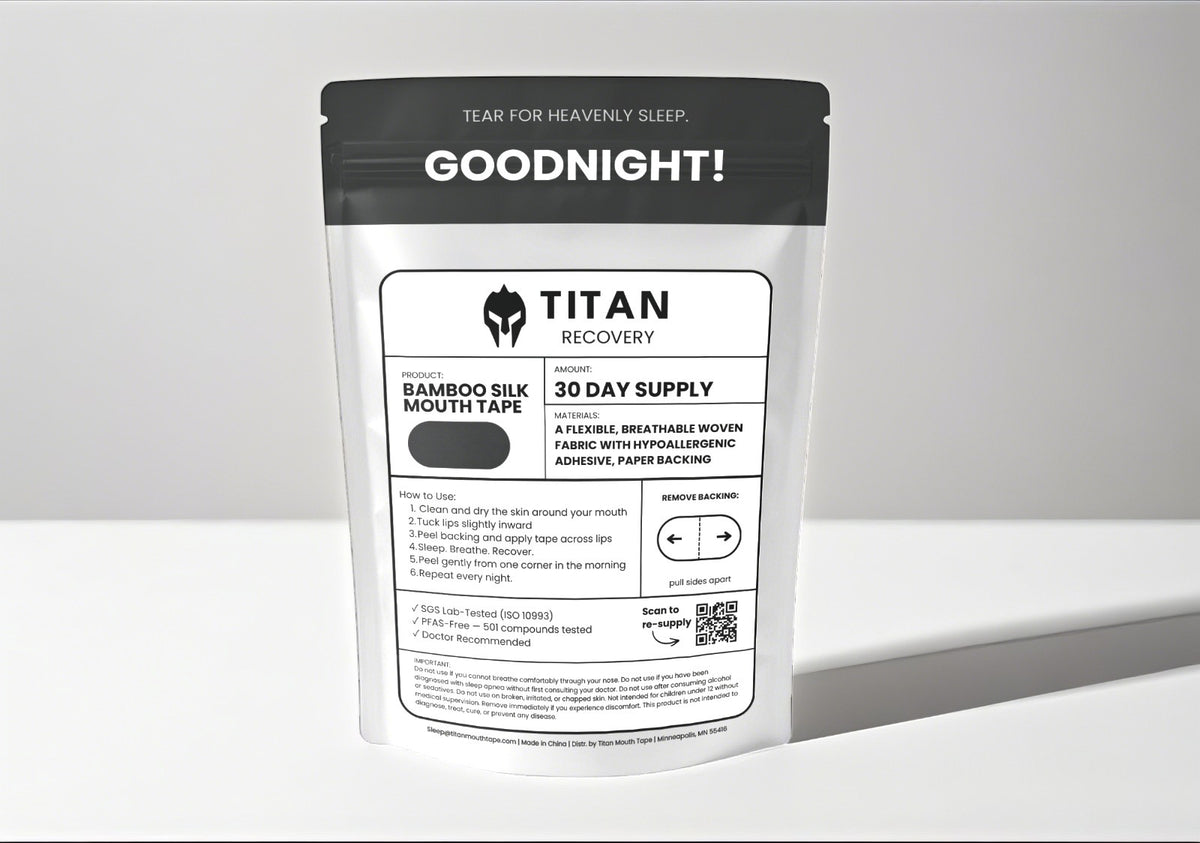
The material does much of the work. A woven bamboo-silk strip stretches in every direction, so it follows the contours of your lips and chin and holds contact even over uneven stubble. That flex is why Titan Mouth Tape pairs a fabric strip with a SilkSeal adhesive tuned to grip the skin beneath facial hair rather than latching onto individual strands.
Tips for heavy and full beards
A full beard, roughly an inch or longer, is the hardest case, but it is workable. Concentrate the tape on your lips and the thin skin around them. Before applying, gently comb or push longer hair away from the corners of your mouth so the ends of the strip can settle onto skin, then press each corner down deliberately. With a thick beard, that corner contact is the whole difference between a seal that holds and a strip on your pillow by 3 a.m. Stubble, by contrast, is the easiest surface of all: short hairs give the adhesive extra texture to grip, so a clean, dry face is usually all you need.
How do you remove mouth tape without pulling hair?
Go slow, go with the grain, and add warm water if it resists. Most "mouth tape rips out beard hair" horror stories come from two mistakes: an aggressive adhesive that bonds to hair, and yanking the strip off fast against the direction of growth. Instead, lift one corner slowly rather than grabbing the middle, then peel downward and outward in the direction your beard grows. If it resists, splash warm water on the strip or peel it in a warm shower to soften the adhesive. Rushing is what catches hair; a slow peel almost never does.
The adhesive matters more than any technique. A tape engineered to bond to skin rather than hair releases cleanly on its own. Titan's SilkSeal adhesive is formulated for that balance: strong enough to hold through a beard all night, gentle enough to peel away without a tug-of-war.
Why does mouth tape keep falling off my beard?
If your tape keeps failing, the cause is almost always oils, moisture, or hair-only contact, not the idea of taping itself. The usual culprits are beard oil applied before bed, skin that was still damp, ends that only touched hair instead of skin, or a strip too small and rigid to grip through facial hair. Fix those and most failures disappear.
If you have worked through all of that and taping still is not clicking, our guide on why mouth tape isn't working digs into the less obvious reasons, from nasal congestion to tape choice.
Is mouth taping with a beard safe?
For most healthy adults, yes, but two rules are non-negotiable. Mouth taping only makes sense if your nose is clear and you have no untreated breathing disorder.
- Clear your nose first. Never seal your lips if you cannot breathe comfortably through your nose. During a cold, allergy flare, or heavy congestion, skip the tape entirely. A nasal strip can help open the airway, but if your nose is genuinely blocked, do not tape that night.
- It is not a treatment for sleep apnea. Mouth tape encourages nasal breathing; it does not treat obstructive sleep apnea and should never replace CPAP or a doctor's care. If you snore heavily or suspect apnea, see a clinician first.
Beards do not change either rule; they only change how you get the strip to stick. If you want the underlying mechanism, our explainer on how mouth tape works covers why nasal breathing is the whole point.
Choosing the right tape for a bearded face
Not every strip labeled "beard-friendly" actually holds through facial hair. When you compare options, look for a flexible woven fabric like bamboo silk that conforms around hair rather than a rigid plastic film that fights it; a gentle-but-strong adhesive designed to bond to skin, not hair, so it grips all night and releases cleanly; and a generous strip size with enough adhesive area to anchor at the corners of your mouth.
Titan Mouth Tape was built to this specification: a soft, flexible bamboo-silk strip with a SilkSeal adhesive tuned to grip the skin beneath a beard and peel away without pulling hair. For a deeper comparison, see our mouth tape for beards guide and our roundup of the best mouth tape for a beard.
Frequently Asked Questions
How do you mouth tape with a beard?
Start with clean, dry, product-free skin. Skip beard oil at night. Place a flexible, beard-friendly tape over your closed lips, then press the ends into the skin at the corners of your mouth where the seal forms. Hold for 10 to 15 seconds so the adhesive grips, and remove it slowly in the direction of hair growth in the morning.
Does mouth tape pull out beard hair?
It can if you use an aggressive adhesive or yank it off fast. To avoid it, choose a tape that bonds to skin rather than hair, peel slowly in the direction your hair grows, and dampen the strip with warm water if it resists. Titan's SilkSeal adhesive is designed to release cleanly without tugging facial hair.
Should I apply beard oil before mouth taping?
No. Beard oil, balm, and wax create a slick barrier that prevents the adhesive from sticking, and the tape will slide off. Apply grooming products in the morning instead, and tape onto clean, dry skin at night.
Can you mouth tape with a full beard?
Yes. Concentrate the tape on your lips and the thin skin around them, comb longer hair away from the corners of your mouth before applying, and press each end firmly into the skin. The corner contact is what makes a full beard workable.
Is it safe to mouth tape with a beard?
For most healthy adults, yes, as long as your nose is clear and you do not have untreated sleep apnea. Never tape when you are congested, and treat mouth tape as a nasal-breathing aid, not a replacement for medical care. The beard changes only how the tape sticks, not the safety rules.
The Bottom Line
Mouth taping with a beard comes down to a simple idea: seal the skin, not the hair. Start with a clean, dry, oil-free face, use a flexible tape with a gentle-but-strong adhesive, and press the ends into the skin at the corners of your mouth where the seal forms. Hold for 10 to 15 seconds, and peel slowly with the grain in the morning. Do that, and beard length stops being the obstacle it feels like at first.
Titan Mouth Tape was built for exactly this, with a bamboo-silk fabric and SilkSeal adhesive that grip through stubble and full beards alike and come off clean. Keep TitanAir Nasal Strips on hand for stuffy nights so you are opening the nose rather than fighting the tape, or start with the Deep Sleep Bundle and let the strip handle your nose while the tape handles your mouth.
Doctor Recommended: "As a maxillofacial surgeon and dentist, I recommend Titan Mouth Tape. Nasal breathing during sleep is essential for airway health and deep restorative rest. Titan's bamboo silk design is the most comfortable and effective mouth tape I have tested. If you struggle with snoring, dry mouth, or poor sleep quality, this is the simplest change you can make for your health." — Dr. Francois P., MD, DDS — Maxillofacial Surgeon
Lab-Tested Safety: Titan's adhesive is independently tested to ISO 10993 medical device standards. Non-toxic (95% cell viability). Non-allergenic (0% reaction rate). Non-irritating (score 0.0/8.0). PFAS-free — 501 compounds tested, zero detected. See full test results →
Try the complete system tonight. Titan Mouth Tape (bamboo silk, SilkSeal™ adhesive) + TitanAir Nasal Strips. Free shipping. 30-night Better Sleep Guarantee. Shop Titan Mouth Tape → · Shop TitanAir Nasal Strips →