Does Mouth Tape Work With Facial Hair?
Share
Yes, mouth tape can work with facial hair, but only if it uses a beard-friendly adhesive and material and is applied so it makes real contact with the skin of your lips. Generic plastic or cheap paper tapes tend to struggle: their adhesive is either too weak to grip through stubble or too harsh, so it rips hair on removal.
If you have a beard, you have probably heard mouth taping helps with snoring and sleep quality, then wondered whether it is even an option for you. Most tape was designed for a clean-shaven face, and facial hair changes the equation. Here is the honest breakdown.
Does mouth tape work with facial hair?
It works when the tape is built to grip skin through hair and release without pulling. A beard does not stop mouth taping from doing its job, which is holding your lips gently closed so you breathe through your nose. What a beard does is raise the bar for the tape. On a smooth face, almost any decent adhesive finds enough skin to hold. Through facial hair, only a tape with the right adhesive and a flexible backing keeps a reliable seal until morning.
The mechanics are simple. Tape holds because its adhesive bonds to your skin, and facial hair sits between the adhesive and that skin, creating gaps that lift the tape off the surface. So the real question is not "beard or no beard," it is whether the tape can reach and grip the skin around your lips despite the hair in the way. For the underlying mechanism, see how mouth tape works.
Why do some mouth tapes fail on beards?
Most tapes fail on beards because their adhesive is either too weak to reach skin or too aggressive on hair. Manufacturers tuning a tape for a clean face optimize for smooth skin, and that tuning breaks down over facial hair in two opposite ways.
- Too weak. A gentle, low-tack adhesive made for bare skin cannot bridge the gaps that hair creates. It clings to a few hair tips, loses contact with the skin, and works loose the moment your jaw moves. You wake up with the strip on your pillow.
- Too harsh. Some tapes compensate with an aggressive adhesive. It holds, but it also latches onto individual hairs, so removal becomes a painful tug that can pull hair out or leave gummy residue in your beard.
- Too stiff. Thin plastic or film backings have almost no flex. They cannot conform to the uneven surface a beard creates, so they lift at the edges and corners as you move.
In other words, a cheap tape usually fails one of two ways: it will not stick, or it sticks to the wrong thing. If your current tape keeps coming off, the cause is often the tape rather than your technique, so rule that out before you give up. Our guide to why mouth tape isn't working covers the common culprits.
What makes a mouth tape beard-friendly?
A beard-friendly tape combines an adhesive that grips skin through stubble, a flexible backing, and enough surface area to hold. These three traits work together. Get all three right and facial hair stops being a dealbreaker.
- An adhesive tuned for facial hair. It must be strong enough to reach and grip the skin beneath stubble and beard, yet gentle enough to release the hair cleanly in the morning. It should bond to skin, not to strands.
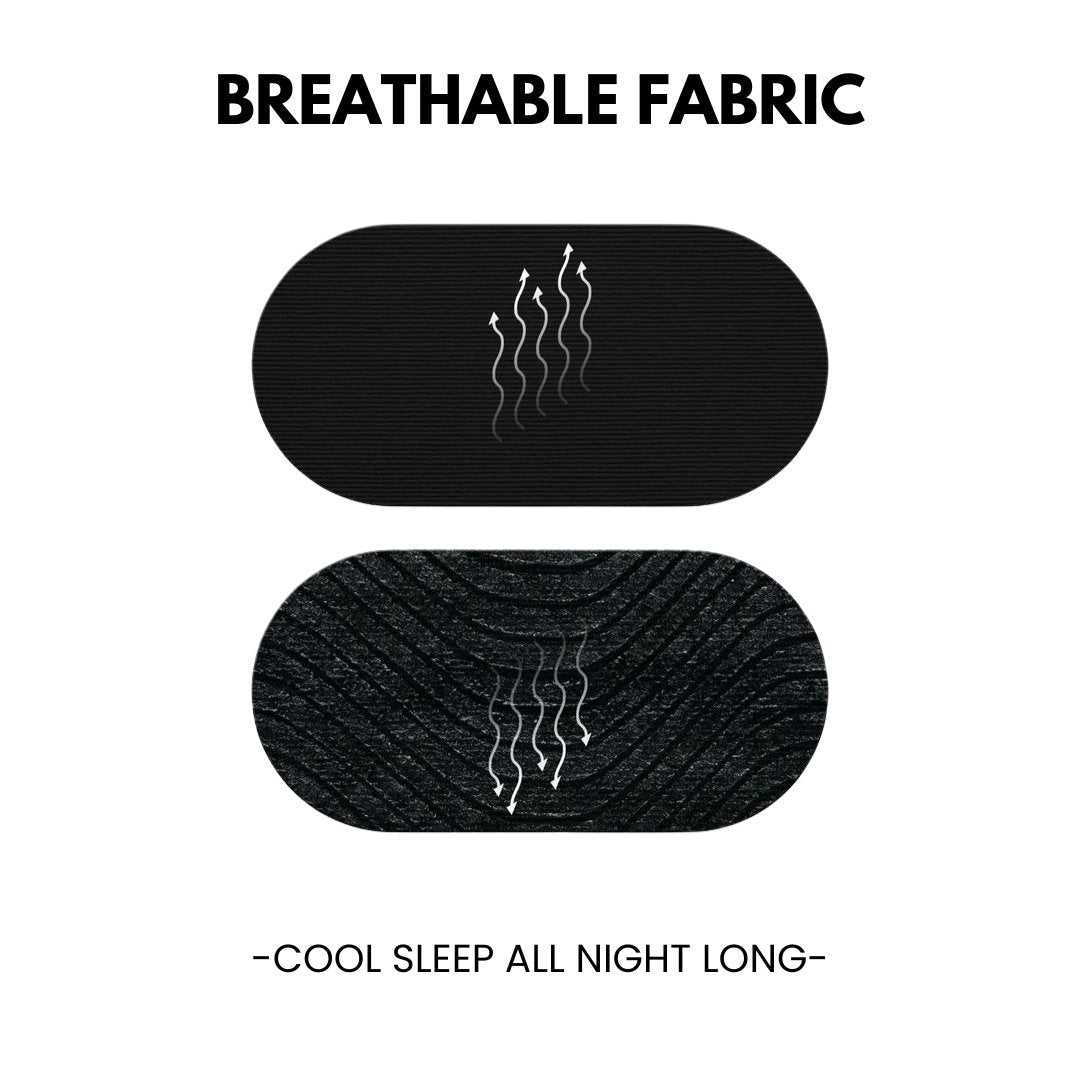
- A flexible, conforming material. A woven fabric backing that stretches slightly in every direction settles into the contours around your mouth and chin, keeping contact even where a beard makes the surface uneven. Rigid film fights that shape and lifts.
- Enough surface area. A larger strip has more skin to hold onto, which matters when facial hair is already reducing contact. A tiny piece of tape lacks the real estate to stay put through a beard.
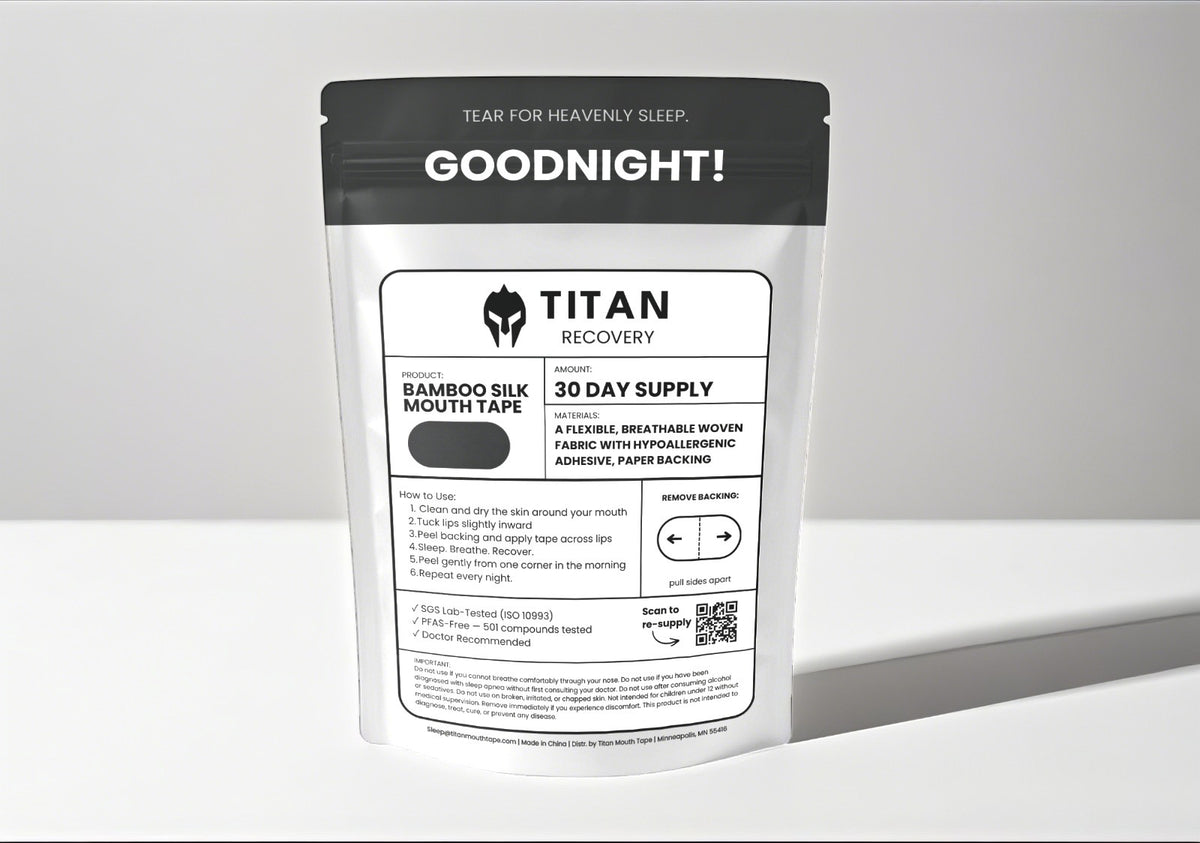
This combination is why we built Titan Mouth Tape the way we did: a bamboo silk fabric that flexes with your face and a SilkSeal adhesive tuned to grip skin through stubble and beard while peeling away cleanly, without the tug-of-war. For a deeper comparison, see our roundup of the best mouth tape for a beard and the full mouth tape for beards guide.
How well does it work for heavy beards?
Results scale with beard length: stubble is easiest, short beards are reliable with good technique, and full beards need the tape placed on the skin closest to your lips. A two-day shadow and a dense four-inch beard are genuinely different jobs, so set expectations accordingly.
- Stubble (1 to 3 days). Easiest of all, sometimes easier than a bare face. The short hairs give a quality adhesive extra texture to grab. Clean, dry skin and a firm press are usually all it takes.
- Short beard (trimmed, under an inch). Very workable. Press the tape down into the beard so the adhesive contacts skin rather than riding on the hair tips, and spend extra time on the edges.
- Full or dense beard (an inch or longer). The most demanding, but still doable. Focus the tape on the skin of your lips and the thin-haired zone right around them, and sweep longer hair away from that strip before applying. A flexible fabric tape with a strong-but-clean adhesive is close to essential here; a stiff strip will not hold.
The denser your beard, the more the quality of the tape and the care of your application decide the outcome. With the right tape, even a full beard is manageable.
How do you get the best seal with facial hair?
Clean, dry, oil-free skin and a center-out press give the adhesive the best chance to reach skin and hold. Technique closes most of the gap between "falls off by 2 a.m." and "still sealed at sunrise." The steps that matter most:
- Wash and fully dry the area. Any moisture between the tape and your skin weakens the bond instantly. Pat dry and give it a minute.
- Skip the beard oil and balm at night. Oils and waxes create a slick barrier the adhesive cannot grip. Move grooming products to the morning on nights you tape.
- Press center-first, then outward. Place the middle of the strip on your lips and smooth toward the corners, pressing firmly so the adhesive settles onto skin.
- Push hair aside near the corners. The corners of the mouth lift first. Comb or press stray beard hair away from that zone before the tape goes on.
- Handle by the edges. Fingertip oils on the adhesive reduce its grip.
If you are brand new to this, our step-by-step guide to starting mouth taping covers the fundamentals that apply to every face, bearded or not.
When might it not fully seal, and what can you do?
A very dense beard, oily skin, or nasal congestion can prevent a perfect seal, but there are practical workarounds. On some faces, mostly very full, coarse beards, you may not get the same edge-to-edge seal a clean-shaven person gets, and that is fine. Mouth taping still helps when the seal is not flawless, because its main job is to discourage your mouth from falling wide open and to cue nasal breathing.
If you are not getting a clean seal, try these:
- Trim the immediate lip line. Keeping the hair right around your lips a little shorter gives the adhesive a cleaner path to skin, without touching the rest of your beard.
- Reposition the strip. Aim for the skin closest to your lips rather than spreading the tape wide across dense hair.
- Address congestion first. If you cannot breathe well through your nose, no tape will feel comfortable. Pairing tape with TitanAir Nasal Strips opens the nasal airway so the seal is easier to keep.
- Upgrade the tape. If you are still fighting a weak or hair-pulling adhesive, the tape itself is likely the limiting factor.
Frequently Asked Questions
Does mouth tape work if you have a beard?
Yes. Mouth tape works with a beard when the tape uses an adhesive that grips skin through facial hair and releases cleanly, paired with a flexible backing. Apply it to clean, dry, oil-free skin and press it down so the adhesive reaches the skin around your lips, not just the hair tips.
Does mouth tape work with a beard if it's really thick?
It can, with the right approach. Focus the tape on the skin of your lips and the thin-haired area right around them, sweep longer hair aside before applying, and use a flexible fabric tape with a strong, clean-release adhesive. A perfect edge-to-edge seal is harder with a very dense beard, but taping still helps cue nasal breathing.
What is the best mouth tape that works with beards?
Look for a tape with a flexible material like bamboo silk that conforms to facial contours, an adhesive designed to grip through hair and release without pulling, and a generous strip size for more surface area. Rigid plastic strips and small, low-tack tapes tend to fail on facial hair.
Does mouth tape pull out beard hair?
Cheap tapes with aggressive adhesive can tug or pull individual hairs on removal. A tape whose adhesive bonds to skin rather than to strands releases cleanly. Peeling slowly from one corner in the morning also makes removal smoother and gentler on your beard.
Should I shave to use mouth tape?
No. You do not need to shave. Stubble and short beards are easy to tape over, and full beards work with the right tape and technique. At most, keeping the hair right along your lip line a little shorter can help the adhesive reach skin, but a full shave is unnecessary.
Can I put beard oil on before taping?
No. Beard oil, balm, and wax create an oily barrier that stops the adhesive from gripping, and the tape will slide off. Apply grooming products in the morning instead, and tape onto clean, dry skin at night.
The Bottom Line
Mouth tape does work with facial hair, provided the tape is made for the job and you apply it well. Generic tapes fail because their adhesive is either too weak to reach skin through hair or too harsh on the hair itself, and stiff plastic backings will not conform to a beard. A beard-friendly tape pairs a flexible material with an adhesive tuned to grip skin through stubble and release gently, plus enough surface area to hold. Get the face clean, dry, and oil-free, press center-out, and even a full beard becomes manageable. That is what Titan Mouth Tape was designed for, with its bamboo silk material and SilkSeal adhesive. If congestion gets in the way of a comfortable seal, add TitanAir Nasal Strips, or get both in the Deep Sleep Bundle.
Doctor Recommended: "As a maxillofacial surgeon and dentist, I recommend Titan Mouth Tape. Nasal breathing during sleep is essential for airway health and deep restorative rest. Titan's bamboo silk design is the most comfortable and effective mouth tape I have tested. If you struggle with snoring, dry mouth, or poor sleep quality, this is the simplest change you can make for your health." — Dr. Francois P., MD, DDS — Maxillofacial Surgeon
Lab-Tested Safety: Titan's adhesive is independently tested to ISO 10993 medical device standards. Non-toxic (95% cell viability). Non-allergenic (0% reaction rate). Non-irritating (score 0.0/8.0). PFAS-free — 501 compounds tested, zero detected. See full test results →
Try the complete system tonight. Titan Mouth Tape (bamboo silk, SilkSeal™ adhesive) + TitanAir Nasal Strips. Free shipping. 30-night Better Sleep Guarantee. Shop Titan Mouth Tape → · Shop TitanAir Nasal Strips →
Related reading
- The Complete Guide to Mouth Taping With a Beard
- Mouth Tape for Sleeping With a Beard
- Does Mouth Tape Work With a Mustache?
- Why Your Mouth Tape Won't Stay On Over a Beard
Ready to start? Shop Titan bamboo silk mouth tape — soft, beard-friendly, PFAS-free, and backed by a 30-Night Better Sleep Guarantee.