Exercise Before Bed: What Helps and What Hurts
Share
If you've ever searched "is it bad to exercise before bed," you've probably found a wall of oversimplified advice telling you to stop training in the evening. The reality is more nuanced than that. Millions of people can only train after work, after the kids are down, or after the evening rush clears out of the gym. Telling them to just not exercise isn't useful advice — it's out of touch with how most schedules actually work.
The research tells a more practical story. The type, intensity, and timing of your workout all determine whether evening exercise helps or hurts your sleep. Some exercise before bed is perfectly fine. Some of it is actively beneficial. And some of it will cost you sleep quality in ways that undermine the very results you're training for. Here's how to tell the difference — and how to protect your recovery when late-night sessions are the only option.
Why Intense Exercise Before Bed Can Hurt Sleep
Hard training triggers a cascade of physiological responses designed to keep you alert and performing. That's exactly what you want at 6 PM. It's a problem at 10 PM.
Elevated core body temperature. Vigorous exercise raises your core temperature significantly, and your body needs that temperature to drop before sleep onset becomes possible. The cooling process takes roughly 60 to 90 minutes after a hard session. Sleep researchers have consistently found that the natural decline in core body temperature is one of the primary triggers for melatonin release and sleep initiation. When you push that decline later with a hard workout, you push your ability to fall asleep later with it.
Cortisol and adrenaline stay elevated. Intense exercise activates the hypothalamic-pituitary-adrenal axis and floods your system with cortisol, adrenaline, and noradrenaline. These stress hormones are performance enhancers during training — they mobilize energy, sharpen focus, and increase pain tolerance. But they're the opposite of what your nervous system needs to transition into sleep. Cortisol in particular suppresses melatonin production, and elevated levels at bedtime are associated with longer sleep onset latency and more fragmented sleep architecture.
Your sympathetic nervous system stays active. Hard training puts you into a sympathetic-dominant state — the fight-or-flight side of your autonomic nervous system. Transitioning to sleep requires a shift into parasympathetic dominance, the rest-and-digest mode where heart rate drops, breathing slows, and the body begins its repair processes. That shift doesn't happen on command. After a truly demanding session, your nervous system may need one to three hours to downregulate enough for quality sleep to begin. Building a pre-sleep routine that supports this transition becomes especially important for evening exercisers.
What Counts as "Too Intense"
The threshold isn't about the name of the workout. It's about what happens to your heart rate and nervous system during the session. As a practical guideline, anything that pushes your heart rate above roughly 80 percent of your max for sustained periods is likely to disrupt sleep if it ends within two hours of when you want to be asleep.
That includes HIIT sessions, sprint intervals, heavy compound lifting (squats, deadlifts, cleans), competitive sports where adrenaline runs high, and any training where you'd describe the effort as "all-out" for repeated sets. These are excellent training modalities — but they carry a physiological cost that takes time to clear before your body is ready to sleep.
The issue isn't that these workouts are bad. It's that their aftereffects — the elevated core temperature, the lingering cortisol, the sympathetic activation — overlap with the window your body needs for sleep preparation. If you have three hours between the end of the session and lights out, you're probably fine. If you have 90 minutes or less, you're gambling with your sleep quality.
What's Actually Fine Before Bed
Not all movement disrupts sleep. Low-intensity exercise that keeps your heart rate in a moderate zone and doesn't trigger a significant stress response can actually improve sleep quality when done in the evening.
Yoga and stretching. Gentle yoga, static stretching, and mobility work activate the parasympathetic nervous system rather than fighting it. The slow, controlled breathing patterns used in these practices directly support the nervous system shift your body needs before sleep. Multiple studies have found that evening yoga improves both sleep onset latency and subjective sleep quality.
Walking. A 20- to 30-minute walk after dinner is one of the most consistently supported habits in sleep research. It aids digestion, provides gentle movement without significant thermoregulation demands, and the rhythmic nature of walking has a calming effect on the nervous system. It won't spike your cortisol. It won't elevate your core temperature meaningfully. And for many people, it's the best transition activity between the active day and the wind-down period before bed.
Light mobility and foam rolling. Joint mobility drills, foam rolling, and gentle bodyweight movements fall well within the range that supports rather than disrupts sleep preparation. These activities increase blood flow to tissues without the sympathetic activation that comes from high-intensity work — which makes them useful as both a recovery tool and a sleep primer.
The Timing Window That Matters
If you train hard in the evening, the research suggests a clear boundary: finish intense exercise at least two to three hours before your target bedtime. That gives your core temperature time to drop, your cortisol levels time to decline, and your nervous system time to shift from sympathetic to parasympathetic dominance.
Light exercise — yoga, stretching, walking, gentle mobility — is fine up to 30 minutes before bed. For some people, it's actively helpful that close to sleep because it replaces screen time or mental rumination with calming physical activity.
The practical takeaway for people who can only train late: if your gym session ends at 9 PM and you want to be asleep by 11 PM, you have enough buffer for most high-intensity work. If your session ends at 10 PM and you need to sleep by 11, switch to a lower-intensity session on those nights, or accept that your sleep onset will be delayed. Knowing the tradeoff is better than ignoring it.
Exercise, Mouth Breathing, and What Carries Into Sleep
There's a less obvious connection between evening exercise and sleep quality that rarely gets discussed: breathing patterns. During high-intensity exercise, most people default to mouth breathing. That's a natural response to high oxygen demand — your body opens every available airway to maximize ventilation. The problem isn't mouth breathing during the workout itself. It's that the pattern can carry forward into sleep.
When you spend an hour or more breathing hard through your mouth, you reinforce that motor pattern. Your jaw relaxes into an open position more readily. Your tongue drops from the roof of your mouth. And when you fall asleep shortly after, those patterns persist — leading to mouth breathing during sleep, which is associated with snoring, reduced deep sleep time, lower HRV, and poorer overall recovery quality.
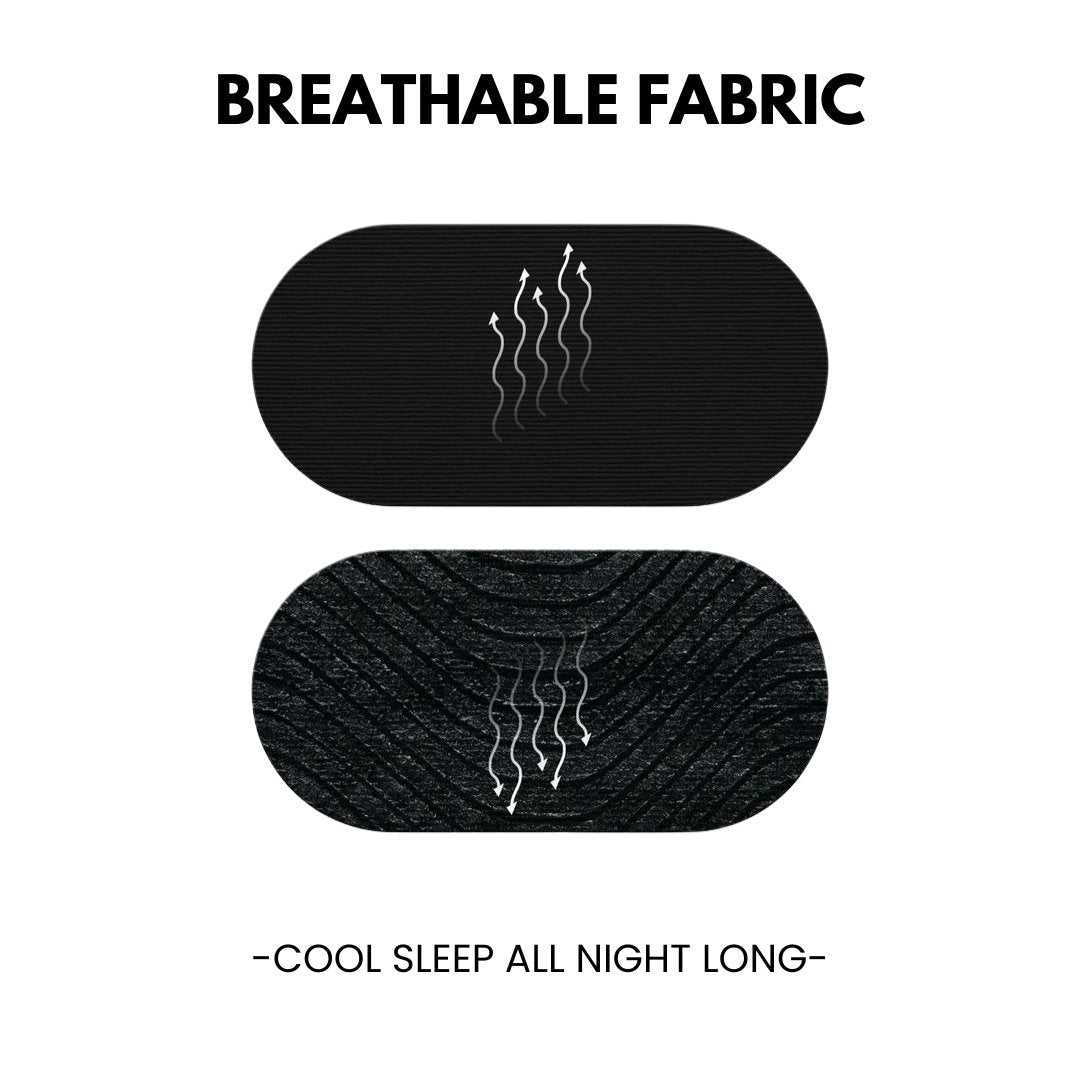
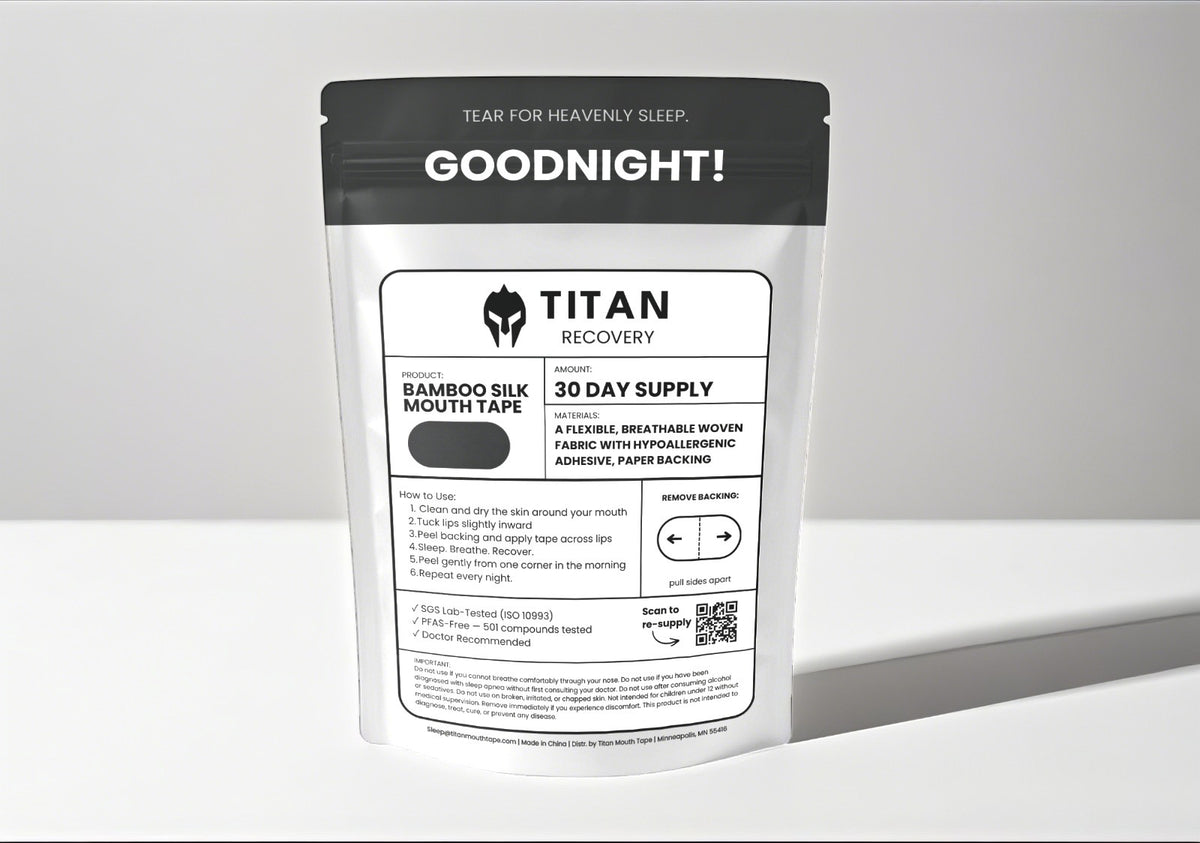
Nasal breathing during training is a practice worth building, especially for moderate-intensity work. It strengthens the habit of keeping the mouth closed during effort, which translates to better breathing patterns during sleep. For high-intensity work where mouth breathing is unavoidable, the solution is on the other end: using Titan Mouth Tape at night to ensure that whatever breathing patterns you reinforced during training don't follow you into your recovery hours.
The Recovery Equation: Training Quality Plus Sleep Quality
Here's the part that evening exercisers need to internalize: exercise quality plus sleep quality equals results. You can have the best training program ever written, but if your sleep quality is consistently compromised by when and how you train, you're leaving adaptation on the table.
The athletes and busy professionals who train late and still recover well are the ones who take the recovery side of the equation as seriously as the training side. That means managing the transition from workout to sleep — a cool shower to accelerate core temperature drop, dimming lights, limiting screens, and protecting deep sleep quality with nasal breathing.
Athletes who use Titan Recovery consistently report that their sleep data improves even when training timing stays the same. That's because Titan Mouth Tape addresses one of the biggest controllable variables in sleep quality — how you breathe — regardless of what happened in the gym three hours earlier. Paired with TitanAir Nasal Strips to keep nasal airflow open, the combination ensures that the recovery window is maximized even when the training window isn't ideal.
The data from sleep tracker users who start mouth taping tells a consistent story: more deep sleep, higher HRV, and better readiness scores — outcomes that evening exercisers need more than anyone.
Frequently Asked Questions
Is it bad to exercise before bed every night?
It depends entirely on the type and intensity of exercise. Light activity like yoga, stretching, or walking before bed is fine nightly and can actually improve sleep quality. High-intensity training — HIIT, heavy lifting, sprints — is better finished two to three hours before bed. If your schedule only allows late intense sessions, focus on post-workout cooling strategies and nasal breathing during sleep to protect recovery quality.
Will working out before bed make it harder to fall asleep?
Intense exercise within 90 minutes of bedtime can delay sleep onset because your core temperature, cortisol, and sympathetic nervous system are still elevated. Moderate or light exercise generally does not have this effect. If you find that late training delays your sleep, extending your cooldown period — a cool shower, gentle stretching, and dimmed lighting — can help accelerate the transition.
What is the best exercise to do before bed for better sleep?
Gentle yoga, static stretching, light mobility work, and casual walking are the best options close to bedtime. These activities support parasympathetic activation rather than fighting it, and several studies show they can improve both how quickly you fall asleep and how much deep sleep you get. Avoid anything that spikes your heart rate above 70 to 80 percent of your maximum within two hours of bed.
How does late-night exercise affect muscle recovery?
Exercise stimulates muscle repair, but the actual recovery happens during sleep — particularly during deep sleep, when growth hormone release peaks. If late-night intense exercise reduces your deep sleep duration or fragments your sleep architecture, the training stimulus is partially wasted because the recovery response is blunted. Protecting sleep quality after evening training is how you ensure the workout actually translates to adaptation. Mouth taping with Titan Mouth Tape is one of the simplest ways to keep deep sleep intact regardless of when you trained.
The Bottom Line
Evening exercise isn't inherently bad for sleep — but it requires more intentional management than morning or afternoon training. The rules are straightforward: finish intense work two to three hours before bed, use light movement as a wind-down tool close to sleep, and take the post-workout-to-sleep transition seriously. For the millions of people whose schedules demand late training, the goal isn't to stop working out. It's to make sure the hours after training are set up to deliver the recovery your body needs. Titan Mouth Tape and TitanAir Nasal Strips keep the breathing side of recovery locked in, even when training timing isn't perfect. Subscribe and Save for 11% off every order. Free shipping. Better Sleep Guarantee.
Doctor Recommended: "As a maxillofacial surgeon and dentist, I recommend Titan Mouth Tape. Nasal breathing during sleep is essential for airway health and deep restorative rest. Titan's bamboo silk design is the most comfortable and effective mouth tape I have tested. If you struggle with snoring, dry mouth, or poor sleep quality, this is the simplest change you can make for your health." — Dr. Francois P., MD, DDS — Maxillofacial Surgeon
Lab-Tested Safety: Titan's adhesive is independently tested to ISO 10993 medical device standards. Non-toxic (95% cell viability). Non-allergenic (0% reaction rate). Non-irritating (score 0.0/8.0). PFAS-free — 501 compounds tested, zero detected. See full test results →
Try the complete system tonight. Titan Mouth Tape (bamboo silk, SilkSeal™ adhesive) + TitanAir Nasal Strips. Free shipping. 30-night Better Sleep Guarantee. Shop Titan Mouth Tape → · Shop TitanAir Nasal Strips →