Does Mouth Tape Help With Bad Breath?
Share
Yes — for the most common cause of morning breath, mouth tape helps. Sleeping with your mouth open dries out saliva, your mouth's natural defense against odor-causing bacteria. Mouth tape holds your lips sealed so you breathe through your nose, keeping saliva in place all night. The result is far milder morning breath. It will not fix bad breath from other causes.
That is the short answer. The reason it works comes down to what saliva does and what happens when it evaporates for eight hours straight — and the reason it sometimes does nothing comes down to where your bad breath actually starts. Both are covered below.
Why does mouth breathing cause bad breath?
Mouth breathing dries out the mouth, and a dry mouth is where odor-causing bacteria thrive. The odor most people call "morning breath" is produced by anaerobic bacteria that live on the back of the tongue and between the teeth and gums. As they break down trapped food particles and dead cells, they release volatile sulfur compounds — the molecules responsible for the rotten, sulfurous smell of bad breath.
Saliva normally keeps these bacteria in check. It washes away the debris they feed on, keeps the mouth's pH near neutral, and carries antimicrobial enzymes. During sleep, saliva production naturally slows as part of your circadian rhythm. If your mouth stays closed, the reduced flow is still enough to hold the line. But if your mouth hangs open, room air flows across your tongue and gums for hours and evaporates what little saliva is left.
Once that thin protective film is gone, the mouth becomes warm, dry, and low in oxygen — the exact environment anaerobic bacteria prefer. They multiply unchecked, sulfur compounds accumulate, and you wake up with breath far worse than an ordinary night. This is why dry mouth and bad breath so often show up together.
- Trigger: mouth open during sleep, air flowing across oral tissues.
- Effect: saliva evaporates, leaving the mouth dry.
- Consequence: anaerobic bacteria multiply and release volatile sulfur compounds.
- Result: concentrated morning breath that brushing masks but does not prevent.
Does mouth tape help morning breath?
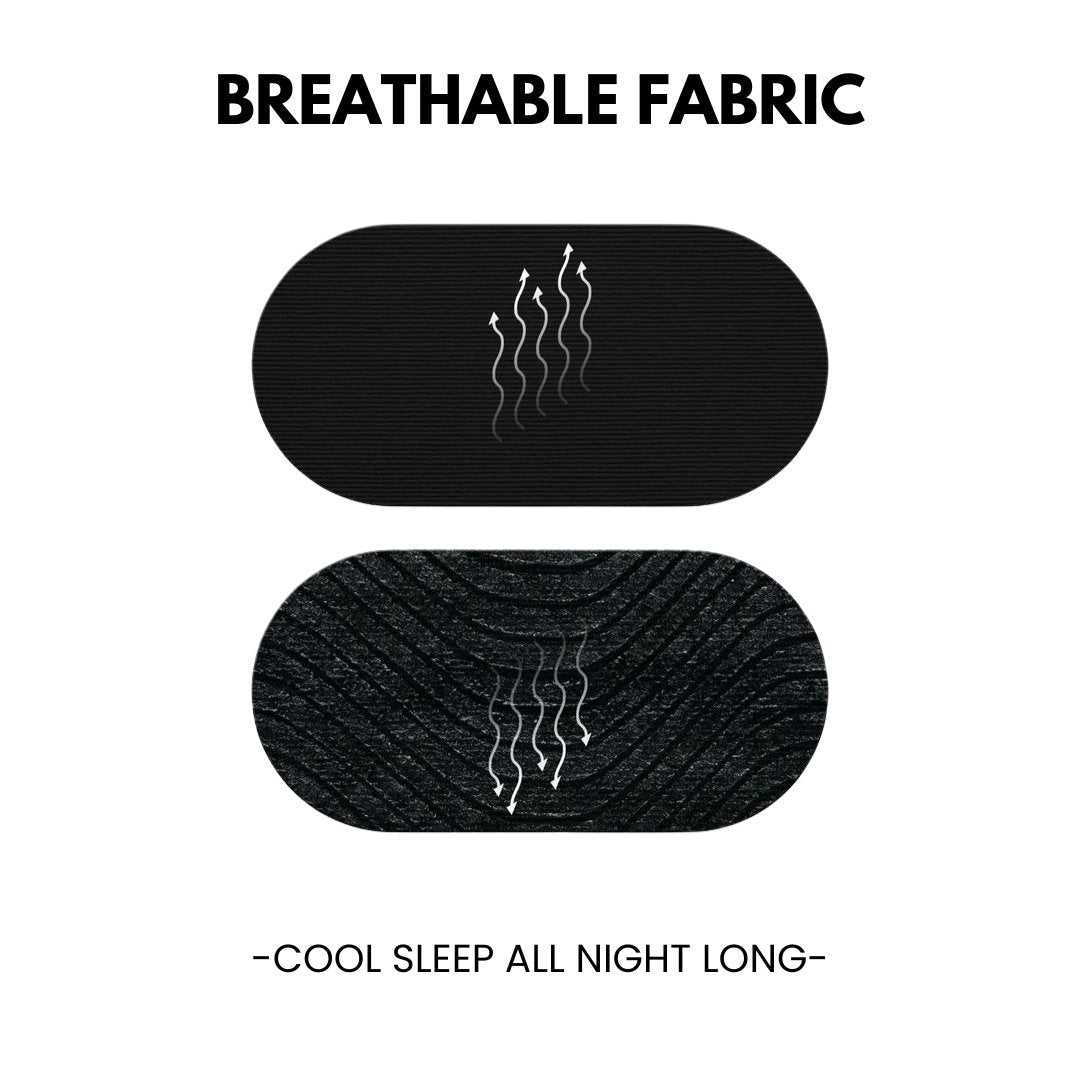
When the cause is mouth breathing, yes — mouth tape addresses it at the source. A strip of tape across the lips holds them gently sealed, so breathing routes through the nose and the mouth stays closed all night. With the mouth sealed, the air inside stays humid and the saliva film stays intact. The antimicrobial, debris-clearing, pH-balancing work that saliva does keeps running instead of shutting down an hour after you fall asleep.
Nothing is added to your mouth — no chemicals, no antibacterial agents. Mouth tape simply preserves the defense system already in place. That is the difference between it and the usual approaches. This is also the mechanism behind why waking up with dry mouth and morning breath tend to resolve together: they share a single root cause.
If you want the full picture of how the tape itself works, our guide on how mouth tape works walks through it.
Why doesn't mouthwash or brushing fix it?
Because they treat the symptom at bedtime, not the condition that develops overnight. An antibacterial rinse kills a share of the bacteria in your mouth at that moment, but bacteria reproduce quickly. If you fall asleep with your mouth open twenty minutes later, the survivors have the same dry, food-rich environment as before. By the early hours the population has recovered, and by morning you are back where you started.
The same limit applies to gum, mints, and tongue scraping. Each addresses the current state of your mouth without changing what happens during the hours you are unconscious. You can scrape your tongue perfectly clean before bed, but if your mouth hangs open all night, new colonies form on that same surface before dawn. If you brush and floss diligently and still wake up with bad breath, the problem is usually not your routine — it is your nighttime breathing. Our post on bad breath even after brushing covers that gap in detail.
When won't mouth tape fix bad breath?
Mouth tape only helps bad breath that comes from a dry, mouth-breathing environment. Halitosis has many causes, and several of them have nothing to do with how you breathe at night. Mouth tape will not touch these:
- Gum disease. Gingivitis and periodontitis create deep pockets where bacteria live regardless of moisture. This needs dental treatment.
- Tonsil stones. Calcified debris trapped in the tonsils produces a strong sulfur smell on its own.
- GERD and acid reflux. Odor carried up from the stomach is a digestive issue, not an oral one.
- Diet. Garlic, onions, and coffee release compounds through the lungs after digestion — tape cannot intercept that.
- Sinus infection or post-nasal drip. Bacteria and mucus draining from the sinuses create their own odor.
- Poor oral hygiene. If plaque and food are not being removed at all, no amount of saliva keeps up.
If your bad breath is constant through the day, worst after meals rather than on waking, or paired with pain, bleeding gums, or reflux symptoms, mouth breathing is probably not the driver. Address those causes directly, and see a dentist or doctor rather than expecting tape to solve a problem it was never built for.
A simple self-check: if your breath is worst first thing in the morning and clearly improves after you brush and drink water, mouth breathing during sleep is the most likely culprit — and the one mouth tape is designed to fix.
What if congestion is why I breathe through my mouth?
Then open the nose first, or the tape has nowhere to route your breathing. Nasal congestion is one of the most common reasons people mouth breathe in the first place. Taping a blocked nose shut is uncomfortable and counterproductive. Pairing mouth tape with TitanAir Nasal Strips solves both halves: the strip lifts the nasal valve open to lower airflow resistance, and the tape keeps your lips sealed so you actually use that clearer nose all night.
For mild to moderate congestion, that combination is usually enough. For significant structural issues like a deviated septum, a strip helps but an ENT evaluation is the better long-term move. If congestion is temporary — a cold or seasonal allergies — it is reasonable to skip taping until your nose clears.
How to stop morning breath at night
The goal is a sealed, moist mouth from the moment you fall asleep until you wake. A practical routine looks like this:
- Clean first. Brush, floss, and scrape your tongue before bed to lower the starting bacterial load.
- Clear the nose. If you are congested, apply a nasal strip so nose breathing is comfortable.
- Seal the lips. Apply mouth tape across closed lips to keep the mouth shut and saliva in place overnight.
- Hydrate through the day. Well-hydrated tissue produces more saliva at night; alcohol close to bedtime dries you out.
New to taping? Our step-by-step guide to mouth taping covers first application, sizing, and building the habit safely. If you also snore, the same sealed-mouth mechanic can help there too — see does mouth tape help with snoring.
Frequently Asked Questions
How fast does mouth tape improve bad breath?
Most people notice a difference the first morning. The thick, dry coating on the tongue is gone and the mouth feels moist rather than parched, so morning breath is noticeably milder. Over the first one to two weeks the improvement stabilizes as the oral environment recovers from chronic overnight dryness. Any lingering gum irritation or tongue coating from months of mouth breathing may take a few weeks longer to settle.
Can mouth tape make bad breath worse?
It should not, as long as you can breathe comfortably through your nose. The one situation to avoid is taping over a blocked nose, which forces harder mouth-adjacent breathing and disrupts sleep. If you are congested, use a nasal strip first or postpone taping until your nose clears. Keeping the mouth sealed preserves saliva, which works against odor rather than for it.
Does mouth tape help dry mouth as well as bad breath?
Yes, because they are the same problem. Dry mouth from sleeping with an open mouth and the bad breath that follows both come from saliva evaporating overnight. Sealing the lips keeps that saliva in place, so both improve on the same timeline. Note that dry mouth caused by medication or a medical condition has a different source and may not respond to taping.
Is bad breath from mouth breathing different from bad breath caused by food?
Yes. Dietary bad breath from garlic, onions, or coffee comes from compounds absorbed into the bloodstream and exhaled through the lungs, so it is not oral in origin and tape cannot affect it. Mouth-breathing bad breath is purely oral: bacterial overgrowth in a dry mouth. If your breath is worst on waking and improves after brushing and water, the mouth-breathing type is the likely cause.
Should I still see a dentist if I have persistent bad breath?
Yes. Persistent bad breath that does not improve with better nighttime breathing can signal gum disease, tonsil stones, a sinus issue, or reflux — none of which mouth tape addresses. A dentist can rule out oral causes and point you toward the right specialist if the source is elsewhere. Treat tape as the fix for mouth-breathing dryness, not as a substitute for a checkup.
The Bottom Line
Does mouth tape help bad breath? For the most common cause — morning breath driven by mouth breathing and the dry mouth it creates — yes. Saliva is your mouth's built-in defense against the anaerobic bacteria that produce volatile sulfur compounds, and mouth breathing evaporates it for hours. Keep the mouth sealed, and the saliva does the rest.
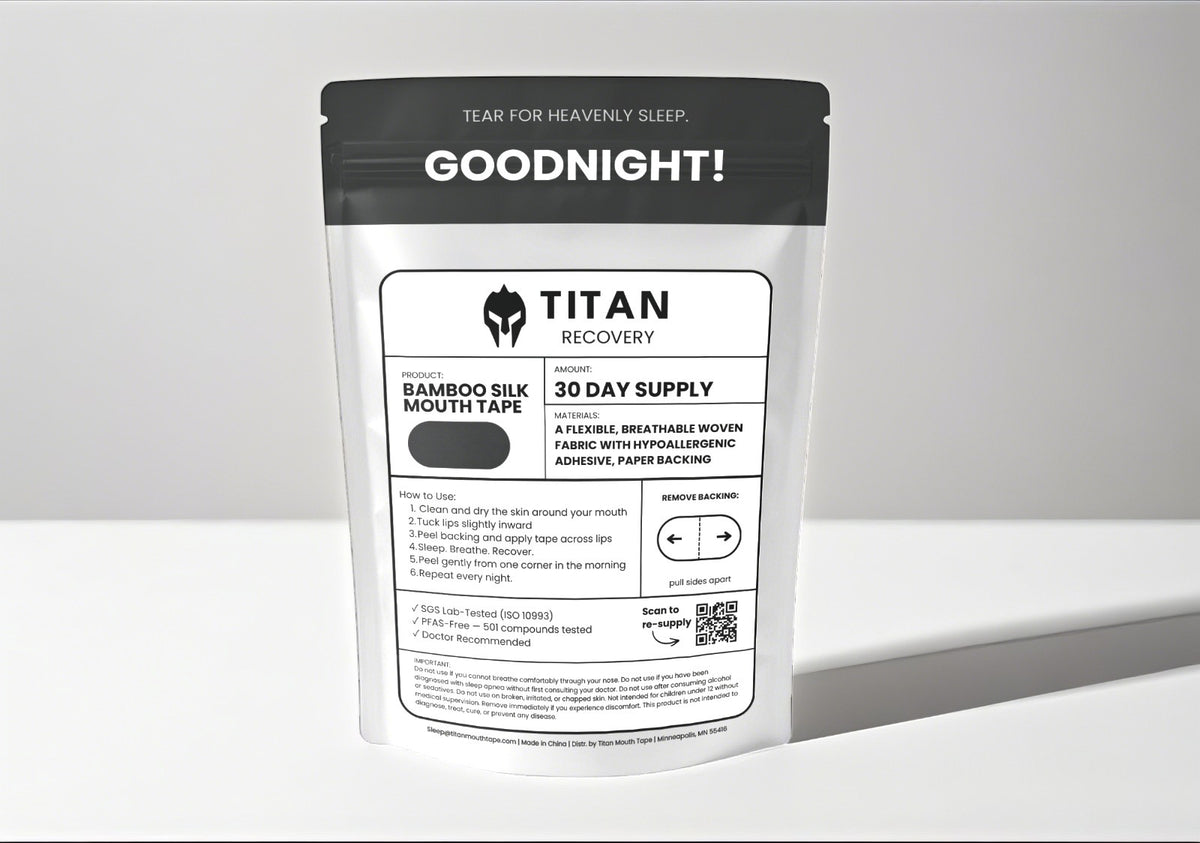
Just be honest about the limits. Tape will not fix bad breath from gum disease, tonsil stones, GERD, diet, or a sinus infection, and it is not a replacement for good oral hygiene or a dental visit. For the right cause, though, it is the simplest fix most people never try. Titan Mouth Tape holds your lips sealed comfortably all night, and if congestion is part of the picture, the Titan Mouth Tape Deep Sleep Bundle pairs it with TitanAir Nasal Strips to clear the nose first.
Doctor Recommended: "As a maxillofacial surgeon and dentist, I recommend Titan Mouth Tape. Nasal breathing during sleep is essential for airway health and deep restorative rest. Titan's bamboo silk design is the most comfortable and effective mouth tape I have tested. If you struggle with snoring, dry mouth, or poor sleep quality, this is the simplest change you can make for your health." — Dr. Francois P., MD, DDS — Maxillofacial Surgeon
Lab-Tested Safety: Titan's adhesive is independently tested to ISO 10993 medical device standards. Non-toxic (95% cell viability). Non-allergenic (0% reaction rate). Non-irritating (score 0.0/8.0). PFAS-free — 501 compounds tested, zero detected. See full test results →
Try the complete system tonight. Titan Mouth Tape (bamboo silk, SilkSeal™ adhesive) + TitanAir Nasal Strips. Free shipping. 30-night Better Sleep Guarantee. Shop Titan Mouth Tape → · Shop TitanAir Nasal Strips →