The Complete Biohacker's Sleep Stack
Share
A biohacker sleep stack isn't a single product or a one-line tip. It's a layered protocol where each intervention compounds on the last, and the whole system outperforms any individual hack by a wide margin. The biohackers who actually move their sleep scores treat sleep the way they treat a supplement stack: identify the levers, control the variables, measure the output, iterate. This is that protocol, organized into seven layers from foundational to advanced, so you can build it one tier at a time and see exactly what each layer contributes.
The logic behind stacking is simple. Sleep is governed by multiple independent systems — circadian rhythm, thermoregulation, airway mechanics, neurotransmitter balance, autonomic tone. A complete sleep optimization protocol addresses all of them in a coordinated sequence, and the results show up in your data within the first week.
Layer 1: Environment
Every serious sleep stack starts with the physical space. Get it wrong and the layers above it underperform.
Temperature is the single most impactful variable. Your core body temperature needs to drop roughly 2 degrees Fahrenheit to initiate sleep onset. Set your room to 65 degrees. If you have the budget, a cooling mattress pad gives you programmable temperature control through the night. If you don't, a fan and light bedding accomplish the same directional effect.
Achieve true blackout. Not dim. Dark enough that you can't see your hand. Blackout curtains are non-negotiable. Cover every LED — chargers, smoke detectors, standby lights. Even small amounts of ambient light suppress melatonin through closed eyelids without waking you.
Control the acoustic environment. Consistent low-frequency noise (white, brown, or pink) masks the sudden spikes that trigger micro-arousals and fragment deep sleep. A dedicated sound machine beats a phone app because it runs without notification interruptions. Complete silence works if you have it. Inconsistent silence is worse than steady ambient sound.
Layer 2: Light Management
Light is the master clock signal. Mismanaging it is the fastest way to sabotage an otherwise solid biohacker sleep routine.
Get bright light within 30 minutes of waking. Direct sunlight is ideal — 10 to 15 minutes, no sunglasses. This morning exposure anchors your melatonin onset roughly 14 to 16 hours later, meaning a 7 AM light session sets you up for natural drowsiness around 9 to 11 PM. If you wake before sunrise, a 10,000-lux light therapy lamp for 20 minutes does the job.
Block blue light two hours before bed. Amber or red-lens glasses filter the wavelengths (roughly 450-495 nm) that most aggressively suppress melatonin. Evening blue light delays melatonin onset by 30 to 90 minutes, compressing your total sleep window. After sunset, switch from overhead lighting to lamps below eye level — overhead light hits the melanopsin receptors in the lower retina most directly, so the position of the source matters as much as its color temperature.
Layer 3: Airway Optimization
This is the layer most biohackers discover last but wish they'd found first. You can perfect your environment, nail your light exposure, and time every supplement to the minute — and still leave 15 to 20 percent of your sleep quality on the table if your breathing shifts to oral respiration the moment you fall asleep.
Nasal breathing produces nitric oxide in the paranasal sinuses, which improves oxygen transfer to tissues, engages the diaphragm more fully, maintains airway humidity, and keeps the parasympathetic nervous system dominant. Mouth breathing does the opposite on every count — it dries the airway, positions the tongue where it can obstruct the throat, and nudges the nervous system toward activation.
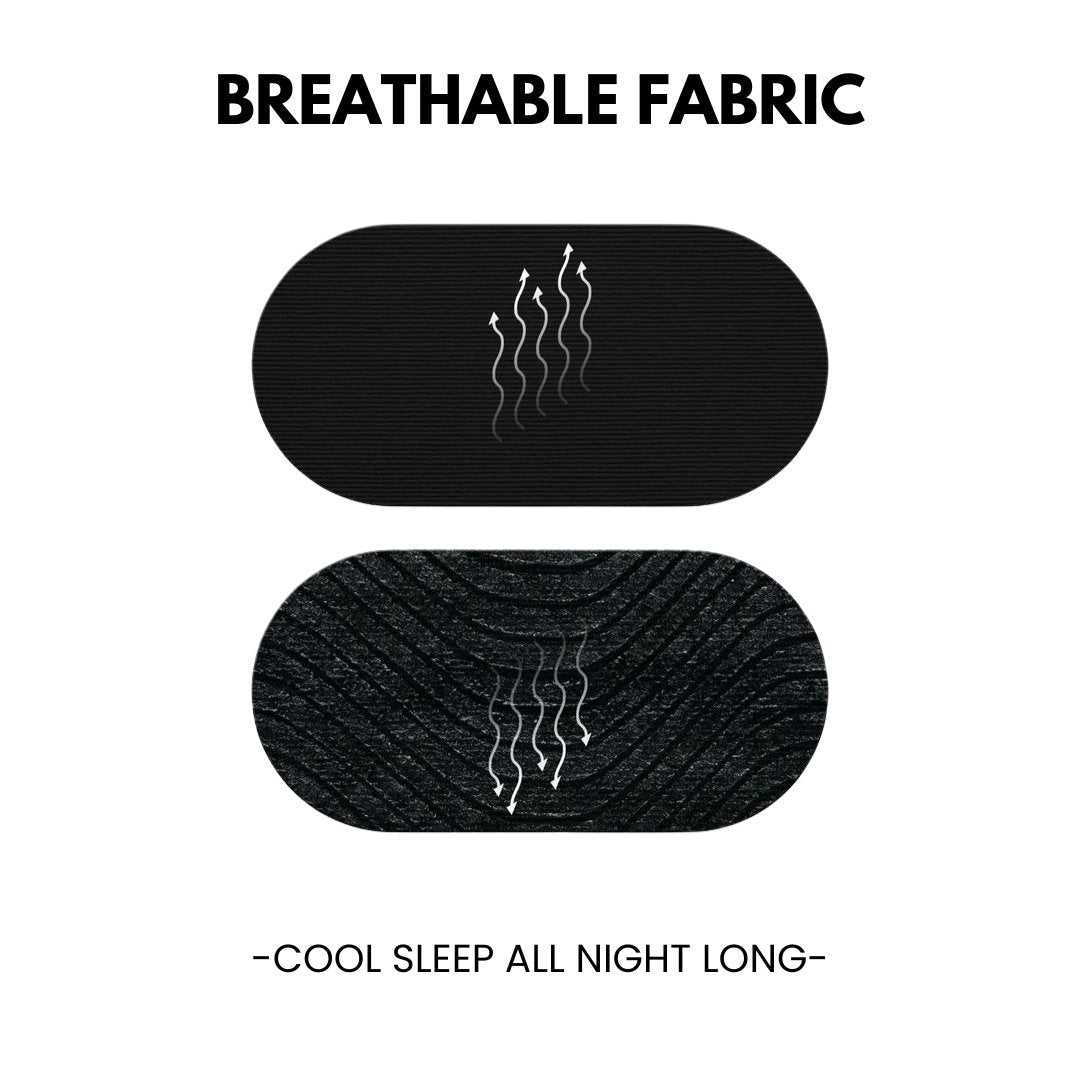
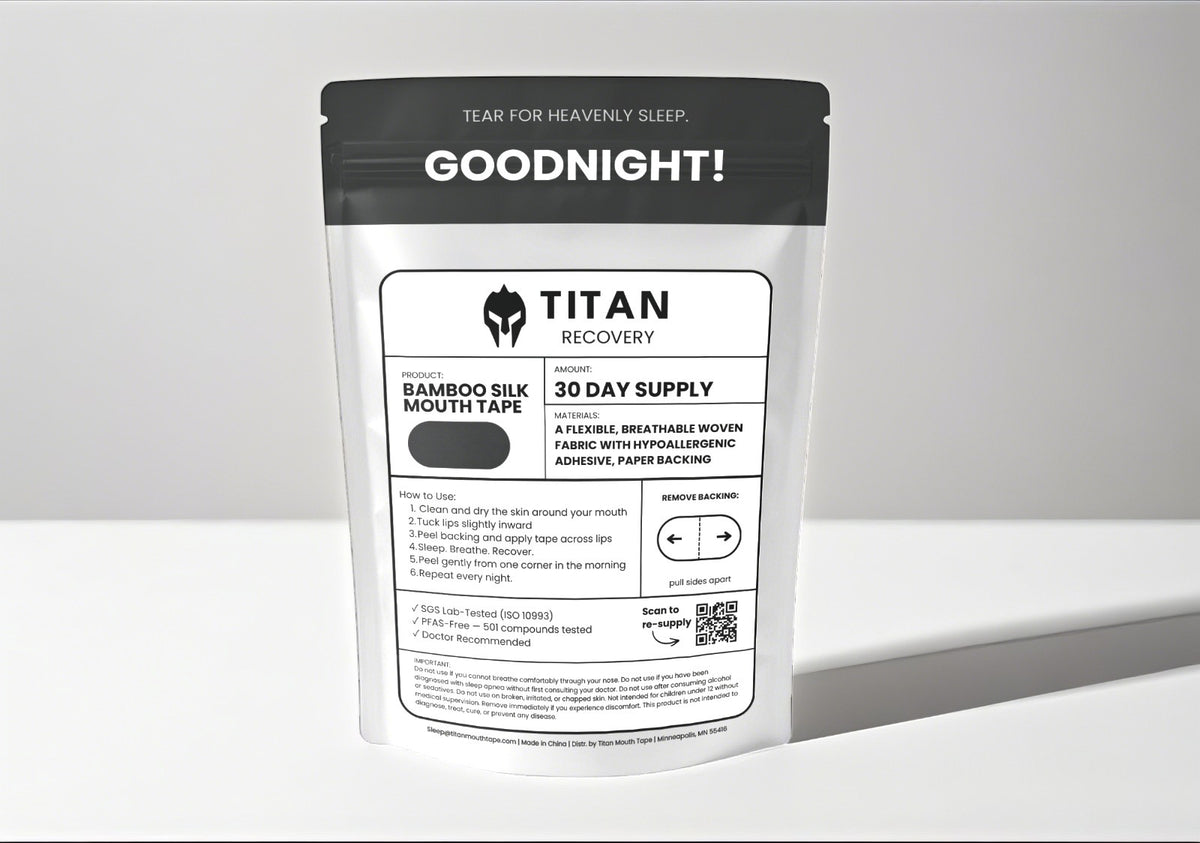
The problem is unconscious control. You can't maintain nasal breathing by willpower while you sleep. Jaw muscles relax. The mouth opens. Mouth tape solves this mechanically by holding the lips gently closed, routing all airflow through the nose from lights-out to morning. Low cost, zero side effects, measurable results on the first night.
Pair it with nasal strips for full airway coverage. If you have any nasal resistance — allergies, a deviated septum, or naturally narrow passages — nasal strips mechanically open the nasal valve and increase airflow volume. The Titan Deep Sleep Bundle packages both because this is how the stack is meant to be run — mouth closed, nose open, both sides of the breathing equation addressed simultaneously.
The data backs this up. Biohackers who track with Oura or WHOOP consistently report measurable improvements in HRV, resting heart rate, and deep sleep duration after adding mouth tape. Highest ROI addition to any sleep stack.
Layer 4: Supplements
Supplements are the layer where biohackers overcomplicate things. The evidence supports a short list. These are the compounds some biohackers include in their sleep stack, based on available research.
Magnesium glycinate (200-400 mg, 30-60 minutes before bed). Magnesium regulates GABA, the neurotransmitter that quiets neural activity. A significant percentage of the population is deficient, and correcting that deficiency tends to improve deep sleep. Glycinate and threonate are the forms with the best evidence for sleep. Oxide is poorly absorbed.
L-theanine (100-200 mg). An amino acid found in tea. Some biohackers use it to promote alpha brain wave activity — the relaxed state that precedes sleep onset. It doesn't cause drowsiness. It lowers the mental chatter that keeps people awake.
Glycine (3 g, roughly an hour before bed). Glycine lowers core body temperature and some research suggests it may improve subjective sleep quality. It's an amino acid the body produces naturally, and supplementing appears to have a mild but consistent effect.
A note on melatonin: most people take too much. Physiological doses are 0.3-0.5 mg, not the 5-10 mg tablets that dominate the supplement aisle. Many biohackers drop it entirely once their light management is dialed in.
Layer 5: Tracking
You can't optimize what you don't measure. This layer separates biohacking sleep from guessing.
Oura Ring remains the gold standard for consumer sleep staging accuracy — deep sleep, REM, HRV, resting heart rate, body temperature deviation, and respiratory rate. The temperature trend data is particularly useful for spotting when alcohol or a late meal disrupted your baseline.
WHOOP excels at recovery scoring and strain tracking. The respiratory rate data is a good proxy for airway quality — you'll see it drop when you add mouth tape, correlating with more efficient breathing.
Apple Watch captures the directional trends that matter most for stack iteration, even if the data isn't as granular.
The key isn't buying the tracker — it's reviewing the data. Pick three metrics — deep sleep duration, HRV, and sleep efficiency are good starting points — and check them weekly. Add one variable at a time and give each change five to seven nights before you evaluate.
Layer 6: Timing
Three timing variables have an outsized impact on sleep architecture.
Consistent wake time. This matters more than consistent bedtime. Your circadian rhythm anchors to wake time and first light exposure, then cascades downstream — cortisol peak, energy trough, melatonin onset. Hold your wake time within a 30-minute window seven days a week. Social jet lag — the shift between weekday and weekend schedules — reduces deep sleep even when total hours stay the same.
Last meal three hours before bed. Digestion is thermogenic. Eating close to bed keeps core temperature elevated when it should be dropping. This single timing change often produces a visible improvement in deep sleep percentage on trackers.
Caffeine cutoff 10 hours before bed. Caffeine's half-life is five to six hours, meaning a 2 PM coffee still has a quarter of its caffeine in your system at midnight. The 10-hour cutoff eliminates the residual adenosine-blocking effect that reduces deep sleep even when you feel like you fell asleep fine. If you sleep at 10 PM, last caffeine is noon.
Layer 7: Evening Protocol
The final layer shifts your nervous system from sympathetic dominance to parasympathetic readiness.
Cold exposure (early evening, not right before bed). A cold shower or plunge 3 to 4 hours before bed triggers a rebound warming effect followed by a delayed core temperature drop that aligns with sleep onset. Too close to bed is stimulating rather than calming. The data generally shows improved deep sleep on cold exposure days.
Breathwork. Five to ten minutes of structured breathing before bed is one of the most effective nervous system resets available. The 4-7-8 pattern — inhale for 4 counts, hold for 7, exhale for 8 — directly activates the vagus nerve and drops heart rate. This isn't meditation. It's a mechanical input that produces a measurable parasympathetic output.
Wind-down ritual. The specific activity matters less than its consistency. Reading a physical book, light stretching, journaling — your brain builds associative conditioning around pre-sleep behaviors. After two to three weeks, the routine itself becomes a sleep cue. The biohackers with the best sleep data tend to have the most boring evenings.
Frequently Asked Questions
What order should I build my biohacker sleep stack?
Start with environment and light management — they're free or low-cost and produce the largest baseline improvements. Add airway optimization next (mouth tape and nasal strips), since the results are immediate and measurable. Then layer in timing, supplements, and tracking. Building one layer at a time lets you isolate what's driving changes in your data.
How long does it take to see results from a sleep stack?
Airway optimization and environment changes show up in tracker data on the first night. Light management and timing adjustments take three to five days. The full compounding effect of a complete stack usually stabilizes within two to three weeks of consistent execution.
Do I need a sleep tracker to biohack my sleep?
No. A tracker accelerates iteration, but the interventions work whether or not you're measuring them. You can also track subjectively — rate your energy, mood, and cognitive clarity each morning on a 1-10 scale and correlate it with what you did the night before.
Can I use mouth tape if I've never tried it before?
Yes. Most people adapt within one to three nights. Start by wearing it for 20-30 minutes while reading before bed to get comfortable with the sensation. If you feel congestion, add nasal strips. Mouth tape holds the lips gently closed — you can always open your mouth if needed.
The Bottom Line
A biohacker sleep stack works because it treats sleep as a system, not a single variable. Environment sets the foundation. Light management synchronizes your circadian clock. Airway optimization — mouth tape plus nasal strips — protects the breathing pattern that deep sleep depends on. Supplements fill gaps. Tracking gives you the feedback loop. Timing and evening protocols lock the behavioral layer into place.
Start with the foundation, add one layer per week, and let your data guide the optimization. Build the stack. Run the protocol. Let the data tell you what's working.
Doctor Recommended: "As a maxillofacial surgeon and dentist, I recommend Titan Mouth Tape. Nasal breathing during sleep is essential for airway health and deep restorative rest. Titan's bamboo silk design is the most comfortable and effective mouth tape I have tested. If you struggle with snoring, dry mouth, or poor sleep quality, this is the simplest change you can make for your health." — Dr. Francois P., MD, DDS — Maxillofacial Surgeon
Lab-Tested Safety: Titan's adhesive is independently tested to ISO 10993 medical device standards. Non-toxic (95% cell viability). Non-allergenic (0% reaction rate). Non-irritating (score 0.0/8.0). PFAS-free — 501 compounds tested, zero detected. See full test results →
Try the complete system tonight. Titan Mouth Tape (bamboo silk, SilkSeal™ adhesive) + TitanAir Nasal Strips. Free shipping. 30-night Better Sleep Guarantee. Shop Titan Mouth Tape → · Shop TitanAir Nasal Strips →