Best Mouth Tape for Side Sleepers (2026)
Share
If you sleep on your side, you've probably wondered whether the best mouth tape for side sleepers actually exists — or whether the tape is just going to end up stuck to your pillowcase by 3 AM. It's a fair concern. Your face is pressed against a surface for hours, and that constant friction seems like it should peel tape right off.
Here's the short answer: side sleepers can absolutely use mouth tape, and the right tape stays on all night. In fact, side sleeping may actually be a better position for mouth taping than back sleeping. The challenge isn't the position itself — it's choosing a tape designed to handle pillow contact. That means a flexible material, strong adhesive, and proper application technique.
Why Side Sleeping Is Actually Good for Mouth Taping
Most people assume back sleepers have the easiest time with mouth tape. There's no pillow friction, sure. But back sleeping introduces a different problem: gravity pulls the jaw straight down. Your lower jaw naturally wants to drop open, which is why back sleepers are more prone to snoring and mouth breathing. The tape has to resist that constant downward pull all night.
Side sleeping largely eliminates that gravitational pull. Your jaw is supported laterally by the pillow and your own anatomy. The one trade-off is pillow friction, and that's a solvable problem with the right tape and the right technique.
The Real Concern: Pillow Friction
Let's address the actual issue. When you sleep on your side, one half of the tape is pressed against your pillow. As you shift positions, roll slightly, or adjust your head during the night, the pillow surface drags against the tape edge. If the adhesive isn't strong enough or the tape material is rigid, that repeated friction gradually peels the tape away from one side.
This is why generic tape — athletic tape, surgical tape, cheap drugstore strips — often fails for side sleepers specifically. These tapes weren't designed for the combination of skin adhesion, flexibility, and pillow resistance that side sleeping demands. They were designed to hold still on a body part that isn't rubbing against fabric for eight hours.
The fix comes down to three things: adhesive strength, material flexibility, and how you apply it.
What to Look for in Mouth Tape if You Side Sleep
Adhesive strength that's calibrated for overnight wear. The adhesive needs to hold through hours of micro-movements without losing grip. Tapes designed for short-term or daytime use don't have the staying power. Medical-grade adhesive formulated for facial skin is the standard — strong enough to resist pillow friction, gentle enough to remove without tearing skin in the morning.
Flexible material that moves with your face. Rigid tape creates an edge that catches on pillow fabric. When your face shifts against the pillow, a stiff tape edge acts like a lever — the pillow catches it and peels it back. A flexible, fabric-based tape conforms to facial contours and moves with the skin rather than fighting against it. There's no hard edge for the pillow to grab.
Low-profile edges that resist snagging. Thick, bulky tapes give the pillow more surface area to pull against. Thinner, smoother tapes present less opportunity for friction to initiate peeling. This is why purpose-built mouth tape outperforms improvised solutions — the form factor is designed to stay flush against the skin.
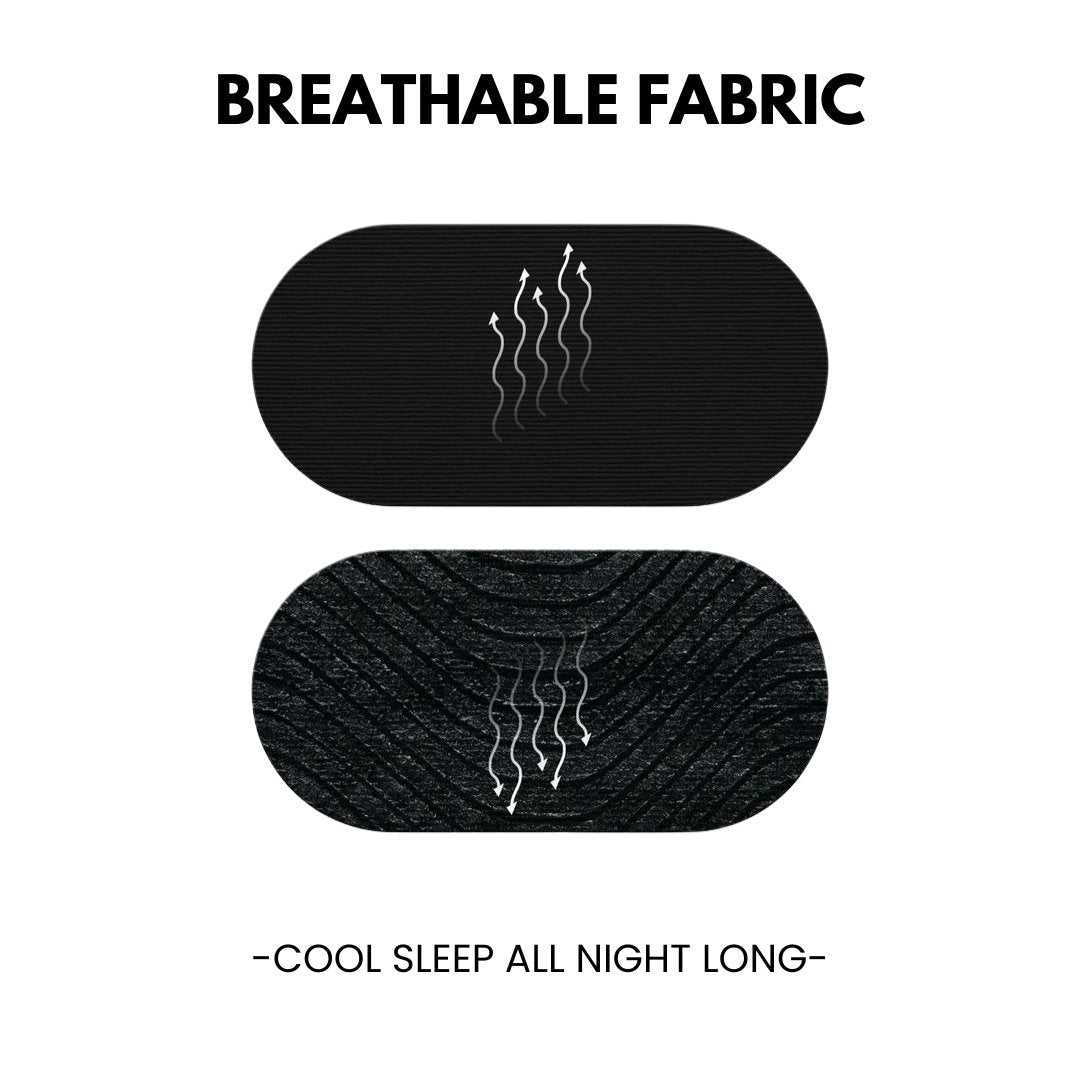
Breathable construction. A non-breathable tape traps moisture between the tape and skin. Moisture weakens adhesive bonds. Over eight hours, that moisture accumulation can reduce holding power enough for pillow friction to finish the job. Breathable materials let moisture wick away, keeping the adhesive surface drier and more effective throughout the night.
How Titan's Bamboo Silk Handles Side Sleeping
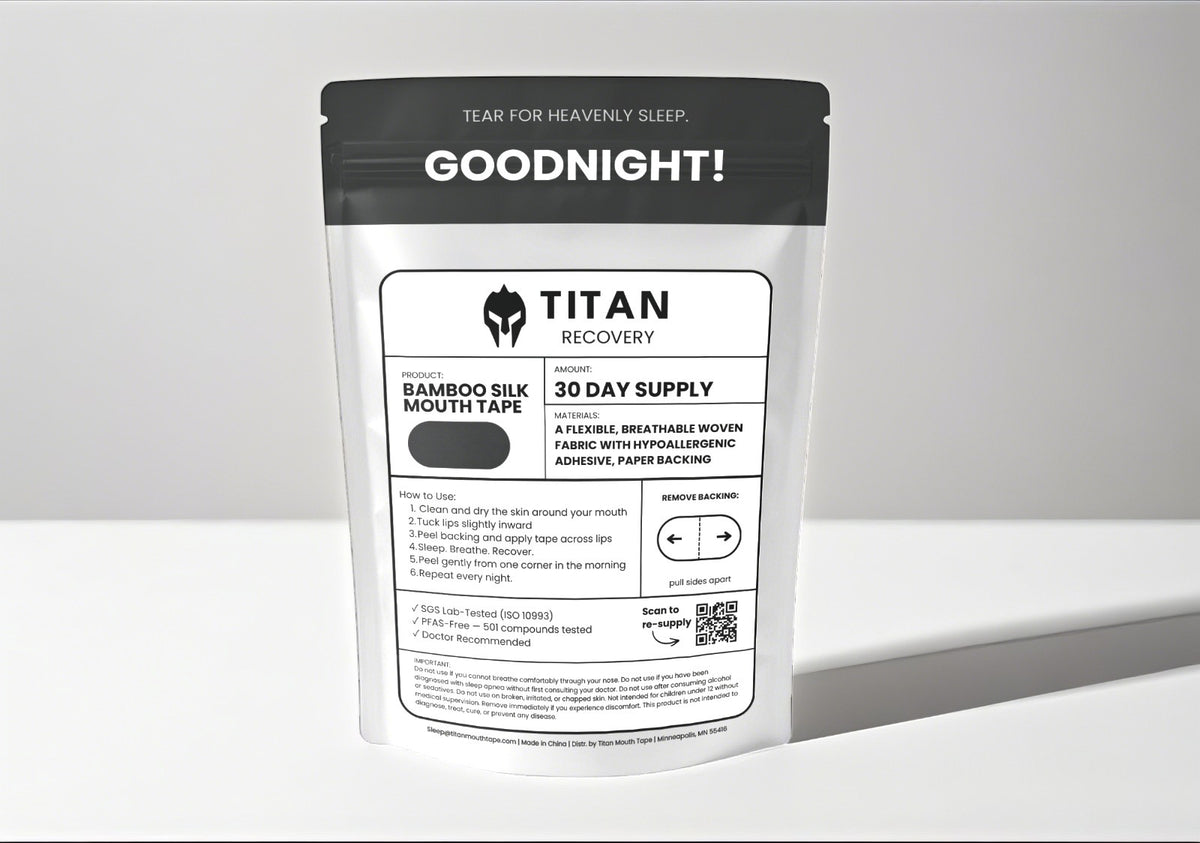
We designed Titan Mouth Tape with side sleepers in mind — because roughly 60% of adults sleep on their side, and a tape that only works for back sleepers is a tape that fails the majority of its users.
The bamboo silk fabric is naturally flexible and breathable. It conforms to the curves around your mouth rather than sitting on top of them with rigid edges. When your face presses into a pillow, the tape moves with your skin instead of catching and peeling. The surface is smooth, not textured, which means pillow fabric slides over it rather than gripping it.
The medical-grade adhesive is pressure-activated and designed for all-night facial adhesion. It bonds more strongly the longer it's in contact with skin, which means it actually gets more secure as the night progresses — not less. That's the opposite of what happens with cheap adhesives that dry out and lose grip over time.
The result: side sleepers consistently report that the tape is right where they left it when they wake up. If you've tried other tapes and found them stuck to your pillow in the morning, the material and adhesive are the difference. More detail on why mouth tape falls off and how to fix it.
Application Tips for Side Sleepers
Even with the right tape, application technique matters. Side sleepers should pay extra attention to these steps:
Clean and dry the area thoroughly. This matters for everyone, but it matters more for side sleepers because you're starting with less margin. Any lip balm, moisturizer, or residual moisture on the skin weakens the adhesive bond, and pillow friction will exploit that weakness. Wash the area with water, pat it completely dry, and make sure there's no product residue on or near your lips.
Press firmly for a full ten seconds. Pressure-sensitive adhesive bonds more strongly when you press it against the skin and hold. Most people give the tape a quick push and move on. That extra time — especially along the edges — creates a stronger initial bond that resists peeling. Work from the center outward, paying special attention to the edges on the side you typically sleep on.
Extend slightly past the lip corners. Adequate coverage provides more adhesive surface area, which means more total holding force. The tape should extend just beyond the corners of your mouth on both sides. If the tape barely covers your lips, you're giving the adhesive less material to work with and the pillow more opportunity to peel an edge.
Consider starting on your back. Even if you roll over within minutes, starting on your back gives the adhesive uninterrupted contact to fully activate before you turn onto your side. A small detail, but it helps during the first few nights.
For a full walkthrough, the step-by-step mouth taping guide covers everything from skin prep to removal.
Combining Mouth Tape with Nasal Strips for Side Sleepers
Side sleepers who want the full Titan Sleep System — mouth tape plus TitanAir Nasal Strips — should know about one side-sleeping-specific consideration: nostril compression.
When you sleep on your side, the nostril closer to the pillow gets partially compressed by the weight of your head. This slightly narrows the airway on that side. It's normal, and your body compensates by routing more airflow through the upper nostril. But if you already have any nasal congestion or a mild deviated septum, that compression can make the pillow-side nostril feel blocked.
A nasal strip helps by mechanically holding the nasal passages open, which partially counteracts the compression effect. The strip keeps both nostrils wider than they'd be on their own, so even the compressed pillow-side nostril maintains better airflow. This is why the combination of mouth tape and nasal strips tends to work especially well for side sleepers — the strip compensates for the one drawback of side sleeping (nostril compression) while the tape locks in nasal breathing for the full night.
The strip sits on the bridge of the nose, well above the pillow contact zone, so friction isn't a concern.
Frequently Asked Questions
Does mouth tape stay on for side sleepers?
Yes, with the right tape and proper application. Purpose-built mouth tape with medical-grade adhesive and flexible fabric handles pillow friction without peeling. The key factors are clean, dry skin, firm pressing for ten seconds, and adequate coverage past the lip corners. Generic tape fails more often for side sleepers because it wasn't designed for overnight pillow contact.
Which side is better for mouth taping — left or right?
The tape itself doesn't care which side you sleep on. If you have a known deviated septum or one nostril that's naturally more congested, you may find it more comfortable to sleep with that side up (away from the pillow) so the less restricted nostril isn't the one being compressed. Otherwise, either side works equally well. The tape stays on regardless of orientation.
Will mouth tape stick to my pillow and pull off?
With properly applied quality tape, no. The adhesive on sleep-specific mouth tape is designed to bond to skin, not fabric. Even during position changes, a flexible tape like Titan Mouth Tape conforms to your face and moves with your skin rather than catching on the pillowcase. If you've experienced this with other tapes, the problem is usually rigid material, weak adhesive, or insufficient skin prep — not the sleeping position.
Should side sleepers use a specific pillowcase material?
Silk or satin pillowcases create less friction than cotton, which can marginally improve tape retention for side sleepers. That said, good mouth tape with proper application holds all night on a standard cotton pillowcase. A slippery pillowcase is a nice-to-have, not a requirement. If you're already using a silk pillowcase for skin or hair benefits, it's a bonus for mouth taping too.
Can I use mouth tape if I switch sides during the night?
Absolutely. Most side sleepers change position multiple times per night, and the tape handles it. Each position change creates a brief moment of friction as your face moves across the pillow, but a well-adhered flexible tape withstands these transitions. If you're a particularly active sleeper, spend a few extra seconds pressing the tape edges firmly during application — that extra adhesive activation pays off through a restless night.
The Bottom Line
Side sleeping and mouth taping are not only compatible — they're a strong combination. You avoid the jaw-dropping gravity problem that back sleepers deal with, and pillow friction is completely manageable with the right tape and proper application. Clean skin, firm pressing, adequate coverage, and a tape built for overnight facial adhesion. That's the formula.
Titan Mouth Tape is built for this. The bamboo silk material flexes with your face instead of catching on the pillow, and the medical-grade adhesive gets stronger as the night goes on. Start with a 30-day supply for $34.95, or lock in 11% off with Subscribe and Save. If you want the full system, pair it with TitanAir Nasal Strips to keep both nostrils open — especially the one pressed against the pillow.
Doctor Recommended: "As a maxillofacial surgeon and dentist, I recommend Titan Mouth Tape. Nasal breathing during sleep is essential for airway health and deep restorative rest. Titan's bamboo silk design is the most comfortable and effective mouth tape I have tested. If you struggle with snoring, dry mouth, or poor sleep quality, this is the simplest change you can make for your health." — Dr. Francois P., MD, DDS — Maxillofacial Surgeon
Lab-Tested Safety: Titan's adhesive is independently tested to ISO 10993 medical device standards. Non-toxic (95% cell viability). Non-allergenic (0% reaction rate). Non-irritating (score 0.0/8.0). PFAS-free — 501 compounds tested, zero detected. See full test results →
Try the complete system tonight. Titan Mouth Tape (bamboo silk, SilkSeal™ adhesive) + TitanAir Nasal Strips. Free shipping. 30-night Better Sleep Guarantee. Shop Titan Mouth Tape → · Shop TitanAir Nasal Strips →