Bamboo Silk Mouth Tape: Why the Material Matters More Than Anything Else
Share
Not all mouth tape is made from the same material. And the material is the reason most mouth tape fails.
The adhesive gets the attention — does it hold, does it irritate, is it tested. But the material the adhesive sits on determines everything else: whether the tape is comfortable enough to wear all night, whether it breathes or traps moisture, whether it works on facial hair, whether it conforms to the curves of your face or fights them, and whether you actually keep using it after the first week.
Most mouth tape is made from plastic film, medical paper, or kinesiology tape. Bamboo silk is fundamentally different from all three — and the difference is not marketing. It is material science.
What Bamboo Silk Actually Is
Bamboo silk is a woven textile made from processed bamboo fiber. The bamboo is broken down into cellulose, extruded into fine threads, and woven into a fabric with a smooth, rounded cross-section — which is what gives it the silk-like feel without using animal-derived silk.
The resulting fabric has properties that matter specifically for overnight facial wear:
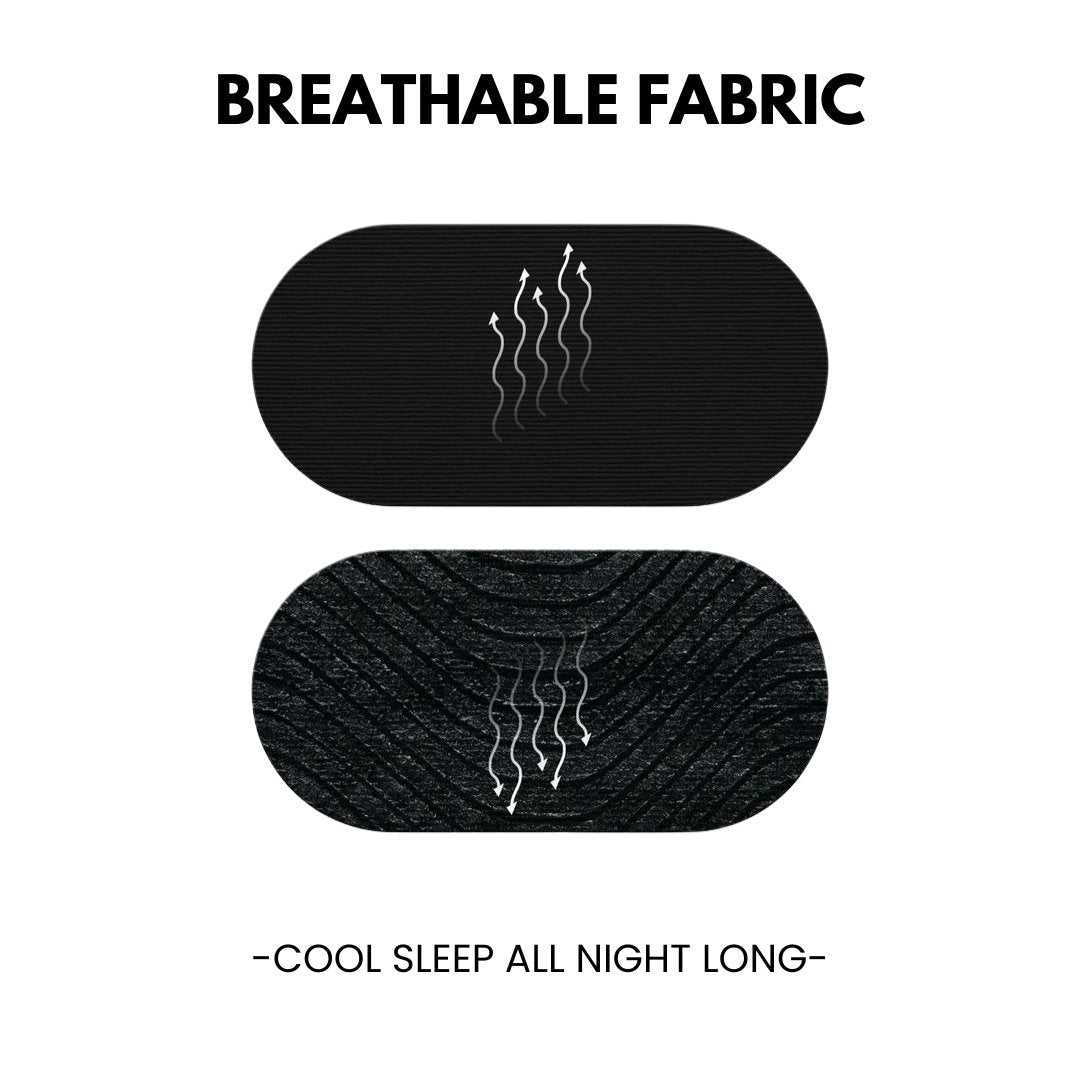
Breathability. Bamboo silk is a woven fabric with natural micro-gaps between fibers. Air passes through the material — unlike plastic film, which creates a sealed, non-breathable layer against the skin. This breathability prevents the moisture trap that causes adhesive degradation and skin irritation with non-woven materials.
Antibacterial properties. Bamboo fiber contains a naturally occurring antimicrobial agent called "bamboo kun." Research published in the Journal of Family Ecology and Consumer Sciences found that bamboo textiles retained antibacterial properties even after multiple wash cycles. For a product that sits on your face for 8 hours in warm, moist conditions — conditions that normally promote bacterial growth — this is a meaningful material advantage.
Softness. The rounded cross-section of bamboo silk fibers produces a smoother surface than the flat, angular cross-sections of synthetic fibers or cotton. This is why bamboo silk feels softer against skin — the fibers have less surface friction. On the perioral area (the thin, sensitive skin around the lips), lower friction means less irritation, less awareness of the tape, and a faster transition to forgetting it is there.
Conformability. Bamboo silk drapes. It conforms to the three-dimensional contours of the face — the curve of the lips, the angle of the jaw, the texture of facial hair — rather than sitting rigidly on the surface. This conformability is what allows the adhesive beneath the fabric to make contact with skin even when facial hair, lip shape, or jaw structure would prevent a rigid material from sealing.
Bamboo Silk vs. Every Other Mouth Tape Material
Bamboo silk vs. plastic film
Most mass-market mouth tape — especially the brands that flood Amazon — uses thin plastic film as the substrate. Plastic is cheap to manufacture, easy to die-cut into shapes, and simple to apply adhesive to.
The problems with plastic on your face for 8 hours:
Non-breathable. Plastic film creates a sealed layer. Moisture from your skin and breathing has nowhere to go. It builds between the adhesive and your skin, weakening the bond (the tape falls off) and creating the warm, moist conditions that promote skin irritation and bacterial growth.
Rigid. Plastic film does not drape or conform. It sits flat on the surface of your face — which means it cannot follow the curves of your lips, cannot work around facial hair, and cannot maintain a complete seal as your face moves during sleep.
Uncomfortable. Plastic against skin feels like plastic against skin. Most people are aware of plastic tape on their face for the entire night. This constant low-level awareness disrupts the relaxation response and makes it harder to fall asleep — and more likely that you rip the tape off at 2am.
Bamboo silk solves all three: it breathes (moisture escapes through the weave), it drapes (conforms to facial contours and hair), and it disappears (the softness crosses the comfort threshold within minutes).
Bamboo silk vs. medical paper tape (3M Micropore)
Medical paper tape is the Reddit-recommended budget option. It is cheap, available at every drugstore, and technically holds the mouth closed.
The problems with paper tape for nightly facial use:
Weak adhesion in moisture. Paper tape adhesive was designed for securing gauze on dry skin during the day. In the warm, moist environment of overnight facial wear, the adhesive weakens progressively. By hour 4-5, the edges lift. By morning, the tape is on the pillow. This is the most common reason people conclude mouth tape does not work — the paper tape failed, not the practice.
Curls at the edges. Paper tape is thin and has no structural memory. The edges curl inward over time, breaking the seal and creating gaps where air escapes. You end up mouth breathing through the gaps while the center of the tape stays on — defeating the purpose entirely.
Cannot handle facial hair. Paper tape sits on top of facial hair. It cannot drape around individual hairs or reach the skin beneath. For any man with stubble, a goatee, or a beard, paper tape is effectively unusable.
Not tested for overnight facial use. 3M Micropore is a medical product designed for wound care. It has not been tested for repeated overnight application on the perioral area. Using it this way is off-label — and the adhesive was never formulated for this exposure profile.
Bamboo silk holds through moisture (the adhesive is formulated for warm, moist conditions), does not curl (the woven fabric has structural integrity), works on facial hair (the fabric drapes around hairs), and is specifically tested for overnight facial wear.
Bamboo silk vs. kinesiology tape (KT tape)
Kinesiology tape is what most "budget" mouth tape brands repackage. It is athletic tape designed for knees, shoulders, and ankles — large, flat, often-shaved surfaces under athletic stress.
The problems with athletic tape on your face:
Aggressive adhesive. KT tape adhesive is designed to hold through sweat and athletic movement on body parts. On facial skin — which is thinner, more sensitive, and more permeable — the adhesive is too aggressive. It causes redness, irritation, and painful removal. On facial hair, it bonds to the hair fibers and rips them out on removal.
Thick and rigid. Kinesiology tape is significantly thicker than purpose-built sleep tape. It feels heavy and foreign on the face. The thickness also prevents it from conforming to lip contours — it sits on top of the face rather than blending with it.
Residue. KT tape adhesive frequently leaves sticky residue on the skin — especially after 8 hours of warm contact. This residue requires scrubbing or oil to remove, adding an unpleasant morning routine to what should be a simple peel-and-go experience.
Bamboo silk has a gentle adhesive formulated for facial skin (not athletic joints), is thin and conformable (feels like nothing), and removes cleanly (zero residue).
Bamboo silk vs. silicone strips
Some mouth tape brands use silicone-based adhesive on a silicone or silicone-coated substrate. Silicone is marketed as "gentle" and "skin-friendly."
The problem: silicone is gentle because it does not bond strongly. On dry, flat, hairless skin, silicone adhesive may hold adequately. On facial hair, on moist skin, on skin that moves during sleep — silicone loses adhesion. The tape migrates, lifts at the edges, and falls off during the night.
Silicone is also non-breathable when used as a solid substrate. It creates the same moisture-trapping environment as plastic film.
Bamboo silk with a non-silicone adhesive (like SilkSeal) provides the gentleness of silicone (non-irritating, tested to ISO 10993) with the holding power that silicone cannot deliver.
Why the Material Determines Whether You Keep Using It
This is the part that matters most commercially — and most personally.
Mouth taping works. The science behind nasal breathing is well-supported. The benefits — no dry mouth, reduced snoring, better sleep quality, no sore throat — are reported consistently across studies and user experience.
But benefits only accrue if you actually wear the tape every night. And compliance is determined by the material.
If the tape is uncomfortable — you quit after a week. If it falls off — you conclude it does not work. If it irritates your skin — you stop using it. If it rips out your beard — you never try again. In every case, the practice was sound. The material failed.
Bamboo silk is the material that removes these failure modes. It is comfortable enough to forget. It holds through the night. It does not irritate. It works on beards. It removes cleanly. The compliance rate stays high because the nightly experience is effortless — and effortless is the only thing that becomes a permanent habit.
What to Look for in Bamboo Silk Mouth Tape
Not all bamboo silk mouth tape is the same. The material is one variable. The adhesive is another. Here is the complete checklist:
Material verified as bamboo silk. Some brands say "bamboo" but use a bamboo-derived rayon blend that does not have the same properties. True bamboo silk has the characteristic softness, drape, and breathability described above.
Adhesive independently tested. The bamboo silk is the backing. The adhesive is the part that touches your skin — and it should be tested under ISO 10993 for cytotoxicity, skin sensitization, and skin irritation. Published results from an accredited lab. Not marketing language.
PFAS screening. The finished tape — not just the adhesive component — should be screened for per- and polyfluoroalkyl substances. 501 compounds is the current comprehensive screening standard.
Full-seal design. No vent hole. A vent allows mouth breathing through the gap, defeating the purpose. The tape should create a complete seal across the lips.
Beard-compatible. If the bamboo silk is truly woven and conformable, it should work on facial hair without modification. If the brand says "shave first" or "trim the mustache," the material is not performing as bamboo silk should.
No logo on the tape. Ink on adhesive can cause contact irritation with repeated nightly use. A clean, unbranded strip is safer and looks better.
30-day guarantee minimum. Long enough to evaluate whether the material and adhesive work for your face, your beard, your skin, and your sleep.
The Material Is the Product
Every mouth tape brand talks about nasal breathing, sleep quality, and snoring reduction. These benefits come from the practice — keeping the mouth closed during sleep. Every tape that stays on all night delivers these benefits.
The question is which tape stays on all night, on your face, with your skin type, with your facial hair, without irritation, without residue, without discomfort — consistently enough that you use it every single night for months and years.
That question is answered by the material. And the material that answers it best is bamboo silk.
Doctor Recommended: "As a maxillofacial surgeon and dentist, I recommend Titan Mouth Tape. Nasal breathing during sleep is essential for airway health and deep restorative rest. Titan's bamboo silk design is the most comfortable and effective mouth tape I have tested. If you struggle with snoring, dry mouth, or poor sleep quality, this is the simplest change you can make for your health." — Dr. Francois P., MD, DDS — Maxillofacial Surgeon
Lab-Tested Safety: Titan's adhesive is independently tested to ISO 10993 medical device standards. Non-toxic (95% cell viability). Non-allergenic (0% reaction rate). Non-irritating (score 0.0/8.0). PFAS-free — 501 compounds tested, zero detected. See full test results →
Try it tonight. Bamboo silk. SilkSeal adhesive. Beard-friendly. No logo on the tape. Free shipping. 30-night Better Sleep Guarantee. Shop Titan Mouth Tape → · Shop TitanAir →
The Bottom Line
The material your mouth tape is made from determines whether you use it for one night or every night. Bamboo silk is breathable, hypoallergenic, moisture-wicking, and gentle on skin and facial hair. It is the only material that checks every box for something you wear on your face for eight hours.
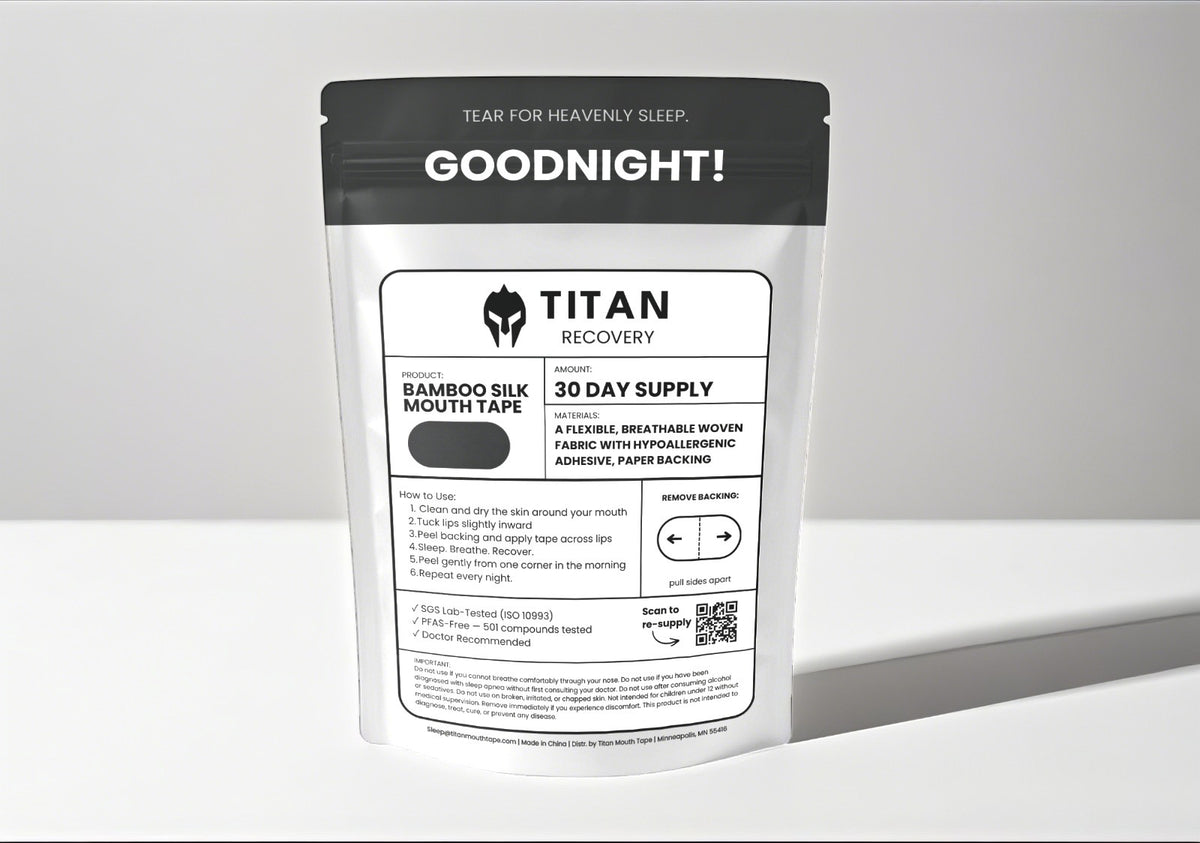
Titan Mouth Tape is made from bamboo silk with a medical-grade SilkSeal adhesive, tested to ISO 10993 standards, PFAS-free, and designed specifically for overnight wear. It starts at under $0.75 per night. If you have tried cheaper tapes and quit because of discomfort, irritation, or residue, the material was the problem, not the concept.