Bad Sleep Is Costing You Everything. Here’s the Proof
Share
You're not lazy. You're not unmotivated. You're not getting old.
You're sleeping wrong.
And it's costing you more than you realize — at work, at the gym, in your relationships, and in the mirror.
Your Brain on Bad Sleep
Sleep is when your brain takes out the trash. Literally.
During deep sleep, your brain's glymphatic system activates — a network of channels that flushes out metabolic waste products, including beta-amyloid, the protein associated with Alzheimer's disease. This system is almost entirely inactive while you're awake. It only runs during sleep, primarily during deep (Stage 3) sleep.
When you don't get enough deep sleep, the waste accumulates. The short-term effects are immediate: brain fog, poor decision-making, slower reaction times, difficulty concentrating, impaired memory. You're not dumber — you're cognitively impaired by toxic buildup that your brain didn't have time to clear.
Studies show that even one night of poor sleep reduces cognitive performance by 20-30%. After five consecutive nights of poor sleep, cognitive impairment is comparable to being legally drunk. Your brain is operating at a blood alcohol level of 0.06-0.1% — and you're driving to work, making financial decisions, and parenting in that state.
The long-term effects are worse. Chronic poor sleep is one of the strongest modifiable risk factors for cognitive decline and dementia. Research from the National Institutes of Health found that people who sleep fewer than six hours per night in midlife have a 30% higher risk of developing dementia.
This isn't about how many hours you're in bed. It's about whether those hours produce the deep sleep your brain needs to clean itself.
Your Body on Bad Sleep
If you work out, sleep determines whether you get results.
Human growth hormone — the primary driver of muscle repair, tissue regeneration, and cellular recovery — is released almost exclusively during deep sleep. If your sleep is fragmented, if you're spending most of the night in light sleep stages, your growth hormone output drops. Your muscles don't recover fully. Your connective tissue doesn't rebuild. Your body breaks down faster than it repairs.
This is why two people can follow the same training program and get vastly different results. One sleeps deeply. The other sleeps lightly — mouth open, airway partially obstructed, cycling in and out of light sleep all night. Same effort in the gym. Completely different recovery overnight.
Sleep also regulates the hormones that control hunger and body composition. Leptin (the hormone that tells you you're full) decreases with poor sleep. Ghrelin (the hormone that tells you you're hungry) increases. After just two nights of restricted sleep, hunger increases by 24% and cravings for high-calorie, high-carb foods spike.
This is why sleep-deprived people gain weight even when their diet and exercise haven't changed. It's not willpower. It's hormones — hormones that are directly regulated by sleep quality.
Your Mood on Bad Sleep
The amygdala — the part of your brain that processes emotional reactions — becomes 60% more reactive after a night of poor sleep. That's not a typo. Sixty percent more reactive to negative stimuli.
At the same time, the prefrontal cortex — the part responsible for rational thought, impulse control, and emotional regulation — shows decreased activity. The result is a brain that's more emotionally reactive and less equipped to manage those reactions.
This is why everything feels harder after a bad night. Small frustrations feel like crises. Minor disagreements become arguments. Your patience disappears. Your ability to see someone else's perspective shrinks. You're not a worse person — your brain is literally less capable of emotional regulation.
Chronic sleep deprivation doesn't just make you irritable. It fundamentally changes your emotional baseline. Studies show that people with ongoing sleep problems are five times more likely to develop depression and twenty times more likely to develop an anxiety disorder.
The relationship between sleep and mental health isn't a one-way street — anxiety and depression also disrupt sleep. But the research increasingly suggests that sleep is the foundation, not the symptom. Fix the sleep, and the mood often follows.
Your Relationships on Bad Sleep
Nobody talks about this, but sleep quality predicts relationship satisfaction more reliably than almost any other variable researchers have studied.
When one or both partners sleep poorly, empathy drops. Conflict increases. Gratitude decreases. The ability to accurately read a partner's emotional state declines. Small gestures that would normally be noticed and appreciated are missed entirely.
Research from UC Berkeley found that couples who slept poorly were significantly more likely to fight the next day — and the fights were more hostile, less productive, and harder to resolve. Not because the issues were bigger, but because the brains managing the conflict were impaired.
Add snoring to the mix and the damage compounds. One partner snores. The other lies awake. Resentment builds. They move to separate rooms. The physical and emotional intimacy that comes from sharing a bed disappears. And both partners are too tired to recognize what's happening or do anything about it.
Better sleep doesn't just make you feel better individually. It makes you a better partner. A more patient parent. A more present friend. Sleep is the invisible infrastructure of every relationship in your life.
Your Appearance on Bad Sleep
This one is vain and it's valid.
Sleep deprivation shows on your face faster than almost any other health variable. Studies have shown that people can accurately identify sleep-deprived faces from photographs — describing them as having more drooping eyelids, redder eyes, darker under-eye circles, paler skin, more wrinkles, and more downturned mouths.
The mechanisms are real. During deep sleep, blood flow to the skin increases. This is when collagen production happens, when skin cells regenerate, when damage from UV exposure and environmental stress is repaired. Growth hormone — released during deep sleep — drives this process.
When deep sleep is disrupted, collagen production drops. Skin loses elasticity faster. Dark circles deepen because the blood vessels under the thin periorbital skin become more visible as the skin thins. Cortisol — which stays elevated during poor sleep — breaks down collagen directly.
No serum, cream, or skincare routine can outperform the recovery that happens during deep sleep. You can spend $200 a month on products that promise to repair your skin, or you can fix the sleep that actually does the repairing.
Your Immune System on Bad Sleep
Your immune system runs maintenance during sleep. T-cells — the white blood cells that identify and destroy infected cells — are produced and deployed during sleep. Cytokines — the signaling proteins that coordinate immune responses — are released during sleep. Antibody production ramps up during sleep.
After just one night of poor sleep (fewer than 6 hours), natural killer cell activity drops by up to 70%. These are the cells responsible for detecting and destroying virus-infected cells and early cancer cells. One night. Seventy percent.
Chronically poor sleepers get sick more often, stay sick longer, and respond less effectively to vaccines. A Carnegie Mellon study found that people who slept fewer than 7 hours per night were three times more likely to develop a cold after being exposed to the virus compared to those sleeping 8+ hours.
Your immune system doesn't have an off switch you can control. But sleep is the on switch. And if that switch isn't fully engaged every night, your defenses are running at a fraction of their capacity.
Your Lifespan on Bad Sleep
This is the part nobody wants to hear.
Large-scale epidemiological studies consistently show that both short sleep (fewer than 6 hours) and fragmented sleep are associated with increased all-cause mortality. The risk isn't minor. Adults who consistently sleep fewer than 6 hours per night have a 12% higher risk of death from any cause compared to those sleeping 7-8 hours.
The mechanisms are well-documented: chronic sleep deprivation increases blood pressure, promotes systemic inflammation, disrupts glucose metabolism (increasing type 2 diabetes risk), accelerates atherosclerosis, and suppresses immune function. Each of these is an independent risk factor for premature death. Together, they compound.
Sleep isn't a luxury you earn after finishing your to-do list. It's a biological requirement that, when consistently unmet, shortens your life.
The Variable You're Not Controlling
Most people who care about their health control their diet, their exercise, their stress, and their screen time before bed. These all matter.
But almost nobody controls how they breathe during the eight hours they're unconscious.
If your mouth falls open during sleep — and for roughly 60% of adults, it does at some point during the night — you're undermining every other health investment you make. Your brain doesn't fully clean itself. Your muscles don't fully repair. Your hormones don't fully regulate. Your immune system doesn't fully activate. Your skin doesn't fully regenerate.
Not because you didn't sleep long enough. Because you didn't sleep well enough. And the difference between good sleep and bad sleep, for the majority of people, comes down to whether their mouth was open or closed.
Nasal breathing activates the parasympathetic nervous system — the recovery branch. It produces nitric oxide, which improves oxygen absorption. It maintains your airway, reducing snoring and fragmentation. It keeps your saliva flowing, protecting your teeth and gums. It promotes the deep sleep stages where every recovery process described above takes place.
One variable. Closed mouth. Nasal breathing. Everything downstream improves.
The Simplest Health Decision You'll Make This Year
You can spend thousands on a mattress, hundreds on supplements, and hours on sleep hygiene routines. These things help at the margins.
Or you can tape your mouth shut before bed tonight and address the root variable that determines whether your sleep produces recovery or just unconsciousness.
Five seconds to apply. Nothing to ingest. No side effects. No prescription. No subscription required.
Just a body that finally breathes correctly during the eight hours that matter most.
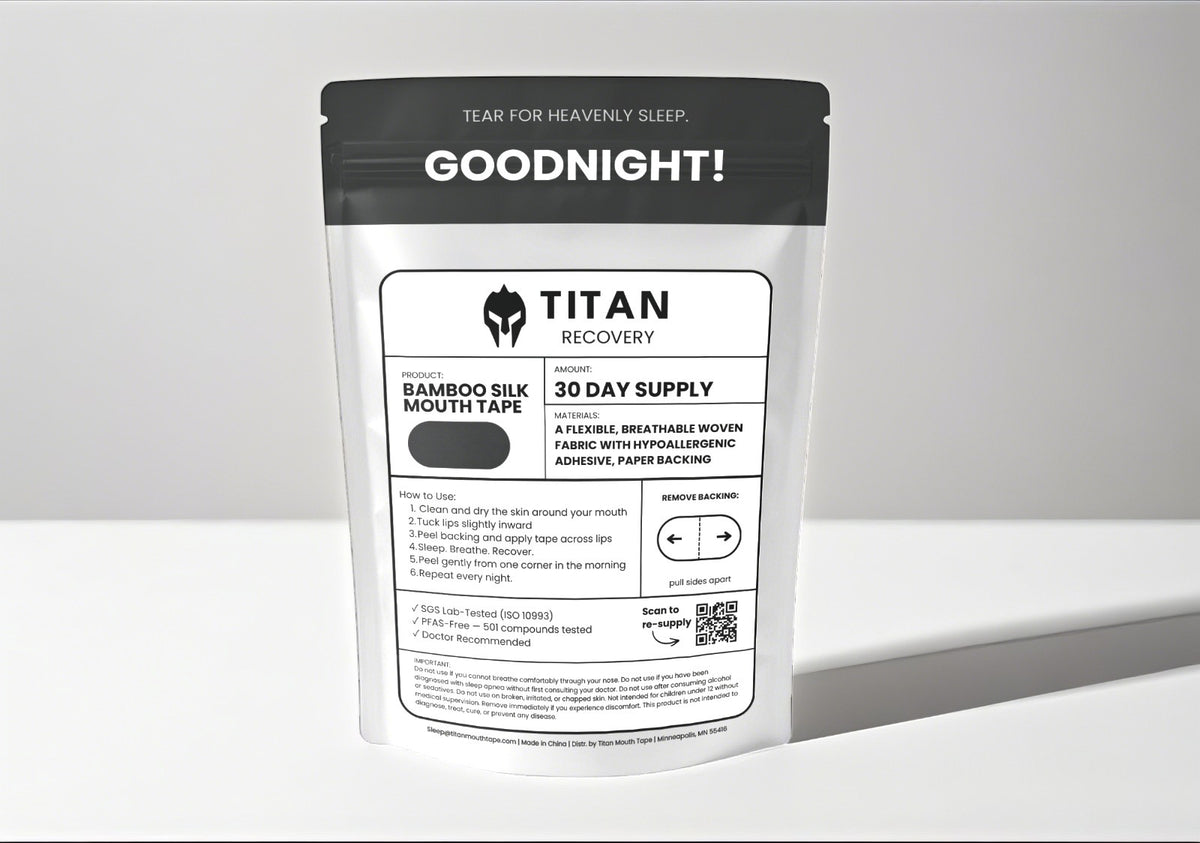
Doctor Recommended: "As a maxillofacial surgeon and dentist, I recommend Titan Mouth Tape. Nasal breathing during sleep is essential for airway health, jaw alignment, and deep restorative rest. Titan's bamboo silk design is the most comfortable and effective mouth tape I have tested." — Dr. Francious Proulx, MD, DDS — Maxillofacial Surgeon
Lab-Tested Safety: Titan's SilkSeal™ adhesive is independently tested by an independent, globally accredited laboratory to ISO 10993 medical device standards. Non-toxic (95% cell viability). Non-allergenic (0% reaction rate). Non-irritating (score 0.0/8.0). PFAS-free — 501 compounds tested, zero detected. compliant with European chemical safety standards — 250 toxic substances screened, all clear. See full test results →
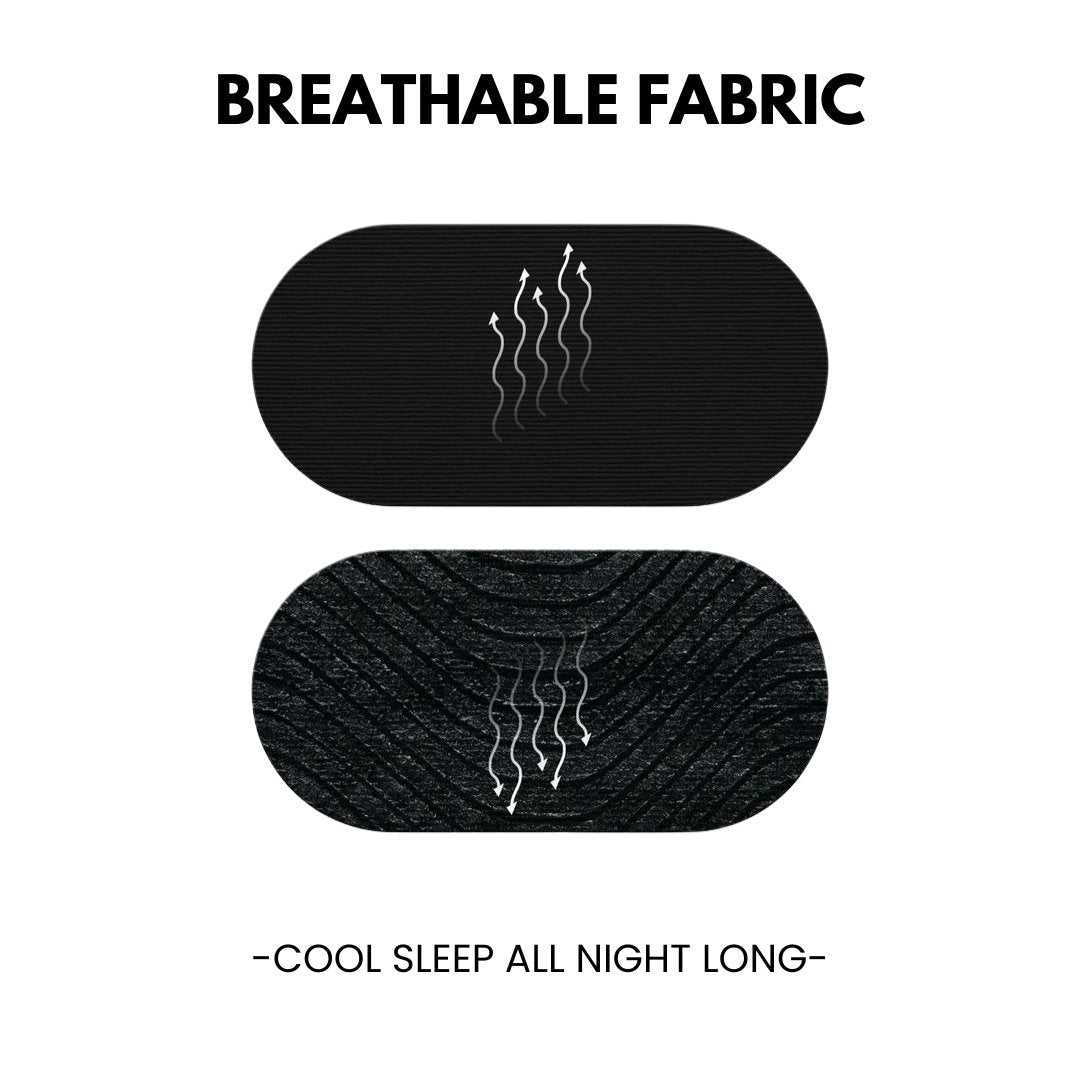
Try it tonight. Bamboo silk. SilkSeal™ adhesive. Beard-friendly. No logo on the tape. Free shipping. 30-night Better Sleep Guarantee. Shop Titan Mouth Tape →
This article is for informational purposes only and does not constitute medical advice. If you have or suspect a sleep disorder or other medical condition, consult a qualified healthcare provider before making changes to your routine.