Why Your Mouth Tape’s Material Matters More Than You Think
Share
Your dentist told you that you grind your teeth. They made a mold of your mouth. Two weeks later, you picked up a custom night guard and wrote a check for $300-700.
You've been wearing it every night since. Your teeth are protected. But your jaw still hurts in the morning. Your partner still says you clench. You still wake up with headaches.
The night guard is doing its job — protecting enamel from enamel. But it's not addressing why your jaw is clenching in the first place.
What if the answer costs $0.72 a night?
What a Night Guard Does (And What It Doesn't)
A custom night guard is a dental appliance — typically made from hard acrylic or dual-laminate material — that sits over your upper or lower teeth. Its purpose is straightforward: prevent your teeth from grinding against each other during sleep.
At this, it's effective. Night guards reduce enamel wear, prevent tooth fractures, protect dental work (crowns, veneers, bonding), and cushion the forces of clenching. If you grind your teeth, a night guard is a reasonable protective measure.
But here's what a night guard doesn't do:
It doesn't stop the clenching. It doesn't reduce jaw muscle activity. It doesn't address the underlying trigger that's causing your jaw to clench and grind in the first place. In fact, some research suggests that for certain individuals, the added bulk of a night guard in the mouth may actually increase clenching activity — because the jaw has something to bite against.
A night guard is a bumper. It absorbs the collision. But the car is still crashing every night.
Why Your Jaw Clenches at Night
The conventional explanation is stress. You're anxious, you carry tension, your jaw clenches as a physical response. And stress is a real contributing factor — nobody disputes that.
But here's what's worth considering: research has found a significant association between sleep-disordered breathing and bruxism (teeth grinding). Studies published in sleep medicine and dental journals suggest that many bruxism events may occur in response to airway compromise during sleep.
The proposed mechanism works like this: when your mouth falls open during sleep, your tongue may drop backward toward your throat. This can narrow the airway. Your brain, detecting increased airway resistance, may trigger a protective reflex — thrusting the jaw forward and clenching the teeth to tighten the muscles around the airway and prevent further collapse.
In other words, your jaw may not be clenching because you're stressed. It may be clenching because your body is trying to keep your airway open.
This doesn't apply to every case. Medications (particularly SSRIs), neurological conditions, and severe anxiety can cause bruxism independently of breathing patterns. But for a meaningful percentage of people who grind and clench, the research suggests airway compromise — often from mouth breathing during sleep — may be a contributing factor.
The Cost Comparison Nobody Makes
Let's talk money, because the math is striking.
Custom night guard: $300-700 from your dentist. Needs replacement every 2-5 years as it wears down from nightly grinding. That's $60-350 per year just for the guard. Plus the dental visits, the impressions, the fitting adjustments.
Over-the-counter boil-and-bite guard: $25-50 from the drugstore. Poorer fit. Less comfortable. May cause jaw alignment issues if poorly fitted. Needs replacement every 3-6 months. That's $50-200 per year.
Mouth tape: $0.62-0.83 per night depending on pack size. A 90-day supply runs about $55-65. Annual cost: roughly $220-260. No dental visits required. No impressions. No fitting. No replacement schedule — you use a fresh strip every night.
But the real cost comparison isn't financial. It's functional.
The night guard protects your teeth from the damage caused by grinding. Mouth tape may help address one of the factors that research suggests contributes to the grinding itself — by keeping your mouth closed, your tongue against the palate, and your airway more open.
One manages the symptom. The other may address a contributing cause.
Can You Use Both?
Yes — and if you currently grind, you probably should.
Don't throw away your night guard. Your teeth need protection while the clenching pattern changes. Here's how to use them together:
Apply the mouth tape first. This holds your lips together and encourages nasal breathing. Then insert your night guard as usual. The tape keeps your mouth closed around the guard. Your tongue stays forward. Your airway may stay more open. The protective clenching reflex may be triggered less frequently.
Over time — we're talking weeks to months, not days — pay attention to your symptoms. Is your jaw less sore in the morning? Are your morning headaches less frequent? Is your night guard showing less wear? Is your mouth moist instead of dry when you wake up?
If the clenching decreases significantly, talk to your dentist about whether the night guard is still necessary. Some people are able to discontinue the guard after establishing consistent nasal breathing during sleep. Others continue wearing both as a precaution. Either way, you're addressing two layers of the problem instead of one.
What Your Dentist Might Not Know
Most dentists are trained to treat bruxism with night guards. It's the standard of care, and it works — for tooth protection. But the connection between breathing patterns during sleep and bruxism is relatively new in dental education. Many practicing dentists graduated before this research became widely discussed.
That's changing. Airway-focused dentistry is a growing field. More dentists are screening for mouth breathing, referring patients for sleep studies, and recognizing that chronic clenching may have a respiratory component — not just a stress component.
If your dentist hasn't asked how you breathe at night, it's worth bringing up. The questions to ask: "Could my grinding be related to how I breathe during sleep?" and "Have you seen patients improve after switching to nasal breathing at night?" You might be surprised by the conversation that follows.
The Signs Your Grinding May Be Breathing-Related
Not all bruxism is connected to airway issues. But if several of the following apply to you, the research suggests breathing during sleep may be worth investigating as a contributing factor:
You wake up with a dry mouth or dry lips. You snore — even lightly. You feel tired despite sleeping enough hours. Your jaw pain is worst in the morning and improves during the day. Your night guard isn't reducing your jaw pain — just protecting your teeth. You've been told you grind but you don't feel particularly stressed. You sometimes wake up briefly during the night for no apparent reason. You have a history of nasal congestion or allergies.
If four or more of those sound familiar, your breathing during sleep is worth addressing — regardless of whether you keep wearing the night guard.
What $0.72 a Night Gets You
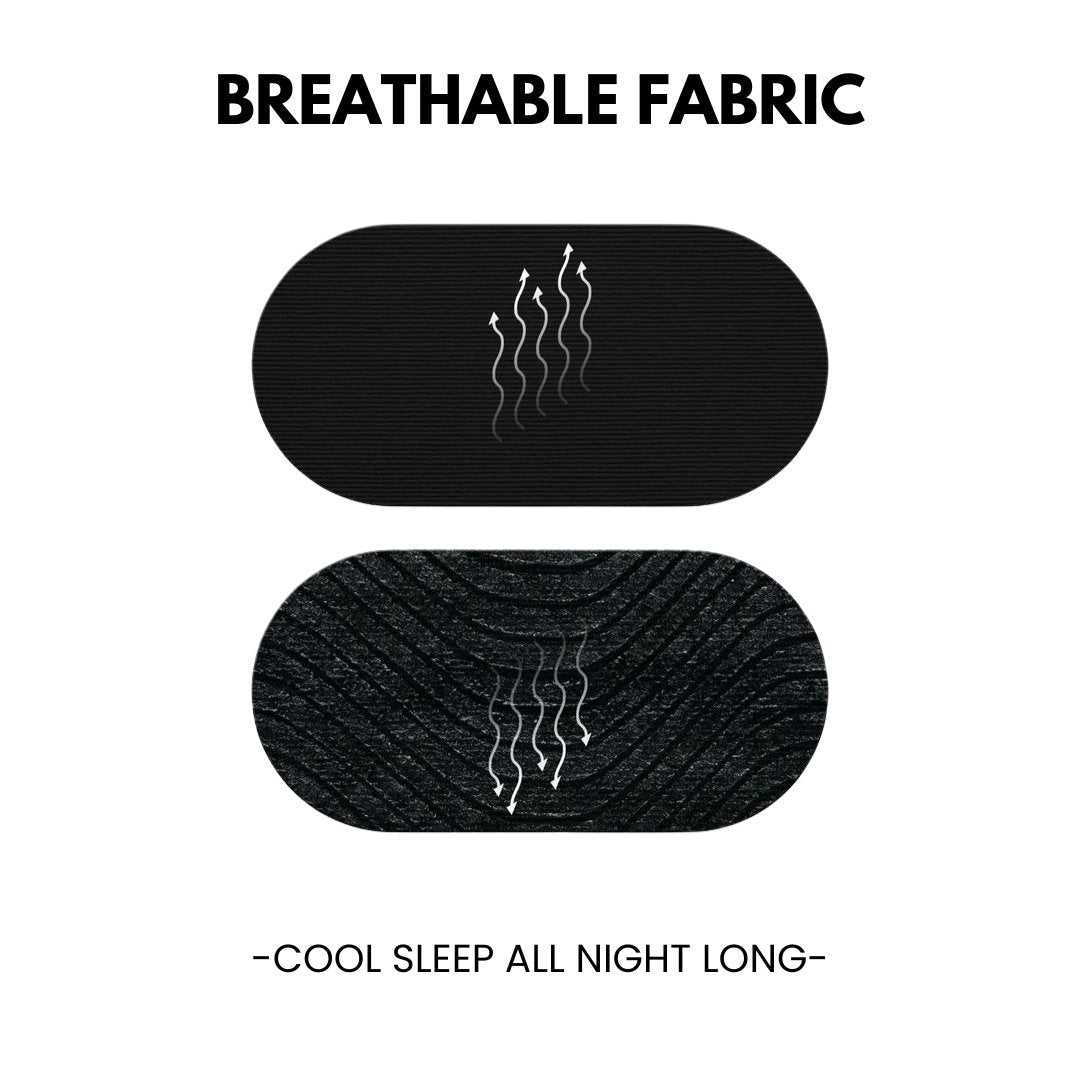
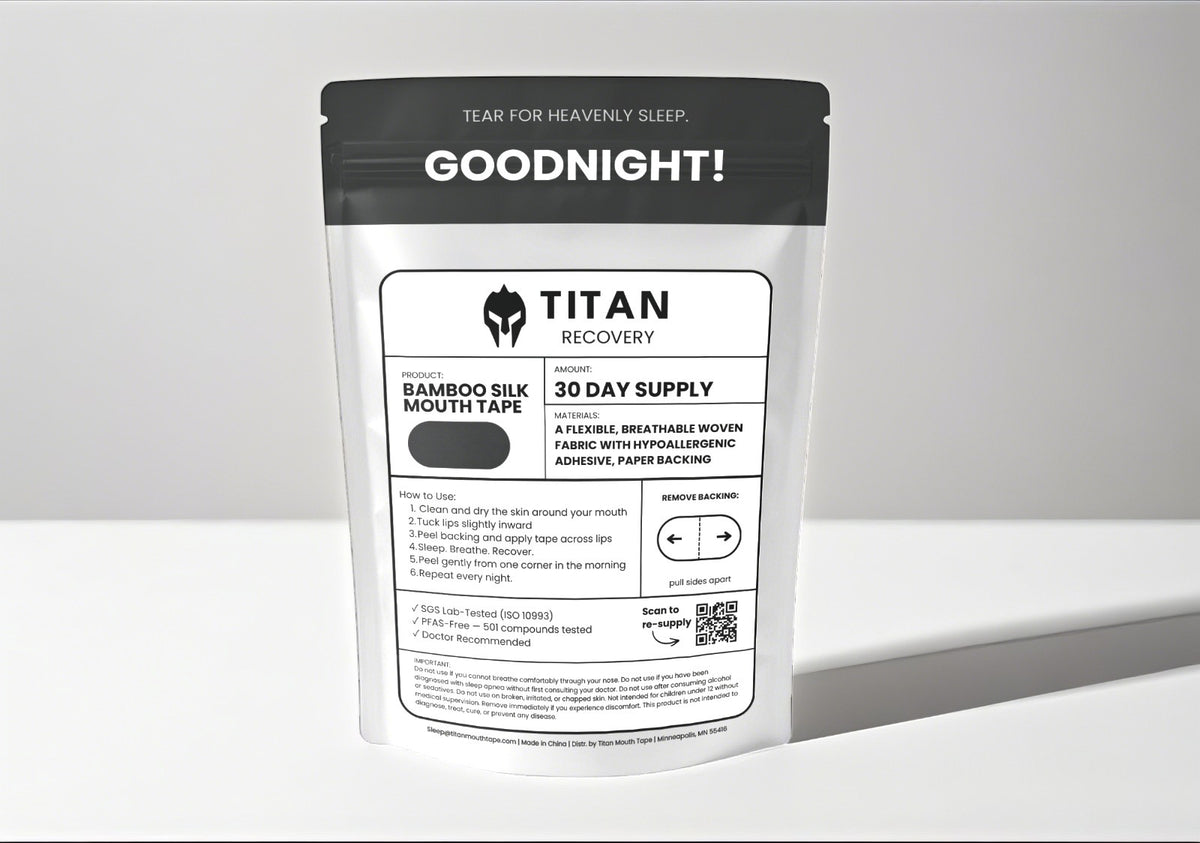
A strip of bamboo silk mouth tape applied before bed. Your lips stay closed. Your tongue rests against the palate. Air flows through your nose — where it's filtered, warmed, humidified, and enriched with nitric oxide.
Your airway may stay more open because the tongue isn't falling backward. The protective clenching reflex may be triggered less often. Your jaw muscles may finally get to rest during sleep instead of working all night. Your nervous system may shift into parasympathetic recovery mode instead of staying in sympathetic stress mode.
And your teeth are protected by a fresh strip of tape every night — no dental impressions, no boiling plastic, no $700 invoice.
The night guard protects your teeth. The tape may help protect your jaw, your sleep, and your airway. Together, they cover more ground than either one alone.
$300 for a bumper. $0.72 for something that may help stop the crash.
Important Disclaimers
Mouth taping is not a treatment for bruxism, TMJ, sleep apnea, or any medical condition. If you grind your teeth, continue wearing your night guard and consult your dentist before making changes to your dental care routine.
If you suspect you have obstructive sleep apnea — characterized by witnessed breathing pauses, gasping during sleep, or extreme daytime sleepiness — see a sleep specialist for evaluation. Sleep apnea requires medical treatment, not tape.
Individual results vary. The relationship between breathing patterns and bruxism is an area of active research. The information in this article is educational and should not be interpreted as medical advice.
Doctor Recommended: "As a maxillofacial surgeon and dentist, I recommend Titan Mouth Tape. Nasal breathing during sleep is essential for airway health and deep restorative rest. Titan's bamboo silk design is the most comfortable and effective mouth tape I have tested. If you struggle with snoring, dry mouth, or poor sleep quality, this is the simplest change you can make for your health." — Dr. Francois P., MD, DDS — Maxillofacial Surgeon
Lab-Tested Safety: Titan's SilkSeal™ adhesive is independently tested to ISO 10993 medical device standards. Non-toxic (95% cell viability). Non-allergenic (0% reaction rate). Non-irritating (score 0.0/8.0). PFAS-free — 501 compounds tested, zero detected. See full test results →
Try it tonight. Bamboo silk. SilkSeal™ adhesive. Beard-friendly. No logo on the tape. Free shipping. 30-night Better Sleep Guarantee. Shop Titan Mouth Tape →