Racing Thoughts at Night: How to Quiet Your Mind

Share
You turn off the light, close your eyes, and your brain decides it's time to review every awkward conversation of the last five years. Racing thoughts at night are one of the most common reasons people lie awake, and the frustrating part is that the harder you try to stop them, the louder they get.
The good news: a racing mind at bedtime is usually a mix of physiology and habit, and both can be changed. Here's why your mind won't shut off, what actually helps you quiet it, and where your breathing fits in.
Why Your Mind Races at Night
You finally stopped moving. All day, work, screens, errands, and conversations keep your attention occupied. At night, the distractions disappear and the unresolved stuff comes forward. Your brain isn't malfunctioning. It's using the first quiet moment it has to process what it set aside.
Your body is still in alert mode. Stress keeps the sympathetic nervous system, the "fight or flight" side, active. Cortisol is supposed to drop in the evening so your body can shift toward sleep. After a stressful day, a late workout, caffeine, or hours of scrolling, that shift can lag. A body that feels switched on produces a mind that feels switched on.
No wind-down. Many people go straight from email, a tense show, or a heated text thread into bed. Your brain doesn't have a switch. It needs a runway, and without one you bring daytime arousal under the covers.
Your bed became a worry spot. If you spend night after night lying there stressing, your brain starts to associate the bed with alertness and rumination instead of sleep. Sleep specialists call this conditioned arousal, and it's one reason the problem can persist long after the original stressor is gone. It's also a big part of why you can feel exhausted and still be unable to sleep.
Fix #1: Build a Real Wind-Down
The goal is to tell your nervous system the day is over. Aim for 30 to 60 minutes of low-stimulation time before bed. It doesn't need to be elaborate, but it does need to be consistent, because the repetition is what teaches your brain the cue.
| When | What to Do | Why It Helps |
|---|---|---|
| 60 min before | Close work email, dim the lights, put the phone out of reach | Cuts the stream of new stimulation and bright light |
| 45 min before | Write down tomorrow's to-do list and any open worries | Gets loops out of your head and onto paper |
| 30 min before | Warm shower, light stretching, or reading something calm | Signals the body to shift toward rest |
| 10 min before | Slow nasal breathing in bed, lights out | Directly nudges the nervous system toward calm |
If you want more ideas for the final stretch, our guide on how to fall asleep fast naturally covers additional techniques.
Fix #2: Get the Worries Out of Your Head
Worry journaling. Earlier in the evening, not in bed, spend 10 minutes writing down what's bothering you and one next step for each item. Studies on bedtime writing have suggested that jotting down a to-do list can help some people fall asleep faster than writing about what they already finished. The idea is simple: your brain can let go of a loop once it trusts the item has been captured.
The cognitive shuffle. This technique, popularized by cognitive scientist Luc Beaudoin, works by occupying your mind with low-meaning, random imagery. Pick a neutral word like "garden," then think of words starting with each letter, visualizing each one briefly: G for goat, A for apple, R for rope. Move on every few seconds. It mimics the disjointed thinking that happens as you drift off, and it crowds out the coherent worrying that keeps you awake. It's not a guaranteed cure, but plenty of people find it more effective than trying to "clear the mind," which rarely works.
Don't argue with the thoughts. Trying to suppress a thought tends to make it more persistent. Noticing it, labeling it ("planning," "worrying"), and returning your attention to your breath is usually more effective than debating it.
Fix #3: Use Stimulus Control (Get Out of Bed)
This is the fix that sounds backwards and works the best for the conditioning problem. If you've been awake and frustrated for what feels like 20 minutes, get out of bed. Go to another dim room, do something quiet and boring (read a paper book, fold laundry, listen to something calm), and return only when you feel sleepy.
The point is to break the link between your bed and wakeful frustration. Over time, the bed becomes a place where you sleep again. Don't watch the clock, and avoid bright screens during this break. Stimulus control is a core component of CBT-I, the cognitive behavioral therapy for insomnia that clinicians commonly recommend as a first-line approach for chronic sleep trouble.
Fix #4: Breathe Your Way Down
This is where most advice stops short, and it's where the physiology gets interesting. Your breathing is one of the few automatic body functions you can also control on purpose, which makes it a direct line into your nervous system.
Slow, relaxed breathing through the nose engages the parasympathetic nervous system, the "rest and digest" side that lowers heart rate and eases arousal. Nasal breathing also slows the pace of each breath and filters, warms, and humidifies the air, and it supports nitric oxide production in the nasal passages. Fast, shallow, open-mouth breathing tends to go with a stressed, keyed-up state. Think about how you breathe when you're anxious versus how you breathe when you're asleep.
That makes slow nasal breathing something close to a physical off-switch for a racing mind. It doesn't erase your worries, but it changes the body state that's feeding them.
The best-known technique is 4-7-8 breathing:
| Step | Count | How |
|---|---|---|
| Inhale | 4 seconds | Quietly through your nose |
| Hold | 7 seconds | Relaxed, no straining |
| Exhale | 8 seconds | Slowly and fully, ideally also through the nose |
Repeat for four rounds. If the holds feel uncomfortable, shorten the counts and keep the same ratio. The long exhale is the useful part. Even if you never feel "calm," giving your attention a slow, countable task leaves less room for the mental replay.
Where Nasal Breathing and Mouth Tape Fit In
Here's the honest connection. You can practice calm nasal breathing for ten minutes before bed, but you can't control what your mouth does once you're asleep. Many people drift into mouth breathing overnight, which can bring dry mouth, snoring, and lighter, more fragmented sleep. Waking at 3 a.m. with a dry mouth and a mind that immediately starts spinning is a very common combination.
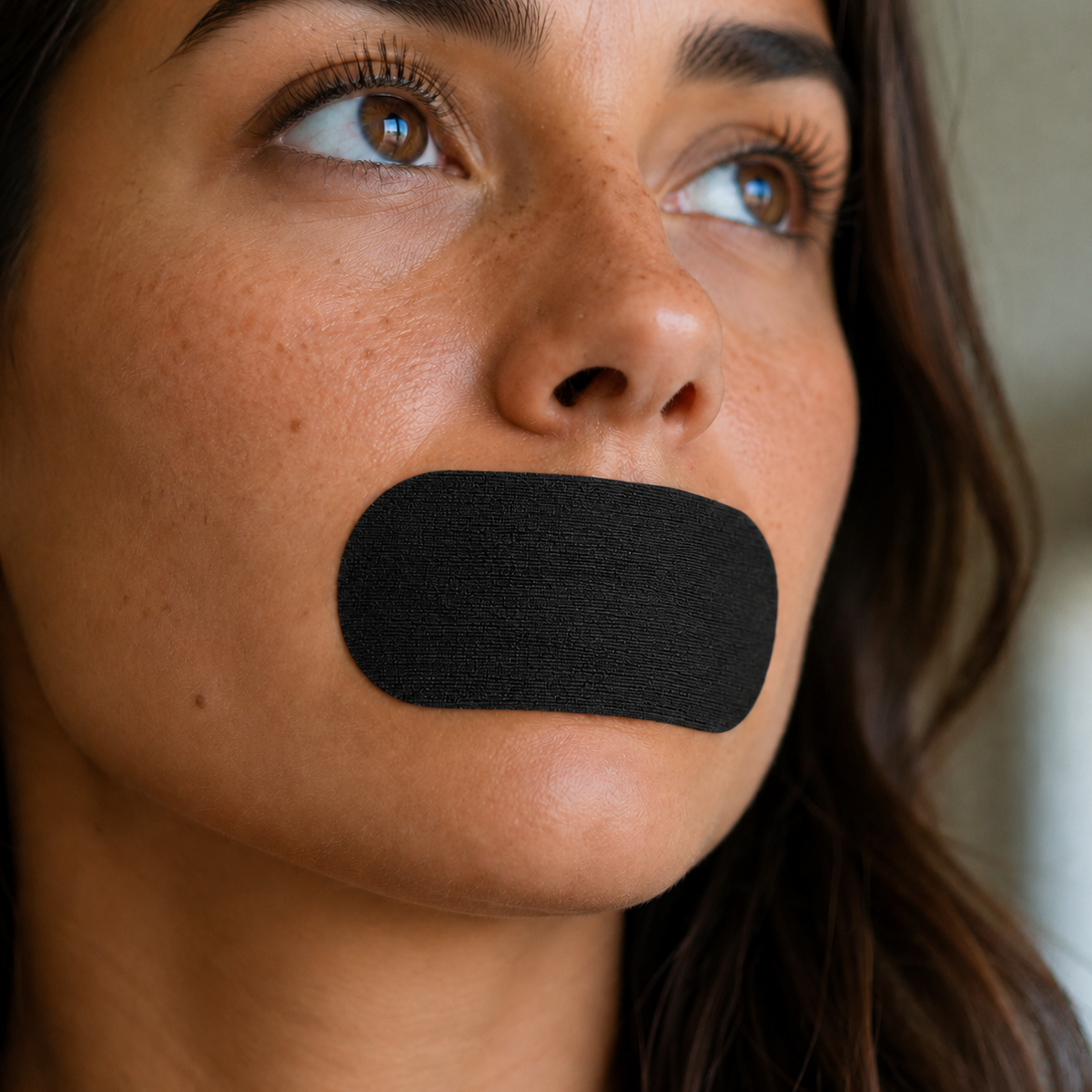
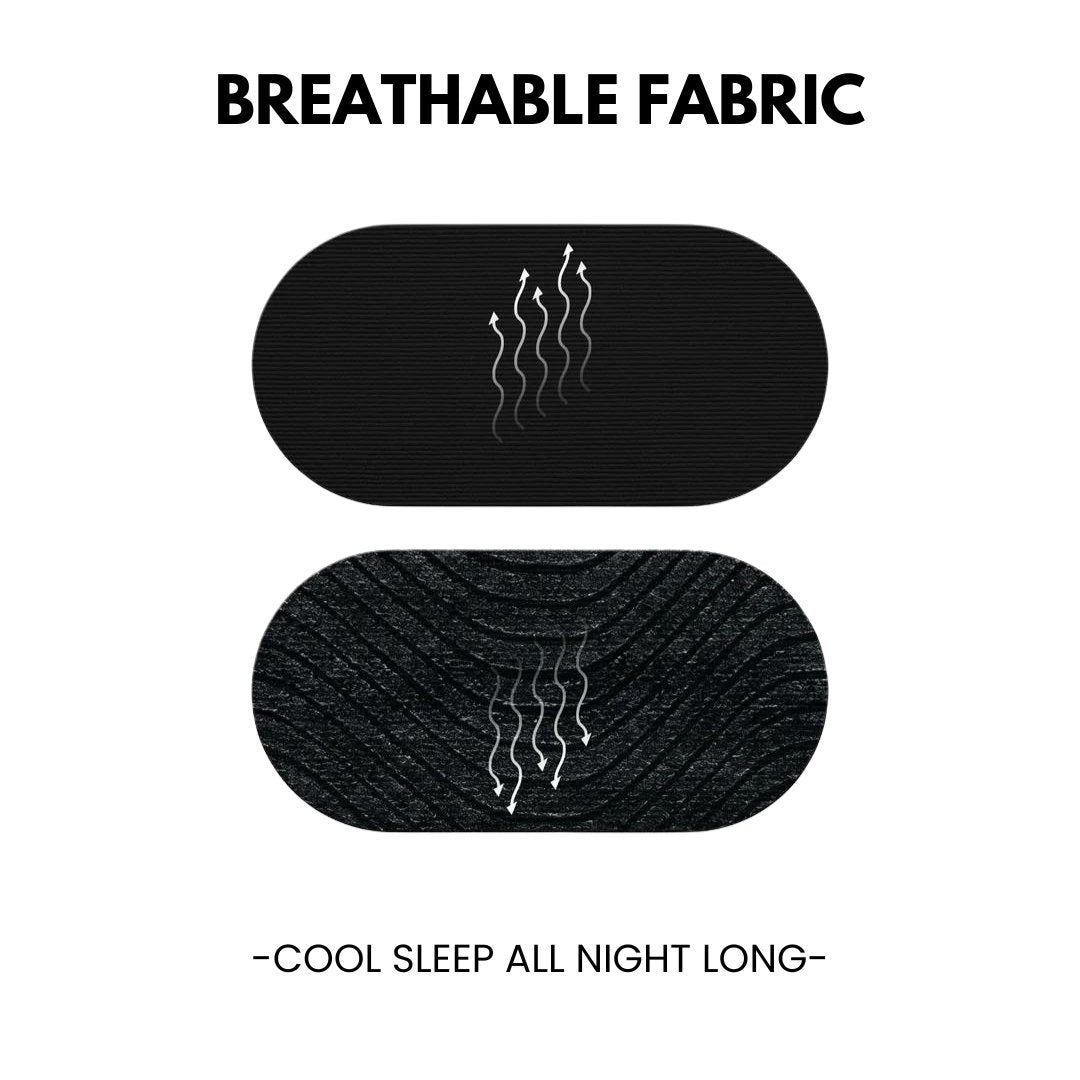
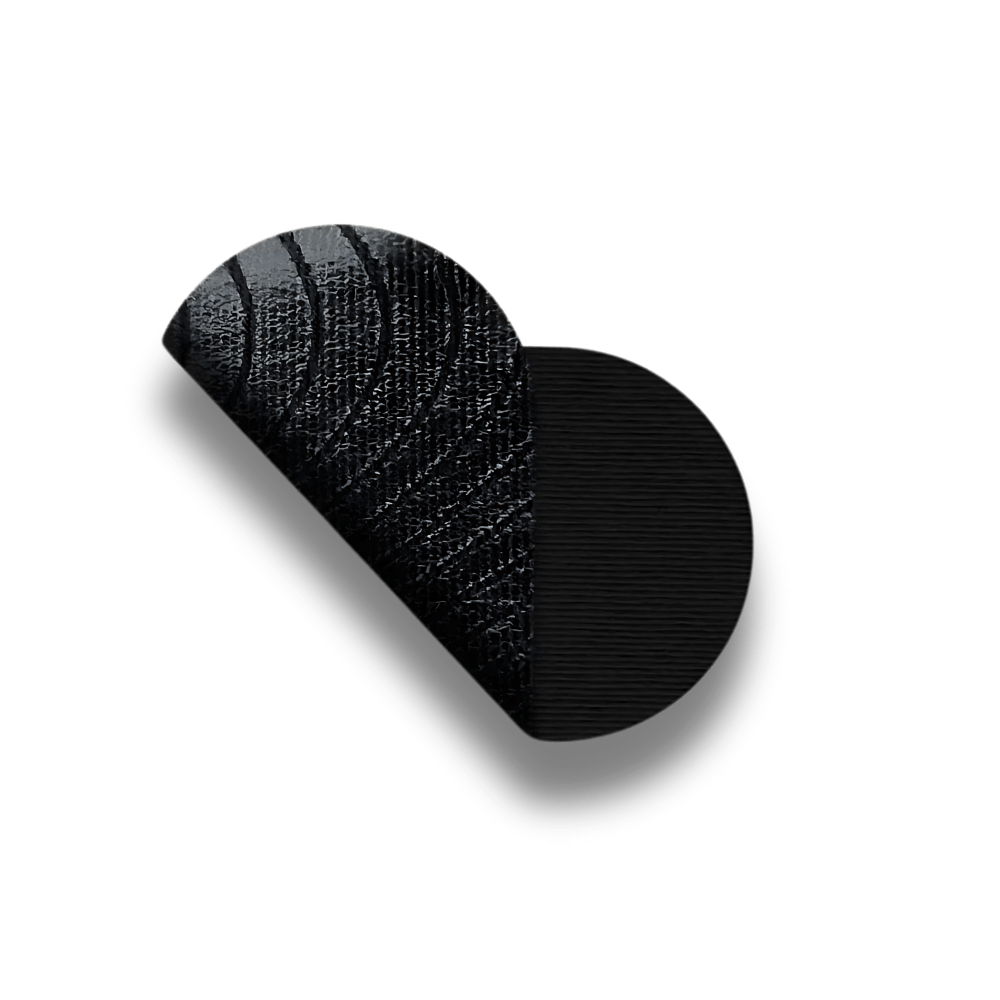
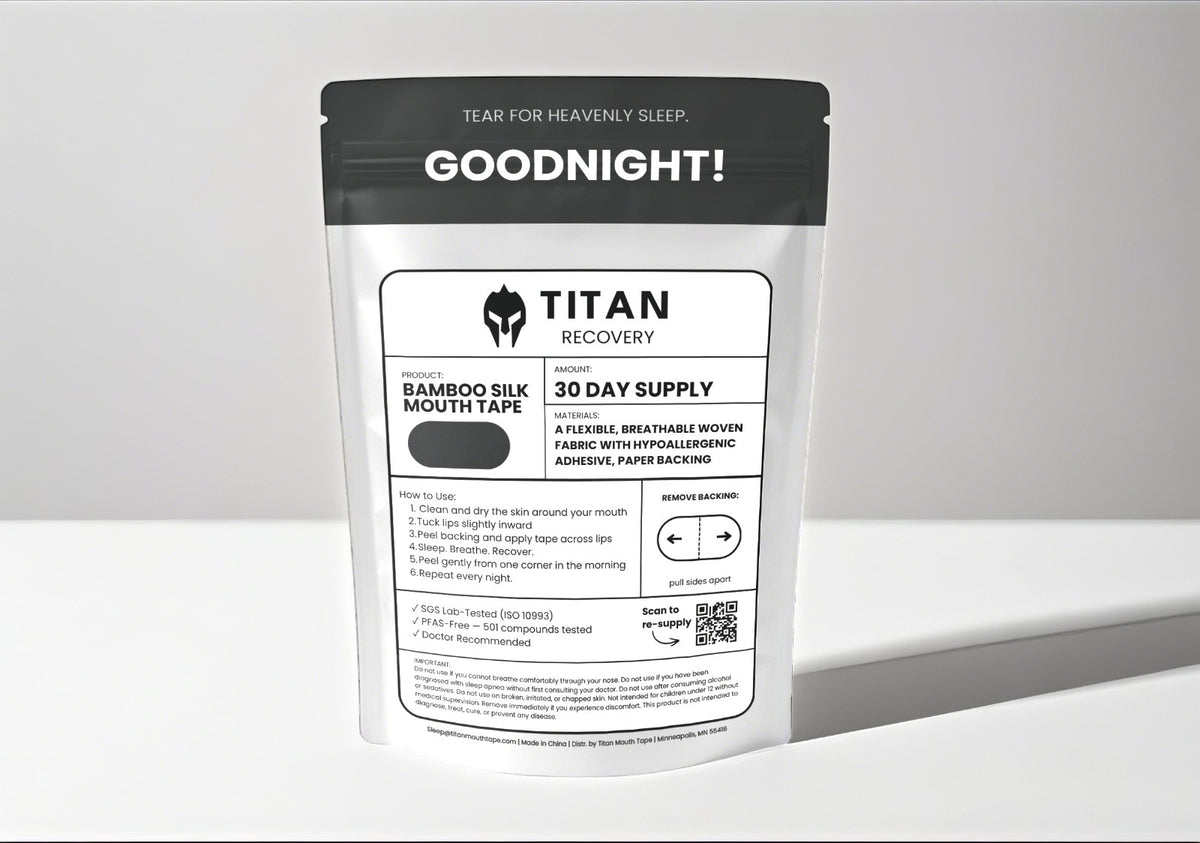
Titan Mouth Tape holds your lips gently closed so you keep breathing through your nose all night. That's all it does. It is not a treatment for anxiety, insomnia, or sleep apnea, and it won't stop a worry from showing up. What it can do is support the nasal breathing pattern you were practicing at bedtime so you're not undoing it the minute you fall asleep. Test it for a few minutes while awake first so it feels natural, and don't use it if you have trouble breathing through your nose.
If your nose runs a little tight in the evening, TitanAir Nasal Strips open the nasal passages from the outside so slow nasal breathing feels easier. Many people use both, and the Deep Sleep Bundle ($69.95) puts them together. Mouth tape alone starts at $34.95 for a 30-night supply, and larger supplies bring it down to about $0.76 a night. Titan has 4.9 stars from 1,000+ sleepers, backed by a 30-night guarantee.
When Racing Thoughts Need More Than Tips
Everyone has a bad night now and then. But if racing thoughts show up most nights for more than a few weeks, or they come with persistent worry, low mood, panic, or daytime impairment, talk to a doctor or a licensed mental health professional. Clinical anxiety and chronic insomnia are very treatable, and CBT-I and other therapies have strong evidence behind them. Self-help techniques and breathing tools are a good support, not a substitute for care. Likewise, if a partner notices loud snoring, gasping, or pauses in your breathing, ask a doctor about a sleep evaluation.
The Bottom Line
A racing mind at night comes from an alert nervous system, a missing wind-down, and a bed that's become associated with worry. Fix those in order: build a consistent wind-down, get the worries onto paper, get out of bed when you're stuck, and use slow nasal breathing to lower your arousal. It takes a few nights of practice, not a single trick.
If you want your nasal breathing to carry through the night, Titan Mouth Tape is an easy, drug-free way to support it. Just keep the expectations honest: it supports better breathing, and the rest of the routine does the quieting.
Doctor Recommended: "As a maxillofacial surgeon and dentist, I recommend Titan Mouth Tape. Nasal breathing during sleep is essential for airway health and deep restorative rest. Titan's bamboo silk design is the most comfortable and effective mouth tape I have tested. If you struggle with snoring, dry mouth, or poor sleep quality, this is the simplest change you can make for your health." — Dr. Francois Proux, MD, DDS — Maxillofacial Surgeon
Lab-Tested Safety: Titan's adhesive is independently tested to ISO 10993 medical device standards. Non-toxic (95% cell viability). Non-allergenic (0% reaction rate). Non-irritating (score 0.0/8.0). PFAS-free — 501 compounds tested, zero detected. See full test results →
Try the complete system tonight. Titan Mouth Tape (bamboo silk, SilkSeal™ adhesive) + TitanAir Nasal Strips. Free shipping. 30-night Better Sleep Guarantee. Shop Titan Mouth Tape → · Shop TitanAir Nasal Strips →