Myofunctional Therapy & Tongue Exercises for Breathing

Share
Myofunctional therapy is a program of guided tongue, lip, and facial-muscle exercises designed to improve how those muscles function, including tongue posture and nasal breathing. The honest summary: some small studies suggest it may help certain people, especially with snoring, but the evidence is limited and mixed, and it is not a proven cure for sleep apnea or any other condition.
If you have been going down the nasal-breathing rabbit hole, you have probably seen "tongue exercises" and "mewing" pop up next to mouth taping. They get lumped together, but they are not the same thing. Here is what myofunctional therapy actually is, what the research does and does not show, and how it fits alongside simple habits like mouth taping.
What Is Myofunctional Therapy?
Orofacial myofunctional therapy is a structured set of exercises for the muscles of the tongue, lips, cheeks, and throat. "Myo" means muscle, and "functional" refers to how those muscles behave during everyday tasks like swallowing, chewing, speaking, and breathing.
It is a legitimate field. It is usually taught by trained myofunctional therapists, and some speech-language pathologists, dental hygienists, and dentists offer it. A typical program involves an assessment, a set of exercises tailored to the person, and daily practice at home over a period of weeks or months.
The goals vary by person. They often include resting the tongue in a better position, keeping the lips together at rest, swallowing without pushing against the teeth, and making nasal breathing feel more natural and automatic.
Why the Tongue Matters for Nasal Breathing
Your tongue is a large muscle, and where it rests affects how your mouth and throat behave. When the tongue sits up against the roof of the mouth with the lips together, the mouth is naturally closed and air moves through the nose. When the tongue drops low and the jaw hangs open, mouth breathing becomes the easy default.
During sleep, muscle tone in the mouth and throat relaxes. For some people, the tongue falls backward and the jaw drops, which can contribute to snoring. That is the logic behind exercising these muscles: stronger, better-coordinated muscles may be less likely to collapse into the airway. It is a reasonable theory, and the research on it is where things get more complicated.
What Does the Research Actually Show?
Here is the plain version, with the caveats up front.
Early reviews looked promising. Several small studies, and reviews that pooled them, found that people who practiced orofacial exercises tended to snore less and, in some studies, had lower measures of sleep apnea severity afterward. Many of those early studies were small, had no control group, or measured people before and after without comparison.
Newer, stricter reviews are more cautious. Reviews that looked only at randomized trials have generally described the overall quality of evidence as low, citing small sample sizes, differences between programs, and limited follow-up. Results in children have been less consistent than in adults.
Adherence is a recurring problem. These exercises take daily effort for weeks. Researchers repeatedly note that people who stop practicing may lose the benefit, and long-term results are largely unstudied.
So the fair takeaway is this: myofunctional therapy is worth discussing with a professional, it may modestly help some people, and it should not be treated as a replacement for evaluation or established treatment. If you or a partner notices loud snoring, gasping, or heavy daytime sleepiness, see a sleep physician. Those can be signs of a condition that needs real diagnosis.
Tongue Exercises for Nasal Breathing: General Examples
The exercises below are general examples of the kind of thing commonly used in myofunctional programs. They are not a prescription. A trained therapist will tailor a program to your mouth, jaw, and breathing, and some people should not do certain exercises without guidance (for example, anyone with jaw pain, TMJ issues, or recent dental work). Stop if anything hurts.
Tongue-to-palate rest. Gently place the tip of your tongue on the roof of your mouth just behind your front teeth, lips lightly together, teeth slightly apart, breathing through your nose. This is the "resting posture" most programs aim to make habitual.
Tongue press. From that position, press the whole tongue lightly up against the palate for a few seconds, then relax. It builds awareness of where your tongue actually is.
Lip seal practice. Sit upright and keep your lips gently together for a few minutes while you read or work, breathing quietly through your nose. Notice how often you catch your mouth hanging open.
Slow nose breathing. Pair the posture above with calm, easy breaths in and out through the nose. If you want a few gentle options, see our guide to nasal breathing exercises.
Again, this is for awareness and habit-building. For a program that targets your own concerns, work with a qualified myofunctional therapist, dentist, or speech-language pathologist.
Mewing vs. Myofunctional Therapy
"Mewing" is a popular online term for holding proper tongue posture, with claims that it reshapes your jawline or widens your airway. We covered it in detail in What Is Mewing?, so here is the short comparison.
| Mewing | Myofunctional Therapy | |
|---|---|---|
| What it is | An internet term for resting tongue posture | A structured exercise program, usually professionally guided |
| Who guides it | Mostly self-taught from videos | Trained therapists, SLPs, some dentists |
| Jawline and airway claims | Largely unproven | Not the main goal |
| Evidence for snoring or breathing | Very limited | Limited and mixed, but studied |
The overlap is the tongue-posture idea. The difference is that myofunctional therapy is a defined clinical approach with at least some research behind it, while the dramatic mewing claims about changing facial structure in adults are largely unproven. Use the posture as a habit if you like it, but be skeptical of promises.
Where Mouth Tape and Nasal Strips Fit In
Exercises train awareness while you are awake. The problem is that you cannot supervise your own mouth while you sleep, and that is when the jaw relaxes and mouth breathing tends to creep in.
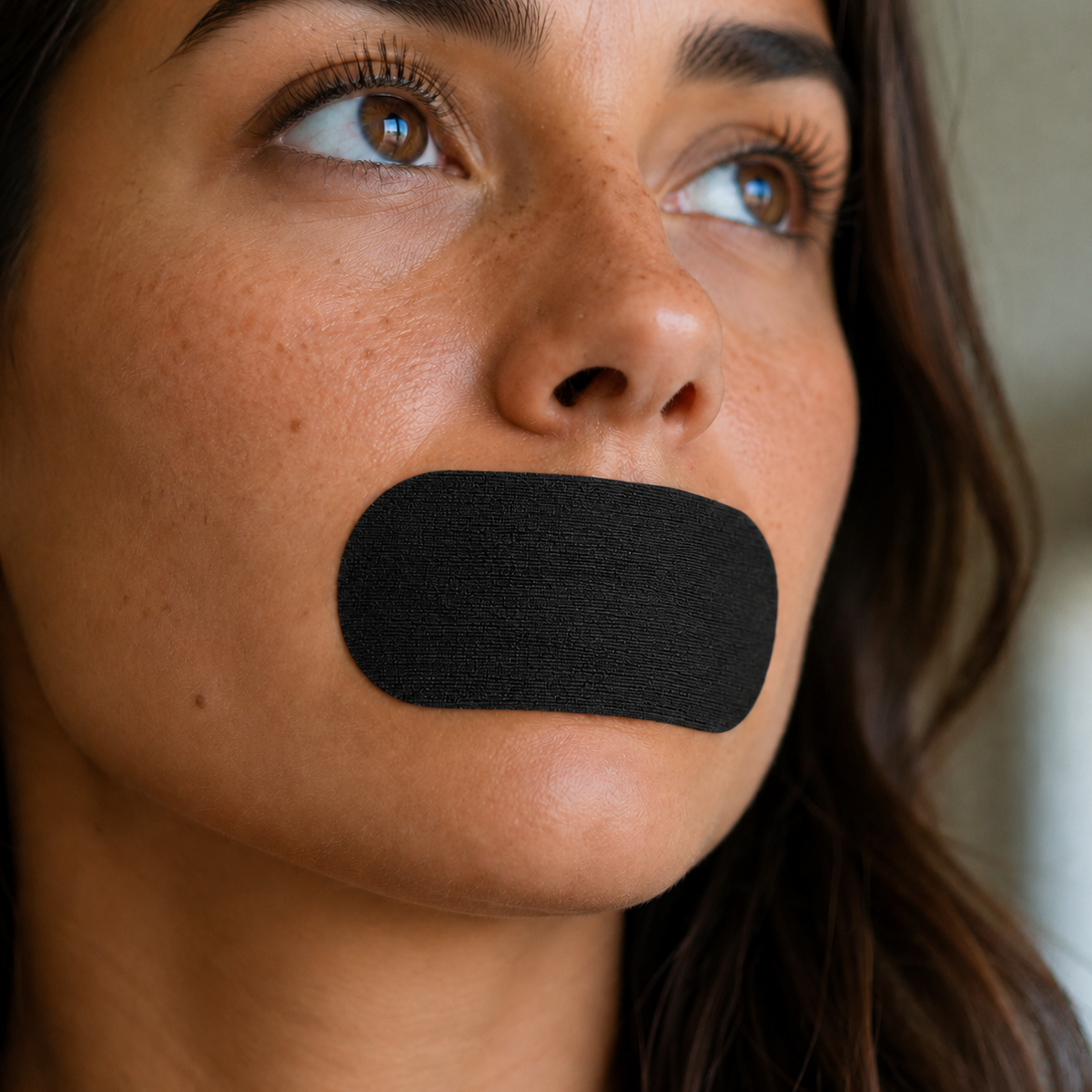
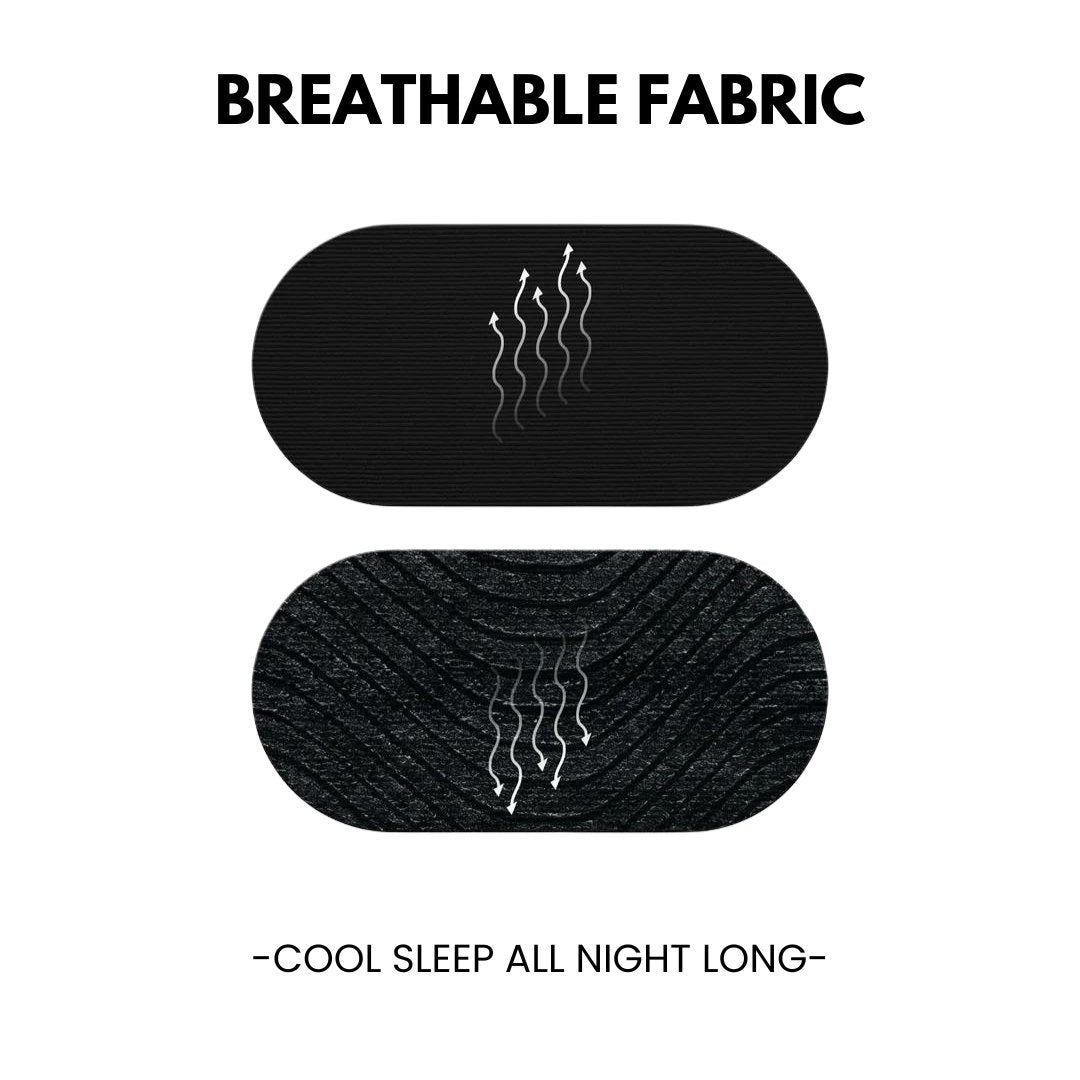
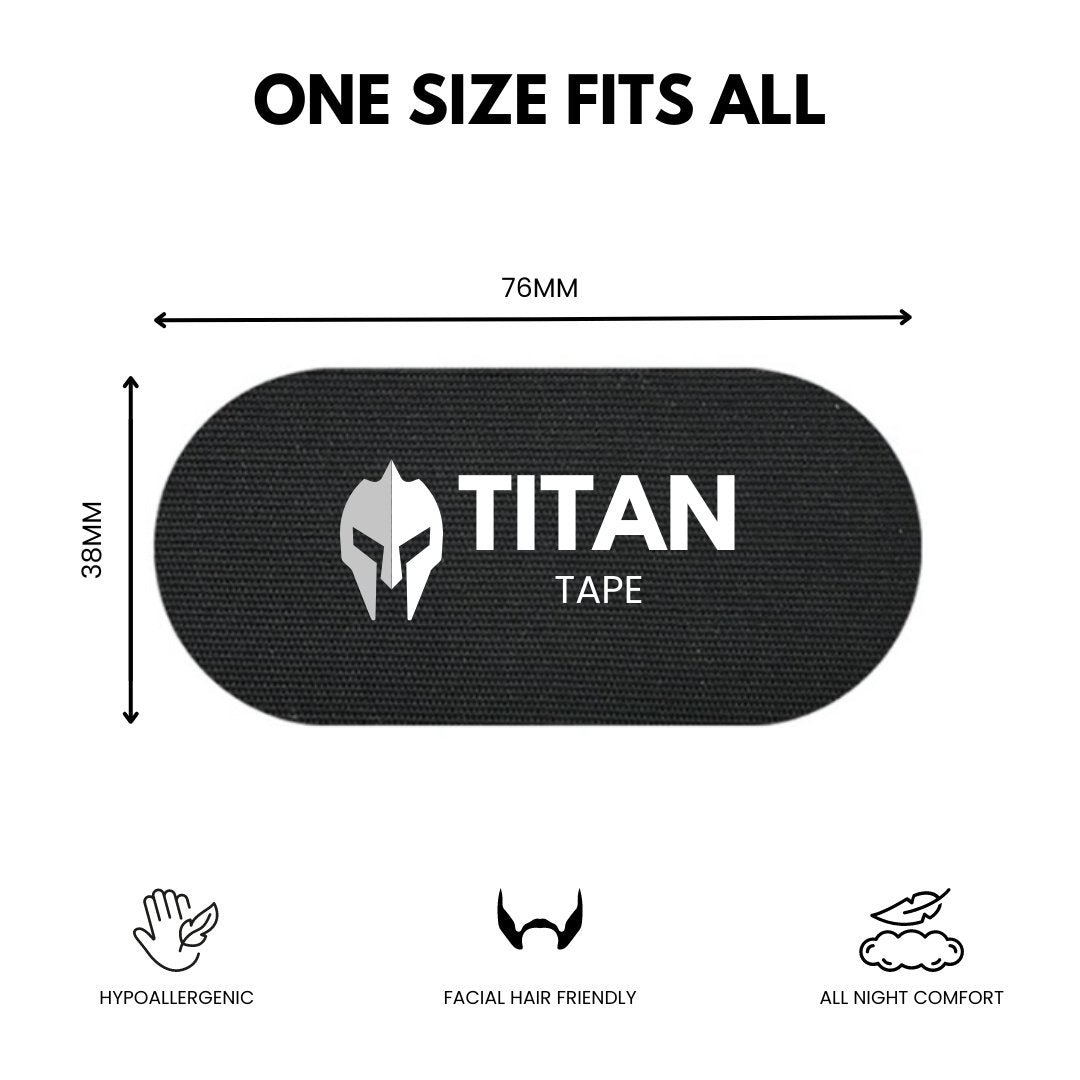
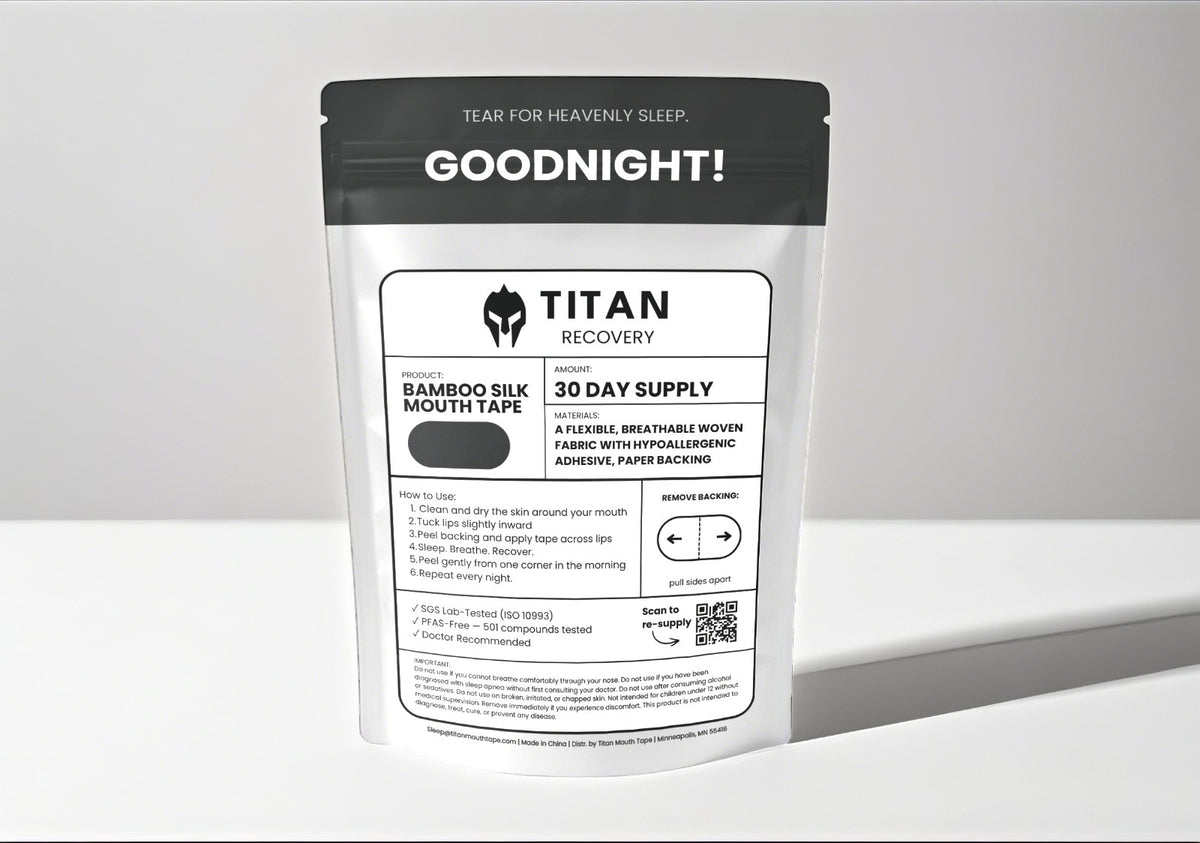
That is where simple tools can complement the habit. Titan Mouth Tape gently holds the lips together overnight, which supports nasal breathing and may make a closed-mouth, tongue-up resting posture easier to maintain. TitanAir Nasal Strips lift the sides of the nose from the outside to make nasal airflow easier, which helps if congestion is part of why you default to your mouth. Our post on training yourself to breathe through your nose at night walks through how these habits stack.
To be clear, these are habit supports, not treatments. They do not treat sleep apnea or any medical condition, and they are not a substitute for a professional. If you cannot breathe comfortably through your nose, get that checked first. Mouth tape is not for everyone, and it is not appropriate if your nose is blocked or you have trouble breathing.
Who Should See a Professional First
Talk to a qualified professional before starting any program if any of these apply:
You snore loudly, gasp or choke during sleep, or feel unrefreshed no matter how long you sleep. You have chronic nasal blockage, a suspected deviated septum, or frequent sinus problems. You have jaw pain, TMJ issues, or are in orthodontic treatment. You are doing this for a child.
A sleep physician can evaluate possible sleep apnea. An ENT can look at your nasal airway. A myofunctional therapist or dentist can assess tongue posture and build a tailored program. These are not competing options. Often the best path involves more than one.
The Bottom Line
Myofunctional therapy is a real field with a plausible idea behind it: better-trained mouth and tongue muscles may support easier nasal breathing and, for some people, quieter sleep. The evidence is still limited and mixed, so treat it as something worth exploring with a professional, not a cure.
If you want to build the nasal-breathing habit day and night, pair guided practice with simple overnight supports. Titan Mouth Tape and TitanAir Nasal Strips are comfortable, low-cost ways to make nasal breathing the default while you sleep. And if something about your breathing worries you, see a professional first.
Frequently asked questions
Can myofunctional therapy cure sleep apnea?
No. Myofunctional therapy is not a proven cure for sleep apnea. Some small studies suggest orofacial exercises may reduce snoring or apnea severity in some adults, but the evidence is limited and mixed. If you suspect sleep apnea, get evaluated by a sleep physician before relying on any exercise program.
How long does myofunctional therapy take to work?
Programs delivered by a therapist commonly run for a number of weeks to a few months, with daily home practice. Results vary a lot from person to person, and consistency matters more than any single exercise. Ask a qualified therapist for a realistic timeline for your situation.
Is mewing the same as myofunctional therapy?
No. Mewing is a popular internet term for holding your tongue against the roof of your mouth, with big claims about jawlines and airways that are largely unproven. Myofunctional therapy is a structured program of exercises, usually guided by a trained professional, and it is studied in a clinical setting.
Who provides myofunctional therapy?
It is typically delivered by trained myofunctional therapists, and some speech-language pathologists, dental hygienists, and dentists offer it. Look for someone with specific training in orofacial myofunctional therapy and ask about their experience with breathing and sleep concerns.
Can I combine tongue exercises with mouth tape and nasal strips?
Many people use them as complementary habits. Exercises build awareness of tongue posture and nasal breathing while you are awake, while mouth tape and nasal strips support nasal breathing during sleep. None of them are medical treatments, and a professional should guide you if you have a breathing disorder.
Doctor Recommended: "As a maxillofacial surgeon and dentist, I recommend Titan Mouth Tape. Nasal breathing during sleep is essential for airway health and deep restorative rest. Titan's bamboo silk design is the most comfortable and effective mouth tape I have tested. If you struggle with snoring, dry mouth, or poor sleep quality, this is the simplest change you can make for your health." — Dr. Francois Proux, MD, DDS — Maxillofacial Surgeon
Lab-Tested Safety: Titan's adhesive is independently tested to ISO 10993 medical device standards. Non-toxic (95% cell viability). Non-allergenic (0% reaction rate). Non-irritating (score 0.0/8.0). PFAS-free — 501 compounds tested, zero detected. See full test results →
Try the complete system tonight. Titan Mouth Tape (bamboo silk, SilkSeal™ adhesive) + TitanAir Nasal Strips. Free shipping. 30-night Better Sleep Guarantee. Shop Titan Mouth Tape → · Shop TitanAir Nasal Strips →