Mouth Tape and Your Whoop Recovery Score
Share
If you wear a Whoop, you already know the morning ritual: check the recovery score, scan HRV and resting heart rate, see how much slow wave sleep you actually got. And if you've been stuck in the yellow or red zone despite doing everything else right -- consistent bedtime, cool room, no alcohol -- you're looking for the variable you haven't addressed yet. For a growing number of Whoop users, mouth tape whoop recovery is that variable. The pattern they report is consistent: higher HRV, lower resting heart rate, more time in deep and REM sleep, and recovery scores that climb from the mid-50s or 60s into the green zone within a few weeks of taping.
Those aren't vague promises. They're the specific metrics Whoop tracks, and nasal breathing influences every one of them. Here's exactly what to expect, why it happens, and how to set up a controlled experiment with your own data.
What Whoop Measures and How Nasal Breathing Moves Each Metric
Whoop's recovery algorithm draws on four inputs. Nasal breathing affects all of them.
Heart rate variability (HRV) goes up. Whoop captures HRV during your last slow wave sleep period, when the reading is cleanest. Nasal breathing slows your breathing rate naturally -- most people drop from 14-18 breaths per minute with mouth breathing to 8-12 with nasal breathing during sleep. That slower, more rhythmic breathing stimulates the vagus nerve, increasing parasympathetic tone and raising HRV. Studies on nasal breathing and deep sleep have documented this connection. A 5-15 ms improvement in nightly HRV is significant for most people, and that's the range Whoop users commonly report after switching to nasal breathing.
Resting heart rate (RHR) goes down. The same parasympathetic activation that raises HRV lowers resting heart rate. Mouth breathing maintains mild sympathetic activation overnight -- your body treats an open airway as a signal of heightened alertness. Close the mouth, breathe through the nose, and your heart doesn't need to work as hard. Even a 2-3 BPM drop shifts the algorithm's assessment of your recovery state.
Respiratory rate stabilizes. Whoop tracks breaths per minute during sleep, and the consistency matters more than the absolute number. Mouth breathers tend to have erratic respiratory patterns -- the mouth falls open, airflow changes, breathing becomes shallow and irregular. Nasal breathing creates consistent airway resistance that naturally regulates pacing. The result is a smoother respiratory rate curve, which Whoop interprets as undisturbed sleep.
Sleep stages shift toward deep and REM. Mouth breathing causes more frequent micro-arousals -- brief awakenings that pull you out of slow wave sleep or REM and back into light sleep. You don't remember them, but your Whoop catches every one. Nasal breathing reduces these micro-arousals by maintaining stable oxygen and CO2 levels, keeping the airway consistent, and sustaining the parasympathetic state that deep sleep requires. More uninterrupted time in deep and REM means better whoop sleep score mouth tape results and higher recovery.
What the Numbers Actually Look Like
The Whoop community documents results obsessively. The patterns from forums, Reddit threads, and team data are consistent:
HRV: A 5-15 ms increase in average nightly HRV within two to four weeks. Heavier mouth breathers see the larger end of that range.
RHR: A 2-5 BPM decrease over the first month, often visible as a slight downward trend within week one.
Respiratory rate: The average may not shift dramatically, but the consistency improves. Users who export their data see tighter standard deviation on taping nights versus non-taping nights.
Sleep staging: 10-30 additional minutes of slow wave sleep per night and 10-20 additional minutes of REM, at the expense of light sleep and wakefulness.
Recovery score: Users consistently in the 40-65% range (yellow) often report moving into 65-85% (green) within two to four weeks. If you want to improve whoop recovery score, nasal breathing is one of the highest-leverage changes available because it touches every input the algorithm uses.
The Adaptation Timeline
Your data won't look clean on night one. Here's what to expect.
Nights 1-3: Your Whoop data may look worse. Adaptation to mouth tape can cause restlessness and fragmented sleep as your body adjusts. Your mouth taping whoop data during this phase is adaptation noise, not signal.
Nights 4-7: Most people settle in. Respiratory rate begins to stabilize. RHR often shows the earliest consistent change -- a slight downward drift of 1-2 BPM.
Weeks 2-3: The signal emerges. HRV trends upward. Sleep staging shows more deep and REM. Recovery scores cluster higher. Look at weekly averages versus the prior month to see the shift.
Week 4+: Your body has adapted. The tape is no longer a novel stimulus, and your data reflects actual nasal-breathing sleep quality. This is when you can make a real assessment of the impact.
How to Run Your Own N=1 Experiment
Whoop users don't want anecdotes. You want data. Here's a clean protocol.
Baseline (14 nights): Collect clean data before you start taping. Keep variables consistent -- similar bedtime, no alcohol on data nights, similar training load. Record average HRV, RHR, respiratory rate, sleep staging percentages, and recovery score.
Tape every night (21+ nights): Don't alternate nights. Use Titan Mouth Tape consistently -- same tape, same application, every night. You're isolating one variable. Mark the first 3-5 nights as adaptation in your Whoop journal and exclude them from analysis.
Compare: After 14-21 clean taping nights, look at average HRV, RHR, respiratory rate variability, deep sleep minutes, REM minutes, and recovery score against your baseline. The effect size varies -- heavy mouth breathers see larger changes -- but the direction of nasal breathing whoop improvements is almost always the same.
Stacking Mouth Tape with Nasal Strips
Taping your mouth closed ensures nasal breathing, but it doesn't address nasal airway resistance. If your nasal passages are narrow or slightly congested, you may be breathing nasally through a restricted pathway, forcing faster breathing that offsets some benefits.
TitanAir Nasal Strips physically open the nasal valve, reducing airway resistance and allowing slower, deeper breaths with less effort. The combination -- mouth tape closing the oral airway, nasal strips opening the nasal airway -- gives your respiratory system the path of least resistance through the nose. Lower breathing effort translates to deeper parasympathetic activation, which shows up as higher HRV and lower RHR on your Whoop.
If your N=1 experiment with mouth tape alone shows moderate improvement, add nasal strips for the second month and see if the numbers move further. The Titan Deep Sleep Bundle includes both. And if you track with an Oura Ring too, we've covered that platform's metrics in our post on what happens to your Oura score when you start mouth taping.
Frequently Asked Questions
How quickly will I see my Whoop recovery score change?
Most users see consistent improvements within two to four weeks. The first few nights may show flat or slightly worse data during adaptation. By the end of week one, RHR typically starts trending down. By weeks two to three, HRV improvements and sleep staging changes become visible in weekly averages. A gradual ramp-up helps minimize the adaptation dip.
Will mouth tape affect my strain score?
Not directly -- strain is calculated from daytime heart rate data. But better recovery means better readiness for training, which can indirectly improve your ability to sustain higher strain loads without overtraining. Many Whoop users report that consistent green recoveries from taping let them train harder and more consistently.
Does mouth tape help if I already score in the green?
The effect size depends on how much mouth breathing you're doing now. If you already nasal breathe naturally most of the night, changes may be small. If you're a partial mouth breather -- which many people are without realizing it -- there's still room. Even efficient nasal breathers sometimes see improved respiratory rate consistency and a few extra minutes of slow wave sleep. Run the experiment and let the data answer.
Can mouth tape replace other recovery strategies?
No. Mouth tape addresses one variable: airway management during sleep. It doesn't replace sleep consistency, alcohol moderation, or training load management. If you're doing everything else right and recovery still underperforms, mouth taping is a high-leverage addition. If your sleep hygiene is poor across the board, mouth tape will help, but it won't compensate for a 1 AM bedtime and three drinks with dinner.
The Bottom Line
Whoop gives you the data. Mouth tape gives you a controllable input that affects every metric Whoop tracks: HRV, resting heart rate, respiratory rate stability, and time in deep and REM sleep stages. The users who see the biggest gains approach it like any other training variable -- establish a baseline, change one thing, collect data, let the numbers tell the story.
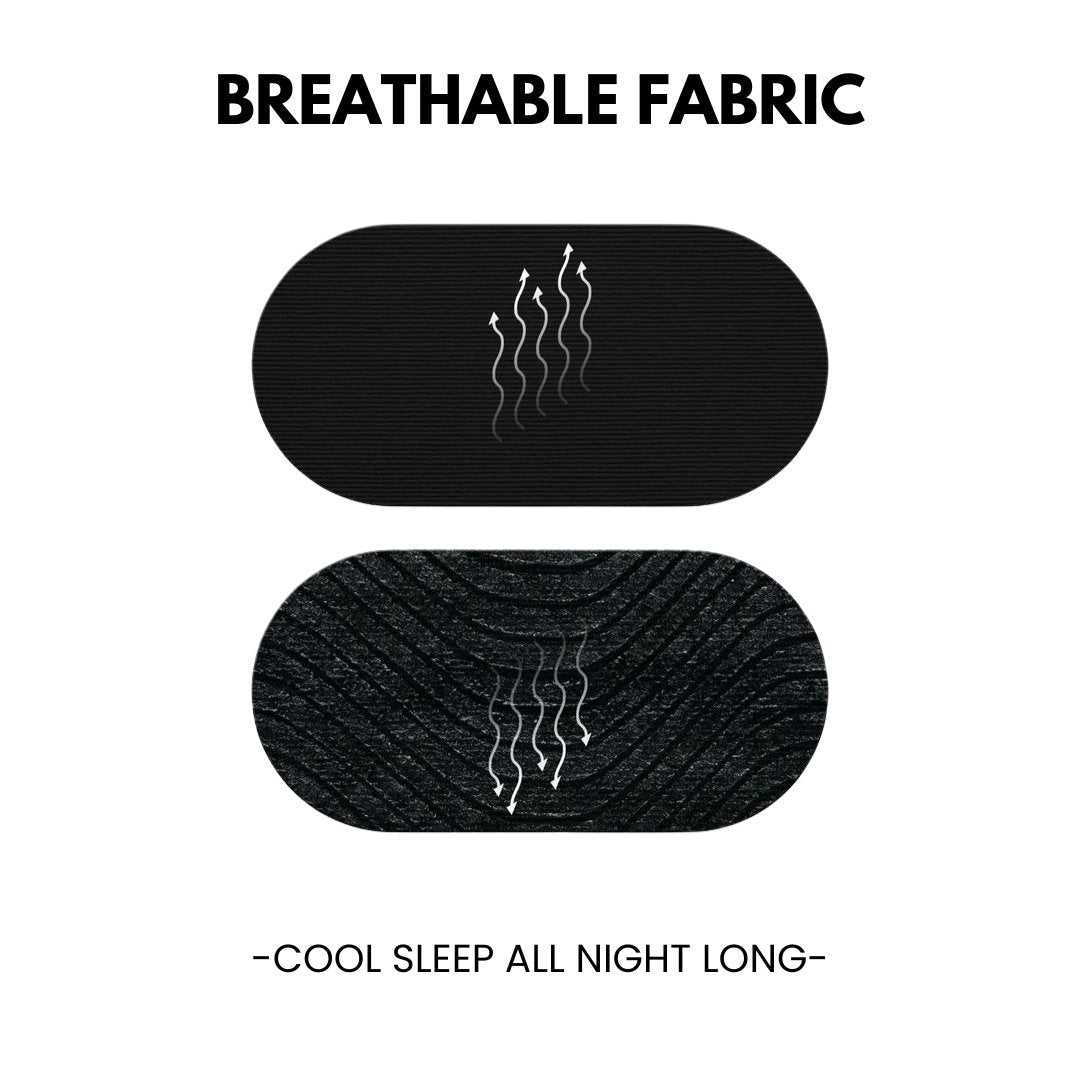
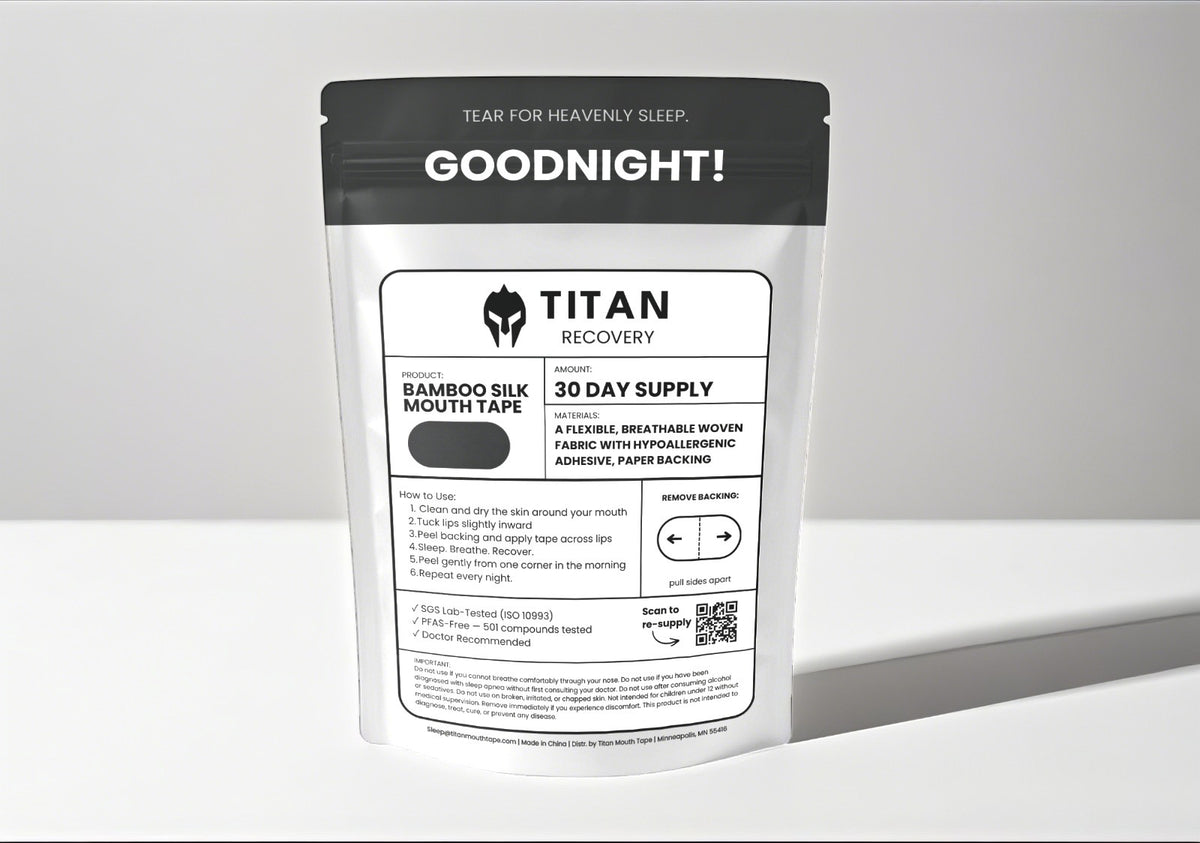
If your recovery score has been stuck in the yellow and you've already optimized sleep timing, room temperature, alcohol, and training load, airway management is the next variable worth testing. Start with a 30-day supply of Titan Mouth Tape ($34.95, or save 11% with Subscribe and Save), run your experiment, and let your Whoop decide.
Doctor Recommended: "As a maxillofacial surgeon and dentist, I recommend Titan Mouth Tape. Nasal breathing during sleep is essential for airway health and deep restorative rest. Titan's bamboo silk design is the most comfortable and effective mouth tape I have tested. If you struggle with snoring, dry mouth, or poor sleep quality, this is the simplest change you can make for your health." — Dr. Francois P., MD, DDS — Maxillofacial Surgeon
Lab-Tested Safety: Titan's adhesive is independently tested to ISO 10993 medical device standards. Non-toxic (95% cell viability). Non-allergenic (0% reaction rate). Non-irritating (score 0.0/8.0). PFAS-free — 501 compounds tested, zero detected. See full test results →
Try the complete system tonight. Titan Mouth Tape (bamboo silk, SilkSeal™ adhesive) + TitanAir Nasal Strips. Free shipping. 30-night Better Sleep Guarantee. Shop Titan Mouth Tape → · Shop TitanAir Nasal Strips →