Daylight Saving Time and Sleep: How to Adjust
Share
One hour. That's all daylight saving time takes from you in March or gives back in November. It sounds trivial. But that single hour is enough to disrupt your circadian rhythm, fragment your sleep architecture, and — according to multiple large-scale studies — increase your risk of heart attack, car accident, and workplace injury in the days that follow. The disconnect between daylight saving time and sleep isn't about willpower. It's about biology. Your internal clock doesn't reset on command, and the week after the clocks change is harder than most people realize.
The good news: you can prepare for it. A few days of gradual adjustment and attention to the signals your body uses to calibrate its clock can eliminate the grogginess, brain fog, and 3 p.m. crash that catch most people off guard.
Why One Hour Matters More Than You Think
Your circadian rhythm isn't a preference — it's a biological system with real inertia. The suprachiasmatic nucleus, a cluster of neurons in the hypothalamus, serves as your master clock. It coordinates melatonin release, cortisol production, core body temperature, and dozens of other processes that determine when you feel alert and when you feel sleepy. This clock runs on a roughly 24-hour cycle, calibrated daily by light.
When clocks shift by an hour, the master clock doesn't instantly recalibrate. The circadian system adjusts at about 15 to 20 minutes per day, meaning a one-hour shift takes three to five days to absorb. During that gap, melatonin releases at the wrong time. Cortisol spikes when you're trying to wind down. Your body expects sleep at an hour that no longer exists on the clock face.
Spring Forward: The Harder Transition
Losing an hour is measurably worse than gaining one. When clocks spring forward in March, you lose an hour of sleep and wake to an alarm that's effectively one hour earlier than your body expects. Acute sleep deprivation stacks on top of circadian misalignment — and the combination shows up clearly in population-level health data.
A 2014 study in Open Heart found a 24% increase in heart attacks on the Monday following spring forward. U.S. mine safety data showed a 5.7% increase in workplace injuries that same week. Traffic accident research tells a similar story: multiple studies document a spike in crashes in the days following the spring change, driven by drowsiness and impaired reaction time.
These findings have been replicated across populations, years, and methodologies. The mechanism is straightforward: daylight saving time sleep disruption produces a week where millions of people are simultaneously underslept and hormonally misaligned.
The spring transition is particularly hard because melatonin timing lags behind the clock change. Melatonin normally begins rising about two hours before your habitual bedtime. After springing forward, that onset is still calibrated to the old schedule — your body isn't ready for sleep at your new bedtime but your alarm fires at the new wake time regardless. Both ends get cut.
Fall Back: Easier But Not Free
Gaining an hour sounds like a gift, but it comes with its own disruption. The fall back sleep transition in November is less acute than spring forward — you gain an hour instead of losing one. But the adjustment still takes days.
The primary issue: your internal clock pushes you to wake up an hour earlier than the clock says. You may find yourself wide awake at 5 a.m., unable to fall back asleep, despite going to bed at your normal time. Evening melatonin onset shifts too, making you sleepy earlier than you'd like — nodding off during evening activities and then waking too early.
The fall transition also brings a sudden shift in light exposure. Sunset arrives an hour earlier, meaning less natural light in the late afternoon. For people prone to seasonal mood changes, this abrupt reduction in evening light compounds the disruption.
How to Adjust to the Time Change
The best adjustment strategy starts before the clocks change, not after. Going to bed at the new time and hoping for the best forces a cold-turkey adaptation that extends the adjustment period. A gradual approach works with your circadian system instead of against it. Here's how to adjust to time change:
Shift your bedtime in 15-minute increments. Starting four days before the time change, move your bedtime 15 minutes earlier (for spring forward) or 15 minutes later (for fall back) each night. By the time the clocks change, your body has already absorbed most of the shift.
Prioritize morning light exposure. Light is the strongest signal your circadian clock uses to calibrate itself. Get outside within 30 minutes of waking — even on overcast days, outdoor light is significantly brighter than indoor light. Morning sunlight advances your clock, accelerating the adjustment. If you can't get outside, sit near a bright window or use a 10,000 lux light therapy lamp for 20 to 30 minutes.
Limit screens before bed. Blue light from phones, tablets, and laptops suppresses melatonin production and delays sleep onset. This matters year-round, but it matters more during the time change because your melatonin timing is already compromised. Cut screens at least 60 minutes before bed during the transition week.
Maintain your sleep hygiene routine. The time change is exactly the wrong moment to let your wind-down routine slide. Keep the bedroom cool (65-68 degrees), dark, and quiet. Stick to your normal pre-bed activities. Consistency gives your circadian system fewer moving targets.
Watch your caffeine and alcohol timing. Caffeine has a half-life of five to six hours — during the adjustment period, stop by early afternoon. Alcohol disrupts sleep architecture even in small amounts, and those disruptions compound with circadian misalignment. The transition week is a good week to skip the nightcap.
Don't nap past early afternoon. A short nap (20 minutes or less) before 2 p.m. can help offset the sleep debt from spring forward without interfering with nighttime sleep. Napping later or longer will push your sleep drive down and make it harder to fall asleep at your new bedtime.
When Sleep Time Gets Compressed, Every Hour Counts
This is the part most spring forward sleep tips overlook. The standard advice covers scheduling and light exposure, and that's important. But when you're temporarily getting fewer hours of sleep — and those hours are circadian-misaligned — the quality of the sleep you do get matters even more than usual. Six compromised hours during the transition week is a very different experience from six hours of high-quality, well-structured sleep.
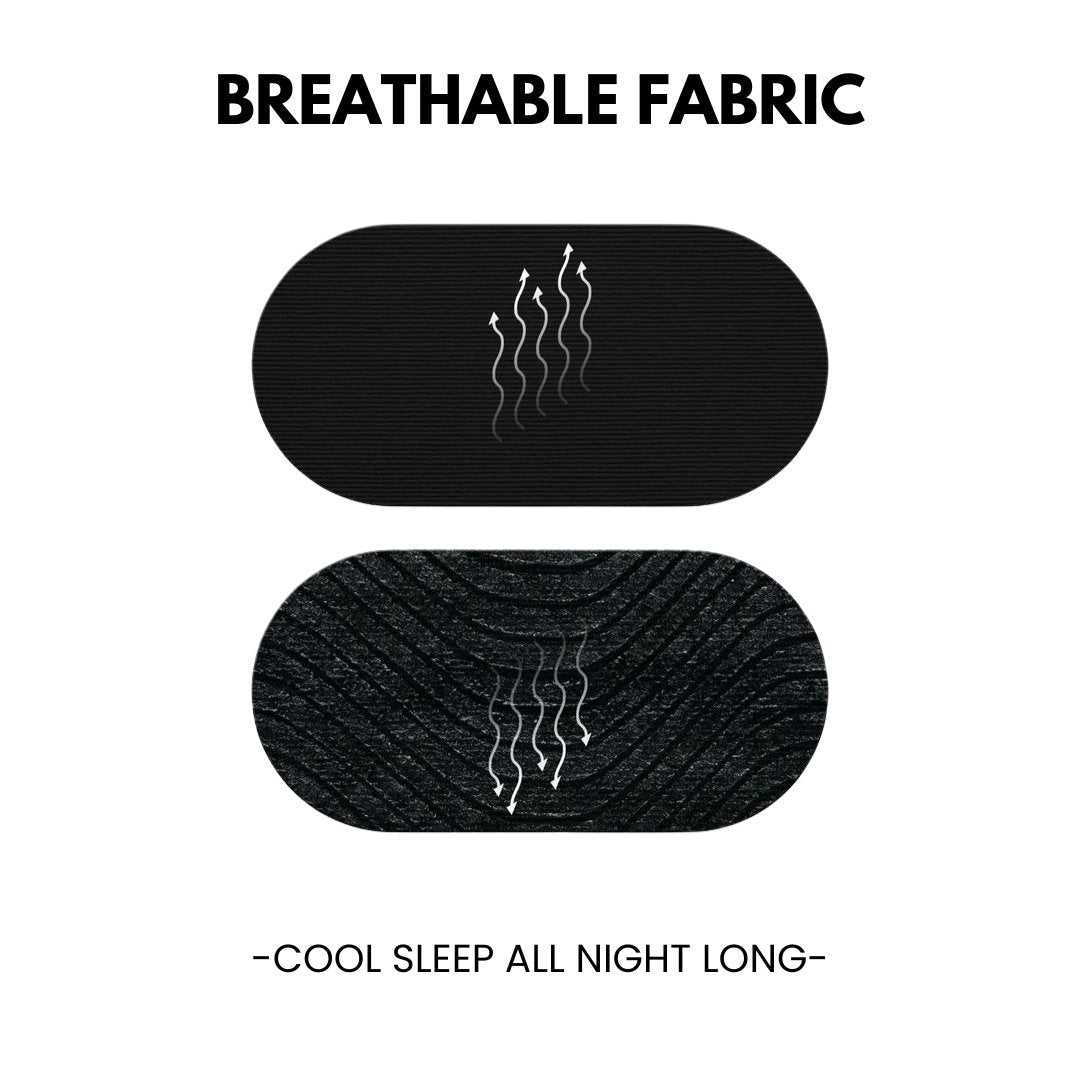
One of the biggest determinants of sleep quality is how you breathe. Nasal breathing supports deep, uninterrupted sleep cycles by maintaining steady oxygen saturation and keeping the airway humidified. Mouth breathing does the opposite — it dries the throat, increases snoring, and triggers micro-arousals that fragment sleep architecture without fully waking you.
When your sleep window shrinks by an hour, every micro-arousal costs you. You can't afford fragmented sleep on top of short sleep. Mouth tape keeps the lips gently sealed during sleep, encouraging nasal breathing even when jaw muscles relax and the mouth would otherwise fall open. The result is fewer disruptions, better oxygen delivery, and more efficient use of whatever sleep time you have.
Pairing mouth tape with nasal strips reduces airflow resistance further, making nasal breathing effortless even when seasonal congestion is a factor. The Deep Sleep Bundle combines both for maximum breathing quality when sleep time is at a premium.
A Transition Week Checklist
Here's the condensed plan for either direction:
Four days out: Begin shifting bedtime by 15 minutes per night in the appropriate direction. Adjust wake time by the same increment if your schedule allows.
Three days out: Shift another 15 minutes. Start prioritizing morning light — 20 to 30 minutes of bright light within the first hour of waking.
Two days out: Shift another 15 minutes. Move your caffeine cutoff earlier. Cut evening screens 60 minutes before bed.
The day before: You're now within 15 minutes of the new schedule. Keep routines locked in and prioritize a full night.
Transition day onward: Immediately adopt the new clock time for everything — meals, exercise, bedtime, wake time. Continue morning light exposure. Keep naps under 20 minutes and before 2 p.m. Most people settle in within three to five days.
Frequently Asked Questions
Does daylight saving time affect deep sleep or just total sleep?
Both. The lost hour directly reduces total sleep time, but circadian misalignment also disrupts deep sleep staging. Your brain cycles through sleep stages in an order tied to your internal clock. When that clock is out of sync with your schedule, the proportion of deep sleep and REM shifts — often reducing the most restorative stages even if you spend adequate time in bed.
How long does it take to adjust to the time change?
Most people fully adjust within three to five days. The circadian clock shifts about 15 to 20 minutes per day, so a one-hour change needs roughly four to five cycles. Using the gradual approach — shifting 15 minutes per night starting four days early — makes the transition nearly seamless because your body absorbs the shift before it officially happens.
Is the spring or fall time change harder on sleep?
Spring forward is harder. Losing an hour means acute sleep deprivation on top of circadian misalignment. Falling back gives you an extra hour, which feels easier — though early waking and shifted melatonin timing still require several days to normalize. The health data is clear: negative effects on heart health, traffic safety, and workplace injury cluster around the spring transition.
Can mouth taping help during the time change?
Yes. When your sleep window is compressed, quality per hour matters more. Mouth taping promotes nasal breathing throughout the night, reducing micro-arousals and supporting steady oxygen saturation. You can't control losing an hour to the clock change, but you can control how efficiently your body uses the hours you have. The sleep quality checklist covers the other controllable variables.
The Bottom Line
Daylight saving time asks your body to make a one-hour jump that your circadian system needs three to five days to absorb. That gap has real consequences — not just grogginess, but measurable increases in health and safety risks. The spring shift is harder than the fall, but both require deliberate management.
The strategy is simple: start early, shift gradually, flood yourself with morning light, and protect the quality of your sleep during the transition. When your sleep time is compressed, you can't afford to waste any of it on fragmented, mouth-breathing hours. Nasal breathing through the night — supported by mouth tape and nasal strips — ensures that the sleep you get actually counts.
The clocks are going to change regardless. Your job is to make sure your body is ready when they do.
Doctor Recommended: "As a maxillofacial surgeon and dentist, I recommend Titan Mouth Tape. Nasal breathing during sleep is essential for airway health and deep restorative rest. Titan's bamboo silk design is the most comfortable and effective mouth tape I have tested. If you struggle with snoring, dry mouth, or poor sleep quality, this is the simplest change you can make for your health." — Dr. Francois P., MD, DDS — Maxillofacial Surgeon
Lab-Tested Safety: Titan's adhesive is independently tested to ISO 10993 medical device standards. Non-toxic (95% cell viability). Non-allergenic (0% reaction rate). Non-irritating (score 0.0/8.0). PFAS-free — 501 compounds tested, zero detected. See full test results →
Try the complete system tonight. Titan Mouth Tape (bamboo silk, SilkSeal™ adhesive) + TitanAir Nasal Strips. Free shipping. 30-night Better Sleep Guarantee. Shop Titan Mouth Tape → · Shop TitanAir Nasal Strips →