How to Stop Drooling in Your Sleep
Share
If you've ever woken up to a damp pillow, flipped it over, and hoped nobody noticed — you're not alone, and you're not broken. How to stop drooling in sleep comes down to one thing: keeping your mouth closed. When your jaw relaxes and your lips part during the night, gravity does the rest. Saliva pools at the opening and drips out. Mouth tape holds your lips gently shut, which means saliva stays inside your mouth where it belongs. That's the fix. The rest of this post explains the why and the how.
Drooling during sleep is one of those problems people laugh about in public and quietly search for solutions to in private. It stains pillowcases, interrupts sleep, and can leave you with irritated skin around the mouth and chin. The good news is that the cause is mechanical, not medical for most people, and the solution is simple once you understand the mechanism.
Why You Drool When You Sleep
Your body produces about a liter of saliva every day. During waking hours, you swallow it reflexively — roughly once a minute without thinking about it. During sleep, that swallowing reflex slows down dramatically. Saliva still gets produced, just at a lower rate, and it sits in your mouth until you swallow. Under normal conditions — mouth closed, breathing through your nose — this works fine. The saliva stays contained and gets swallowed periodically.
The problem starts when your mouth opens. Once your lips part, saliva has an exit route. Gravity takes over, and whatever has pooled near the opening drains out. This is why you typically wake up with drool on one side of your face — whichever side was closest to the mattress. If you sleep on your back with your mouth open, saliva can pool at the back of your throat instead, which often triggers coughing or a choking sensation.
Sleep position amplifies it. Side sleepers and stomach sleepers are the most common droolers because gravity is working directly against them. When you're lying on your side, an open mouth is basically a funnel pointed at your pillow. Back sleepers with open mouths drool less visibly, but the saliva still moves — it just runs toward the throat instead of the pillowcase.
Jaw relaxation during deep sleep. As you move into deeper stages of sleep, your muscles relax significantly. The masseter and other muscles that keep your jaw closed during the day lose their tone. If your nasal airway has any resistance — even mild congestion, slightly swollen turbinates, or a minor deviated septum — your body may default to mouth breathing, which keeps the mouth wide open for hours at a stretch.
Nasal congestion is often the hidden trigger. Many people who drool at night breathe perfectly fine through their nose during the day. But lying down changes nasal dynamics — blood pools in the nasal tissue, turbinates swell, and airway resistance increases. The body's response is simple: open the mouth and breathe through the path of least resistance. Once the mouth is open, drooling follows.
Why Drooling Matters Beyond the Mess
Most people treat drooling as an annoyance — something to joke about or ignore. But consistent nighttime drooling signals that you're mouth breathing, and mouth breathing during sleep carries real consequences that go well beyond a wet pillow.
Dehydration. Losing saliva through drooling contributes to mild overnight dehydration. Saliva is mostly water, and when it's leaving your body instead of being reabsorbed through swallowing, you're losing fluid. Many people who drool heavily also wake up with dry mouth — which seems contradictory until you realize that the saliva is leaving the mouth instead of staying in it.
Skin irritation. Saliva contains digestive enzymes. When it sits on your skin for hours — on your cheek, chin, or around your lips — those enzymes can cause redness, chapping, and irritation. Some people develop a chronic rash around their mouth and don't connect it to nighttime drooling until they stop the drooling and the rash clears up.
Pillow hygiene. A saliva-soaked pillow is a warm, moist environment that bacteria and dust mites thrive in. Even with regular pillowcase changes, the moisture penetrates deeper into the pillow over time. This can contribute to acne, allergic reactions, and a pillow that simply doesn't smell clean no matter how recently you washed the case.
Disrupted sleep. The sensation of drool on your face or a wet pillow can partially wake you during the night. You might not remember these micro-awakenings, but they fragment your sleep cycles and reduce the time you spend in deep, restorative stages. You wake up feeling like you slept but didn't rest.
How Mouth Tape Stops Drooling
The mechanism is straightforward. Mouth tape holds your lips gently together during sleep, which eliminates the opening that saliva drains through. If your mouth stays closed, the saliva stays inside your mouth. You continue to swallow it periodically through the night, just as your body is designed to do. No more puddles on the pillow.
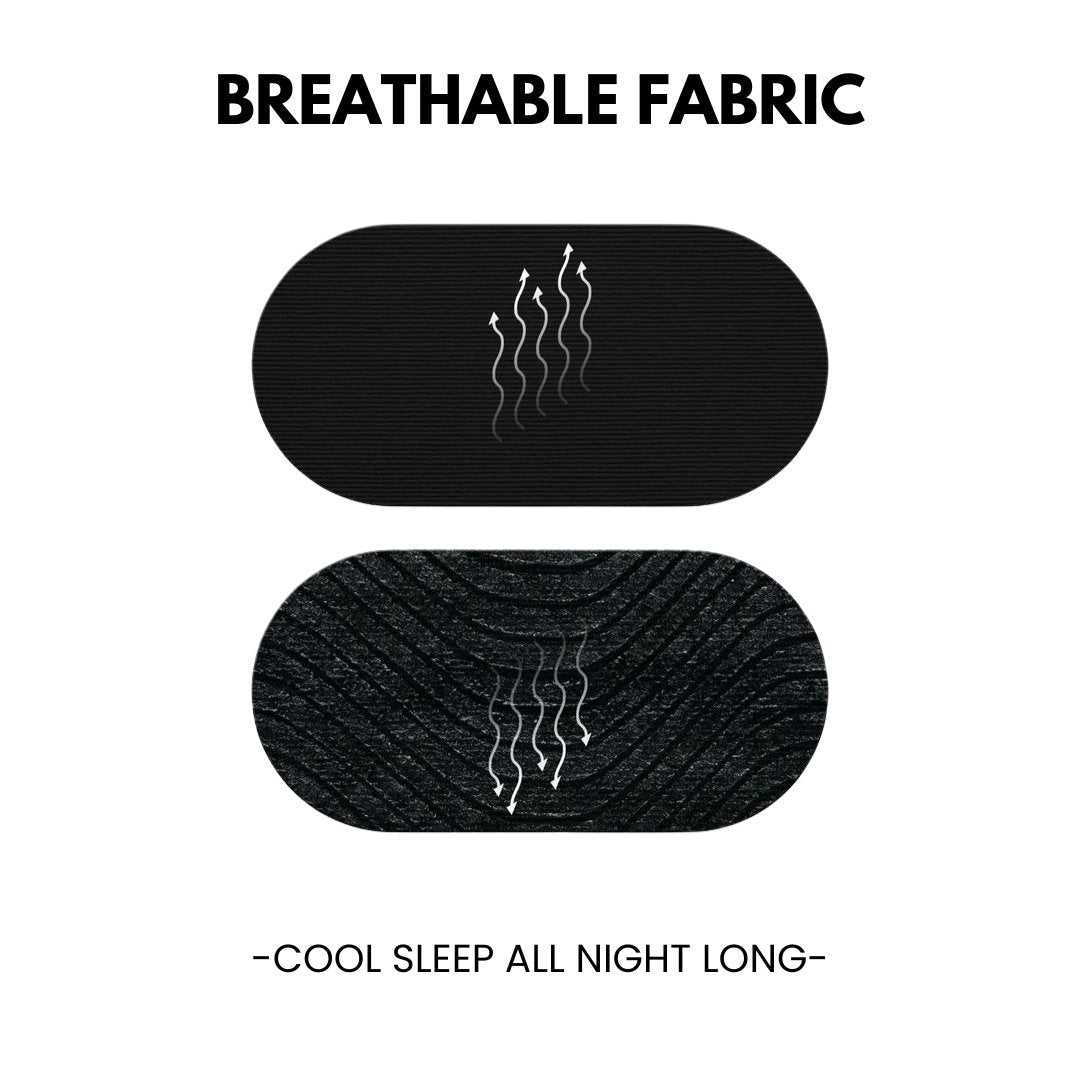
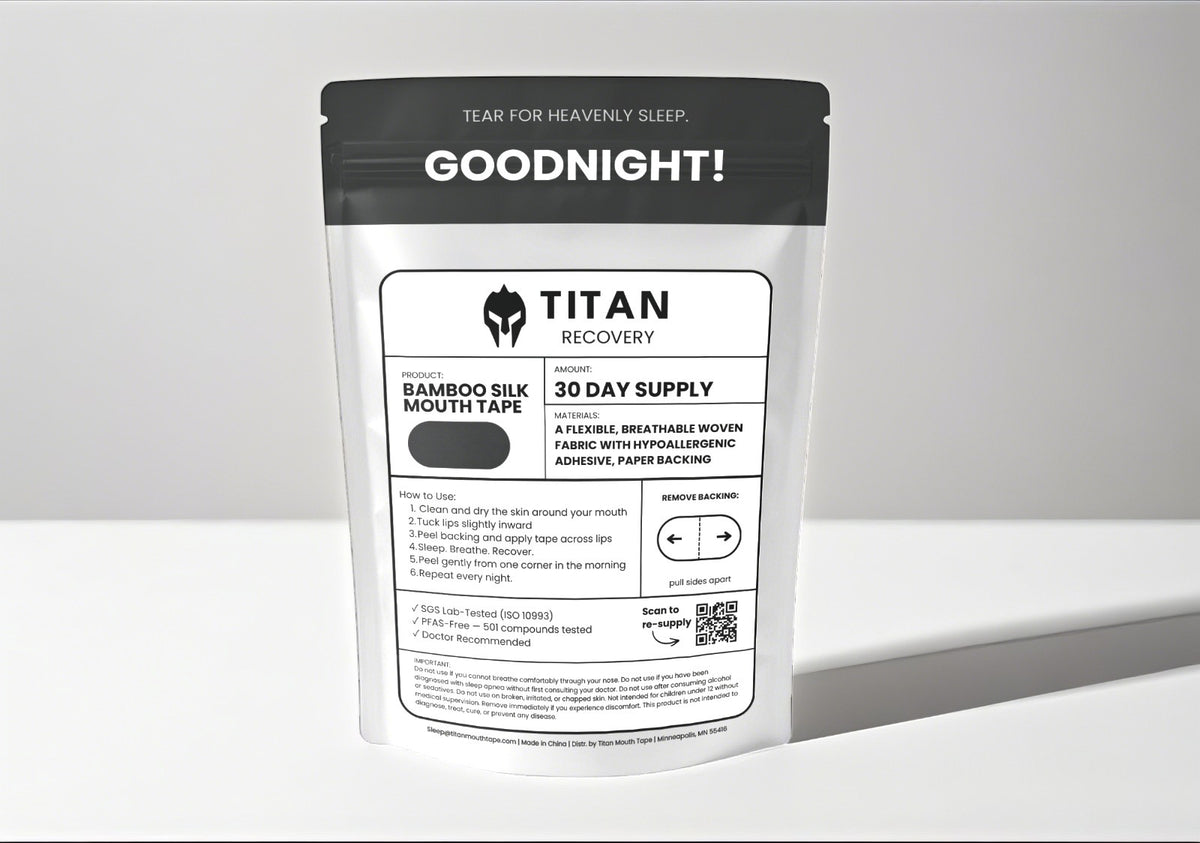
This isn't about clenching your jaw shut with industrial adhesive. The tape we use at Titan Recovery is a medical-grade adhesive that sits comfortably across the lips, keeps them sealed against the natural relaxation of sleep, but releases easily if you need to open your mouth. It's gentle enough to wear every night and effective enough to keep a full seal through all sleep stages, including the deep relaxation phases where your jaw muscles let go completely.
Mouth tape also redirects your breathing through your nose, which comes with its own set of benefits. Nasal breathing filters, warms, and humidifies the air before it reaches your lungs. It also promotes the production of nitric oxide in the nasal passages, which supports vascular health and oxygen absorption. So beyond stopping the drool, you're breathing the way your body was designed to breathe during sleep.
If nasal congestion is part of your drooling problem — and it often is — pairing mouth tape with TitanAir Nasal Strips opens the nasal airway mechanically, reducing the resistance that causes your body to switch to mouth breathing in the first place. The Titan Sleep System combines both for exactly this reason.
What to Expect When You Start
Drooling relief is one of the fastest results people notice with mouth taping because the cause-and-effect relationship is so direct.
Night one. Your pillow is dry in the morning. For people who have been drooling for years, this is genuinely surprising. The change is immediate because the mechanism is purely physical — if the mouth doesn't open, the saliva doesn't escape. You may also notice you feel more hydrated when you wake up, since saliva that used to end up on your pillow is now staying in your body.
First week. You stop thinking about it. The novelty of a dry pillow wears off quickly and just becomes normal. You may also notice improvements in morning breath and reduced throat dryness, both of which are connected to the same mouth-open-during-sleep problem. If you're new to mouth taping, check out our step-by-step guide to make the transition comfortable.
First month. The skin irritation around your mouth and chin clears up if drooling was causing it. Your pillow stays fresher longer between washes. You may notice your sleep quality has improved overall — not just from eliminating drooling, but from the cumulative benefits of consistent nasal breathing through the night.
Other Approaches People Try
Drooling is common enough that people have come up with plenty of attempted solutions. Some help a little. None address the root cause the way mouth tape does.
Switching sleep positions. Sleeping on your back reduces gravity-driven drooling, and some people try training themselves to stay on their back all night. The problem is that this is difficult to maintain — you move positions dozens of times per night without conscious control. And if you're sleeping on your back with your mouth open, the saliva still moves; it just goes toward your throat instead of your pillow, which can cause coughing, gagging, or aspiration. The position isn't the root cause. The open mouth is.
Special pillows. Elevated or contoured pillows can change the angle of your head and jaw, and some people find they drool slightly less with certain pillow shapes. But a pillow can't keep your mouth closed. If your jaw relaxes and your lips part — which they will during deep sleep — the drool still happens, just maybe at a slightly different angle. The pillow addresses a symptom of a symptom.
Staying hydrated. Drinking more water before bed is sometimes recommended as a drooling solution, which is counterintuitive and doesn't actually help. Drooling isn't caused by excess saliva production — it's caused by saliva leaving the mouth through an opening that shouldn't be there during sleep. Drinking more water just means more bathroom trips at night.
Medications. In rare cases, excessive drooling can be treated with medications that reduce saliva production. These are typically reserved for neurological conditions where drooling is a daytime problem, not for the garden-variety nighttime drooling that comes from sleeping with your mouth open. Reducing saliva production creates its own set of problems — dry mouth, increased cavity risk, difficulty swallowing — and doesn't address the mouth breathing that caused the issue.
Frequently Asked Questions
Is drooling in your sleep normal?
It's extremely common — some estimates suggest nearly half of adults drool during sleep at least occasionally. But common doesn't mean optimal. Drooling indicates that your mouth is opening during sleep, which means you're mouth breathing. While occasional drooling is harmless, consistent nightly drooling suggests a pattern worth addressing, both for comfort and for the broader benefits of nasal breathing during sleep.
Can mouth tape make you drool more?
No. Mouth tape keeps your lips sealed, which is the opposite of the condition that causes drooling. Some people worry that trapping saliva inside a closed mouth will cause problems, but your body is designed to manage saliva in a closed mouth — you do it all day. You swallow it naturally, even during sleep. The tape simply maintains the closed-mouth position that your relaxed jaw muscles won't hold on their own.
What if I drool because of allergies or congestion?
Allergies and congestion cause drooling indirectly — they block the nasal airway, which forces mouth breathing, which leads to drooling. The solution has two parts: open the nasal airway and keep the mouth closed. TitanAir Nasal Strips mechanically widen the nasal passage to reduce resistance, while Titan Mouth Tape keeps the lips sealed so you breathe through the now-open nose instead of defaulting to mouth breathing. If congestion is severe — a full sinus infection, for example — address that first and add mouth taping once you can breathe through your nose reasonably well.
Does sleeping position affect how much you drool?
Yes, but only in terms of where the drool goes, not whether it happens. Side sleepers drool onto their pillow. Stomach sleepers drool onto the mattress. Back sleepers with open mouths may not drool visibly, but saliva pools at the back of the throat, which can cause disrupted sleep, coughing, or a sore throat by morning. Changing your sleep position can redirect drool but doesn't stop it — only keeping the mouth closed does that. Read more about how mouth tape helps with other nighttime breathing issues.
How long does it take for mouth tape to stop drooling?
One night. Unlike some benefits of mouth taping that develop gradually over weeks, drooling stops as soon as the mouth stays closed. The very first night you wear Titan Mouth Tape and it maintains a seal through the night, you'll wake up to a dry pillow. There's no adjustment period for this particular benefit — the mechanism is purely physical and the result is immediate.
The Bottom Line
Drooling on your pillow at night isn't something you have to accept as part of how you sleep. It happens for a specific, mechanical reason — your mouth opens, and gravity pulls saliva out. The fix is equally specific and mechanical: keep the mouth closed.
Mouth tape does exactly that. It holds your lips gently together through the night so saliva stays in your mouth, your pillow stays dry, and you breathe through your nose the way your body was designed to. The change happens the first night you use it.
If you're ready to stop flipping your pillow over every morning, Titan Mouth Tape is the straightforward answer. Pair it with TitanAir Nasal Strips if congestion is part of the picture, or grab the Titan Sleep System for the full setup. Learn more about why we built Titan Recovery and what makes our approach different.
Doctor Recommended: "As a maxillofacial surgeon and dentist, I recommend Titan Mouth Tape. Nasal breathing during sleep is essential for airway health and deep restorative rest. Titan's bamboo silk design is the most comfortable and effective mouth tape I have tested. If you struggle with snoring, dry mouth, or poor sleep quality, this is the simplest change you can make for your health." — Dr. Francois P., MD, DDS — Maxillofacial Surgeon
Lab-Tested Safety: Titan's adhesive is independently tested to ISO 10993 medical device standards. Non-toxic (95% cell viability). Non-allergenic (0% reaction rate). Non-irritating (score 0.0/8.0). PFAS-free — 501 compounds tested, zero detected. See full test results →
Try the complete system tonight. Titan Mouth Tape (bamboo silk, SilkSeal™ adhesive) + TitanAir Nasal Strips. Free shipping. 30-night Better Sleep Guarantee. Shop Titan Mouth Tape → · Shop TitanAir Nasal Strips →