Mouth Tape and Acid Reflux: Can Nasal Breathing Reduce Nighttime GERD?
Share
If you deal with acid reflux at night, you already know how miserable it makes sleep. The burning, the throat irritation, the midnight wakeups. What you might not know is that the way you breathe during sleep may be making it worse. Mouth tape is not a treatment for GERD — but by promoting nasal breathing, it may reduce several factors that contribute to nighttime reflux, including dry mouth, air swallowing, and shallow chest breathing.
If you have diagnosed GERD, keep following your gastroenterologist's guidance. What we're covering here is how the shift from mouth breathing to nasal breathing may support better conditions for sleep when reflux is part of the picture.
Why Acid Reflux Gets Worse at Night
Gastroesophageal reflux disease (GERD) happens when stomach acid flows backward through the lower esophageal sphincter (LES) — the muscular valve between your stomach and esophagus. During the day, gravity and upright posture help keep acid where it belongs. At night, lying flat removes that advantage, giving acid a shorter path to travel and more time to irritate the esophageal lining.
Nighttime reflux also tends to be more damaging because you swallow less frequently during sleep, so acid stays in contact with the esophagus longer. Saliva production drops too — and saliva is your body's natural acid buffer. These factors make acid reflux at night a particularly stubborn problem, and one where every contributing variable matters.
The Mouth Breathing and Acid Reflux Connection
Research has identified several ways that mouth breathing may worsen reflux symptoms during sleep. None of these are direct causes of GERD on their own, but they create conditions that make existing reflux more frequent or more uncomfortable.
Dry Mouth and Reduced Saliva
Saliva contains bicarbonate, which neutralizes acid on contact. When stomach acid reaches the esophagus, swallowed saliva helps clear it and buffer the pH. Mouth breathing dramatically accelerates oral moisture loss, reducing both volume and buffering capacity overnight. Less saliva means acid lingers longer and does more damage. If you already deal with dry mouth during sleep, reflux is likely compounding the problem — and vice versa.
Air Swallowing and Stomach Pressure
Mouth breathing is associated with aerophagia — the involuntary swallowing of air. When you breathe through an open mouth during sleep, you take in more air with each swallow. That air accumulates in the stomach, increasing gastric pressure. Higher stomach pressure pushes against the LES and makes reflux episodes more likely. This is one of the less obvious connections between GERD and mouth breathing, but it's a meaningful one for people who wake up feeling bloated or gassy alongside their reflux symptoms.
Shallow Breathing and a Weaker LES
The diaphragm plays a dual role that most people don't think about. It's your primary breathing muscle, but it also wraps around and reinforces the lower esophageal sphincter. Deep, diaphragmatic breathing — the kind your body defaults to during nasal breathing — engages the diaphragm fully, which provides additional support to the LES. Mouth breathing tends to promote shallower, chest-dominant breathing patterns that reduce this mechanical support. Over time, habitual shallow breathing may contribute to a weaker barrier against acid reflux.
How Nasal Breathing May Help
Switching from mouth breathing to nasal breathing addresses several of those contributing factors at once. It's not a magic fix for GERD, but it shifts your breathing mechanics in a direction that may reduce the severity and frequency of reflux episodes.
Saliva preservation. Breathing through the nose keeps the mouth closed, reducing oral moisture loss. You maintain higher saliva volume through the night, preserving more of your body's natural acid-buffering capacity.
Reduced air swallowing. Nasal breathing involves a slower, more controlled airflow pattern. The nasal passages filter, warm, and regulate incoming air, reducing the amount swallowed during sleep. Less air in the stomach means less gastric pressure working against the LES.
Diaphragmatic engagement. Nasal breathing naturally promotes deeper, belly-driven breathing rather than shallow chest breathing. This engages the diaphragm more fully and may provide stronger mechanical support to the LES throughout the night. The nitric oxide produced during nasal breathing also supports vasodilation and healthier tissue function in the airways.
Sleep Position and Reflux: Where Breathing Fits In
If you've researched how to sleep with acid reflux, you've probably encountered the standard advice: sleep on your left side with your head slightly elevated. This positioning uses gravity to keep acid in the stomach and away from the esophageal opening, which sits slightly to the right of center. It's one of the most effective non-medication strategies for reducing nighttime reflux.
What's less discussed is how breathing pattern affects position maintenance. Mouth breathers tend to shift positions more often, frequently ending up on their back — the worst position for reflux. Nasal breathing is associated with more stable sleep, meaning you're more likely to stay in the reflux-friendly position you chose at bedtime. We've covered the best sleeping positions for nasal breathing in detail, and the overlap with reflux recommendations is significant.
Using Mouth Tape for Reflux-Related Sleep Issues
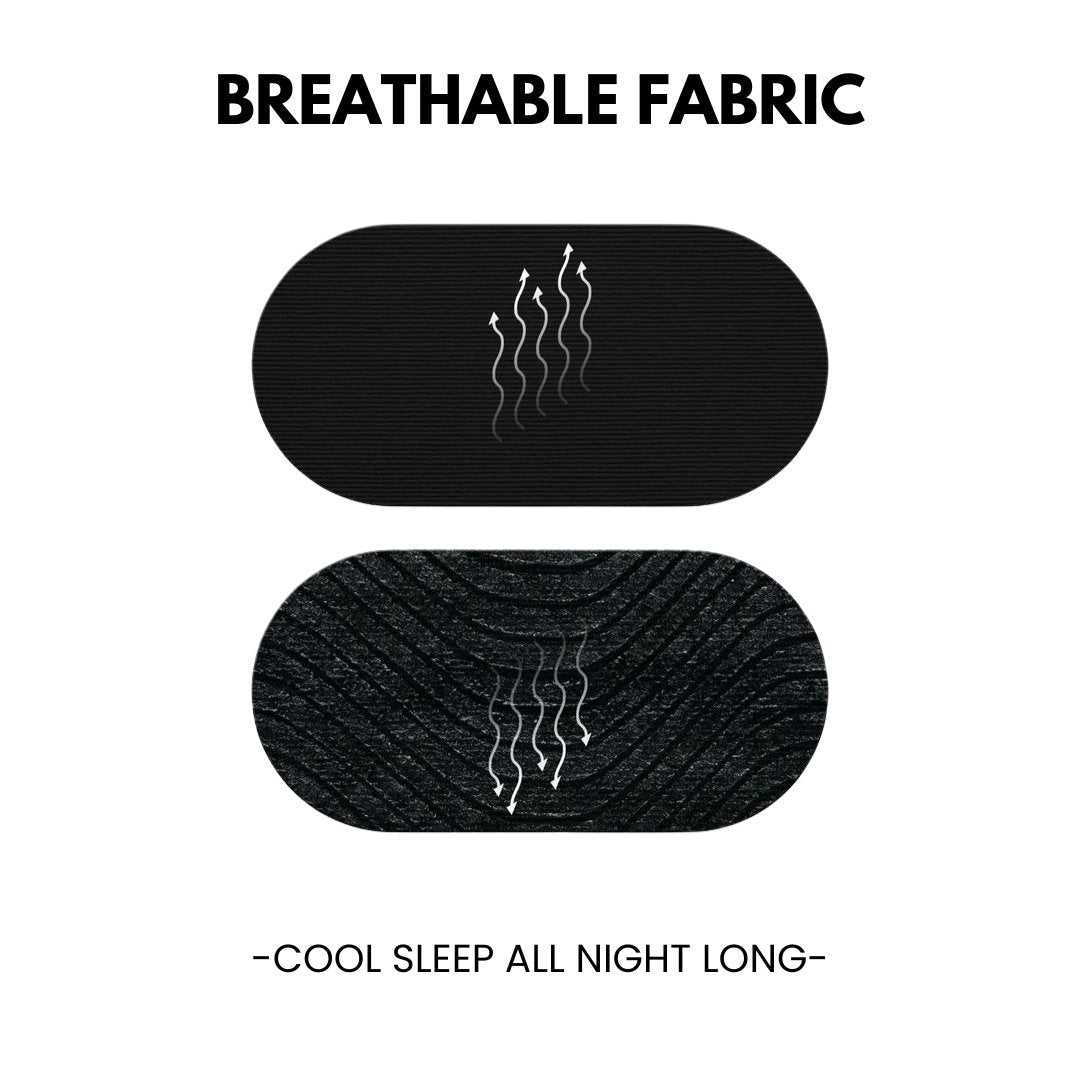
Mouth tape keeps your lips gently sealed during sleep, prompting nasal breathing. For reflux sufferers, the goal is to remove the breathing-related factors that may be making symptoms worse. If you're new to taping, start with our complete guide to mouth tape for sleeping. A few reflux-specific considerations:
Make sure your nose is clear first. Nasal congestion will undermine the entire approach. If you have chronic stuffiness or a deviated septum, try pairing TitanAir Nasal Strips with your tape to open the nasal passages mechanically. Using mouth tape and nasal strips together is one of the most effective combinations for ensuring consistent nasal airflow.
Don't skip your existing reflux management. If your doctor has you on a PPI, H2 blocker, or dietary protocol, mouth tape works alongside those interventions — not instead of them. The tape addresses breathing mechanics; your medication addresses acid production.
Combine with position. Use mouth tape alongside left-side sleeping and a wedge pillow or elevated headboard. Stacking these low-risk strategies together is more effective than relying on any single approach. If you find yourself still tired after a full night of sleep, reflux-related disruptions — even ones you don't fully wake up for — could be the reason.
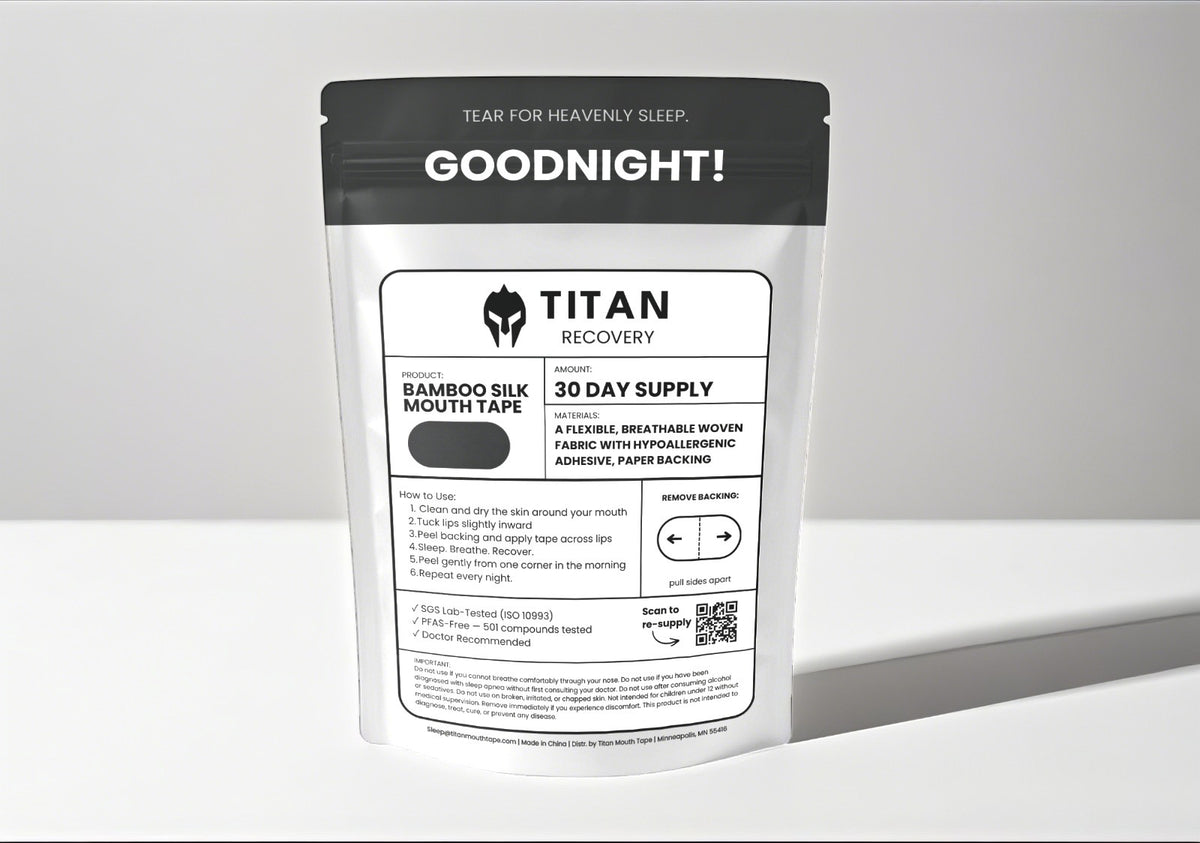
Choose the right tape. Not all mouth tape is made the same. You want something that holds a seal all night without irritating skin, especially if you're also managing nighttime mouth breathing or snoring. Our guide on how to pick mouth tape covers what to look for. Titan Mouth Tape uses a medical-grade adhesive designed for sensitive skin and all-night hold.
Frequently Asked Questions
Can mouth tape cure acid reflux?
No. Mouth tape promotes nasal breathing, which may reduce contributing factors like dry mouth, air swallowing, and shallow breathing that can worsen reflux symptoms at night. It is not a treatment for GERD. If you have diagnosed reflux, work with your doctor and consider mouth tape as one supporting element alongside medical guidance.
Is it safe to use mouth tape if I have GERD?
For most people, yes. Mouth tape keeps the lips sealed but does not block the airway. If you experience nausea or active vomiting related to your reflux, hold off until those symptoms are managed. Always ensure you can breathe clearly through your nose before taping.
Does nasal breathing actually reduce acid reflux?
Nasal breathing acid reflux research is still evolving, but the mechanical connections are well-established. Nasal breathing preserves saliva production, reduces air swallowing, and promotes diaphragmatic breathing that supports the lower esophageal sphincter. These factors are associated with reduced reflux frequency and severity, though individual results vary.
What sleeping position is best for acid reflux and nasal breathing?
Left-side sleeping with the head slightly elevated is the gold standard for reducing nighttime reflux. This position also works well for nasal breathing and is compatible with mouth tape. Avoid sleeping flat on your back, which worsens both reflux and the tendency to mouth breathe.
Can I use mouth tape with reflux medication?
Absolutely. Mouth tape addresses breathing mechanics, while medications like PPIs and H2 blockers address acid production. They work on different parts of the problem. Continue taking any prescribed medication as directed. The Titan Deep Sleep Bundle — which pairs mouth tape with nasal strips — is a good starting point if you want to address both nasal airflow and mouth breathing simultaneously.
The Bottom Line
Acid reflux at night is a multi-factor problem, and mouth breathing is one factor that can make it worse. By drying out the mouth, increasing air swallowing, and promoting shallow breathing, it creates conditions that may worsen reflux frequency and severity. Mouth tape doesn't treat GERD directly — but by encouraging nasal breathing, it may reduce some of those contributing variables.
The smart approach is to stack low-risk strategies: left-side sleeping, head elevation, nasal breathing, and whatever medical treatment your doctor recommends. Titan Mouth Tape fits into that stack as a breathing tool, not a reflux treatment. It's one piece of a bigger picture — and for many people, the piece they didn't know was missing.
Doctor Recommended: "As a maxillofacial surgeon and dentist, I recommend Titan Mouth Tape. Nasal breathing during sleep is essential for airway health and deep restorative rest. Titan's bamboo silk design is the most comfortable and effective mouth tape I have tested. If you struggle with snoring, dry mouth, or poor sleep quality, this is the simplest change you can make for your health." — Dr. Francois P., MD, DDS — Maxillofacial Surgeon
Lab-Tested Safety: Titan's adhesive is independently tested to ISO 10993 medical device standards. Non-toxic (95% cell viability). Non-allergenic (0% reaction rate). Non-irritating (score 0.0/8.0). PFAS-free — 501 compounds tested, zero detected. See full test results →
Try the complete system tonight. Titan Mouth Tape (bamboo silk, SilkSeal™ adhesive) + TitanAir Nasal Strips. Free shipping. 30-night Better Sleep Guarantee. Shop Titan Mouth Tape → · Shop TitanAir Nasal Strips →