I Tried Mouth Tape and It Didn’t Work. Here’s What Went Wrong
Share
You tried mouth tape. It didn't work.
Maybe it fell off at 2am. Maybe it ripped out hair. Maybe it left a sticky residue on your face that took ten minutes to scrub off. Maybe it irritated your skin. Maybe it felt like wearing duct tape to bed.
So you stopped. You told yourself mouth taping isn't for you. And you went back to waking up with a dry mouth, snoring, and dragging through the day on four hours of real sleep.
Here's the thing: mouth taping didn't fail you. Your tape did.
The Dirty Secret of the Mouth Tape Market
The mouth tape market exploded between 2022 and 2025. Hundreds of brands launched. Most of them did the same thing: they bought generic adhesive tape from an overseas manufacturer, slapped a label on it, and listed it on Amazon for $12.99.
They didn't test the adhesive. They didn't develop their own material. They didn't invest in a tape that works on facial hair, or that feels comfortable enough to wear every night, or that releases cleanly in the morning. They just needed a product fast enough to ride the trend.
If your first experience with mouth tape involved any of the following, you were using one of these products:
The tape was made from kinesiology tape — the athletic tape designed for knees and shoulders, with an aggressive acrylic adhesive that bonds to hair and leaves residue. Or it was a thin plastic strip that curled at the edges and popped off within an hour. Or it was medical paper tape from a first aid kit — gentle enough, but with zero holding power on anything other than perfectly dry, hairless skin.
None of these were engineered for the job. They were repurposed. And the experience you had — tape on your pillow by morning, irritated skin, ripped-out facial hair — was the predictable result of a product that wasn't built for your mouth.
What Actually Goes Wrong (And Why)
When people say mouth tape "didn't work," they usually mean one of five things. Each one has a specific cause — and none of them are reasons to give up on mouth taping.
"It fell off during the night." This is an adhesive problem. The adhesive was either too weak for your skin type, couldn't handle the moisture produced during sleep, or couldn't grip through facial hair. Plastic and paper tapes are the most common offenders. The fix isn't pressing harder or applying to "clean, dry skin" — it's using an adhesive that's formulated for prolonged wear on the face in humid conditions.
"It ripped out my facial hair." This is a material problem. Kinesiology tape adhesives bond aggressively to hair fibers. They're designed for athletic use on shaved or hairless skin. When applied to a beard, goatee, or stubble, they grip the hair instead of the skin. Removal becomes painful, and small patches of hair come out with the tape. The fix is a flexible fabric tape with an adhesive that bonds to skin through and around hair — not a rigid tape that fights it.
"It left sticky residue on my face." This is an adhesive quality problem. Cheap acrylic adhesives break down during prolonged wear, especially in warm and moist conditions — exactly the conditions present during sleep. The adhesive partially liquefies and transfers to the skin, leaving a gummy residue that requires oil or rubbing alcohol to remove. Higher-quality medical-grade adhesives maintain their integrity during wear and release cleanly.
"It irritated my skin." This is a biocompatibility problem — and the most concerning one. The skin around your mouth is thin, sensitive, and absorbent. An adhesive that hasn't been tested for skin safety can cause redness, itching, peeling, or contact dermatitis. Many tape brands use untested adhesives and market them as "hypoallergenic" without any lab data to support the claim. The fix is using a tape whose adhesive has been independently tested for cytotoxicity, skin sensitization, and irritation under ISO 10993 medical device standards.
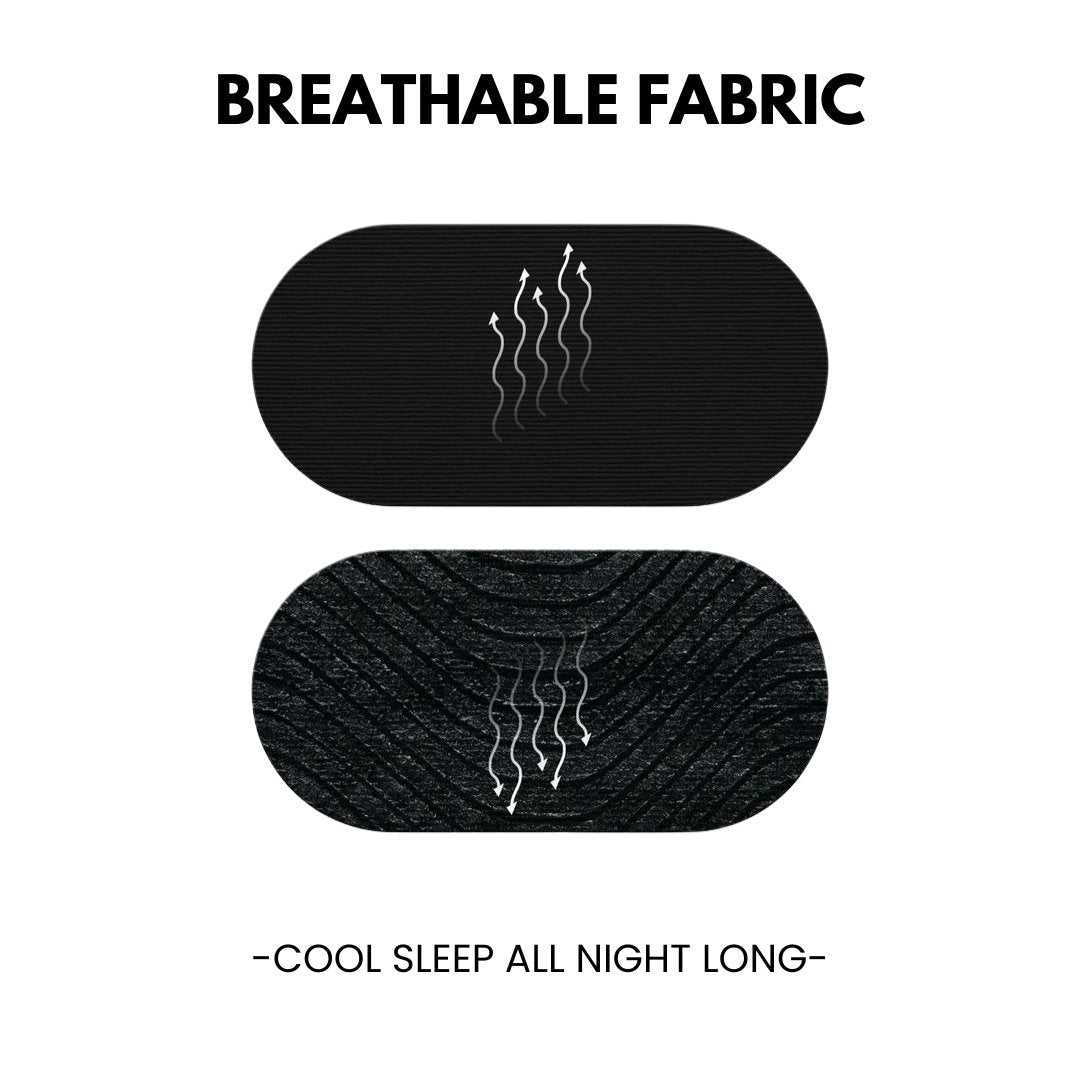
"It was so uncomfortable I couldn't fall asleep." This is a material and design problem. Rigid tapes, thick tapes, and tapes with strong chemical odors all interfere with sleep onset. If you're aware of the tape on your face — if you can feel it pulling, stretching, or restricting movement — your brain won't relax. The tape needs to feel like nothing. Thin, soft, breathable fabric (bamboo silk is the gold standard here) achieves this in a way that plastic, paper, and kinesiology tape cannot.
Five Things Your First Tape Probably Got Wrong
1. Wrong material. Plastic doesn't breathe. Paper doesn't hold. Kinesiology tape is too aggressive. The material needs to be a woven fabric — breathable, flexible, and conforming to the contours of your face. Bamboo silk is naturally antibacterial, moisture-wicking, and soft enough to sleep in without noticing it.
2. Wrong adhesive. The adhesive is the most important part of any mouth tape, and it's where most brands cut the most corners. A good adhesive needs to hold for 8 hours in warm, moist conditions without losing grip, without transferring residue, and without bonding to facial hair. It needs to be gentle enough for nightly use on sensitive skin but strong enough to maintain a seal all night. That's a narrow window, and generic adhesives don't hit it.
3. No safety testing. Most brands have never tested their adhesive for biocompatibility. They haven't screened for PFAS. They haven't published lab data. If your skin reacted to your first tape, the adhesive may have contained irritants, allergens, or contaminants that proper testing would have caught.
4. Not designed for beards. If you have any facial hair, most tapes will either fall off or rip out hair. A tape designed for beards needs an adhesive that bonds to skin through hair without gripping individual hair fibers. This is a specific engineering challenge that generic tapes don't solve.
5. Bad design. Some tapes cover too much of the face. Others are too small and don't create a full seal. Some have logos printed on them — a branding choice that makes the product less appealing for nightly use. The design should be simple: a single strip, sized correctly for the mouth, with no branding, no bulk, and no unnecessary material.
What a Good Tape Actually Feels Like
If you've only ever used a bad mouth tape, you might not know what a good one feels like. Here's the difference:
You apply it in five seconds. It sits against your lips and the skin around your mouth like a second skin — soft, thin, and barely perceptible. Within two minutes, you've stopped noticing it. You fall asleep normally.
During the night, it holds. It doesn't peel at the edges. It doesn't slide. It doesn't stretch out and lose its seal. Your mouth stays closed. Your tongue stays against the palate. You breathe through your nose all night.
In the morning, you peel it off slowly from one corner. It releases cleanly. No hair pulling. No residue. No redness. Your mouth is moist. Your throat isn't raw. You feel like you actually slept — not just laid there.
That's the experience that a well-engineered mouth tape delivers. And it's nothing like the experience you had with the $12.99 Amazon tape that fell off at 2am.
How to Choose Your Second Tape
If you're ready to try again — and you should be, because the practice works even if the product didn't — here's what to evaluate:
Material: Bamboo silk or woven cotton. Not plastic. Not paper. Not kinesiology tape.
Adhesive testing: Look for published ISO 10993 lab reports — cytotoxicity (is it toxic to cells?), skin sensitization (does it cause allergic reactions?), and skin irritation (does it cause redness or inflammation?). If the brand doesn't publish these, they haven't done them.
PFAS screening: Has the product been tested for forever chemicals? How many compounds were screened? Were the results published?
Beard reviews: If you have facial hair, filter reviews specifically for men with beards. Generic 5-star reviews don't tell you whether it'll work on your face.
No logo: A small thing that signals design intentionality. Brands that put a logo on the tape are prioritizing marketing over user experience.
Guarantee: A brand that offers a money-back guarantee is confident their product works. A brand that doesn't is hoping you won't return it.
The Practice Works. The Product Matters.
Mouth taping isn't a gimmick. The science behind nasal breathing — nitric oxide production, parasympathetic nervous system activation, improved oxygen absorption, reduced snoring, protected teeth and gums — is well-established. Elite athletes do it. Sleep specialists discuss it. Millions of people practice it nightly.
But the benefits only materialize if the tape stays on your face all night, doesn't damage your skin, and is comfortable enough that you'll actually use it consistently.
A bad tape doesn't disprove mouth taping. It just proves that materials matter. Chemistry matters. Engineering matters. And cutting corners on the thing that sits on your face for a third of your life matters most of all.
You didn't fail at mouth taping. Your tape failed you. Try a better one.
Doctor Recommended: “As a maxillofacial surgeon and dentist, I recommend Titan Mouth Tape. Nasal breathing during sleep is essential for airway health and deep restorative rest. Titan’s bamboo silk design is the most comfortable and effective mouth tape I have tested. If you struggle with snoring, dry mouth, or poor sleep quality, this is the simplest change you can make for your health.” — Dr. Francois P., MD, DDS — Maxillofacial Surgeon
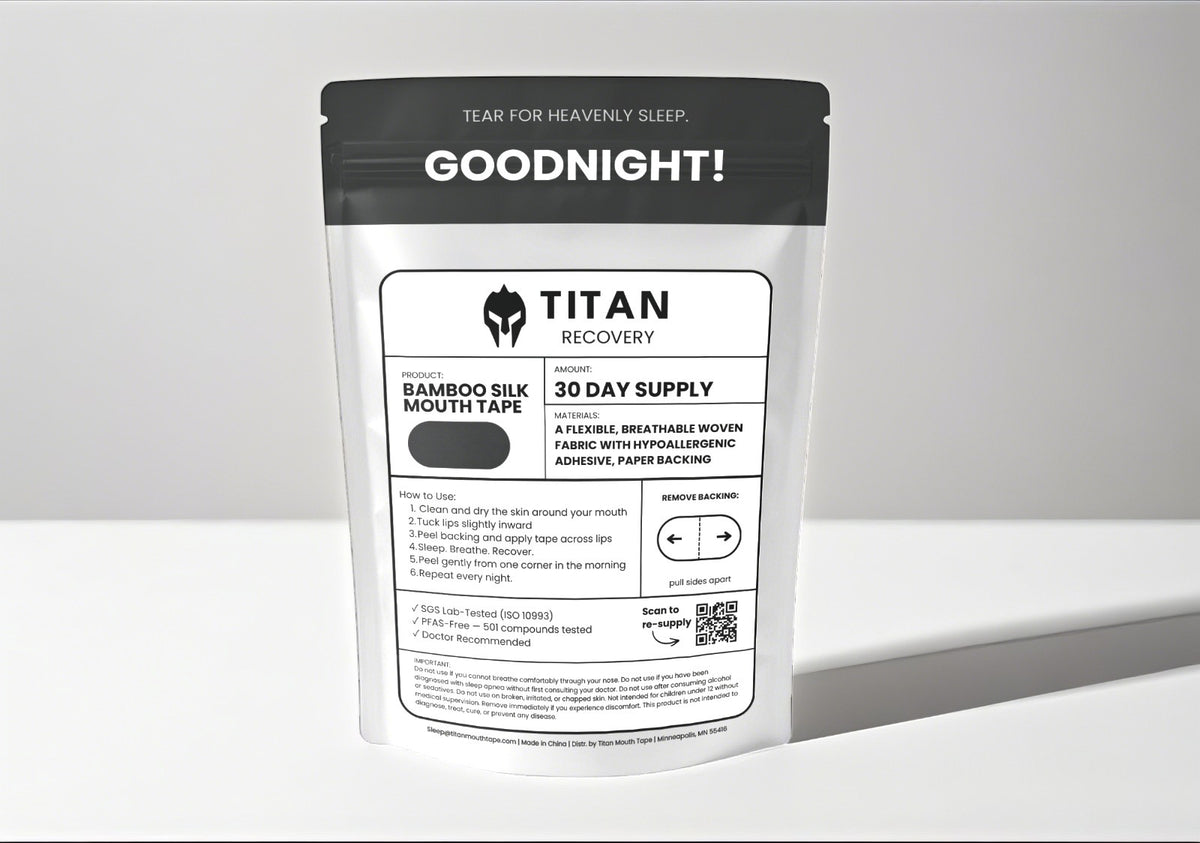
Lab-Tested Safety: Titan’s SilkSeal™ adhesive is independently tested to ISO 10993 medical device standards. Non-toxic (95% cell viability). Non-allergenic (0% reaction rate). Non-irritating (score 0.0/8.0). PFAS-free — 501 compounds tested, zero detected. See full test results →
Try it tonight. Bamboo silk. SilkSeal™ adhesive. Beard-friendly. No logo on the tape. Free shipping. 30-night Better Sleep Guarantee. Shop Titan Mouth Tape → · Shop TitanAir →