Titan Mouth Tape vs Dream Recovery: Same Material, Different Standards
Share
Titan Recovery and Dream Recovery sell mouth tape made from the same base material: bamboo silk. Both brands position themselves in the premium tier. Both claim PFAS-free formulations. If you lined up the product pages side by side, you'd think you were looking at two versions of the same thing.
You're not. The material is similar, but the testing behind it, the adhesive technology, and the level of transparency differ in ways that matter if you're putting something on your face for eight hours every night. Here's an honest breakdown of both products, and where the real differences show up.
What They Have in Common
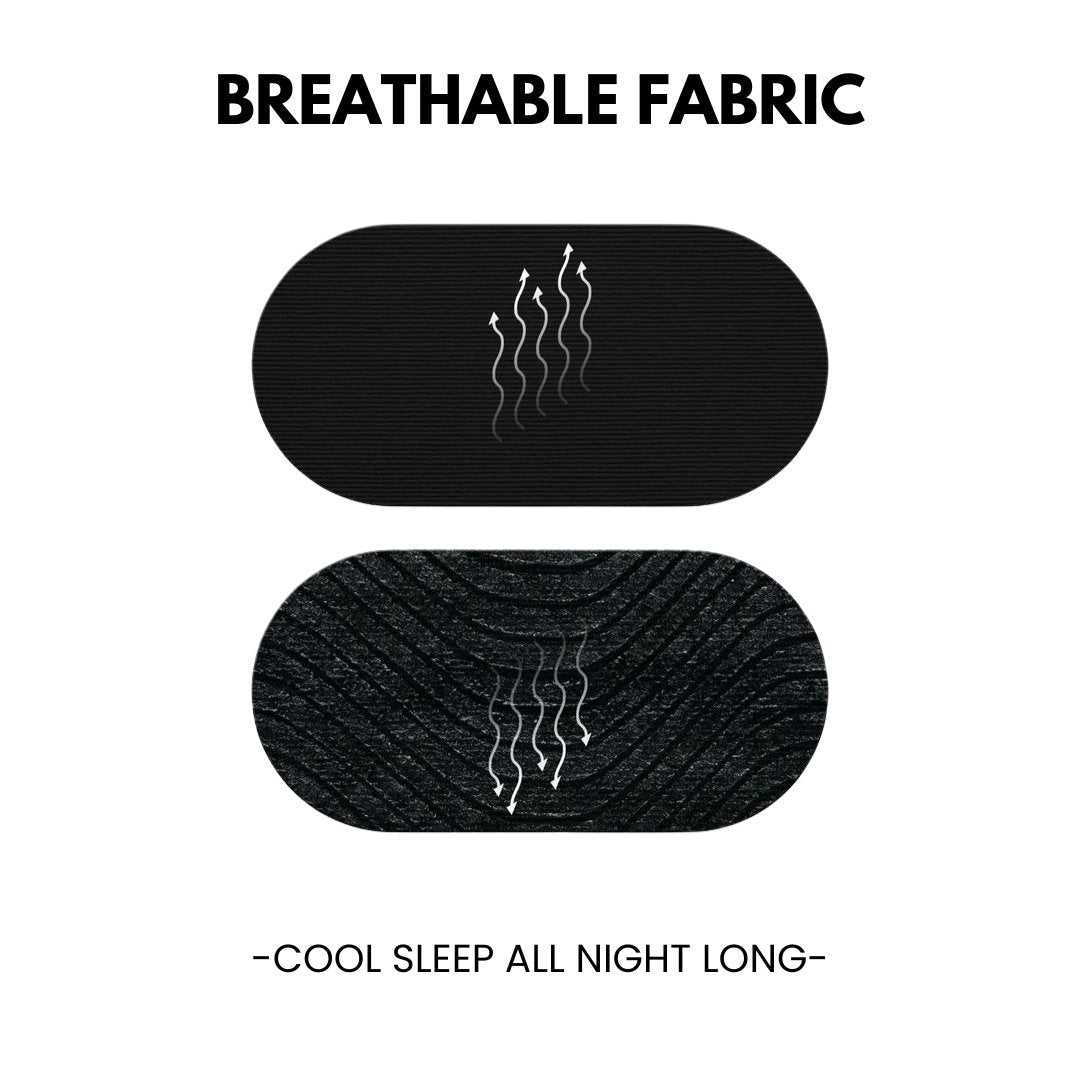
Credit where it's due: Titan Recovery and Dream Recovery share a product philosophy that sets both apart from the majority of the mouth tape market. Both chose organic bamboo silk as their primary material, which is softer, more breathable, and gentler on skin than the woven cotton, microporous film, or synthetic polymers used by most competitors. Both offer full-coverage tape options. Both are made in the USA. Both brands take a PFAS-free stance.
If your only criteria are "bamboo silk" and "PFAS-free," both products technically check the same boxes. The separation happens when you look at how each brand validates those claims.
Where They Differ: Testing Specificity
PFAS testing. PFAS (per- and polyfluoroalkyl substances) are synthetic chemicals found in a surprising number of consumer products, including some adhesives. Both Titan Recovery and Dream Recovery claim their products are PFAS-free. The difference is in the scope.
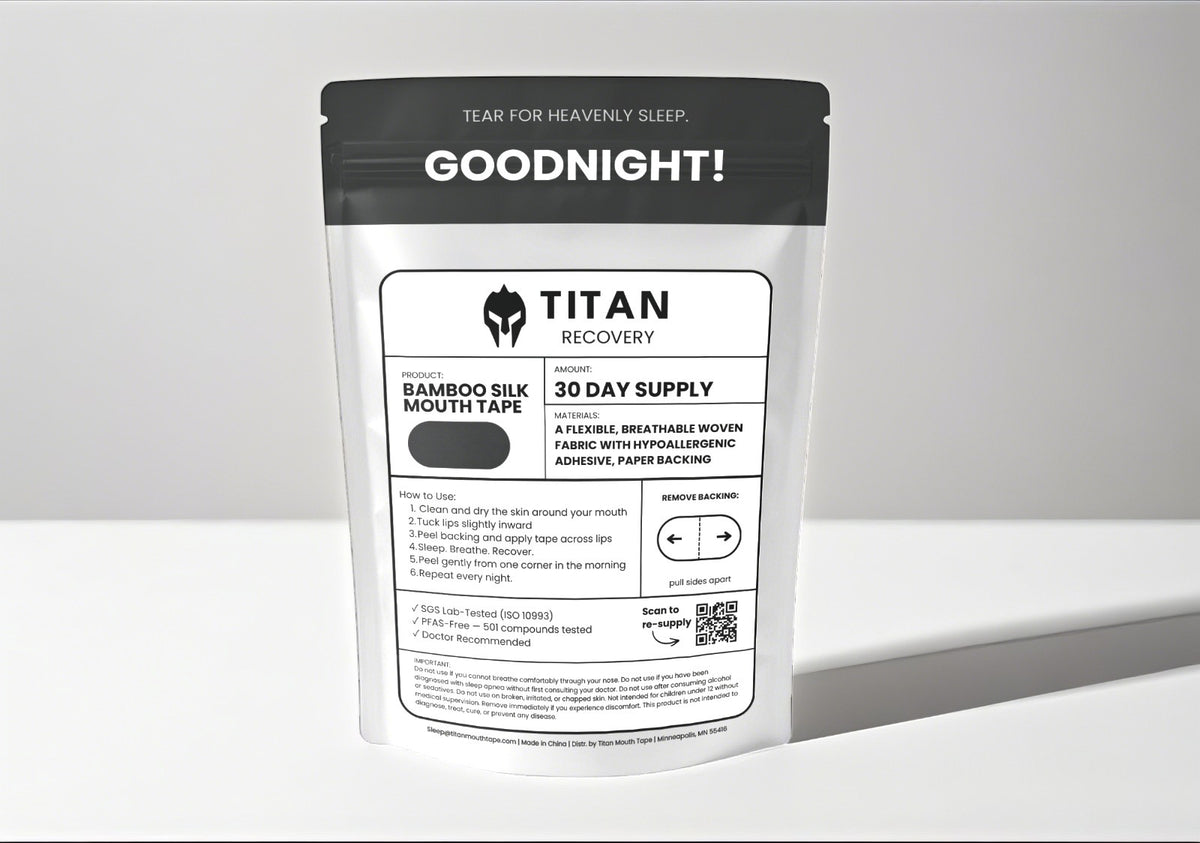
Titan Recovery's PFAS-free verification screens for 501 individual PFAS compounds. That number is specific and publicly documented. Dream Recovery states their tape is PFAS-free and non-toxic, but doesn't disclose the scope of their testing -- how many compounds were screened, which testing methodology was used, or what lab performed the analysis. That doesn't mean their product contains PFAS. It means you can't independently verify the depth of their claim the way you can with Titan Recovery's.
Biocompatibility testing. Titan Recovery's mouth tape is tested to ISO 10993, the international standard for evaluating the biocompatibility of medical devices that contact the body. ISO 10993 testing assesses cytotoxicity (cell damage), sensitization (allergic reactions), and irritation. It's the same standard applied to surgical implants, wound dressings, and medical adhesives.
Dream Recovery does not reference ISO 10993 or equivalent biocompatibility testing in their product documentation. Their adhesive is described as "medical-grade hypoallergenic," which is a common industry descriptor but not a specific testing standard. Many brands use the term "medical-grade" without third-party validation. Titan Recovery uses it too -- and backs it with the ISO certification.
For most people with normal skin, both products will likely perform fine. But if you have sensitive skin, eczema, or a history of adhesive reactions, the presence or absence of formal biocompatibility testing is a meaningful distinction.
Adhesive Technology
Titan Recovery uses its proprietary SilkSeal adhesive, engineered to hold securely for eight hours and release cleanly without pulling skin or leaving residue. The adhesive was developed specifically for overnight facial wear -- not adapted from a wound-care or bandage application.
Dream Recovery uses a medical-grade hypoallergenic adhesive. Based on user reports, it holds well and removes without significant discomfort. There's no published detail on the adhesive formulation or whether it was purpose-built for sleep use versus adapted from existing medical adhesive technology.
Both adhesives are functional. The difference is in the level of disclosed engineering: Titan Recovery names the adhesive system and describes its design intent. Dream Recovery describes the category ("medical-grade hypoallergenic") without naming a specific technology.
Product Line and Variants
Dream Recovery offers more product variety. This is one of their clear strengths. Their lineup includes:
Dream Tape Strips -- partial-coverage strips for a less restrictive feel. Dream Tape Full -- full-coverage for complete mouth seal. Dream Tape+ -- a premium variant infused with collagen, Vitamin E, Vitamin B, aloe, and retinol. The skincare-meets-sleep concept is genuinely interesting and appeals to people who want their overnight hours doing double duty.
Titan Recovery offers one mouth tape product with one design philosophy: full-coverage bamboo silk with SilkSeal adhesive. No partial strips. No skincare infusions. The logic is that the tape's job is nasal breathing and sleep quality, and the material and adhesive should be optimized entirely for that purpose. Fewer SKUs, more focus.
Whether you prefer the variety of Dream's lineup or the simplicity of Titan Recovery's depends on what you're looking for. If you want a partial-coverage option or skincare benefits built into your tape, Dream has offerings Titan Recovery doesn't. If you want a single product that's been through rigorous biocompatibility testing and focuses purely on sleep performance, Titan Recovery's approach is more streamlined.
The Comparison
| Category | Titan Recovery | Dream Recovery |
|---|---|---|
| Material | Bamboo silk | Organic bamboo silk |
| PFAS Testing Scope | 501 compounds tested | PFAS-free (scope not disclosed) |
| Biocompatibility Testing (ISO 10993) | Yes | Not disclosed |
| Adhesive Type | SilkSeal (proprietary) | Medical-grade hypoallergenic |
| Skincare Ingredients | None | Dream Tape+: collagen, vitamins, aloe, retinol |
| Price (30-day, full coverage) | $26.95 | $27.95 |
| Subscription Price | Multi-month discounts (up to 360-day) | $22.92/month (auto-ship) |
| Units Sold | Newer brand | 3,000,000+ |
| Made in USA | Yes | Yes |
Pricing Breakdown
For full-coverage tape at the single-pack level, the two brands are nearly identical: Titan Recovery at $26.95 for a 30-day supply, Dream at $27.95. A dollar apart.
Dream Recovery's subscription model is straightforward and favors people who want monthly auto-delivery: $22.92/month for Dream Tape Full on subscription, which is a meaningful discount from their one-time price.
Titan Recovery takes a different approach with bulk pricing. Instead of a monthly subscription, Titan Recovery offers multi-month supply packs that bring the per-night cost down as you buy in larger quantities: $26.95 for 30 days, $78.95 for 90 days, $146.95 for 180 days, and $272.95 for 360 days. That 360-day supply works out to roughly $0.76 per night. Dream's subscription rate for full coverage lands at about $0.76 per night as well. At scale, the cost per night is essentially the same.
Dream also offers partial-coverage strips at a lower price point ($24.25 one-time, $19.89 on subscription), which Titan Recovery doesn't match since Titan Recovery only offers full-coverage tape. If partial coverage is enough for you and budget is the deciding factor, Dream's strips are the cheaper option.
Volume and Market Presence
Dream Recovery has sold over 3 million units. That's a significant number, and it means their product has been tested by a large user base in real-world conditions. High volume doesn't automatically mean the product is superior, but it does mean the feedback loop is wide. A lot of people have tried it and enough have come back for Dream to sustain that kind of volume.
Dream also offers a 30-day money-back guarantee, which lowers the barrier to trial.
Titan Recovery is a newer entrant with a smaller installed base. The tradeoff is that Titan Recovery invested in third-party laboratory testing before scaling distribution -- ISO 10993 biocompatibility, 501-compound PFAS screening -- rather than prioritizing unit volume first. Different go-to-market strategies, each with its own logic.
Customer Service
Some Dream Recovery customers have reported slow response times from their support team, with waits exceeding 48 hours for replies. This isn't universal -- plenty of Dream customers have had fine support experiences -- but it's a pattern that shows up in enough reviews to be worth noting. High-volume brands sometimes struggle to scale customer service alongside order volume.
Titan Recovery's smaller scale currently allows for faster response times. Whether that holds as the brand grows remains to be seen, but as of now, support responsiveness is a point of differentiation.
Who Should Choose Titan Recovery
Titan Recovery is the right pick if you prioritize verified safety testing over sales volume -- specifically, 501-compound PFAS screening and ISO 10993 biocompatibility certification. If you have sensitive or reactive skin and want the assurance of formal biocompatibility testing rather than a general "hypoallergenic" label. If you prefer buying in bulk rather than managing a subscription. Or if you want a purpose-built adhesive (SilkSeal) with publicly documented design intent rather than a generic medical-adhesive descriptor.
The Bottom Line
This is the closest competitor comparison in the mouth tape market. Same base material. Similar pricing at scale. Both PFAS-free. Both made in the USA. If you grabbed either one without reading the fine print, you'd probably sleep well.
The difference is in what you can verify. Titan Recovery screens for 501 PFAS compounds and publishes the scope. Dream says PFAS-free without disclosing how many compounds were tested. Titan Recovery carries ISO 10993 biocompatibility certification. Dream describes their adhesive as medical-grade hypoallergenic without referencing a formal testing standard. Titan Recovery names its adhesive technology. Dream names the category.
Dream Recovery has earned massive market traction and offers genuine variety with their product line. The Dream Tape+ skincare variant is a concept nobody else in the market is doing. Those are real strengths.
But if the question is "what exactly was tested, and how thoroughly?" -- Titan Recovery has the more specific answers. For a product you wear on your face every night, that specificity is worth something. Try it yourself and see if you notice the difference.
Related reading
- REM vs. Deep Sleep
- What Happens When You Don't Sleep
- Recovery Isn't Just for Athletes
- Best Mouth Tape in 2026: What Actually Matters
- Mouth Tape vs Chin Strap: Which One Actually Keeps Your Mouth Closed?
- Titan vs SomniFix vs Hostage Tape: An Honest Comparison
- Is Mouth Tape a Gimmick? What the Evidence Says