Sleep Quality vs. Quantity: Why Hours Alone Don't Matter
Share
You can sleep nine hours and still wake up exhausted. That's because sleep quality vs quantity are two different metrics, and quantity alone tells you almost nothing about whether your sleep is actually restoring your body and brain. If you're hitting the recommended seven to nine hours and still dragging through your days, the problem isn't how long you sleep — it's how well you sleep during those hours.
The difference matters more than most people think. Research on sleep and health outcomes consistently shows that sleep quality is a stronger predictor of daytime functioning, mood, cognitive performance, and long-term health than total sleep duration. Two people can spend the same eight hours in bed and have wildly different outcomes depending on what happens during those hours.
What Sleep Quality Actually Means
Sleep quality isn't a vague feeling. It has measurable components.
Sleep efficiency: the percentage of time in bed that you're actually asleep. If you're in bed for eight hours but spend 45 minutes falling asleep and another 30 minutes awake mid-night, your efficiency is about 81%. Researchers consider 85% or higher good, 90% or above excellent. Below 80% signals a quality problem regardless of total hours.
Sleep architecture: the structure of sleep stages throughout the night. A normal night includes four to six 90-minute cycles, each moving through light sleep (N1, N2), deep sleep (N3/slow-wave), and REM. Earlier cycles are deep-sleep dominant; later cycles are REM-dominant.
Deep sleep is physically restorative — growth hormone release, tissue repair, immune maintenance, brain waste clearance. Adults need 60 to 90 minutes per night. Less than that, and you feel unrested regardless of total time.
REM sleep handles cognitive function, memory consolidation, and emotional regulation. Insufficient REM shows up as brain fog, irritability, and poor concentration. Most adults need 90 to 120 minutes per night.
Number of awakenings matters more than people realize. Brief micro-arousals fragment sleep architecture and prevent the brain from completing full cycles. You may not remember them, but your body registers every one. Even five to ten brief arousals per hour — common in mouth breathers — can significantly degrade quality while leaving total sleep time unchanged.
Why You Can Get 8 Hours and Still Feel Terrible
The math of bad sleep quality is simple but rarely explained clearly. Take two people who both spend eight hours in bed.
Person A falls asleep in 10 minutes, sleeps through the night with two brief awakenings, spends 85 minutes in deep sleep and 110 minutes in REM, and wakes up naturally near the end of a sleep cycle. Sleep efficiency: 96%. They feel rested.
Person B takes 25 minutes to fall asleep, wakes up three times during the night (once for 15 minutes), has their deep sleep truncated by frequent micro-arousals, and gets pulled out of a REM cycle by their alarm. Deep sleep: 40 minutes. REM: 70 minutes. Sleep efficiency: 78%. They feel like they barely slept.
Both logged eight hours in bed. One got genuinely restorative sleep. The other got fragmented, shallow, architecturally disrupted sleep that left them tired, foggy, and irritable. This is the core of the sleep quality vs quantity distinction — and it's why you're still tired after 8 hours.
The most common quality disruptors include environmental factors (noise, light, temperature), substances (alcohol, caffeine too late in the day), stress and anxiety, inconsistent sleep schedules, sleep-disordered breathing, and mouth breathing. Most people address the obvious ones — blackout curtains, cutting off caffeine by 2 PM — but miss the breathing piece entirely.
How Mouth Breathing Destroys Sleep Quality
Mouth breathing during sleep is one of the most underrecognized destroyers of sleep quality. It doesn't necessarily reduce total sleep time — you can mouth breathe for eight straight hours. But it systematically degrades the quality of those hours in several measurable ways.
Fragmented sleep architecture. The oral airway is less stable than the nasal airway — the tongue and soft palate can partially obstruct it, triggering micro-arousals as the brain briefly ramps up muscle tone to reopen the airway. These arousals fracture sleep cycles and prevent the brain from sustaining deep sleep and REM.
Reduced deep sleep. Deep sleep requires maximal muscular relaxation and stable brain activity. Airway instability from mouth breathing works against both. The brain can't fully let go when it's monitoring a compromised airway. Studies show nasal breathing is associated with more deep sleep time, even in people without diagnosed sleep apnea.
Dry mouth arousals. Mouth breathing dries out oral tissues progressively through the night, triggering swallowing reflexes and brief awakenings. Waking up with dry mouth is a reliable signal of mouth breathing, and the dryness itself fragments sleep.
Sympathetic nervous system activation. Mouth breathing activates the fight-or-flight response more than nasal breathing. Research on HRV and nasal breathing shows nasal breathers maintain higher heart rate variability during sleep — a direct marker of the parasympathetic tone that supports deep, restorative sleep.
Snoring. Mouth breathing is the primary driver of snoring, which disrupts sleep architecture for both you and your partner. Even snoring that falls short of apnea produces measurable sleep fragmentation.
How to Actually Improve Sleep Quality
If you've been chasing more hours and still feeling unrested, shift your focus to quality. Here's what moves the needle, roughly in order of impact.
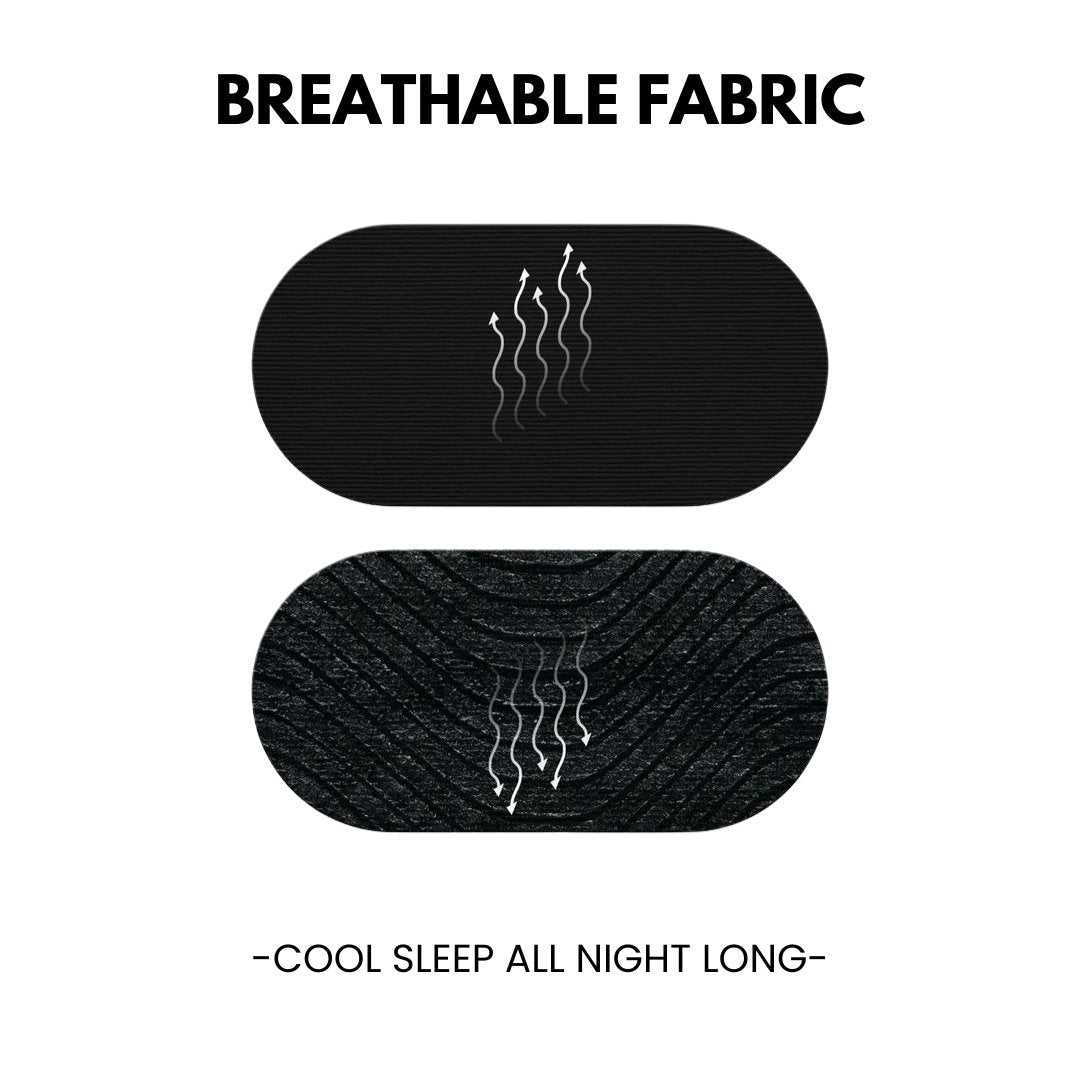
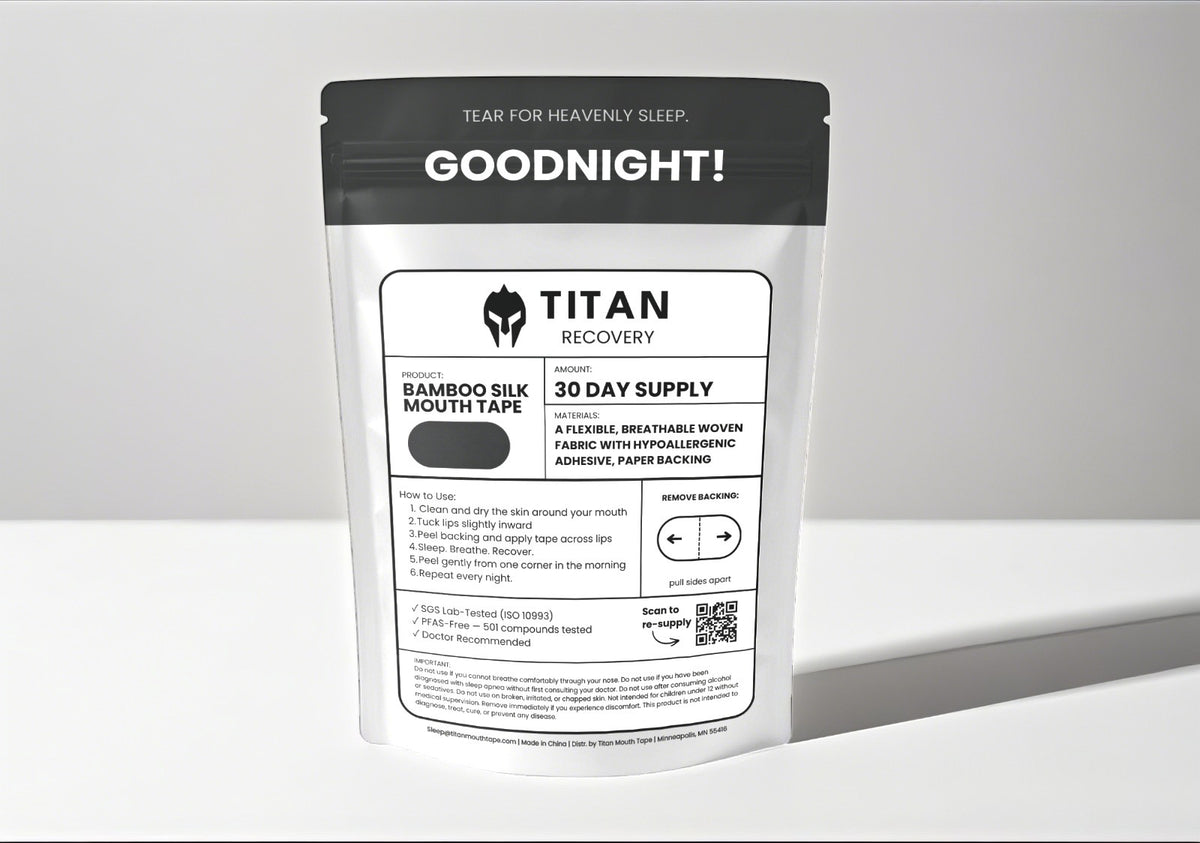
Fix the breathing. This is the highest-leverage change most people haven't made. Mouth tape ensures nasal breathing throughout the night, eliminating the cascade of quality degraders described above. It improves sleep efficiency, supports deeper sleep stages, reduces snoring, and promotes parasympathetic dominance. It's also the simplest intervention on this list — apply it before bed, remove it in the morning. If nasal congestion is a factor, pair it with nasal strips to keep the airway open.
Lock in your schedule. A consistent wake time — yes, weekends included — is the most powerful circadian rhythm tool. Pick a wake time, set it in stone, and let your body find the right bedtime naturally.
Control light exposure. Bright light within 30 to 60 minutes of waking anchors your circadian rhythm. Dimming lights in the evening protects the melatonin signal that drives sleep onset and deep sleep production. This is one of the proven factors that actually improve sleep quality.
Optimize your environment. Cool the room to 65 to 68 degrees. Make it dark (blackout curtains or a sleep mask). Address noise with earplugs or white noise. These factors directly affect sleep onset and number of awakenings.
Watch the substances. Caffeine has a half-life of five to seven hours — cut it by noon if quality is an issue. Alcohol helps you fall asleep faster but fragments the second half of the night, suppresses REM, and increases awakenings.
Manage the wind-down. A consistent 30 to 60 minute wind-down routine — dimmed lights, no screens, low-stimulation activity — reduces sleep onset latency and improves sleep efficiency.
How to Know If Your Sleep Quality Is Improving
You don't necessarily need a wearable sleep tracker to assess sleep quality, though they can be useful for spotting trends. Here are the practical signals that your sleep quality is improving.
You fall asleep within 10 to 20 minutes. Falling asleep the moment your head hits the pillow isn't a sign of good sleep — it usually means you're sleep-deprived. Taking more than 30 minutes indicates difficulty initiating sleep. The sweet spot is 10 to 20 minutes: awake long enough to register that you're winding down, asleep fast enough that you're not wasting time in bed.
You wake up no more than once during the night. One brief awakening (bathroom, repositioning) is normal. Multiple awakenings, or long periods of wakefulness in the middle of the night, indicate fragmented sleep.
You wake up without an alarm feeling rested. This is the gold standard. If your body wakes you naturally at a consistent time and you feel ready to start the day, your sleep quality and quantity are both in a good place.
No dry mouth or sore throat in the morning. These are telltale signs of mouth breathing during sleep. Their absence suggests nasal breathing is happening consistently.
Consistent energy through the afternoon. The post-lunch dip is normal, but severe afternoon fatigue or the need for a nap to function suggests poor sleep quality the night before, even if you logged enough hours.
Frequently Asked Questions
Is 6 hours of high-quality sleep better than 8 hours of poor sleep?
In terms of how you feel and function the next day, yes — six hours of efficient, well-structured sleep with adequate deep sleep and REM will typically leave you more rested than eight hours of fragmented, shallow sleep. But that doesn't mean six hours is enough long-term. Both quality and quantity matter for health. The goal is seven to nine hours of high-quality sleep, not trading one for the other. If you're currently getting poor-quality long sleep, focus on improving the quality first — the quantity may naturally adjust as your sleep becomes more efficient.
How does mouth tape improve sleep quality specifically?
Mouth tape improves sleep quality through several mechanisms. It ensures nasal breathing, which stabilizes the upper airway and reduces micro-arousals that fragment sleep. Nasal breathing promotes parasympathetic nervous system activation, which supports deeper sleep stages. It eliminates dry mouth, which is itself a source of sleep disruption. And it reduces or eliminates snoring, which fragments sleep architecture. The net effect is higher sleep efficiency, more time in deep sleep and REM, and fewer awakenings — all without adding a single minute to your time in bed.
What's the most important sleep stage for feeling rested?
Deep sleep (slow-wave sleep, stage N3) is most directly responsible for physical restoration and the feeling of being well-rested. It's when growth hormone is released, tissue repair occurs, and the brain's waste clearance system is most active. REM sleep is equally important for cognitive function, emotional regulation, and memory consolidation — its deficit shows up more as brain fog, irritability, and difficulty concentrating than as physical fatigue. You need adequate amounts of both for truly restorative sleep.
Can sleep trackers accurately measure sleep quality?
Consumer wearable sleep trackers (wrist-based devices and smart rings) are reasonably accurate at measuring total sleep time and sleep efficiency. Their accuracy for specific sleep stages — distinguishing deep sleep from light sleep, for example — is more limited compared to clinical polysomnography. They're useful for tracking trends over time (is your sleep efficiency improving week over week?) but shouldn't be taken as precise measurements on any given night. Use them as directional indicators rather than absolute values.
How long does it take to notice sleep quality improvements?
Changes to sleep environment and breathing patterns (like starting mouth tape) often produce noticeable improvements within the first few nights — less dry mouth, less snoring, feeling more rested upon waking. Circadian rhythm adjustments from a consistent schedule typically take one to two weeks to stabilize. The cumulative benefits of consistently high-quality sleep — better mood, sharper cognition, more stable energy — build over two to four weeks of sustained improvement.
The Bottom Line
Sleep quantity gets all the attention, but sleep quality is what determines whether those hours actually restore you. You can lie in bed for nine hours and still accumulate a sleep debt if the quality is poor — if your sleep is fragmented by micro-arousals, starved of deep sleep by airway instability, and disrupted by mouth breathing, dry mouth, and sympathetic overdrive.
The good news is that sleep quality is largely within your control. A consistent schedule, a dark cool room, smart substance management, and — critically — ensuring nasal breathing throughout the night are the interventions with the strongest evidence behind them. Mouth tape addresses what is often the biggest unrecognized quality problem: mouth breathing that silently fragments your sleep architecture night after night. Fix the quality, and the hours you're already getting will finally start doing their job.
Doctor Recommended: "As a maxillofacial surgeon and dentist, I recommend Titan Mouth Tape. Nasal breathing during sleep is essential for airway health and deep restorative rest. Titan's bamboo silk design is the most comfortable and effective mouth tape I have tested. If you struggle with snoring, dry mouth, or poor sleep quality, this is the simplest change you can make for your health." — Dr. Francois P., MD, DDS — Maxillofacial Surgeon
Lab-Tested Safety: Titan's adhesive is independently tested to ISO 10993 medical device standards. Non-toxic (95% cell viability). Non-allergenic (0% reaction rate). Non-irritating (score 0.0/8.0). PFAS-free — 501 compounds tested, zero detected. See full test results →
Try the complete system tonight. Titan Mouth Tape (bamboo silk, SilkSeal™ adhesive) + TitanAir Nasal Strips. Free shipping. 30-night Better Sleep Guarantee. Shop Titan Mouth Tape → · Shop TitanAir Nasal Strips →
This article is for informational purposes only and does not constitute medical advice. If you have or suspect a sleep disorder or other medical condition, consult a qualified healthcare provider before making changes to your routine.