Mouth Tape vs 3M Micropore Tape: Is Purpose-Built Worth the Upgrade?
Share
Most people who mouth tape started with 3M Micropore. It's cheap, it's available at every drugstore, and a dozen YouTube videos told you to try it. There's nothing wrong with that. Surgical tape over your lips is how most of the mouth-taping community got its start.
But at some point — usually a few weeks in, after dealing with soggy paper tape, painful morning removals, or strips that peel off at 3 a.m. — the question comes up: is there something better? And if so, is it worth ten times the price per strip?
Here's an honest look at what you get with 3M Micropore, what you get with purpose-built mouth tape, and where the real differences land.
What 3M Micropore Actually Is
3M Micropore is surgical tape. It was designed to secure bandages and wound dressings to skin. It's hypoallergenic, latex-free, and available in rolls at any pharmacy for roughly $4.50 to $8.00. A single roll gives you 60 or more uses, which puts your per-night cost somewhere around $0.07 to $0.08.
That's the appeal. For less than a dime a night, you can keep your mouth closed during sleep. And it works — in the most basic sense. The adhesive holds. Your lips stay together. You breathe through your nose.
But Micropore wasn't built for this. It was built to hold gauze over a cut on your forearm. The material, the adhesive, the shape — none of it was designed for eight hours of contact with the delicate skin around your mouth while you sleep.
Where Micropore Falls Short for Sleep
The material is paper. Micropore is a microporous paper tape. Paper absorbs moisture. During sleep, your body produces saliva, your skin produces oils, and humidity builds between your lips and the tape. Paper tape gets soggy. Soggy tape loses adhesion, bunches up, and peels at the edges. You wake up at 2 a.m. with a damp strip hanging off your chin.
The adhesive wasn't formulated for lips. Surgical tape adhesive is designed to stick to relatively flat, dry skin on your arms, legs, or torso. Lip skin is different — thinner, more sensitive, often oily, and it moves constantly as you shift during sleep. Some people find Micropore uncomfortably sticky on lip skin, leaving residue or causing irritation. Others find it doesn't hold well enough. The adhesive is doing a job it wasn't calibrated for.
Removal can hurt. Because the adhesive was designed for wound care — where secure holding is the priority — pulling Micropore off your lips in the morning can be unpleasant. Especially if you have any facial hair. It's not designed for gentle release from sensitive facial skin; it's designed to keep a bandage in place until a nurse peels it off.
There's no shape. You tear or cut a rectangle from a roll. That rectangle doesn't match the contour of your lips. The edges may not line up. Coverage is inconsistent. Every night is a small craft project: find the scissors, cut a strip, try to center it, hope the sizing is right. Purpose-built mouth tape comes pre-cut to fit the mouth, with consistent sizing every night.
No safety testing for this use case. 3M tests Micropore for its intended purpose — wound dressing. There's no biocompatibility testing for prolonged contact with lip and perioral skin during sleep. No PFAS testing. No data on eight-hour overnight facial adhesion. You're using a product off-label, which is fine — but it means you're working without the safety data that purpose-built products provide.
What Purpose-Built Mouth Tape Offers
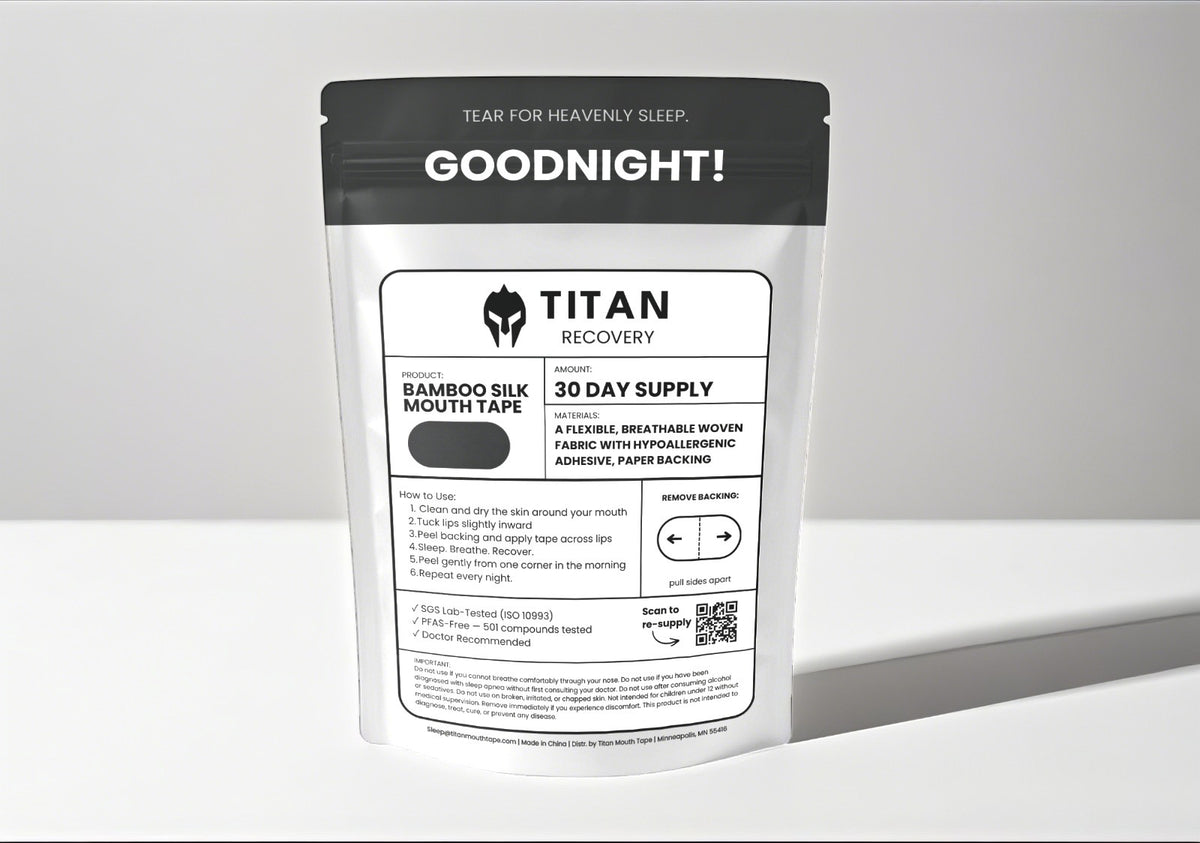
Purpose-built mouth tape exists because enough people discovered the limitations of Micropore to create demand for something better. Here's what the upgrade gets you, using Titan Recovery as the specific comparison point.
| Factor | 3M Micropore | Titan Recovery |
|---|---|---|
| Material | Microporous paper | Bamboo silk |
| Designed for | Wound dressing | Overnight mouth taping |
| Pre-cut shape | No (cut from roll) | Yes |
| Adhesive type | Surgical (wound care) | SilkSeal (sleep-specific) |
| Moisture resistance | Low (paper absorbs moisture) | High (bamboo silk) |
| Removal comfort | Can be painful on lip skin | Gentle release |
| PFAS-free tested | No | Yes (501 compounds) |
| Biocompatibility testing | For wound dressing use | ISO 10993 (facial skin) |
| Beard-friendly | No | Yes |
| Cost per night | $0.07-$0.08 | $0.76-$0.90 |
The Material Difference
Paper vs. bamboo silk is the single biggest gap. Micropore's microporous paper was engineered to let wound sites breathe while holding gauze in place. That's a fine job for a forearm bandage. For overnight lip use, paper creates problems: it wicks moisture, softens, and deteriorates over the course of a night. Some users report peeling the morning's tape off in soggy fragments.
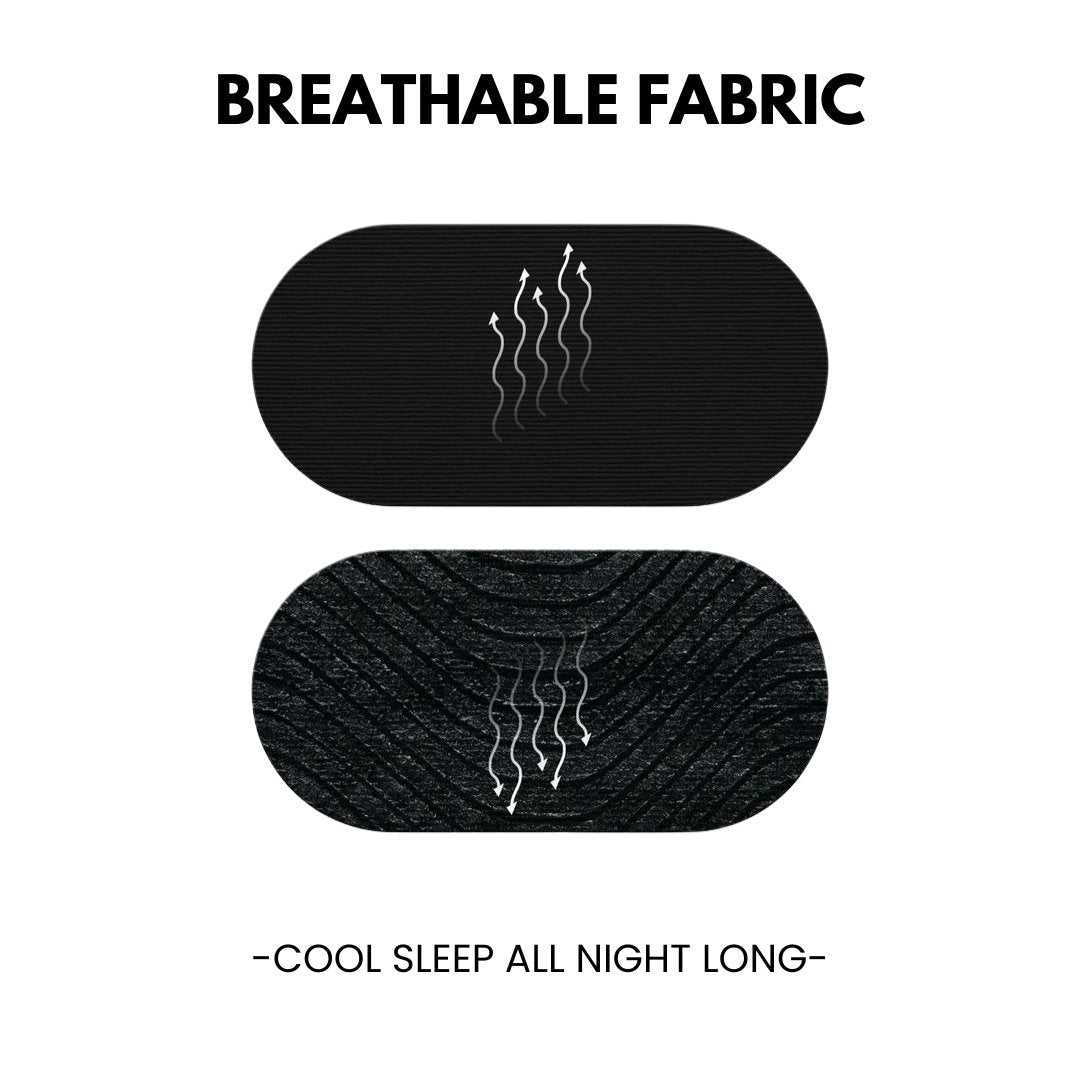
Bamboo silk doesn't absorb moisture the way paper does. It stays intact, maintains its shape, and feels like fabric rather than medical supplies. Over a single night the difference is noticeable. Over a month of nightly use, it's the difference between a routine you tolerate and one you don't think about.
The Adhesive Difference
Surgical adhesive and sleep adhesive have opposite priorities. Surgical tape adhesive is optimized for security — it needs to hold a dressing in place through activity, sweat, and friction. Gentle removal from sensitive skin is a secondary concern. That's why pulling Micropore off your lips feels like it's taking a layer of skin with it, especially if you have any stubble or facial hair.
Titan Recovery's SilkSeal adhesive was formulated specifically for the job: hold for eight hours on lip skin, release painlessly in the morning. Those two demands — long hold and gentle release — are genuinely hard to balance, and it's the reason purpose-built mouth tape adhesive costs more to develop than repurposing surgical tape adhesive.
The Safety Gap
3M Micropore is a safe product for its intended use. But its safety testing covers wound dressing — not prolonged overnight contact with lip and facial skin. It hasn't been tested for PFAS content in the context of mouth taping. It hasn't gone through biocompatibility evaluation for this specific application.
Titan Recovery's PFAS-free testing across 501 compounds and ISO 10993 biocompatibility testing were conducted specifically for overnight facial adhesion. When you're putting something on your lips for 2,500+ hours per year (eight hours a night, 365 days), that specificity matters.
Honest Talk About the Price
The cost difference is real and it's significant. At roughly $0.07 per night for Micropore versus $0.76 per night for Titan Recovery (at the 360-day pack rate), you're paying about ten times more for purpose-built tape. Over a year, that's roughly $25 for Micropore versus $273 for Titan Recovery.
There's no way to spin $248 in annual difference as trivial. It's not. The question is whether the upgrade justifies the cost for your specific situation.
Micropore makes sense if:
- You're testing whether mouth taping works for you and don't want to commit money before you know
- Your skin tolerates surgical adhesive without irritation
- You don't mind the nightly ritual of cutting strips to size
- You don't have significant facial hair
- Budget is the top priority and the paper material doesn't bother you
The upgrade makes sense if:
- You've been mouth taping for a while and plan to continue — this is a nightly habit, not an experiment
- Micropore's paper material gets soggy, irritates your skin, or falls off during the night
- You have facial hair and Micropore pulls painfully on removal
- You want verified safety data for a product you're applying to your face every night
- You want a consistent, pre-cut product instead of a DIY project with scissors
The Upgrade Path Is Real
Here's what typically happens: someone reads about mouth taping, buys a roll of 3M Micropore at CVS for six dollars, and tries it for a few weeks. It works well enough to prove the concept. They sleep better. They snore less. They wake up without a dry mouth.
Then the annoyances accumulate. The paper gets damp. The strip slides. The morning removal stings. They have to find the scissors every night. It doesn't work well over their stubble. It looks and feels like they have a bandage on their face.
That's when the upgrade to purpose-built tape happens — and the feedback is almost universally the same: "I should have done this sooner." Not because Micropore is bad. Because something designed for this specific job does the job better.
If you're still in the Micropore phase, there's no rush. Let it prove the concept. And when you're ready for something built for the job, Titan Mouth Tape starts at $26.95 for a 30-day supply. You can also pair it with TitanAir Nasal Strips to open your nasal passages while keeping your mouth sealed — a complete system that no drugstore aisle can replicate.
The Bottom Line
3M Micropore tape works. It's cheap, it's available everywhere, and it'll keep your mouth closed tonight. There's zero shame in starting there — most people do. But it's surgical tape doing a job it wasn't designed for, and the limitations show up over weeks and months of nightly use: soggy paper, harsh adhesive, no pre-cut shape, no safety testing for overnight facial contact. Purpose-built mouth tape like Titan Recovery costs more because it solves those exact problems — bamboo silk that stays dry, SilkSeal adhesive that holds and releases gently, PFAS-free certification, and ISO 10993 biocompatibility. The upgrade from DIY to purpose-built is one of the easiest quality-of-life improvements in the mouth-taping routine. Whether it's worth it depends on how many nights you have ahead of you — and for most committed mouth tapers, it's a lot.