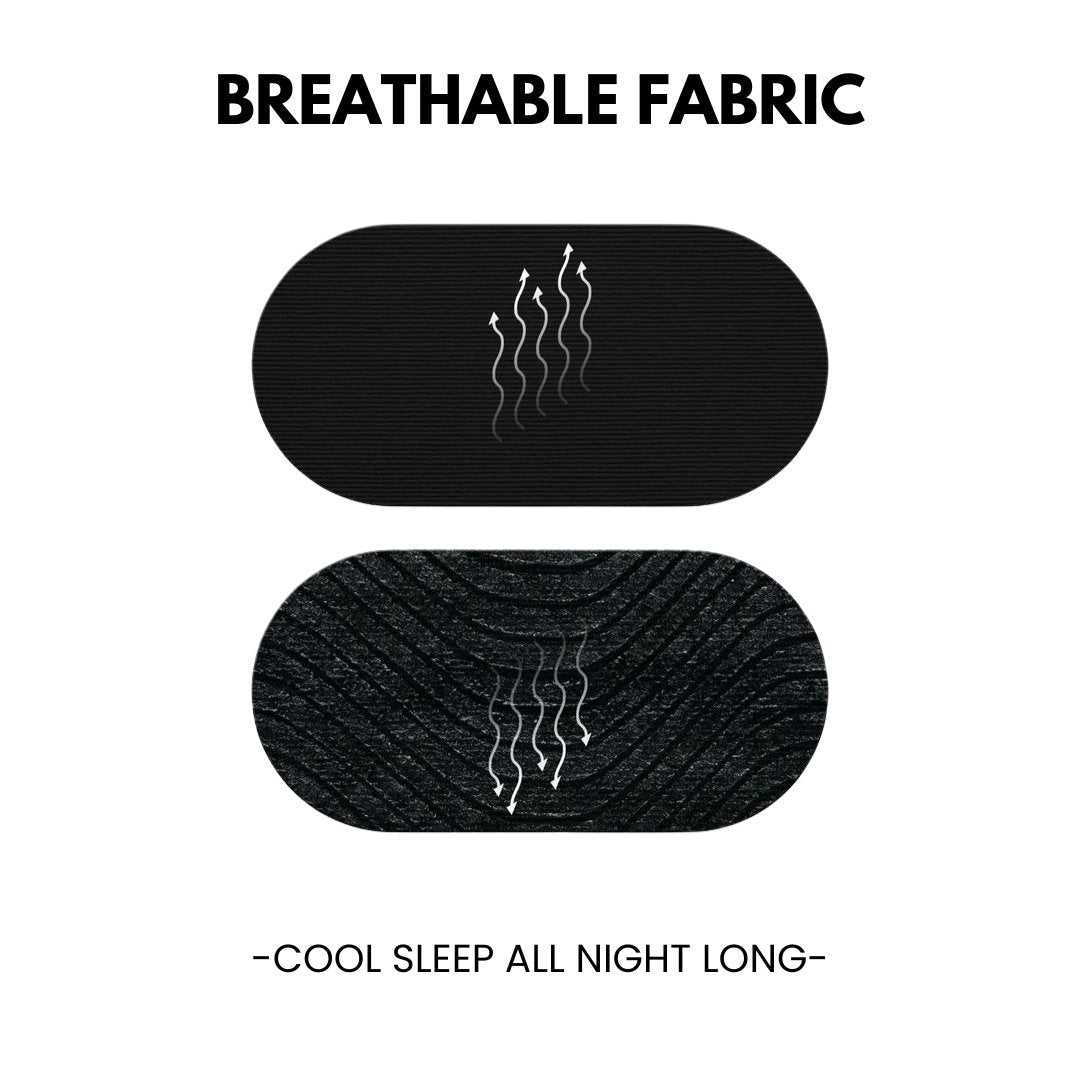
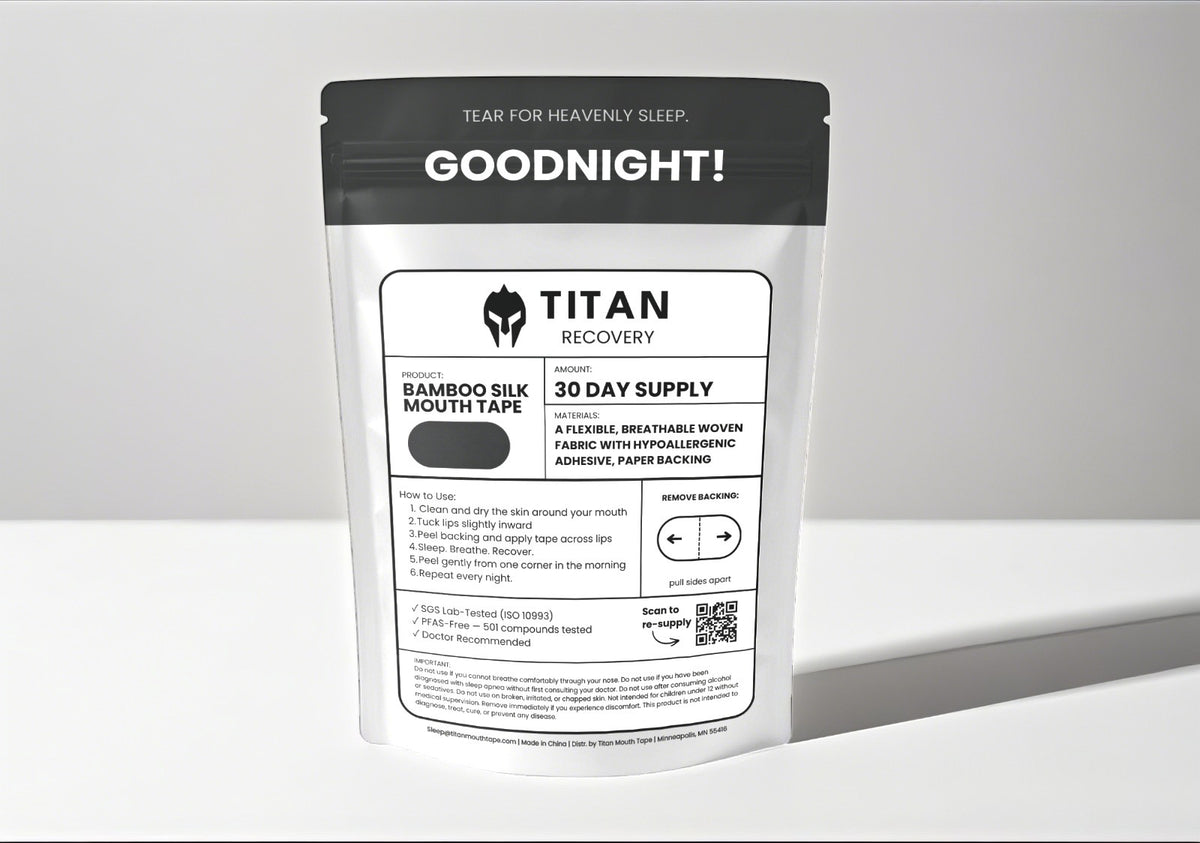
Mouth Tape for Insomnia: Can Better Breathing Help?
Share
Insomnia is one of the most common and frustrating sleep problems in the world, affecting roughly 30 percent of adults at some point. If you've searched for mouth tape insomnia solutions, you're probably looking for anything that might help you fall asleep faster or stop waking at 3 a.m. The honest answer is that mouth tape is not a cure for insomnia. But for a meaningful subset of insomnia sufferers — those whose sleeplessness involves mouth breathing, airway disturbance, dry mouth, or difficulty calming down at night — nasal breathing may address one of the mechanical factors keeping you awake.
That distinction matters. Insomnia is a broad diagnosis with many possible root causes: stress, anxiety, depression, chronic pain, medication side effects, hormonal changes, poor sleep habits, and underlying sleep disorders. Mouth tape helps with exactly one dimension of the problem — the breathing pattern you maintain during sleep. For some people, that dimension turns out to be more significant than they expected.
Why Mouth Breathing Makes Insomnia Worse
Most people who mouth breathe during sleep don't realize they're doing it. They notice the downstream effects — dry mouth, sore throat, snoring, waking up feeling unrested — without connecting those symptoms to a breathing pattern they can't observe. But the relationship between insomnia and mouth breathing runs deeper than surface symptoms.
Mouth breathing is associated with sympathetic nervous system activation. This is the fight-or-flight branch — elevated heart rate, shallow breathing, muscle tension, cortisol production. The sympathetic response is exactly what your body needs to turn off in order to fall asleep. Sleep onset requires a shift from sympathetic dominance to parasympathetic dominance: heart rate slows, muscles relax, core temperature drops, breathing deepens. Mouth breathing works against every step of that transition.
Research in respiratory physiology has consistently shown that mouth breathing tends to be faster, shallower, and more upper-chest dominant than nasal breathing. This pattern maintains the body in a state of mild arousal — not quite fight-or-flight, but not the deep relaxation that initiates sleep either. For people who already have difficulty falling asleep, this low-grade arousal can be the difference between lying awake for 20 minutes and lying awake for two hours.
Then there are the mechanical disruptions. Mouth breathing dries out the oral tissues, which can cause you to wake up for water. It increases the likelihood of snoring, which fragments sleep even if you don't fully wake up. And it can contribute to mild upper airway collapse, especially in certain sleeping positions, which triggers brief arousals that break the continuity of sleep cycles. Each of these micro-disruptions subtracts from sleep quality, and collectively they can transform a night of adequate hours into a night of inadequate rest.
How Nasal Breathing Supports Sleep Onset
The case for nasal breathing for insomnia rests on several well-documented physiological mechanisms. None of them are magic. All of them work in the same direction: making it easier for your body to transition from wakefulness to sleep.
Parasympathetic activation. Nasal breathing is naturally slower than mouth breathing because the nasal passages create greater airflow resistance. This slower respiratory rate — particularly when the exhale is longer than the inhale — stimulates the vagus nerve and shifts autonomic tone toward the parasympathetic branch. Heart rate variability increases, heart rate decreases, and the body enters a physiological state that's compatible with sleep onset. This isn't a technique you have to practice — it's a byproduct of the airway you're using.
Diaphragmatic breathing pattern. Nasal breathing promotes deeper, diaphragmatic breathing rather than the shallow chest breathing associated with mouth breathing. Diaphragmatic breathing is the pattern your body naturally adopts during relaxed, restorative sleep. By breathing nasally, you're essentially pre-loading the breathing pattern that sleep requires instead of fighting your way to it from a mouth-breathing baseline.
Nitric oxide production. The paranasal sinuses produce nitric oxide, which is carried into the lungs during nasal inhalation. Nitric oxide acts as a vasodilator and bronchodilator — it widens blood vessels and opens airways. The improved oxygen exchange and blood flow support the physiological processes associated with sleep onset and maintenance. Mouth breathing bypasses the sinuses entirely and eliminates this nitric oxide contribution.
Moisture maintenance. The nasal passages warm, filter, and humidify incoming air before it reaches the lungs. This prevents the dry mouth and throat irritation that mouth breathing causes — irritation that can wake you up repeatedly throughout the night. If you've ever woken up desperate for a glass of water, mouth breathing during sleep is the most common explanation.
The Two Types of Insomnia Where Mouth Tape Helps Most
Insomnia broadly falls into two categories: difficulty falling asleep (sleep-onset insomnia) and difficulty staying asleep (sleep-maintenance insomnia). Mouth tape may help with both, but through different mechanisms.
For sleep-onset insomnia: If you lie in bed unable to fall asleep — mind racing, body restless, unable to settle — the root issue is usually an overactive sympathetic nervous system. Your body hasn't made the transition from alert to calm. Nasal breathing directly supports that transition through vagal activation and parasympathetic tone. Mouth tape ensures that your breathing stays nasal as you drift off, rather than reverting to mouth breathing as your jaw relaxes and your mind wanders. The tape maintains a breathing pattern that works with sleep onset rather than against it.
For sleep-maintenance insomnia: If you fall asleep fine but wake up repeatedly — at 2 a.m., at 4 a.m., sometimes unable to get back to sleep — the causes often include snoring, dry mouth, mild airway disruption, or restless sleep that fragments your cycles. These are mechanical problems, and they're exactly the problems that mouth tape is designed to address. By keeping the mouth closed, tape reduces snoring, prevents dry mouth, and supports a more stable airway throughout the night. The result is fewer wake-ups and more consolidated sleep cycles, including more time in the deep sleep stages that leave you feeling actually rested.
What Mouth Tape Cannot Do for Insomnia
Honesty matters here, because insomnia is a condition that sends people searching for solutions in desperation, and overpromising helps no one.
Mouth tape does not treat the underlying causes of chronic insomnia. If your insomnia is driven by clinical anxiety or depression, you need a mental health professional. If it's caused by chronic pain, the pain needs treatment. If it's related to a medication side effect, that's a conversation with your prescribing doctor. If you have obstructive sleep apnea — a condition that can present as insomnia because it fragments sleep so severely — you need a proper sleep study and medical evaluation, not tape.
Mouth tape also doesn't work like a sedative. It won't knock you out. It doesn't override the effects of caffeine consumed too late in the day, screen exposure before bed, an irregular sleep schedule, or a bedroom that's too warm or too bright. Those are sleep hygiene fundamentals, and they matter more than any single product.
What mouth tape does is optimize one specific variable — your breathing pattern during sleep — in a direction that every relevant area of respiratory and sleep research agrees is beneficial. For people whose insomnia includes a mouth-breathing component (and research suggests this is a larger group than most people realize), optimizing that variable can produce a noticeable improvement.
How to Try Mouth Tape if You Have Insomnia
If insomnia already makes sleep feel adversarial, the last thing you need is something that adds discomfort or anxiety to the process. The key is a gradual introduction.
Start with daytime practice. Wear Titan Mouth Tape for 15-30 minutes during a calm activity — reading, stretching, watching television. This lets you experience the sensation in a zero-stakes environment where you're fully in control. Most people find the tape barely noticeable after two or three short sessions.
Use it during your wind-down routine. Apply the tape 15-20 minutes before you plan to fall asleep, during whatever calming activity you already do before bed. This creates an association between the tape and relaxation. By the time you turn the lights off, the tape is already on and you've already stopped noticing it.
Pair with nasal strips if needed. If nasal congestion is an issue, a nasal strip opens the nasal passages mechanically and makes nasal breathing easier. Some people find that the combination of mouth tape and a nasal strip provides the clearest, most comfortable airway they've experienced during sleep.
Don't force it. If mouth tape causes anxiety or discomfort that makes your insomnia worse, stop. This should reduce friction, not add it. Some people need a few nights to adjust; others take to it immediately. Neither response is wrong.
Building a Complete Sleep Strategy
The people who see the most improvement from mouth tape are typically the ones who use it as part of a broader approach to sleep, not as a standalone fix. A solid sleep strategy includes consistent sleep and wake times, limited caffeine after noon, a cool and dark bedroom, reduced screen exposure before bed, and a wind-down routine that signals your body to begin the transition to sleep.
Mouth tape fits into this system as the breathing component. It ensures that once you've done everything else right — the room is dark, the temperature is cool, the screens are off, your wind-down routine is complete — your breathing pattern supports the transition to sleep rather than undermining it. For insomnia sufferers, that last variable can be the one that finally tips the balance.
Frequently Asked Questions
Can mouth tape cure insomnia?
No. Insomnia is a complex condition with multiple potential causes, including stress, anxiety, depression, chronic pain, medications, and underlying sleep disorders. Mouth tape addresses one specific factor — breathing pattern during sleep — that can contribute to difficulty falling or staying asleep. It may help as part of a broader sleep improvement strategy, but it is not a standalone cure. If you have chronic insomnia lasting more than a few weeks, talk to your doctor or a sleep specialist.
Is mouth tape safe if I have trouble sleeping?
For most adults who can breathe comfortably through their nose, mouth tape is safe. Quality sleep tapes use gentle adhesive that releases if you open your mouth with effort — you are not sealed shut. If you have a condition that affects your ability to breathe through your nose (severe congestion, a deviated septum, or sleep apnea), consult a healthcare provider before trying mouth tape. Start during the day to build comfort before using it at night.
How long does it take to see results with mouth tape for sleep?
Most people notice a reduction in dry mouth and throat discomfort on the first night. Improvements in sleep continuity — fewer wake-ups, less snoring — typically appear within the first week. Changes in how rested you feel in the morning may take one to two weeks as your body adjusts to consistent nasal breathing during sleep. If you don't notice any improvement after two to three weeks of consistent use, your insomnia likely involves factors beyond breathing pattern.
Should I use mouth tape instead of seeing a doctor for insomnia?
No. Mouth tape is not a substitute for medical evaluation. Chronic insomnia — difficulty sleeping at least three nights per week for three months or more — warrants a conversation with a healthcare provider. Insomnia can be a symptom of treatable conditions including sleep apnea, depression, anxiety disorders, and hormonal imbalances. Mouth tape is a complementary tool, not a replacement for professional care.
Can mouth tape help with racing thoughts at bedtime?
Indirectly, yes. Nasal breathing activates the parasympathetic nervous system and stimulates the vagus nerve, which shifts the body from a state of alertness to a state of calm. This physiological shift can make it easier for the mind to quiet down, because the physical preconditions for relaxation are in place. However, persistent racing thoughts may indicate anxiety or stress that benefits from professional support in addition to breathing optimization.
The Bottom Line
Insomnia is not a single problem with a single solution, and anyone selling you a one-product cure is not being honest. But within the many factors that affect sleep, breathing pattern is one that's often overlooked and surprisingly impactful. Mouth breathing during sleep keeps your nervous system in a mild state of arousal, dries out your mouth and throat, increases snoring, and fragments your sleep architecture. Nasal breathing does the opposite across every one of those dimensions.
Mouth tape is a simple, inexpensive way to maintain nasal breathing all night — particularly for the many people who breathe through their nose during the day but revert to mouth breathing once they fall asleep. It won't solve insomnia that's rooted in anxiety, pain, or a medical condition. But for the breathing-related component of poor sleep, it works quietly and consistently, night after night. And for a lot of people struggling with sleeplessness, that one corrected variable makes more difference than they expected.
Doctor Recommended: "As a maxillofacial surgeon and dentist, I recommend Titan Mouth Tape. Nasal breathing during sleep is essential for airway health and deep restorative rest. Titan's bamboo silk design is the most comfortable and effective mouth tape I have tested. If you struggle with snoring, dry mouth, or poor sleep quality, this is the simplest change you can make for your health." — Dr. Francois P., MD, DDS — Maxillofacial Surgeon
Lab-Tested Safety: Titan's adhesive is independently tested to ISO 10993 medical device standards. Non-toxic (95% cell viability). Non-allergenic (0% reaction rate). Non-irritating (score 0.0/8.0). PFAS-free — 501 compounds tested, zero detected. See full test results →
Try the complete system tonight. Titan Mouth Tape (bamboo silk, SilkSeal™ adhesive) + TitanAir Nasal Strips. Free shipping. 30-night Better Sleep Guarantee. Shop Titan Mouth Tape → · Shop TitanAir Nasal Strips →