Mouth Tape for Shift Workers: Better Sleep on a Broken Schedule
Share
When you work nights, rotating shifts, or early mornings, the standard sleep advice feels like it was written for someone living a different life. "Get eight hours." "Keep a consistent schedule." "Wake up with the sun." None of that maps to the reality of sleeping during the day, switching between day and night shifts, or getting home at 7 a.m. and trying to fall asleep while the rest of the world starts its day. The best shift worker sleep tips aren't about getting more hours — they're about making every hour of sleep you do get count for more.
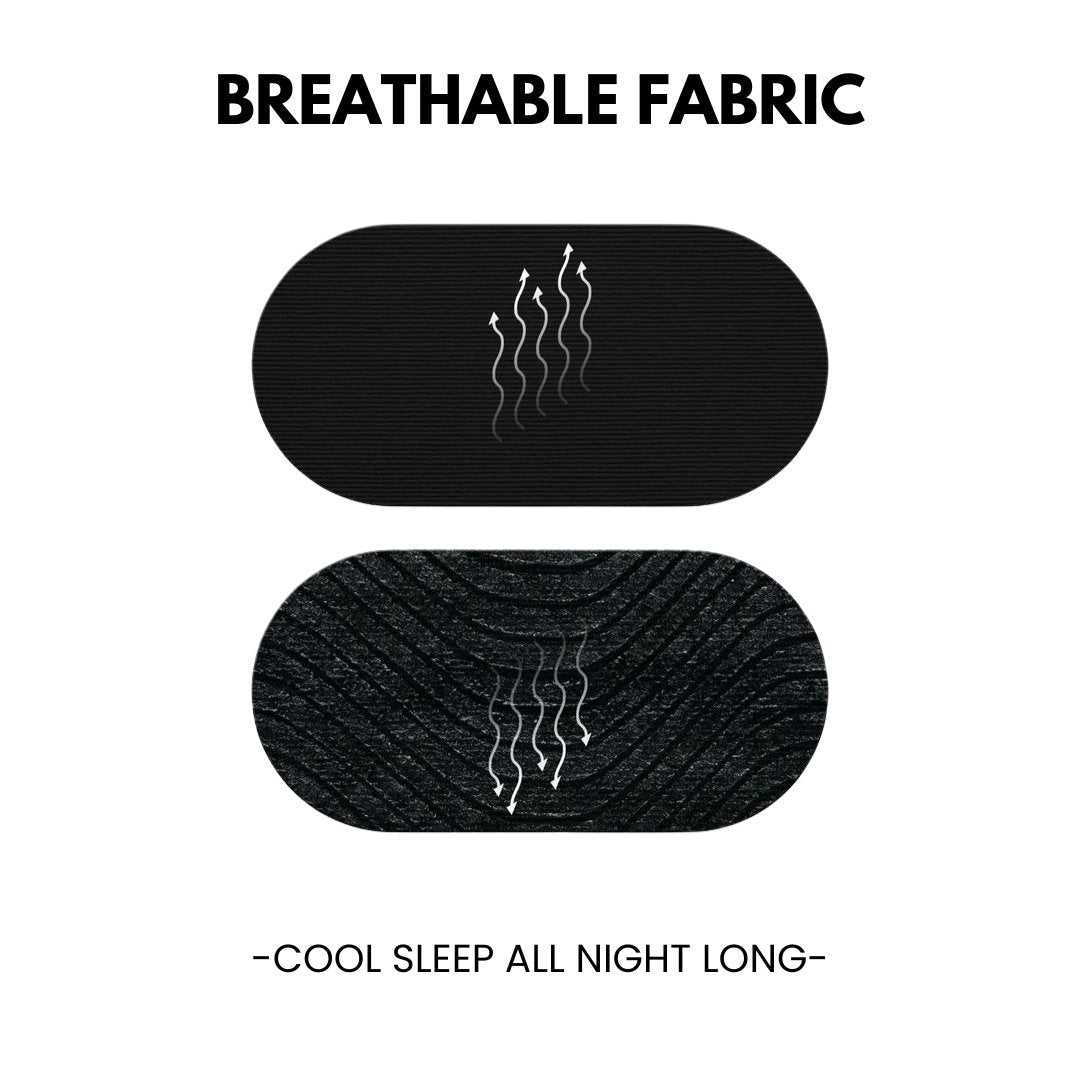
That's where mouth tape enters the picture. If you're a shift worker sleeping in a compressed window — five or six hours instead of eight — the quality of that sleep matters exponentially more. Mouth breathing during sleep reduces the quality of every stage, from light sleep through deep sleep and REM. Keeping your mouth closed and breathing through your nose is one of the simplest ways to upgrade the sleep you're already getting, without requiring extra time you don't have.
Why Shift Work Sleep Is Different
Shift work doesn't just reduce how many hours you sleep. It changes the kind of sleep you get. Your circadian rhythm — the internal clock that regulates when your body wants to be awake and when it wants to sleep — is calibrated to daylight. When you try to sleep during the day, you're working against that clock. Melatonin production is suppressed by light exposure. Core body temperature, which normally drops during nighttime sleep to support deep sleep stages, stays elevated. Cortisol, which should be low during sleep, follows its own daytime pattern regardless of when you went to bed.
The result is that daytime sleep is lighter, more fragmented, and shorter. Research on shift worker sleep has consistently found that night shift workers get one to four fewer hours of sleep per 24-hour period compared to day workers, and the sleep they do get contains less slow-wave deep sleep and less REM sleep. These are the stages where physical recovery, immune function, memory consolidation, and hormonal regulation happen. Less time in deep sleep and REM means less recovery per hour of sleep.
This is not a discipline problem. It's a biological constraint. Your body is not built to sleep efficiently during daylight hours. The question for shift workers isn't how to perfectly replicate nighttime sleep — it's how to extract the maximum recovery from every minute of the imperfect sleep window available.
How Mouth Breathing Makes Bad Sleep Worse
Mouth breathing during sleep introduces several problems that are especially damaging when sleep quality is already compromised.
Snoring and airway vibration. Mouth breathing allows the soft tissue at the back of the throat to vibrate, producing snoring. Snoring fragments sleep — not just for a partner, but for the snorer. Each vibration can trigger a micro-arousal, a brief spike in brain activity that pulls you out of deeper sleep stages without fully waking you. Over a six-hour sleep window, dozens of micro-arousals can significantly reduce the percentage of time spent in restorative deep sleep and REM. For shift workers who already get less deep sleep due to circadian misalignment, losing more of it to snoring is a compounding loss.
Dry mouth and nighttime waking. Mouth breathing dries out the oral mucosa, tongue, and throat. This produces discomfort that can trigger conscious waking — the kind where you reach for water, reposition, and then spend ten to twenty minutes trying to fall back asleep. In an eight-hour sleep window, losing twenty minutes is annoying. In a five-hour window, it's a significant percentage of total rest. Dry mouth is one of the most common complaints among mouth breathers, and for shift workers it's worse because the daytime environment tends to be drier (heating, air conditioning, lower humidity).
Sympathetic activation. Mouth breathing is associated with shallow, upper-chest breathing and higher sympathetic nervous system tone. This is the fight-or-flight branch — elevated heart rate, higher cortisol, reduced HRV. For shift workers, sympathetic tone is already elevated due to circadian disruption, work stress, and irregular eating patterns. Mouth breathing during sleep adds another sympathetic input to a system that's already running hot. Nasal breathing, by contrast, promotes parasympathetic tone and higher HRV — the physiological state that supports actual recovery.
What Nasal Breathing Does During Compressed Sleep
When you breathe through your nose during sleep, several things happen that directly improve sleep quality — and these improvements matter more when sleep time is limited.
Slower, deeper breathing. The nasal passages create more airflow resistance than the mouth, which naturally slows the respiratory rate and promotes diaphragmatic breathing. Slower breathing shifts autonomic tone toward parasympathetic dominance, supporting the transition into and maintenance of deep sleep stages. For shift workers fighting circadian-driven arousal, anything that helps the body settle into deeper sleep faster is valuable.
Nitric oxide delivery. The paranasal sinuses produce nitric oxide, which is carried into the lungs with each nasal inhalation. Nitric oxide improves oxygen exchange in the lungs and acts as a vasodilator, improving blood flow. Better oxygenation during sleep supports the metabolic processes that happen during deep sleep — tissue repair, hormone release, and immune function. Mouth breathing bypasses this delivery system entirely.
Reduced snoring. Keeping the mouth closed eliminates or significantly reduces snoring by maintaining airway structure and preventing the soft palate vibration that produces the sound. Fewer snoring-related micro-arousals means more time spent in the sleep stages that actually restore you.
Maintained airway humidity. Nasal breathing humidifies and warms air before it reaches the lungs. This prevents the airway drying that causes discomfort and waking. For shift workers sleeping during the day — often in climate-controlled environments with low humidity — this is a meaningful advantage over mouth breathing.
Building a Shift Worker Sleep Environment
Mouth tape is one piece of the puzzle. For shift workers, the sleep environment matters as much as sleep hygiene because you're trying to override strong biological signals telling your body to be awake. Here's what works.
Total darkness. This is non-negotiable for daytime sleeping. Blackout curtains or a high-quality sleep mask blocks the light that suppresses melatonin and signals wakefulness to the circadian clock. Even small amounts of light — the glow around curtain edges, an LED on a device — can reduce melatonin production and lighten sleep. Invest in curtains that seal to the window frame or layer blackout curtains with a sleep mask for redundancy.
Temperature control. Your body needs to cool down to initiate and maintain deep sleep. During the day, ambient temperature tends to be warmer than at night. Set the room to 65-68 degrees Fahrenheit if possible. A cooling mattress pad or breathable bedding can help compensate if you can't control the room temperature. This is one of the highest-impact sleep quality interventions regardless of schedule.
Sound isolation. Daytime sleep means daytime noise — traffic, construction, neighbors, delivery trucks, dogs barking, family members going about their day. White noise machines or brown noise generators create a consistent sound floor that masks intermittent noises. Earplugs are a reliable backup. The goal is not silence (which makes every sound more jarring) but consistent, predictable sound.
Signal management. Put your phone in do-not-disturb mode. Tell household members your sleep window. If your doorbell rings with deliveries, disable it or put up a sign. Every interruption during a compressed sleep window costs more than it would during a full eight-hour night because you have less total time for your body to cycle back into deep sleep after waking.
Mouth tape and nasal strips. Apply mouth tape as the last step before you close your eyes. If nasal congestion is an issue — and daytime allergies or dry indoor air can make it worse — pair it with nasal strips to mechanically open the nasal passages. The combination ensures clear, comfortable nasal breathing throughout your sleep window, maximizing the quality of every hour.
Timing Your Sleep: Strategies That Work
When you sleep matters almost as much as how you sleep. A few strategies that shift workers have found effective:
Sleep immediately after your shift ends. The longer you stay awake after a night shift, the harder it is to fall asleep. Your body's circadian alerting signal strengthens as the morning progresses. If your shift ends at 7 a.m., aim to be in bed by 8 a.m., not noon. Front-loading your sleep takes advantage of whatever residual sleepiness you have from being awake all night.
Anchor sleep. If your schedule rotates, try to keep at least a four-hour block of sleep at the same time every day, regardless of which shift you're on. This gives your circadian rhythm a partial anchor point. The remaining sleep hours can shift with your schedule, but the anchor block provides some consistency for your internal clock.
Strategic napping. A 20-30 minute nap before a night shift can reduce fatigue without causing sleep inertia (the grogginess from waking out of deep sleep). If you can't get enough sleep in one block, splitting sleep into a longer primary block and a shorter nap is better than trying to force a single long sleep session at the wrong circadian time.
Light exposure management. Wear blue-light-blocking glasses on your commute home after a night shift. Bright morning light is the strongest circadian signal — it tells your brain that daytime has begun and suppresses melatonin. Blocking that signal helps preserve whatever sleep pressure you've built up during the night.
Frequently Asked Questions
How many hours of sleep do shift workers actually need?
The biological need doesn't change — adults need seven to nine hours. But the reality for most shift workers is five to six hours. Since you likely can't add hours, the focus should be on maximizing the quality of the hours you get. Nasal breathing during sleep, total darkness, cool temperatures, and sound isolation are the highest-impact interventions for extracting more recovery from less time.
Will mouth tape help me fall asleep faster after a night shift?
Mouth tape supports the transition to sleep by promoting nasal breathing, which activates the parasympathetic nervous system — the "rest and digest" branch that facilitates falling asleep. It's not a sedative, but it removes one barrier to sleep onset: the shallow, fast breathing pattern associated with mouth breathing that keeps your nervous system in a more alert state. Many users report that the routine of applying tape becomes part of a wind-down ritual that signals sleep time to the brain.
I breathe through my mouth because my nose is stuffy. What should I do?
Nasal congestion is common and treatable. Start with nasal strips, which mechanically open the nasal valve — the narrowest point in the nasal passage — without medication. If congestion persists, a saline rinse before bed can clear mucus and reduce inflammation. For chronic congestion, especially if it's worse during certain seasons, consult a doctor to rule out allergies, a deviated septum, or other structural issues. Most people find that once they start nasal breathing consistently, congestion actually improves over time as the nasal passages adapt to regular use.
Does mouth tape work if I sleep on my side or stomach?
Yes. Mouth tape holds the lips together regardless of sleep position. Side sleepers and stomach sleepers are actually more prone to mouth breathing because gravity pulls the jaw open when the head is turned. Tape maintains the closed-mouth position in any orientation. If you're a stomach sleeper, you may also find that nasal breathing reduces the face-pressed-into-pillow snoring that's common in that position.
Can mouth tape replace a CPAP machine?
No. If you have been diagnosed with obstructive sleep apnea and prescribed a CPAP, continue using it as directed by your doctor. Mouth tape is not a treatment for sleep apnea. Some CPAP users do add mouth tape to prevent air leaks from mouth breathing while using their machine — if this interests you, discuss it with your sleep specialist first. For shift workers who snore but have not been diagnosed with apnea, mouth tape is a reasonable first step, but persistent loud snoring combined with daytime fatigue warrants a sleep study.
The Bottom Line
Shift work forces you to sleep in a compressed window, at the wrong time, against your circadian rhythm. You can't fix the schedule, but you can stop making the sleep you do get worse by mouth breathing through it. Every hour of shift worker sleep needs to earn its keep, and nasal breathing supports the deeper, less fragmented sleep that makes those hours count.
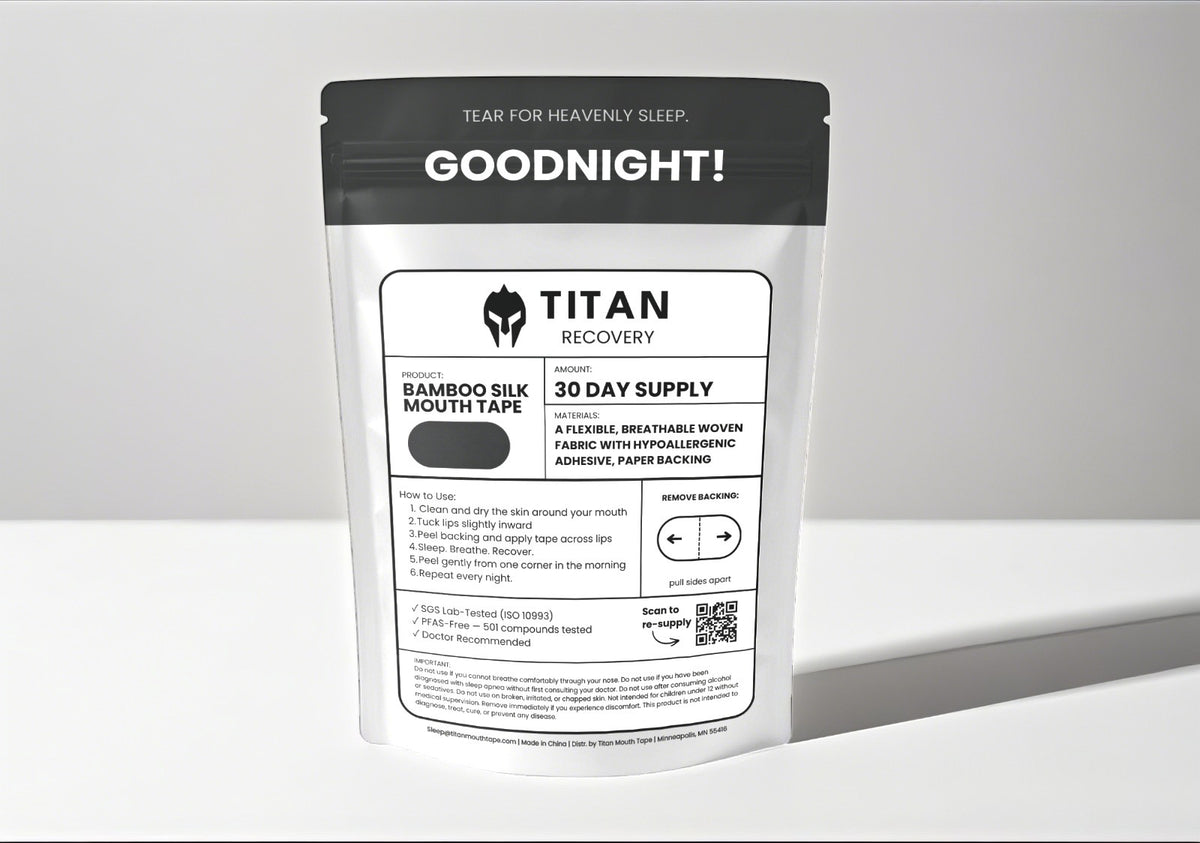
The setup is simple: blackout curtains, cool room, white noise, and Titan Mouth Tape to keep your breathing on the nasal pathway from the moment you close your eyes until your alarm goes off. If congestion is a factor, the Deep Sleep Bundle pairs mouth tape with nasal strips so every breath flows through the nose without effort. You already know why you're still tired — for shift workers, the answer is almost always quality, not just quantity. Fix the breathing, and you fix one of the biggest quality leaks in your sleep.
Doctor Recommended: "As a maxillofacial surgeon and dentist, I recommend Titan Mouth Tape. Nasal breathing during sleep is essential for airway health and deep restorative rest. Titan's bamboo silk design is the most comfortable and effective mouth tape I have tested. If you struggle with snoring, dry mouth, or poor sleep quality, this is the simplest change you can make for your health." — Dr. Francois P., MD, DDS — Maxillofacial Surgeon
Lab-Tested Safety: Titan's adhesive is independently tested to ISO 10993 medical device standards. Non-toxic (95% cell viability). Non-allergenic (0% reaction rate). Non-irritating (score 0.0/8.0). PFAS-free — 501 compounds tested, zero detected. See full test results →
Try the complete system tonight. Titan Mouth Tape (bamboo silk, SilkSeal™ adhesive) + TitanAir Nasal Strips. Free shipping. 30-night Better Sleep Guarantee. Shop Titan Mouth Tape → · Shop TitanAir Nasal Strips →