The Vagus Nerve and Sleep: Why Nasal Breathing Matters
Share
The vagus nerve is the longest cranial nerve in your body, and it's the single most important nerve for vagus nerve sleep quality. It runs from your brainstem through your neck, chest, and abdomen, acting as the primary communication highway between your brain and your rest-and-digest system. When the vagus nerve is well-stimulated, your heart rate drops, your cortisol levels decrease, and your body shifts into the deep recovery state that quality sleep requires. When it's understimulated, you stay stuck in a shallow, sympathetically-driven version of sleep that leaves you tired in the morning.
Here's the connection most people miss: nasal breathing is one of the most reliable ways to stimulate the vagus nerve, and mouth breathing largely bypasses it. If you do breathing exercises before bed but then mouth breathe for the next seven hours, you're undoing most of your work. Understanding this mechanism — and keeping it running all night — is the difference between sleep that restores and sleep that just passes time.
The Vagus Nerve: Your Body's Rest-and-Digest Highway
The autonomic nervous system has two branches. The sympathetic branch handles fight-or-flight — elevated heart rate, rapid breathing, cortisol release, muscle tension. The parasympathetic branch handles rest-and-digest — slower heart rate, deeper breathing, tissue repair, immune function, digestion. These two branches aren't just responses to your emotional state. They're bidirectional systems that can be influenced by physical inputs, including how you breathe.
The vagus nerve is the main conduit for parasympathetic signaling. It carries information from the brain to the heart, lungs, gut, and other organs, and it carries information back. When researchers talk about "vagal tone," they're describing how effectively your body can activate its parasympathetic system — how quickly your heart rate can drop after exertion, how efficiently your body shifts into recovery mode, how deeply your sleep architecture allows you to rest.
High vagal tone is associated with: better sleep quality, stronger immune function, lower resting heart rate, higher heart rate variability, better emotional regulation, and faster recovery from stress. Low vagal tone is associated with: shallow sleep, chronic inflammation, elevated resting heart rate, lower HRV, higher anxiety levels, and difficulty winding down at night.
Vagal tone isn't fixed. It responds to inputs — and one of the most consistent and well-documented inputs is breathing pattern.
How Nasal Breathing Stimulates the Vagus Nerve
The connection between nasal breathing and vagal activation isn't a single mechanism. It's a convergence of several physiological pathways that all push the nervous system in the same direction.
Airway resistance creates slower breathing. The nasal passages provide roughly 50% more resistance to airflow than the mouth. This isn't a design flaw — it's a feature. Higher resistance naturally slows the respiratory rate from the typical mouth-breathing rate of 15-20 breaths per minute to a nasal-breathing rate closer to 10-12 breaths per minute. Slower breathing, particularly with extended exhalation, directly stimulates vagal afferents — the nerve fibers that send calming signals from the body to the brain. This is why every evidence-based breathing technique for stress reduction emphasizes slow, deep breaths: the respiratory rate itself is a vagus nerve input.
Diaphragmatic breathing engages vagal pathways. Nasal breathing promotes belly breathing (diaphragmatic) rather than chest breathing (thoracic). When the diaphragm contracts and descends during inhalation, it creates mechanical pressure changes in the thoracic and abdominal cavities that stimulate vagal nerve endings. This mechanical activation is a direct pathway to parasympathetic engagement — your body reads the physical movement of diaphragmatic breathing as a safety signal and responds by dialing down the sympathetic system.
Nasal airflow activates trigeminal-vagal connections. Air flowing through the nasal passages stimulates nerve endings in the nasal mucosa that connect to the trigeminal nerve, which in turn interacts with vagal circuits in the brainstem. This is a neurological pathway that mouth breathing simply cannot access — the mouth doesn't have the same nerve endings or the same connection to vagal processing centers. When you breathe through your nose, you're sending signals through a dedicated neural circuit that feeds into parasympathetic activation. When you breathe through your mouth, that circuit is offline.
Nitric oxide production supports the cascade. The paranasal sinuses produce nitric oxide, which is carried into the lungs during nasal inhalation. Nitric oxide is a vasodilator — it widens blood vessels, improves blood flow, and supports oxygen delivery. Better blood flow and oxygenation reduce the physiological stress signals that keep the sympathetic system engaged. Mouth breathing bypasses the sinuses entirely, missing this component of the vagal support system.
Vagal Tone, HRV, and Deep Sleep
Heart rate variability — HRV — is the gold standard metric for vagal tone, and it's now trackable by consumer devices like Oura, Apple Watch, and Whoop. HRV measures the variation in time between consecutive heartbeats. Counterintuitively, higher variability is better — it indicates that your autonomic nervous system is flexible and responsive, able to shift between sympathetic and parasympathetic states as needed.
The relationship between HRV and sleep quality is well established in research. Higher overnight HRV correlates with more time in deep sleep stages, better sleep efficiency, and feeling more rested upon waking. Lower overnight HRV correlates with lighter sleep, more frequent awakenings, and that flat, unrested feeling in the morning even after a full night in bed.
Here's where the mechanism connects. During sleep, your body is supposed to progressively shift into parasympathetic dominance as the night continues. Your heart rate should drop, your breathing should slow, your muscles should relax, and your brain should move through the stages of NREM and REM sleep in organized cycles. This shift is mediated by the vagus nerve. If vagal tone is high — if the vagus nerve is doing its job effectively — the transition into deep, restorative sleep stages happens naturally and completely.
If vagal tone is low — if the parasympathetic system isn't fully engaged — the shift is incomplete. You still sleep, but you spend more time in lighter stages. Your heart rate stays higher than it should. Your cortisol doesn't drop as fully. You cycle through sleep stages less efficiently. This is the physiological reality behind being tired after eight hours of sleep — the quantity was there, but the quality wasn't, because the vagal-mediated shift into deep recovery never fully engaged.
The Problem with Breathing Exercises That Stop at Bedtime
There's been a surge of interest in breathwork for sleep — box breathing, 4-7-8 breathing, coherence breathing, physiological sighs. These techniques work. Slow, controlled nasal breathing with extended exhalation reliably activates the vagus nerve, lowers heart rate, and promotes the parasympathetic state needed to fall asleep.
But there's a fundamental limitation: they stop working when you stop doing them.
Most people practice breathing exercises for 5-15 minutes before bed. They fall asleep in a nicely parasympathetic state, nasal breathing, heart rate declining, HRV rising. Then, sometime in the first hour or two, their jaw relaxes, their mouth falls open, and they spend the remaining five to six hours breathing through their mouth.
Mouth breathing during sleep reverses the vagal activation that the breathing exercises established. The respiratory rate increases. Breathing shifts from diaphragmatic to thoracic. The nasal airway circuit goes offline. The nitric oxide pathway shuts down. Heart rate stays higher. HRV drops. The body drifts back toward sympathetic tone during the exact hours when parasympathetic dominance matters most.
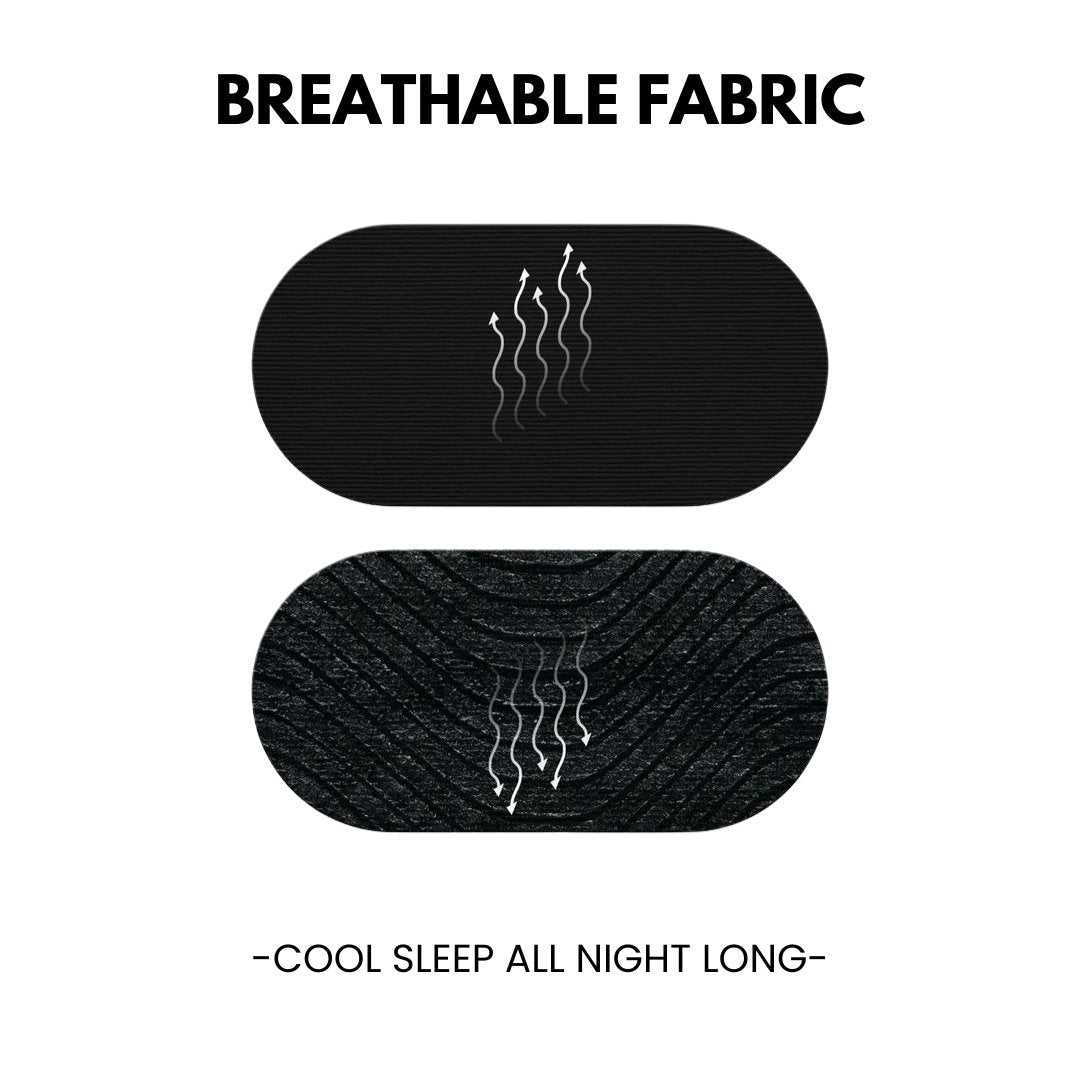
This is the gap that mouth tape fills. Mouth tape keeps the nasal breathing pathway active all night — not just during the conscious wind-down period, but through every sleep cycle, including the critical deep sleep stages in the first half of the night and the REM-heavy cycles in the second half. It turns a 15-minute breathing exercise into a seven-hour vagus nerve stimulation session.
What Your HRV Data Is Telling You
If you're tracking HRV with a wearable device, you already have a window into your vagal function during sleep. Here's what to look for and how nasal breathing connects to the numbers.
Baseline HRV trends. Your absolute HRV number is highly individual — it depends on age, fitness, genetics, and other factors. What matters is your trend. If your overnight HRV has been declining or plateauing despite adequate sleep duration, it may indicate that your vagal tone during sleep isn't where it should be. Chronic mouth breathing is one common, correctable cause.
HRV during deep sleep vs. overall. Some trackers (Oura in particular) break down HRV by sleep stage. HRV should be highest during deep sleep, when parasympathetic dominance peaks. If your deep-sleep HRV isn't significantly higher than your average overnight HRV, the vagal activation that deep sleep requires may not be fully engaging — and breathing pattern is one of the first things to investigate.
Night-to-night consistency. Consistent nasal breathing tends to produce more consistent HRV readings night after night. If your HRV swings widely without obvious lifestyle causes (alcohol, late exercise, illness), inconsistent breathing patterns — alternating between nasal and mouth breathing depending on congestion, sleep position, or room conditions — may be a factor.
The two-week test. Many people who switch to consistent nasal breathing during sleep — using mouth tape and nasal strips together — see a measurable change in their overnight HRV within one to two weeks. This isn't a guaranteed result, but it's a common pattern reported by users tracking their data. The improvement reflects better vagal activation during sleep, not a change in cardiovascular fitness.
Building the Vagal Activation Stack
Nasal breathing during sleep is the foundation, but it works best as part of a larger approach to supporting vagal tone and parasympathetic sleep.
Pre-sleep breathing protocol. Spend 5-10 minutes before bed doing slow nasal breathing — inhale for 4 counts, exhale for 6-8 counts. The extended exhalation is the key vagal trigger. This primes the parasympathetic system before you even close your eyes and establishes the nasal breathing pattern that mouth tape will maintain throughout the night.
Temperature drop. Core body temperature needs to drop by about 1-2 degrees for sleep onset. A cool bedroom (65-68 degrees Fahrenheit) supports this, and the temperature drop itself activates parasympathetic pathways. A warm shower 60-90 minutes before bed accelerates the core temperature decline through a process called vasodilation.
Consistent sleep timing. The circadian system and the autonomic nervous system are deeply interconnected. Going to bed and waking at the same time reinforces the parasympathetic shift that's supposed to happen at night. Irregular sleep timing weakens this signal, making it harder for the vagus nerve to do its job on schedule.
Limit evening stimulants. Caffeine and alcohol both suppress vagal tone. Caffeine blocks adenosine receptors that support parasympathetic function. Alcohol may help you fall asleep but suppresses deep sleep and HRV for much of the night. Cutting caffeine by early afternoon and limiting alcohol intake supports the vagal environment that nasal breathing is designed to activate.
Frequently Asked Questions
How does the vagus nerve affect sleep quality?
The vagus nerve is the primary conduit for parasympathetic signaling — the rest-and-digest system. During sleep, vagal activation lowers heart rate, reduces cortisol, and facilitates the transition into deep sleep stages where physical and mental recovery occur. Higher vagal tone, measured as heart rate variability, consistently correlates with better sleep quality, more time in deep sleep, and feeling more rested upon waking.
Can nasal breathing really improve HRV?
Yes. Research on respiratory-cardiac coupling has demonstrated that slow nasal breathing increases heart rate variability by activating vagal pathways. The nasal airway's resistance naturally slows breathing rate, promotes diaphragmatic breathing, and stimulates nerve endings that connect to vagal circuits — all of which support higher HRV. Many people who switch to consistent nasal breathing during sleep report measurable HRV improvements within one to two weeks of tracking.
What's the difference between vagus nerve stimulation and nasal breathing?
Clinical vagus nerve stimulation uses an implanted or external device to deliver electrical impulses directly to the vagus nerve, typically for conditions like epilepsy or treatment-resistant depression. Nasal breathing stimulates the vagus nerve through natural physiological pathways — slower breathing, diaphragmatic movement, and nasal airflow activating trigeminal-vagal neural connections. Both activate the same nerve, but through very different mechanisms. Nasal breathing is a behavioral approach anyone can use.
How long does it take to see sleep improvements from better nasal breathing?
Many people notice subjective improvements — less dry mouth, fewer awakenings, feeling more rested — within the first few nights of consistent nasal breathing during sleep. Measurable HRV improvements typically appear within one to two weeks of tracking. Deeper changes in sleep architecture and daytime energy levels may take several weeks of consistent practice as the body adapts to sustained parasympathetic activation during sleep.
Does mouth tape work as vagus nerve stimulation during sleep?
Mouth tape doesn't stimulate the vagus nerve directly. What it does is maintain the nasal breathing pattern that stimulates the vagus nerve. By keeping the mouth closed during sleep, it ensures that every breath flows through the nasal airway — engaging the slower respiratory rate, diaphragmatic breathing, trigeminal nerve activation, and nitric oxide production that collectively drive vagal activation. It's the mechanism that keeps the vagus nerve pathway active all night, not just during conscious breathing exercises.
The Bottom Line
The vagus nerve is the gatekeeper of deep sleep. It mediates the parasympathetic shift your body needs to move from waking alertness into genuine restorative rest — the kind that repairs tissue, consolidates memory, regulates hormones, and leaves you actually recovered in the morning. When vagal tone is high, this process works. When it's low, sleep becomes a less effective version of itself.
Nasal breathing is one of the most accessible and well-documented ways to support vagal tone. It works through multiple converging pathways — slower respiratory rate, diaphragmatic engagement, trigeminal-vagal neural activation, nitric oxide production — all of which push the autonomic nervous system toward the parasympathetic state that quality sleep demands. Mouth breathing shuts most of these pathways down.
The practical application is straightforward. Breathe through your nose during the day. Do a short breathing protocol before bed. Then use mouth tape to keep the nasal pathway active all night. Track your HRV if you have a wearable — the data will show you whether the shift is happening. The vagus nerve responds to consistent input. Give it the right signal, and sleep quality follows.
Doctor Recommended: "As a maxillofacial surgeon and dentist, I recommend Titan Mouth Tape. Nasal breathing during sleep is essential for airway health and deep restorative rest. Titan's bamboo silk design is the most comfortable and effective mouth tape I have tested. If you struggle with snoring, dry mouth, or poor sleep quality, this is the simplest change you can make for your health." — Dr. Francois P., MD, DDS — Maxillofacial Surgeon
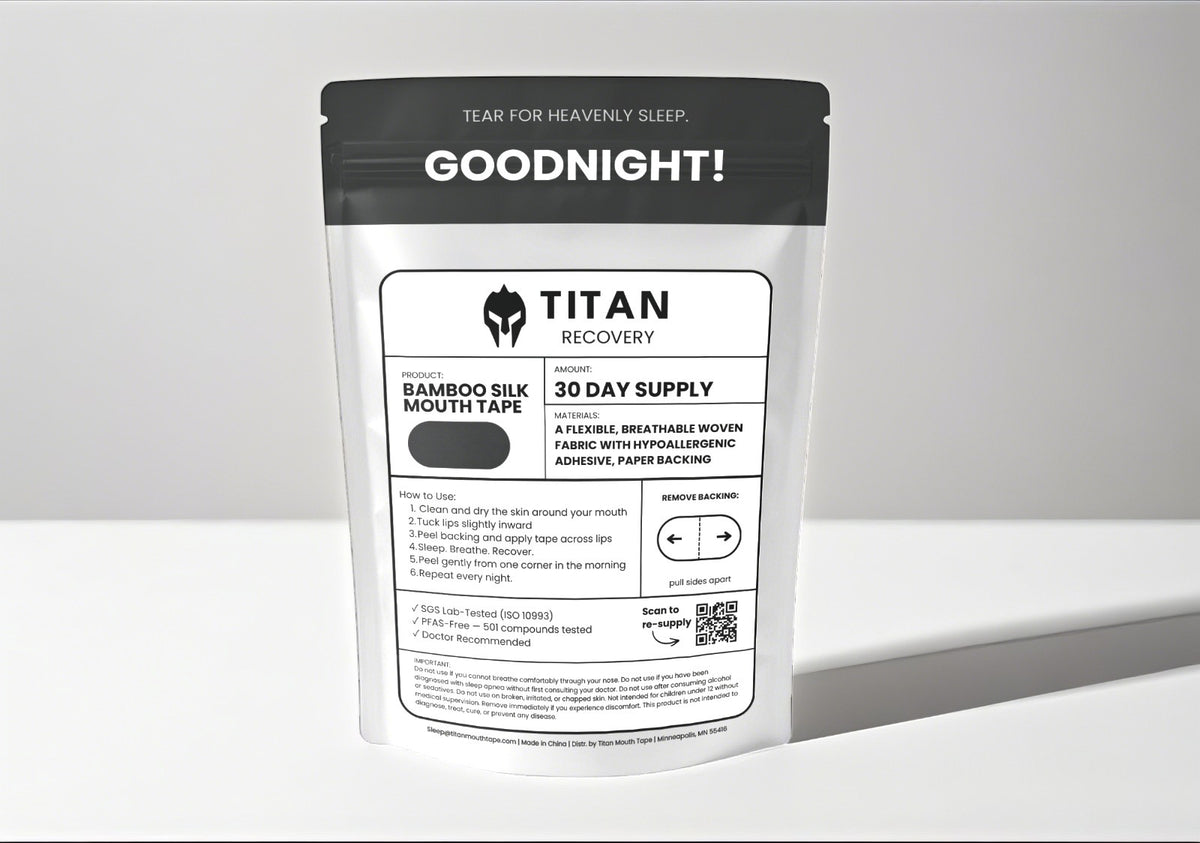
Lab-Tested Safety: Titan's adhesive is independently tested to ISO 10993 medical device standards. Non-toxic (95% cell viability). Non-allergenic (0% reaction rate). Non-irritating (score 0.0/8.0). PFAS-free — 501 compounds tested, zero detected. See full test results →
Try the complete system tonight. Titan Mouth Tape (bamboo silk, SilkSeal™ adhesive) + TitanAir Nasal Strips. Free shipping. 30-night Better Sleep Guarantee. Shop Titan Mouth Tape → · Shop TitanAir Nasal Strips →
This article is for informational purposes only and does not constitute medical advice. If you have or suspect a sleep disorder or other medical condition, consult a qualified healthcare provider before making changes to your routine.