Mouth Taping With Postnasal Drip: What You Need to Know
Share
If you're wondering about mouth taping with postnasal drip, the direct answer is: taping is only a good idea once the drip and any congestion behind it are under control. Mouth taping assumes you can breathe comfortably and clear your throat through your nose — and active postnasal drip can work against both. Get the drip managed first, then decide.
Here's how postnasal drip affects your breathing at night, when to skip the tape, and what actually helps.
What Postnasal Drip Does to Nighttime Breathing
Postnasal drip is the sensation of mucus running down the back of your throat. It's usually caused by allergies, a lingering cold, sinus issues, or dry air, and it almost always feels worse when you lie down — gravity stops helping, so mucus pools at the back of the throat.
That pooling triggers throat clearing, coughing, and frequent swallowing, all of which fragment sleep. Many people with drip also breathe through the mouth at night, partly out of habit and partly because the same congestion driving the drip is blocking the nasal airway. The result is the familiar mouth-breathing combo — dry mouth, sore throat, and shallow sleep — layered on top of the drip itself. Our explainer on how mouth tape works covers why closing the mouth helps once breathing is clear.
Should You Mouth Tape With Active Postnasal Drip?
During an active flare, taping is usually the wrong move. Two reasons:
You may not be able to breathe well through your nose. If the congestion causing your drip is also blocking your nostrils, taping your mouth shut forces nasal-only breathing when your nose can't keep up. That's uncomfortable and defeats the purpose.
Coughing and throat clearing need an open mouth. If drip is making you cough or clear your throat repeatedly at night, you want your mouth free to do that. Taping over an active cough reflex is counterproductive.
This is the same principle we apply to colds and congestion generally — see when to skip mouth tape. The tape is for a clear airway, not a blocked one.
Clear the Drip First: What Actually Helps
The right sequence is to reduce the drip and open the nose, and only then consider taping to lock in nasal breathing.
Saline rinse before bed. A saline sinus rinse physically flushes mucus and allergens out of the nasal passages. It's drug-free and often the single most effective step for nighttime drip.
Elevate your head. Sleeping with your head raised keeps mucus from pooling at the back of the throat as aggressively.
Humidify the room. Dry air thickens mucus and worsens both drip and the dry mouth that comes with mouth breathing. Cool-mist humidification helps.
Address the underlying cause. If allergies drive your drip, allergy management matters. If it's chronic or one-sided, or comes with facial pain or discolored mucus, see a doctor to rule out sinus infection or structural issues.
Open the nasal airway mechanically. Once the drip is calmer, nasal strips can widen the nostrils to make nose breathing easier — a gentler first step than taping while your airway is still recovering. Here's how nasal strips work.
When Taping Becomes Helpful Again
Once the drip has settled and you can breathe freely through your nose, mouth taping can be genuinely useful — especially if postnasal drip has left you in a habit of mouth breathing that persists after the congestion clears. Reinforcing nasal breathing helps keep the airway humidified and can reduce the throat dryness that drip already aggravates. Start gently with our step-by-step beginner's guide.
Why is my postnasal drip worse at night?
Lying down removes gravity's help, so mucus pools at the back of the throat instead of draining. Dry bedroom air and daytime allergen exposure catching up with you also contribute.
Can mouth taping cause postnasal drip?
No. Mouth taping doesn't create drip. If anything, consistent nasal breathing keeps the airway more humidified. But taping during an active drip flare is uncomfortable because your nose is likely congested.
Does mouth breathing make postnasal drip worse?
Mouth breathing dries out the throat, which can make the raw, irritated feeling of drip worse and increase throat clearing. Restoring nasal breathing — once the airway is clear — usually feels better.
The Bottom Line
Don't tape over active postnasal drip. Clear the airway first with a saline rinse, head elevation, humidified air, and — once things calm down — nasal strips to open the nose. When you can breathe comfortably through your nose again, mouth taping becomes a helpful way to lock in that nasal breathing and break any mouth-breathing habit the drip left behind. Sequence matters: clear first, tape second.
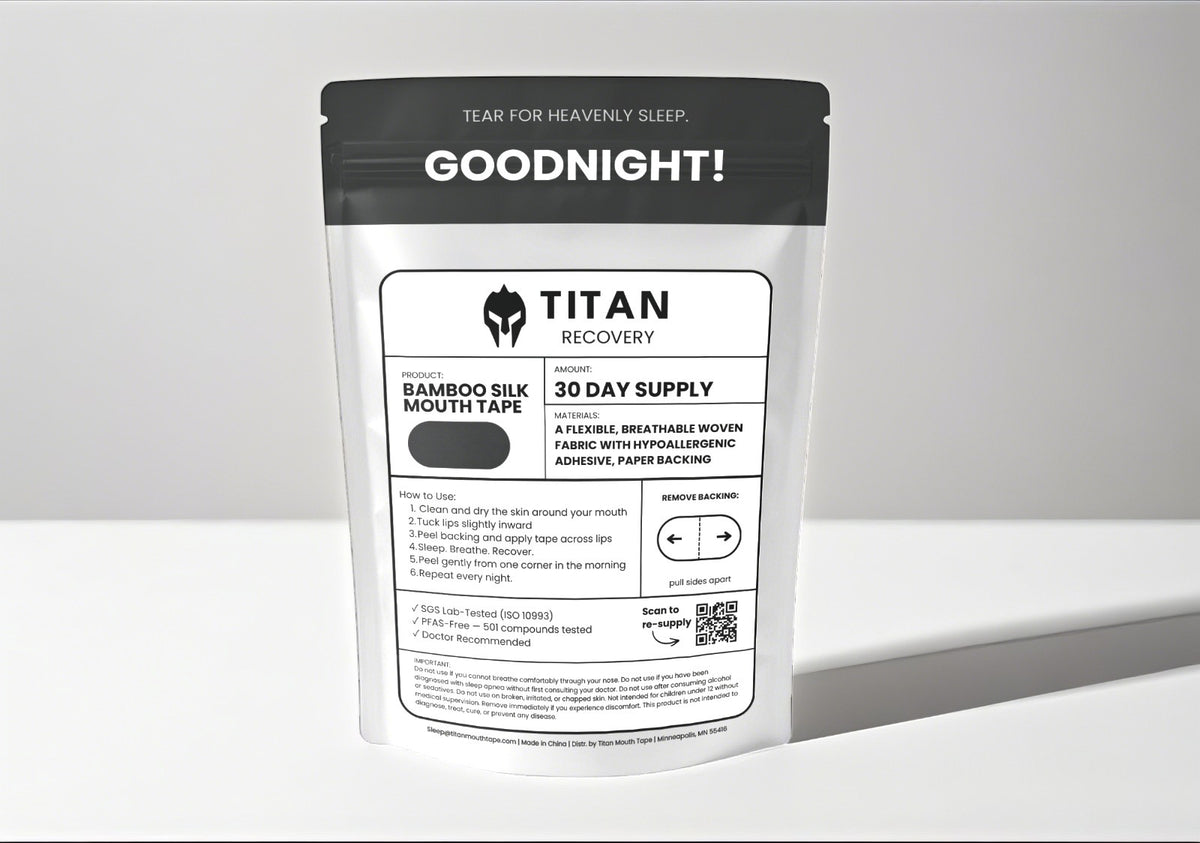
Doctor Recommended: "As a maxillofacial surgeon and dentist, I recommend Titan Mouth Tape. Nasal breathing during sleep is essential for airway health and deep restorative rest. Titan's bamboo silk design is the most comfortable and effective mouth tape I have tested. If you struggle with snoring, dry mouth, or poor sleep quality, this is the simplest change you can make for your health." — Dr. Francois P., MD, DDS — Maxillofacial Surgeon
Lab-Tested Safety: Titan's adhesive is independently tested to ISO 10993 medical device standards. Non-toxic (95% cell viability). Non-allergenic (0% reaction rate). Non-irritating (score 0.0/8.0). PFAS-free — 501 compounds tested, zero detected. See full test results →
Try the complete system tonight. Titan Mouth Tape (bamboo silk, SilkSeal™ adhesive) + TitanAir Nasal Strips. Free shipping. 30-night Better Sleep Guarantee. Shop Titan Mouth Tape → · Shop TitanAir Nasal Strips →