Mouth Taping and Menopause: Better Sleep Through the Transition
Share
If you're looking into mouth taping and menopause, you're almost certainly not sleeping the way you used to. The short answer: menopause changes your sleep and your breathing in ways that make nasal breathing more valuable, and for many women mouth taping can be a helpful piece of the picture — but it works best alongside the other changes that address menopausal sleep at its root.
Here's what's happening during the transition, where mouth breathing fits in, and how to decide whether taping belongs in your routine.
Why Menopause Disrupts Sleep So Badly
Sleep complaints are one of the most common and frustrating symptoms of perimenopause and menopause. Several things stack up at once:
Falling estrogen and progesterone. Progesterone has a calming, sleep-promoting effect, and estrogen helps regulate body temperature and sleep architecture. As both decline, falling asleep and staying asleep get harder.
Hot flashes and night sweats. Vasomotor symptoms can jolt you awake repeatedly, fragmenting sleep even when total time in bed looks normal.
Rising risk of sleep-disordered breathing. This is the part many women don't hear about. The drop in progesterone — which helps keep upper-airway muscles toned — combined with changes in fat distribution raises the risk of snoring and obstructive sleep apnea after menopause. Snoring that was never an issue can appear seemingly overnight.
Where Mouth Breathing Fits In
When you sleep with your mouth open, the jaw drops back and the tongue tends to fall toward the throat, narrowing the airway and making snoring more likely. Nasal breathing keeps the mouth closed and the airway more stable, and it delivers the physiological perks of breathing through your nose — filtered, humidified air and better nitric oxide production. If you want the full mechanism, see how nasal breathing affects oxygen.
For a woman whose snoring is newly worse in menopause, encouraging consistent nasal breathing is a reasonable, low-cost thing to address — and that's exactly what mouth taping is designed to support. Our overview of whether mouth tape helps with snoring walks through when it does and doesn't make a difference.
Can Mouth Taping Help Menopausal Sleep?
Mouth taping can help with the mouth-breathing and mild-snoring part of the equation — the dry mouth, the sore throat, the light snoring caused by an open-mouth posture. What it cannot do is fix hot flashes or replace lost hormones. Think of it as one tool that addresses one specific contributor, not a treatment for menopause itself.
One important caution: if your snoring is loud, if you gasp or stop breathing during sleep, or if you're exhausted despite a full night in bed, get evaluated for obstructive sleep apnea before relying on tape. Post-menopausal apnea is common and underdiagnosed, and mouth taping is not a treatment for it. Our guidance on who should avoid mouth tape covers this.
A Practical Sleep Routine for the Transition
Mouth taping works best as part of a broader menopausal sleep strategy, not a standalone fix.
Keep the room cool. A cold bedroom (around 65°F) reduces both night sweats and general sleep disruption.
Address congestion first. Taping only makes sense if you can breathe well through your nose. If you're congested, a saline rinse or nasal strips can open the airway so nasal breathing is comfortable.
Protect a consistent schedule. Regular sleep and wake times stabilize a system that menopause is already destabilizing.
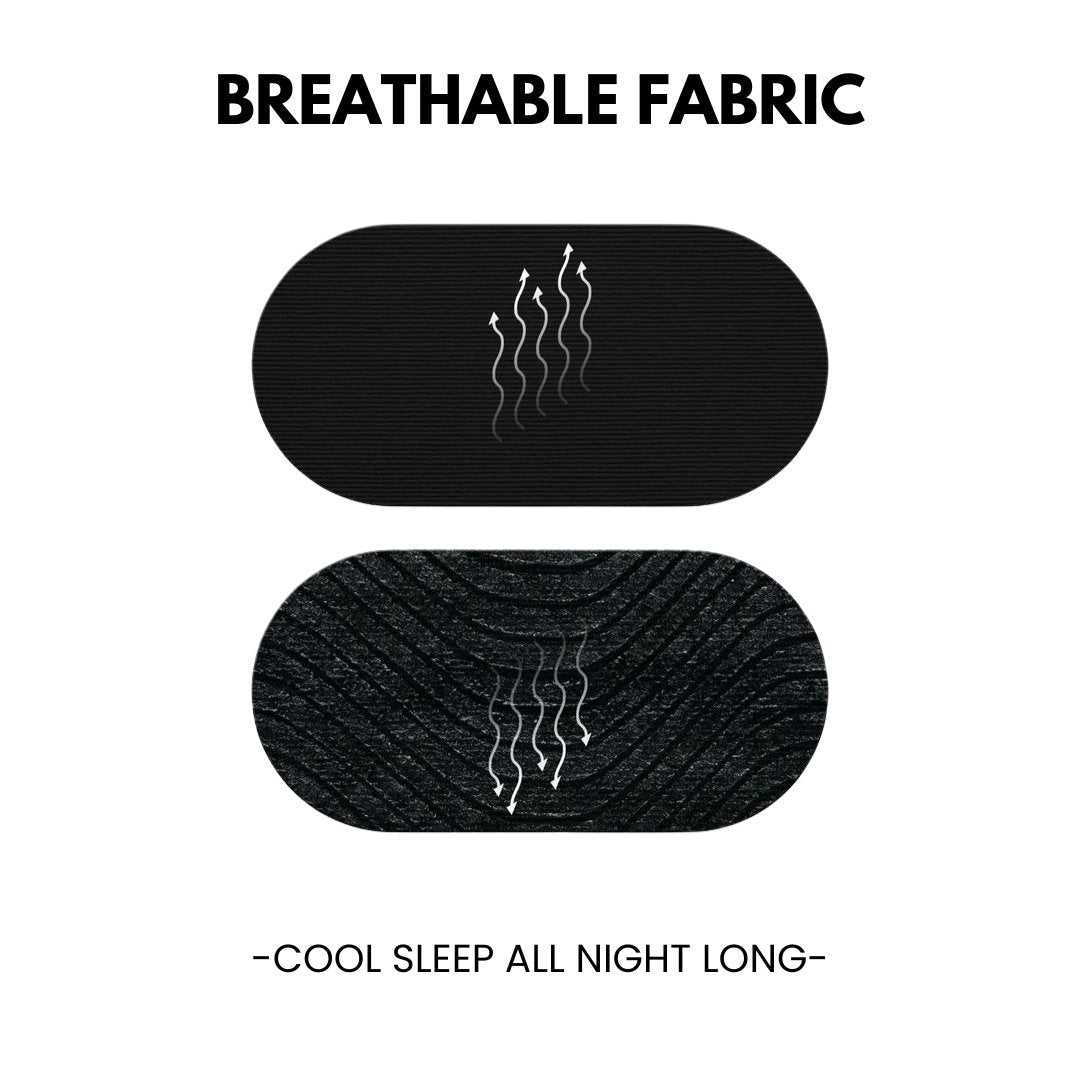
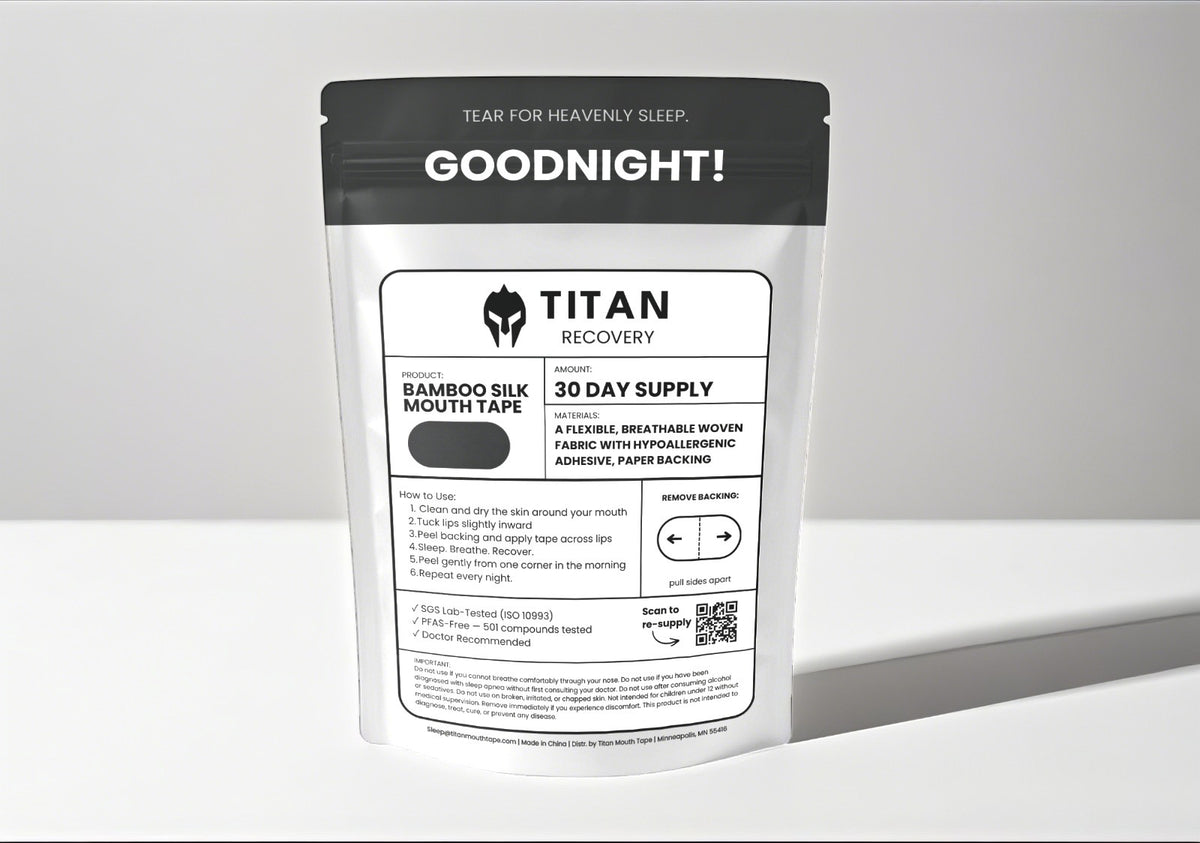
Layer in mouth taping once the basics are in place. If your nose is clear and apnea has been ruled out, gentle mouth tape can reinforce nasal breathing through the night. Start with our beginner's guide and a comfortable, skin-friendly tape like our bamboo silk mouth tape.
Does menopause cause snoring?
It can. The decline in progesterone reduces upper-airway muscle tone, and the risk of snoring and sleep apnea rises notably after menopause — even in women who never snored before.
Will mouth taping stop menopausal night sweats?
No. Night sweats are driven by hormonal changes in temperature regulation. Mouth taping addresses breathing, not vasomotor symptoms — keep the room cool and talk to your doctor about hot flashes.
Is mouth taping safe if I'm on HRT or sleep medication?
Mouth taping itself is a mechanical habit, but if you take sedating medication that could make you slower to wake or clear your airway, check with your doctor first.
The Bottom Line
Menopause makes nasal breathing more valuable — snoring and mouth breathing often show up or worsen during the transition — so supporting a closed-mouth, nose-breathing sleep posture is a sensible move. Mouth taping can help with that specific piece, provided your nose is clear and you've ruled out sleep apnea. Pair it with a cool room, congestion management with nasal strips if needed, and a steady schedule, and you're addressing menopausal sleep from several angles at once rather than hoping one fix does it all.
Doctor Recommended: "As a maxillofacial surgeon and dentist, I recommend Titan Mouth Tape. Nasal breathing during sleep is essential for airway health and deep restorative rest. Titan's bamboo silk design is the most comfortable and effective mouth tape I have tested. If you struggle with snoring, dry mouth, or poor sleep quality, this is the simplest change you can make for your health." — Dr. Francois P., MD, DDS — Maxillofacial Surgeon
Lab-Tested Safety: Titan's adhesive is independently tested to ISO 10993 medical device standards. Non-toxic (95% cell viability). Non-allergenic (0% reaction rate). Non-irritating (score 0.0/8.0). PFAS-free — 501 compounds tested, zero detected. See full test results →
Try the complete system tonight. Titan Mouth Tape (bamboo silk, SilkSeal™ adhesive) + TitanAir Nasal Strips. Free shipping. 30-night Better Sleep Guarantee. Shop Titan Mouth Tape → · Shop TitanAir Nasal Strips →