Dry Eyes and Sleep: The Mouth Breathing Connection

Share
If you wake up most mornings with eyes that feel gritty, stinging, or stuck shut, you've probably looked into the usual suspects: screen time, allergies, aging, medications. But there's a contributor to dry eyes sleep problems that most people never consider, and most eye doctors don't ask about: how you breathe at night. Mouth breathing during sleep changes the airflow dynamics around your face in ways that can dry out the surface of your eyes, particularly if you're one of the many people whose eyelids don't fully close during sleep.
The connection is straightforward once you understand the mechanics. An open mouth creates a different air circulation pattern across the face compared to a closed mouth. More air moves over the eye area, humidity drops, and the tear film that protects your corneas evaporates faster. For people already prone to dry eyes, this nightly exposure can be the difference between mild irritation and genuine discomfort.
Why Your Eyes Dry Out at Night
During the day, you blink roughly 15 to 20 times per minute, spreading a protective layer of moisture, oil, and mucin across the corneal surface. During sleep, blinking stops. Your tear film has to last for hours with no renewal. When conditions are right, eyelids fully closed and humidity adequate, this works. When conditions are wrong, the tear film evaporates faster than the eyes can replenish it.
Eyelid closure matters more than people realize. Many people don't fully close their eyelids during sleep, a condition called nocturnal lagophthalmos. Research suggests prevalence as high as 5 to 20 percent depending on diagnostic criteria. Even a millimeter of lid separation exposes corneal surface to the air, and over six to eight hours, that's enough to cause significant drying and discomfort.
Ambient humidity directly affects tear evaporation speed. Heated rooms in winter, air-conditioned rooms in summer, and arid climates all reduce it. And then there's airflow across the face, the factor most people overlook, and where mouth breathing enters the picture.
How Mouth Breathing Dries Your Eyes
With nasal breathing, airflow is directed downward through the nostrils and doesn't disturb the air around the eyes. With an open mouth, the dynamics change. Exhaled air is warmer than room air. As it exits the mouth, it rises along the face, creating a subtle but continuous convection current that moves upward past the cheeks and across the eye area for hours.
For someone with fully closed eyelids, the lids act as a barrier. But for anyone with partial lid opening, this airflow hits exposed corneal tissue directly, accelerating tear film evaporation.
There's a humidity component too. Nasal breathing humidifies and warms incoming air through the nasal turbinates, keeping the surrounding facial area relatively moist. Mouth breathing bypasses this system. The oral cavity dries out (which is why you wake up with a parched throat), and the micro-environment around the face becomes drier overall. The effect compounds across the night: early in sleep the tear film may hold, but after four or five hours of mouth-breathing-driven airflow and reduced humidity, it has thinned to the point of irritation.
Other Causes of Dry Eyes at Night
Mouth breathing is one factor, not the only one. Most people dealing with dry eyes at night have more than one cause at work.
Fans and HVAC systems. A fan or forced-air vent pointed toward the head creates direct airflow across the face all night. If you use a fan for white noise, pointing it away from the bed or switching to a noise machine helps.
Medications. Antihistamines, antidepressants, blood pressure medications, decongestants, and hormonal treatments can all reduce tear production. If symptoms appeared or worsened when you started a new medication, mention the connection to your doctor.
Screen time. Extended screen use reduces blink rate by as much as 50 to 70 percent. By bedtime, your tear glands may already be fatigued. The nighttime drying becomes the final straw.
Age, hormones, and underlying conditions. Tear production decreases with age, and menopause is associated with increased dry eye prevalence. Autoimmune conditions like Sjogren's syndrome and thyroid disorders can also affect tear production or eyelid position. Persistent, severe symptoms warrant investigation with a physician.
What the Research Connects
No large-scale trial has studied mouth taping specifically as a dry eye intervention. But published research establishes each link in the chain: mouth breathing alters facial airflow, altered airflow accelerates tear evaporation, nocturnal lagophthalmos exposes the cornea to that airflow, and nasal breathing preserves facial humidity. The connection is mechanistically sound. For people who wake up with dry eyes every morning and also breathe through their mouth at night, addressing the breathing is a reasonable step.
Practical Fixes for Dry Eyes at Night
Dry eyes at night rarely have a single cause, so the most effective approach addresses multiple factors.
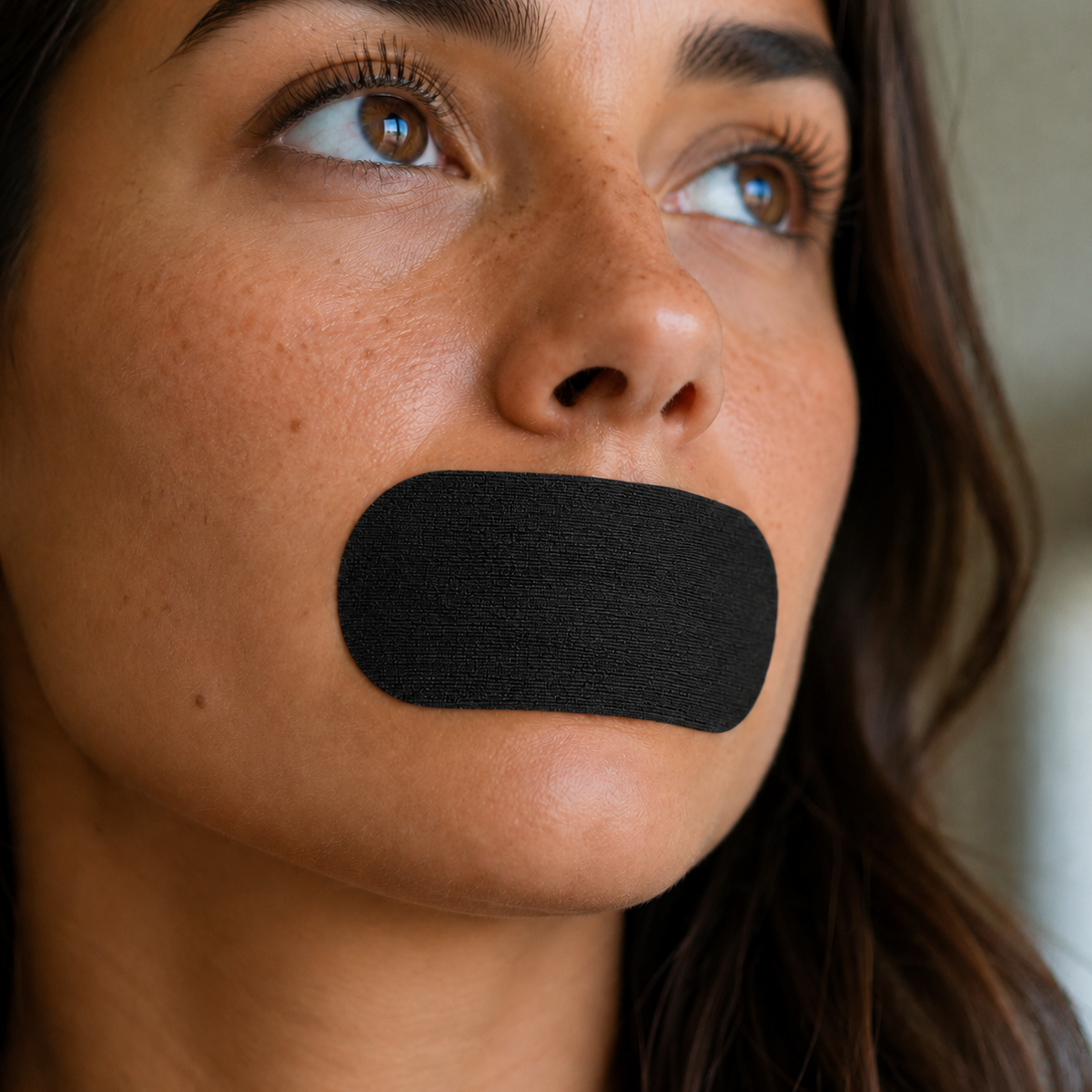
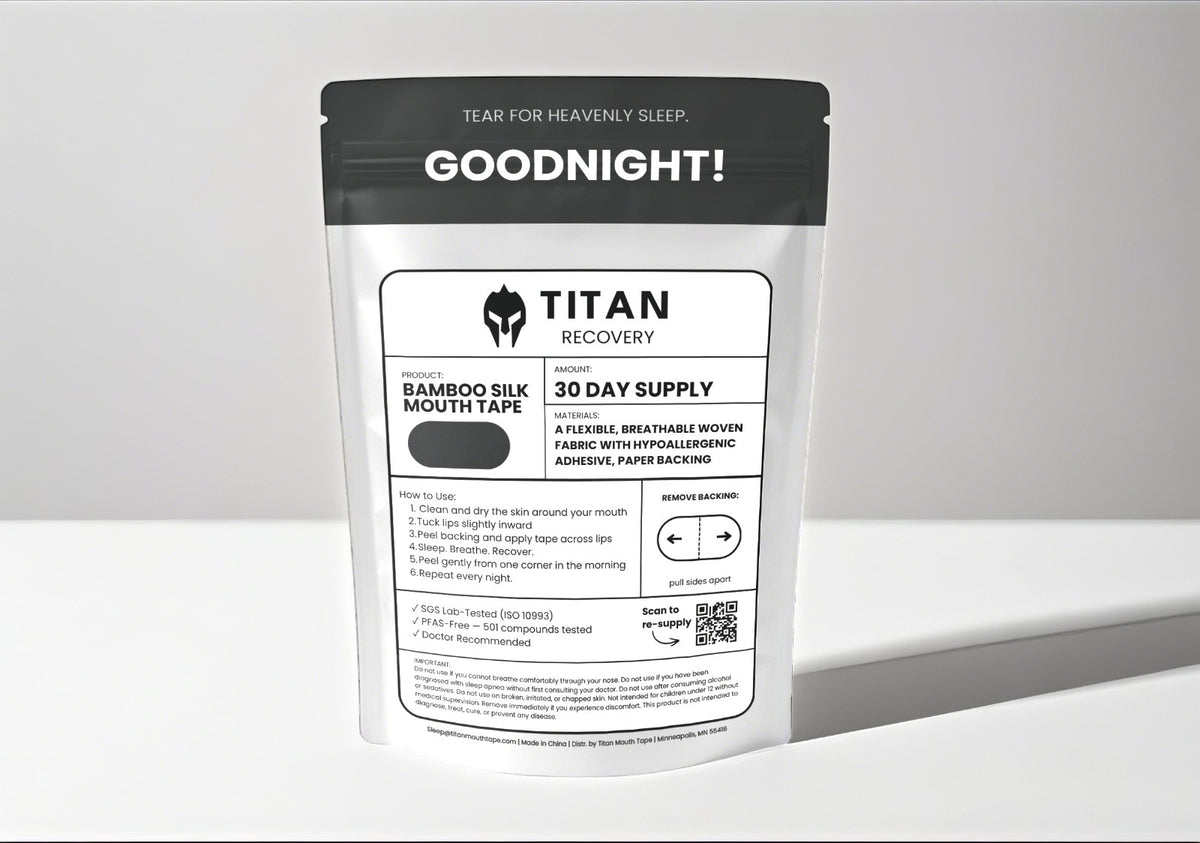
Switch to nasal breathing during sleep. Mouth tape holds the lips in a relaxed closed position, routing breathing through the nose. This eliminates the convection current across the face and preserves nasal humidification. For people whose dry eyes are worsened by mouth breathing, this single change can be significant.
Manage your bedroom airflow. Position fans so they don't blow toward your head. Redirect HVAC vents away from the bed. Consider whether you need the fan for cooling or just for noise (a noise machine may be a better option).
Add humidity. A bedroom humidifier can meaningfully reduce overnight tear evaporation. Target 40 to 60 percent humidity. Many people are surprised to find their bedroom in the 20 to 30 percent range during heated winter months.
Use preservative-free lubricating drops before bed. A gel-based lubricant applied at bedtime provides a moisture reservoir that lasts longer through the night. Preservative-free formulations are important for overnight use.
Check for nocturnal lagophthalmos. Ask a sleep partner to check whether your eyelids are fully closed after you fall asleep. A visible sliver of white along the bottom of your eyelids means you have some degree of incomplete closure, worth mentioning to your eye doctor.
Review your medications and screen habits. Ask your physician whether any current medications could be contributing. Reduce screen time in the last hour before sleep to let your blink rate normalize and tear glands recover.
When to See an Eye Doctor
See an ophthalmologist or optometrist if your dry eye symptoms affect your vision, if you experience significant eye pain, if symptoms persist despite environmental changes, or if you have an autoimmune condition or thyroid disorder that could be contributing. An eye doctor can assess your tear film, check for corneal damage, evaluate eyelid closure, and recommend treatments from prescription drops to punctal plugs.
How Mouth Tape Fits into the Picture
Mouth tape is not an eye treatment. It doesn't add moisture to the eyes or stimulate tear production. What it does is address one environmental factor, mouth-breathing-driven airflow and humidity loss, that contributes to overnight drying.
For people who wake up with both dry mouth and dry eyes, the connection to mouth breathing is especially likely. Both symptoms share the same root cause. Pairing mouth tape with nasal strips ensures the nasal airway stays open all night. The combination of mouth tape and nasal strips is a practical starting point for anyone whose nighttime breathing is contributing to morning eye discomfort.
Frequently Asked Questions
Can mouth breathing actually cause dry eyes?
Mouth breathing contributes to dry eyes by altering facial airflow during sleep. Exhaled air from an open mouth creates a convection current that rises across the eye area, accelerating tear film evaporation. The effect is most pronounced in people whose eyelids don't fully close during sleep. It's typically one factor among several rather than the sole cause.
Why do I wake up with dry eyes even though I use eye drops at night?
Drops applied at bedtime may not last six to eight hours, especially if environmental factors like mouth breathing, fan airflow, or low humidity are continuously drying the eyes. Addressing these causes in addition to using drops produces better results than drops alone. Gel-based lubricants last longer but may still be insufficient if the drying force is continuous.
How do I know if I sleep with my eyes partially open?
Ask a sleep partner to check your eyelids about fifteen minutes after you fall asleep. A visible strip of white (the sclera) along the bottom edge means you have some degree of nocturnal lagophthalmos. If you sleep alone, waking consistently with dry eyes that are worse on one side (often the upward-facing side for side sleepers) is suggestive. An eye doctor can evaluate lid closure as part of a dry eye assessment.
Will a humidifier help with dry eyes at night?
Yes. Targeting 40 to 60 percent humidity meaningfully reduces overnight tear evaporation, especially during winter when heated air drops below 30 percent. A humidifier works best combined with other measures like reducing airflow and addressing mouth breathing.
Should I tape my eyes shut instead of taping my mouth?
Eye taping is sometimes recommended by ophthalmologists for confirmed nocturnal lagophthalmos, but it requires specific medical-grade tape and careful technique. Don't improvise this. See an eye doctor for proper guidance. Mouth tape addresses the airflow and humidity factors from the other direction, which for many people is enough to reduce symptoms without directly taping the eyes.
The Bottom Line
Dry eyes at night is a problem with multiple causes, and mouth breathing is one of the most common and most overlooked. The mechanics are straightforward: an open mouth changes how air moves across the face, reduces the humidity around the eyes, and accelerates tear film evaporation, especially for the many people whose eyelids don't fully close during sleep. Addressing this doesn't require expensive interventions or complicated routines. Mouth tape for better sleep keeps the lips together and routes breathing through the nose, eliminating the facial airflow problem at its source while also solving the dry mouth that often accompanies it. Combined with practical steps like managing bedroom airflow, adding humidity, and using lubricating drops before bed, this approach tackles the environmental factors that cause overnight drying. If your dry eye symptoms are persistent or severe, see an eye doctor for a thorough evaluation. But if you've been waking up with gritty, irritated eyes and you know you breathe through your mouth at night, connecting those two facts is a reasonable place to start.
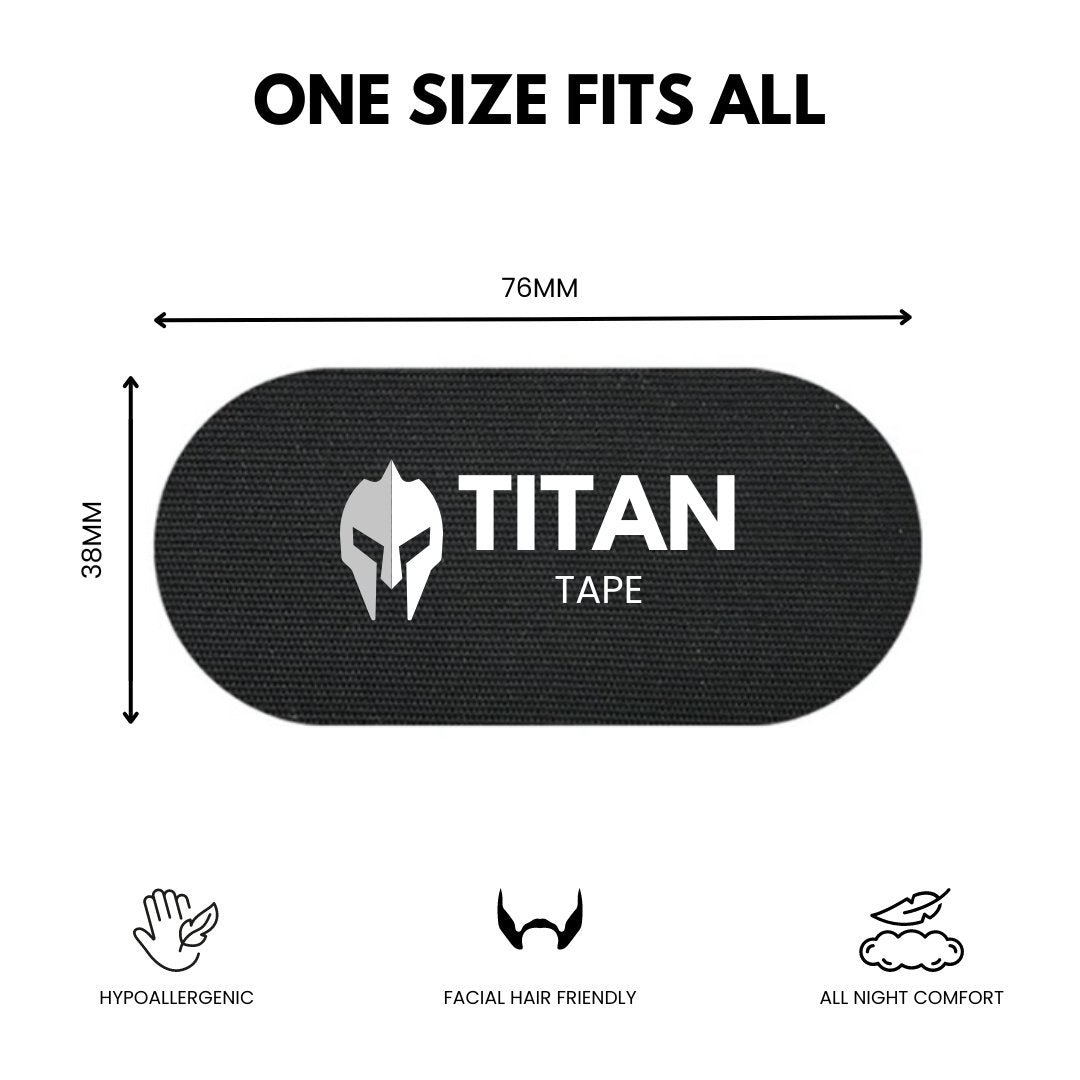
Doctor Recommended: "As a maxillofacial surgeon and dentist, I recommend Titan Mouth Tape. Nasal breathing during sleep is essential for airway health and deep restorative rest. Titan's bamboo silk design is the most comfortable and effective mouth tape I have tested. If you struggle with snoring, dry mouth, or poor sleep quality, this is the simplest change you can make for your health." — Dr. Francois Proux, MD, DDS — Maxillofacial Surgeon
Lab-Tested Safety: Titan's adhesive is independently tested to ISO 10993 medical device standards. Non-toxic (95% cell viability). Non-allergenic (0% reaction rate). Non-irritating (score 0.0/8.0). PFAS-free — 501 compounds tested, zero detected. See full test results →
Try the complete system tonight. Titan Mouth Tape (bamboo silk, SilkSeal™ adhesive) + TitanAir Nasal Strips. Free shipping. 30-night Better Sleep Guarantee. Shop Titan Mouth Tape → · Shop TitanAir Nasal Strips →