ADHD and Sleep: How Mouth Breathing Makes It Worse
Share
If you have ADHD and struggle to fall asleep, stay asleep, or wake up feeling rested, you are not imagining things. Research estimates that up to 75% of adults with ADHD experience significant ADHD sleep problems — difficulty initiating sleep, frequent nighttime waking, reduced deep sleep, and morning grogginess that compounds the attention and executive function challenges ADHD already creates. Sleep and ADHD are so deeply intertwined that some researchers have questioned whether certain ADHD symptoms are actually sleep deprivation symptoms wearing a different label.
One factor that rarely gets discussed in this conversation is how you breathe at night. Mouth breathing during sleep fragments sleep architecture, reduces time in deep restorative stages, and keeps the nervous system in a state of low-grade arousal — exactly the opposite of what an ADHD brain needs to recover. Nasal breathing does the opposite, and mouth tape is one simple way to maintain it. This is not an ADHD treatment. It's a sleep optimization strategy that addresses a variable most people with ADHD have never considered.
Why ADHD and Sleep Problems Travel Together
The relationship between ADHD and sleep is bidirectional and well-documented. ADHD involves dysregulation of dopamine and norepinephrine pathways in the prefrontal cortex — the same neurotransmitter systems involved in sleep-wake regulation. This creates a neurobiological predisposition toward circadian rhythm disruption, delayed sleep onset, and poor sleep quality that exists independently of behavior or habits.
Delayed sleep phase is common. Many adults with ADHD experience a natural shift in their circadian rhythm that makes them alert late at night and groggy in the morning. Their melatonin release may be delayed by one to three hours compared to neurotypical adults. This isn't laziness or poor sleep hygiene — it's a clock that runs differently.
The racing mind problem is real. ADHD brains struggle with the transition from active thinking to the quiet, disengaged state that falling asleep requires. Executive function deficits make it harder to "turn off" thoughts, leading to extended sleep onset latency — lying in bed for 30, 60, or 90 minutes before sleep finally arrives. This is one of the most commonly reported ADHD sleep complaints.
Sleep architecture is often disrupted. Studies using polysomnography have found that adults with ADHD tend to spend less time in slow-wave deep sleep and more time in lighter sleep stages. They experience more frequent micro-arousals — brief awakenings that may not be consciously remembered but that prevent sleep from doing its restorative work. The result is that even when someone with ADHD gets eight hours in bed, the quality of those hours may be significantly lower than what a neurotypical sleeper gets.
How Mouth Breathing Makes All of This Worse
Here's where the breathing pattern becomes relevant. Mouth breathing during sleep is associated with several physiological effects that directly worsen the sleep problems ADHD already creates.
Sympathetic nervous system activation. Mouth breathing tends to be faster, shallower, and chest-dominant. This breathing pattern maintains sympathetic tone — the fight-or-flight branch of the autonomic nervous system. For someone with ADHD whose nervous system is already biased toward arousal and alertness, mouth breathing during sleep adds fuel to a fire that's already burning. The body stays in a low-grade alert state instead of dropping into the deep parasympathetic recovery that restorative sleep requires.
Fragmented sleep architecture. Mouth breathing is associated with increased upper airway resistance during sleep. Even when it doesn't rise to the level of obstructive sleep apnea, this resistance causes micro-arousals — the same brief awakenings that ADHD sleep studies already document at elevated rates. More mouth breathing means more arousals, means less consolidated deep sleep, means worse cognitive function the next day.
Dry mouth and throat irritation. Mouth breathing dries the oral mucosa throughout the night. This causes nighttime dry mouth, sore throat, and the kind of discomfort that causes additional awakenings. For people who already struggle with sleep continuity, adding a physical irritant makes things worse.
Reduced nitric oxide delivery. Nasal breathing carries nitric oxide from the paranasal sinuses into the lungs, where it improves oxygen exchange and vascular function. Mouth breathing bypasses this entirely. The practical consequence is slightly less efficient oxygenation — which matters when the brain is supposed to be consolidating memories, clearing metabolic waste, and restoring the neurotransmitter balance that ADHD already challenges.
The ADHD Brain Needs Better Sleep, Not Just More Sleep
The standard advice for ADHD sleep problems focuses on sleep hygiene: consistent bedtimes, blue light reduction, stimulant medication timing. These are all legitimate strategies. But they address when and whether you fall asleep — not the quality of the sleep you get once you're there.
Sleep quality is distinct from sleep quantity, and for people with ADHD, quality is often the bigger problem. You can go to bed at a reasonable hour, fall asleep within 20 minutes, and still wake up feeling unrested because the sleep itself was fragmented, shallow, and spent in the wrong breathing pattern.
This is where nasal breathing during sleep becomes relevant. Nasal breathing activates the parasympathetic nervous system — the branch responsible for rest, recovery, and the deep physiological calm that restorative sleep requires. It does this through several mechanisms: slower respiratory rate due to increased nasal airflow resistance, vagus nerve stimulation through diaphragmatic breathing, and nitric oxide delivery that improves vascular and respiratory function.
For someone with ADHD, this parasympathetic activation is particularly valuable. The ADHD nervous system tends to run hot — higher baseline arousal, more difficulty downregulating. A breathing pattern that mechanically promotes calm during the hours when the brain is supposed to be recovering isn't a cure for ADHD. But it addresses one of the physiological inputs that determines whether sleep actually restores cognitive function or just occupies time.
What Mouth Tape Does (and What It Doesn't)
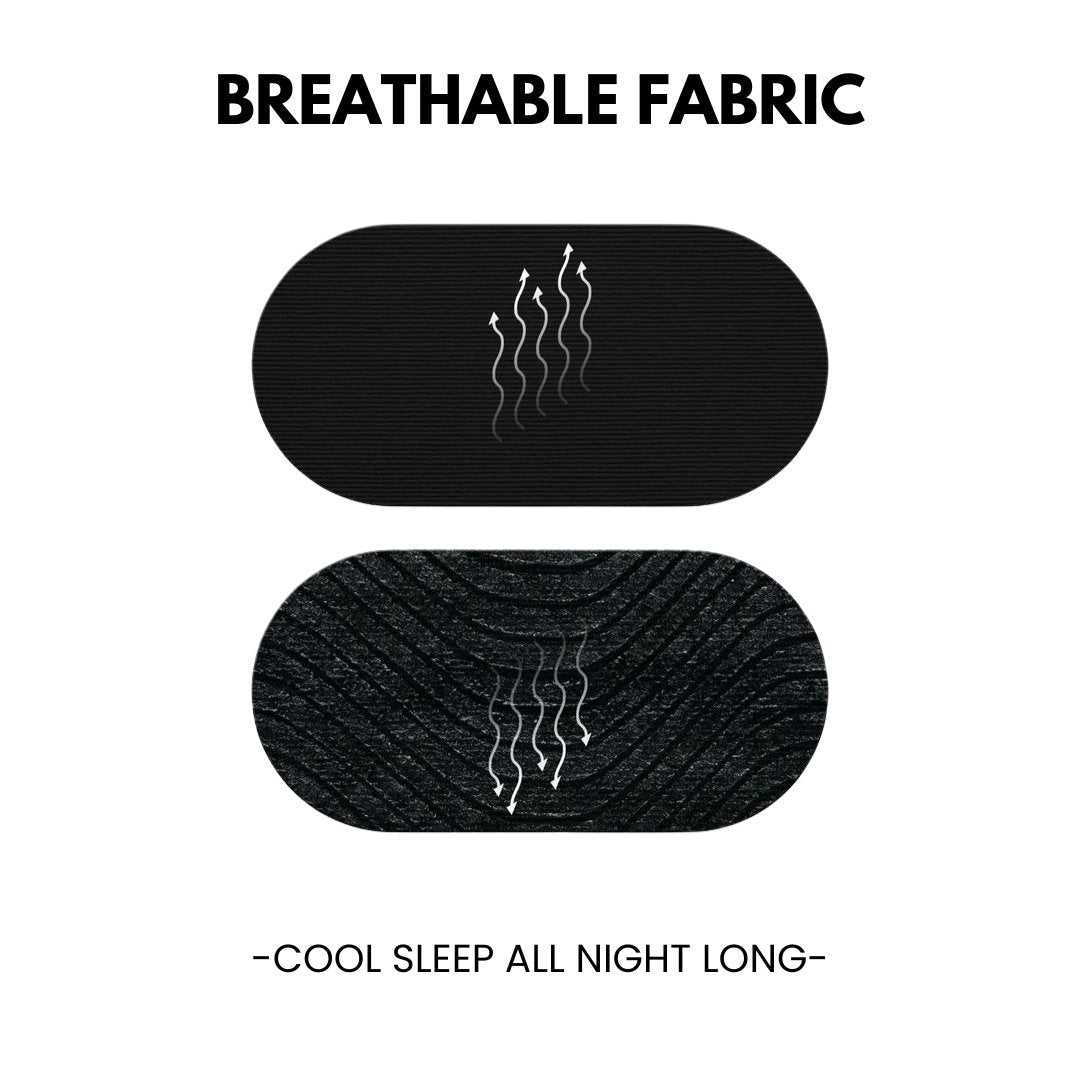
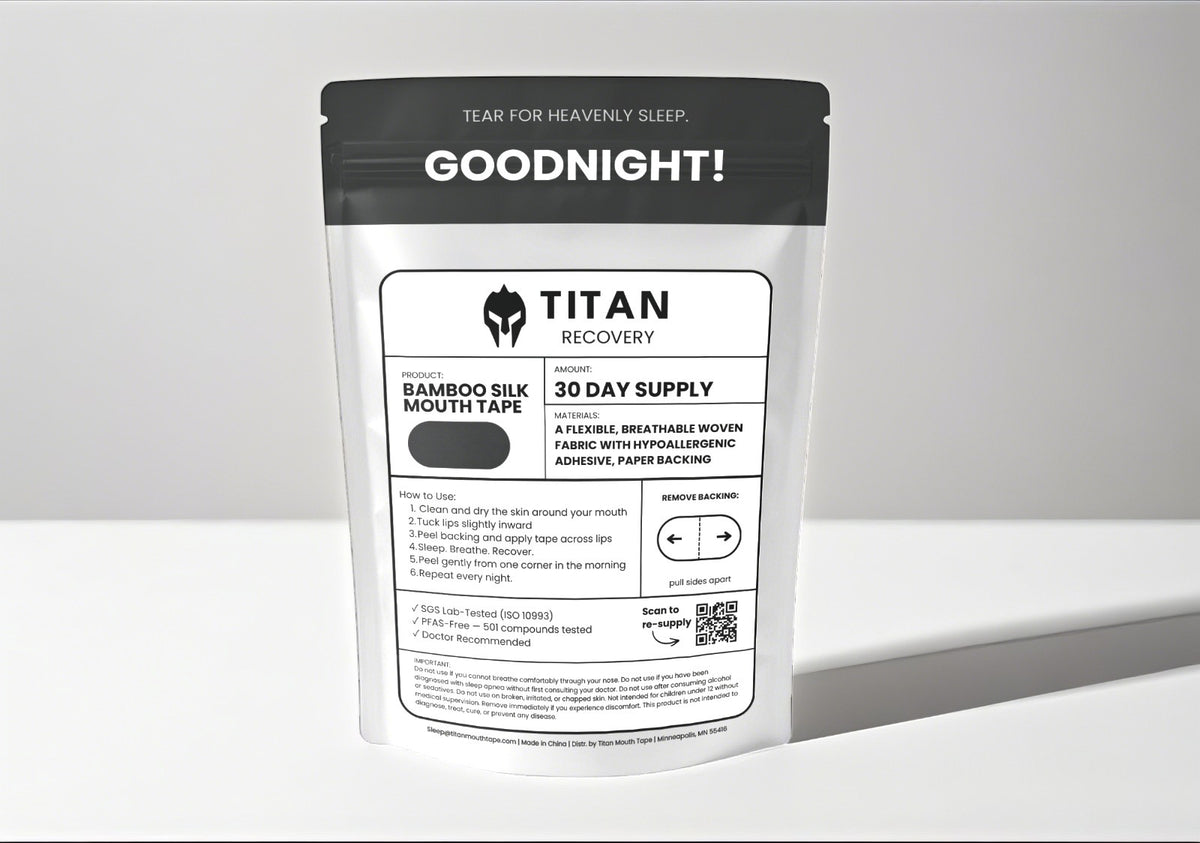
Mouth tape gently holds the lips in a closed position during sleep, ensuring that breathing stays nasal throughout the night. It's a passive, mechanical tool. You apply it before bed and it maintains the nasal breathing pattern your body benefits from — without requiring conscious effort, which is particularly relevant for ADHD brains that have difficulty sustaining conscious behavioral changes during sleep onset.
Support deeper sleep stages. By promoting parasympathetic tone, mouth tape creates the physiological conditions associated with more consolidated, deeper sleep — more time in slow-wave stages where memory consolidation, metabolic waste clearance, and neurotransmitter restoration happen.
Reduce nighttime arousals. Nasal breathing reduces upper airway turbulence compared to the open-mouth position, which may decrease the micro-arousals that fragment ADHD sleep.
Improve morning clarity. Many users report that the most noticeable change is waking up more clear-headed. For someone with ADHD, morning cognitive clarity directly affects the ability to organize, prioritize, and manage the executive function demands the day brings.
What it will not do: treat ADHD itself. Mouth tape does not affect dopamine pathways, executive function networks, or the neurological basis of the condition. If you have ADHD that requires medication, behavioral therapy, or other clinical intervention, those remain your primary tools. If your core problem is delayed sleep phase — you genuinely cannot fall asleep until 2 AM — mouth tape won't move that clock. And if your sleep problems significantly impact daily functioning, talk to your healthcare provider. Mouth tape fits into a sleep optimization stack; it doesn't replace the foundation.
How to Start: A Practical Approach for ADHD
ADHD brains are better at adopting new habits when the barrier to entry is low and the sensory experience is neutral or positive. Mouth tape fits this well because it requires no ongoing attention or willpower once applied — but the introduction still matters.
Try it during a calm daytime activity first. Wear mouth tape for 20-30 minutes while doing something relaxed — watching a show, reading, scrolling your phone. The goal is to build familiarity with the sensation in a low-stakes environment. Most people find it unnoticeable within a few minutes.
Make it part of your existing bedtime sequence. If you already take medication, brush your teeth, and set an alarm, add mouth tape as the last step. Linking it to an established routine reduces the executive function demand of remembering a new habit — something ADHD makes genuinely harder.
Pair with a nasal strip if congestion is a factor. Some people with ADHD take medications (stimulants or otherwise) that can contribute to nasal dryness or mild congestion. If your nose feels partially blocked when lying down, an external nasal strip opens the nasal valve and makes nasal breathing effortless. The combination of mouth tape plus nasal strip covers both sides of the airway equation.
Give it at least a week. ADHD brains are novelty-seeking, which means new interventions often get abandoned before they've had time to produce measurable results. Commit to seven consecutive nights and assess how your mornings feel at the end of that window rather than evaluating night by night.
Frequently Asked Questions
Can mouth tape help with ADHD insomnia?
Mouth tape addresses one factor that contributes to poor sleep quality: breathing pattern. If mouth breathing is fragmenting your sleep or keeping your nervous system in sympathetic arousal, switching to nasal breathing may improve sleep quality. It won't override a delayed circadian rhythm or racing thoughts on its own, but it removes one barrier to restorative sleep. If you have persistent insomnia, work with a healthcare provider to address all contributing factors.
Is ADHD mouth breathing a recognized connection?
Research has identified higher rates of sleep-disordered breathing — including habitual mouth breathing — in children and adults with ADHD. Some studies found that treating sleep-disordered breathing in children with ADHD symptoms led to improvements in attention and behavior. The two conditions share overlapping risk factors and can worsen each other.
Will mouth tape interfere with ADHD medication?
No pharmacological interaction. Some stimulant medications can cause dry mouth or mild nasal congestion as side effects — if you experience these, staying hydrated before bed and using a nasal strip alongside mouth tape can help maintain comfortable nasal breathing.
What if I feel anxious about taping my mouth?
Sensory sensitivity — more prevalent in people with ADHD — can make the initial experience unfamiliar. Start with daytime practice in a controlled environment. The tape holds a relaxed position with gentle adhesive that releases if you open your mouth with intention. You are not sealed shut. If anxiety persists, read more about mouth tape safety or discuss it with your doctor.
The Bottom Line
ADHD and sleep problems are deeply connected at a neurobiological level. The ADHD brain is already predisposed to fragmented sleep, reduced deep sleep, and difficulty transitioning into rest. Mouth breathing during sleep adds a physiological stressor on top of that — maintaining sympathetic arousal, fragmenting sleep architecture further, and reducing the quality of the limited restorative sleep ADHD allows.
Nasal breathing during sleep promotes the parasympathetic activation, deeper sleep stages, and morning clarity that an ADHD brain needs to function at its best during the day. Mouth tape is a simple, passive tool that maintains this breathing pattern all night without requiring the sustained conscious effort that ADHD makes difficult. It's not an ADHD treatment — it's a sleep optimization tool that works on a variable most people with ADHD have never thought to control.
The Titan Deep Sleep Bundle pairs mouth tape with nasal strips for maximum airway support — gentle materials, all-night hold, and a Better Sleep Guarantee. Give your nervous system a week of uninterrupted nasal breathing and see whether the mornings start to feel different.
Doctor Recommended: "As a maxillofacial surgeon and dentist, I recommend Titan Mouth Tape. Nasal breathing during sleep is essential for airway health and deep restorative rest. Titan's bamboo silk design is the most comfortable and effective mouth tape I have tested. If you struggle with snoring, dry mouth, or poor sleep quality, this is the simplest change you can make for your health." — Dr. Francois P., MD, DDS — Maxillofacial Surgeon
Lab-Tested Safety: Titan's adhesive is independently tested to ISO 10993 medical device standards. Non-toxic (95% cell viability). Non-allergenic (0% reaction rate). Non-irritating (score 0.0/8.0). PFAS-free — 501 compounds tested, zero detected. See full test results →
Try the complete system tonight. Titan Mouth Tape (bamboo silk, SilkSeal™ adhesive) + TitanAir Nasal Strips. Free shipping. 30-night Better Sleep Guarantee. Shop Titan Mouth Tape → · Shop TitanAir Nasal Strips →
This article is for informational purposes only and does not constitute medical advice. If you have or suspect a sleep disorder or other medical condition, consult a qualified healthcare provider before making changes to your routine.