Why You're Still Tired After 8 Hours of Sleep
Share
Why You're Still Tired After 8 Hours of Sleep
You're not lazy. You're not "just not a morning person." Something is happening while you sleep that no one ever told you about.
You did everything right. You went to bed at a reasonable hour. You slept a full eight hours. Your alarm goes off and you feel like you have been awake all night. Heavy. Foggy. Reaching for coffee before your feet hit the floor. And the worst part — you cannot explain why.
So you blame stress. Or your mattress. Or your age. Or the fact that you "just don't sleep well." You accept it as your baseline and stop questioning it.
But eight hours of sleep should produce eight hours of recovery. If it is not, something is actively degrading your sleep quality while you are unconscious. And in the vast majority of cases, the cause is something you have never considered.
Does This Sound Like Your Morning?
The Usual Suspects — And Why They're Probably Not the Problem
When people search "why am I still tired after 8 hours," they get the same recycled advice: reduce stress, improve sleep hygiene, see a doctor, buy a new mattress. Some of these matter. Most of them are not the primary cause. Let's eliminate the noise.
Stress
Stress can delay sleep onset and cause nighttime awakenings, but most stressed people can still achieve restorative sleep once they fall asleep — unless something else is disrupting their sleep architecture. Stress is usually a contributor, not the root cause of chronic morning exhaustion.
Your Mattress
Mattress companies spend billions convincing you that sleep quality is a surface problem. Unless your mattress is causing physical pain that wakes you up, it is not the reason you feel wrecked after eight hours. People sleep well on floors, couches, and cheap mattresses every night. The mattress is not the variable.
Inconsistent Schedule
An irregular sleep schedule does fragment circadian rhythm and reduce sleep quality. But even people with perfect schedules — same bedtime, same wake time, every day — still report chronic fatigue if the underlying breathing problem is not addressed.
Screen Time Before Bed
Blue light from screens suppresses melatonin and can delay when you fall asleep. But it does not explain why you feel exhausted after a full eight hours. If you fall asleep at a reasonable time and still wake up wrecked, screens are not the issue. Something is happening after you fall asleep.
Alcohol
Alcohol sedates you into sleep but destroys sleep architecture as it metabolizes — reducing deep sleep, fragmenting REM, and increasing snoring and mouth breathing. If you drink regularly before bed, it is absolutely making things worse. But if you do not drink and still wake up exhausted, alcohol is not your answer.
Mouth Breathing During Sleep
This is the one. When your mouth falls open during sleep, a chain reaction starts that destroys sleep quality from the inside — regardless of how many hours you are in bed, how good your mattress is, or how consistent your schedule. Your airway narrows. Your throat dries out. Snoring begins. Your body shifts out of deep, restorative sleep into lighter, fragmented cycles. Your oxygen absorption drops. Your nervous system stays in a low-grade stress response instead of shifting into recovery mode. Eight hours in bed becomes four hours of actual restorative sleep — and you feel every missing minute the next morning.
What Mouth Breathing Actually Does to Your 8 Hours
The distinction between "hours in bed" and "hours of restorative sleep" is the entire answer. Mouth breathing does not reduce how long you sleep. It reduces how well you sleep — and the gap between those two things is where your fatigue lives.
When you breathe through your nose, air is filtered, warmed, and humidified. Your sinuses produce nitric oxide — a vasodilator that widens blood vessels and improves oxygen transfer into your bloodstream. Your parasympathetic nervous system activates, lowering cortisol and enabling the deep sleep stages where physical repair, memory consolidation, and hormonal regulation happen.
When you breathe through your mouth, none of that happens. The air is raw. No nitric oxide is produced. Your nervous system stays partially activated. Deep sleep stages are shortened or skipped. You get the hours but not the recovery.
This is why the standard advice — sleep more, stress less, buy a new mattress — does not work. The problem is not the quantity of sleep. It is the quality. And the quality is being destroyed by how you breathe, not where you sleep.
The Fix Is Simpler Than You Think
You do not need a sleep study. You do not need a new mattress. You do not need a $300 wearable. You need your mouth to stay closed while you sleep so your body can breathe through the nose — the airway it was designed to use.
Mouth tape is the most direct intervention. One strip of breathable tape applied over the lips before bed keeps the mouth gently sealed all night. Your body defaults to nasal breathing. The nitric oxide pathway activates. Your parasympathetic nervous system engages. Deep sleep returns. And you wake up feeling like eight hours actually meant something.
Most people notice the difference on the first night: no dry mouth, no sore throat, noticeably more energy in the morning. By the end of the first week, the chronic fatigue that felt permanent starts to lift.
Why Titan Mouth Tape
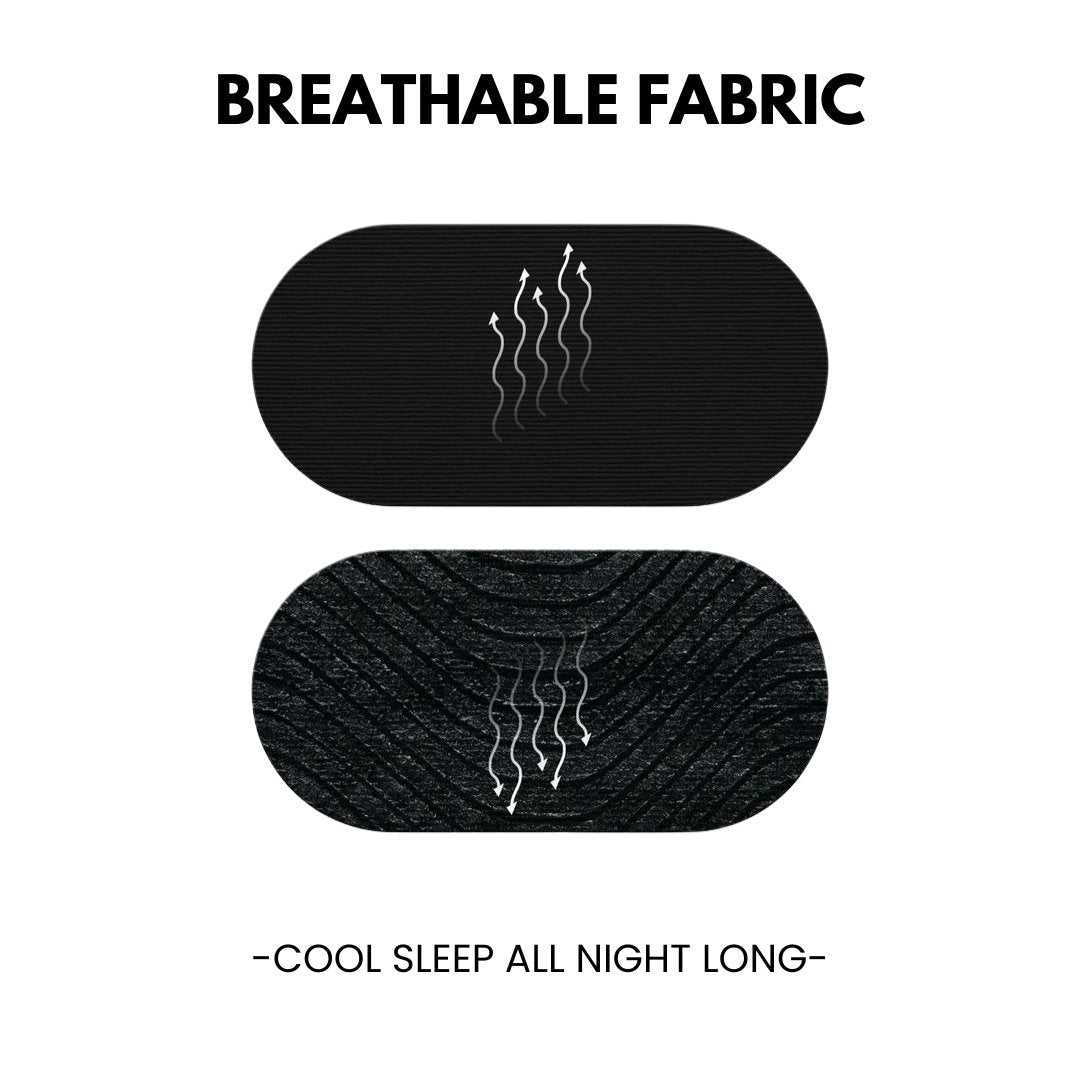
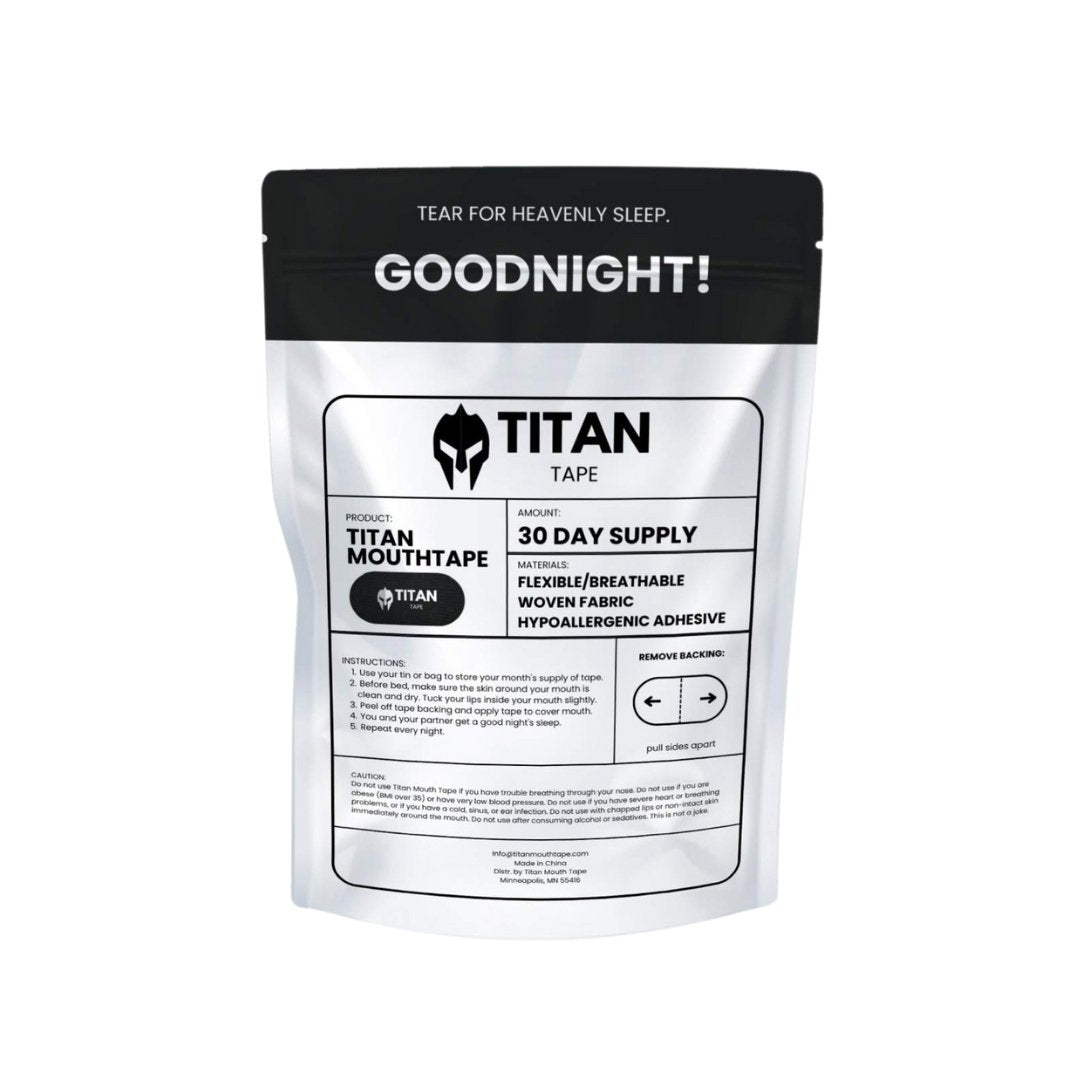
If you are going to put something on your face every night, the material matters. Titan Mouth Tape is made from breathable bamboo silk — not kinesiology tape, not paper, not synthetic fabric. The hypoallergenic adhesive holds all night without residue, irritation, or skin damage, even on beards and sensitive skin. No logo is printed on the tape itself, because ink on adhesive causes contact irritation with nightly use.
Available in 30, 90, 180, and 360-day supplies. Free shipping on every order. Every purchase is backed by the Better Sleep Guarantee — try it for 30 nights, and if you do not wake up feeling better, full refund.
Stop Accepting Tired as Normal
You have been told that fatigue is just part of being an adult. That some people are "morning people" and some are not. That you need more coffee, a better pillow, a sleep supplement, a meditation app.
None of that addresses the fact that your mouth is open for eight hours every night, draining the quality from every minute of sleep you get.
One strip. One night. You will feel the difference before you have had your coffee.
Tomorrow Morning Can Be Different
Titan Mouth Tape. Bamboo silk. Hypoallergenic. Beard-friendly. The simplest answer to the question you have been asking for years.
Shop Titan Mouth TapeFree shipping. 30-night Better Sleep Guarantee. Under $0.54/night.