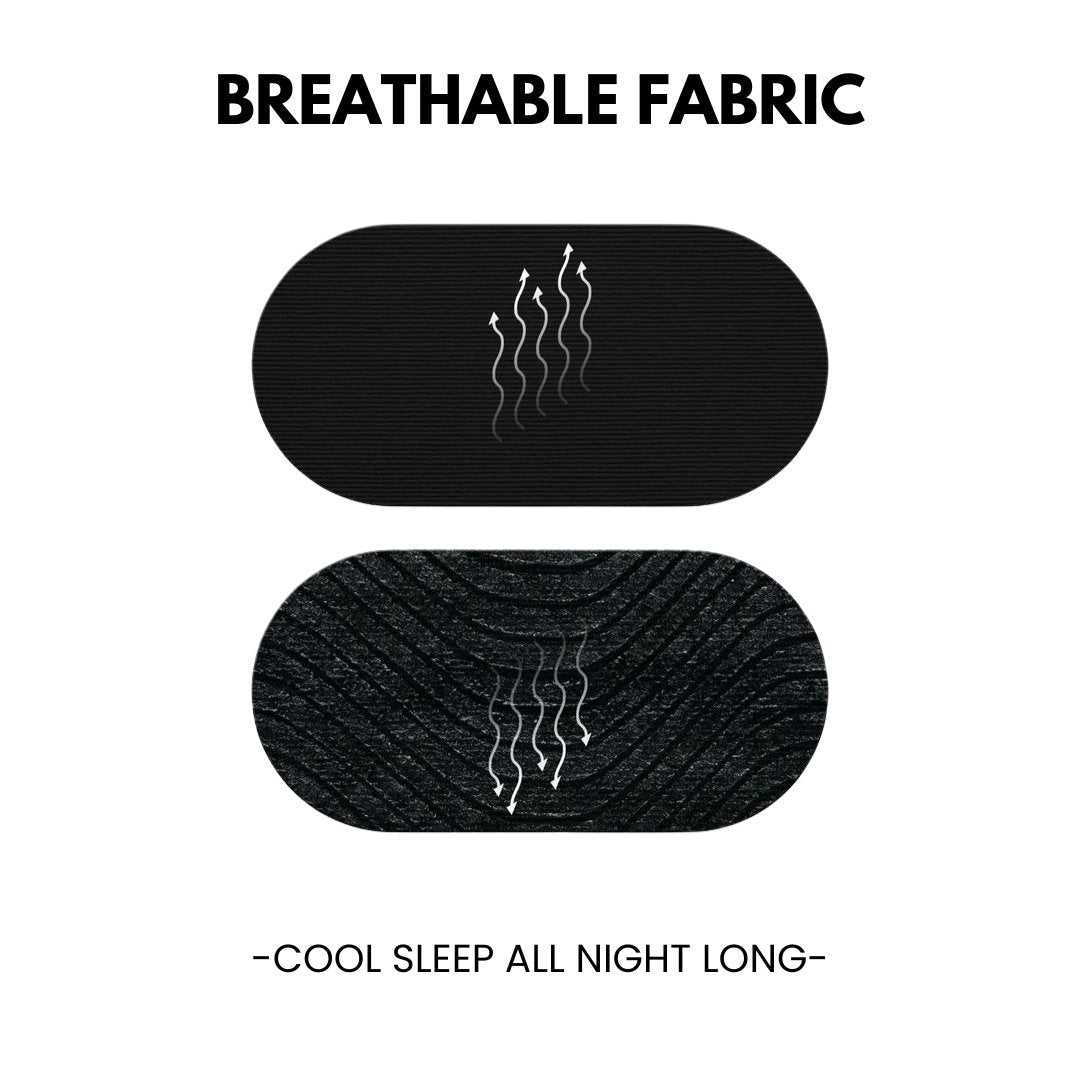
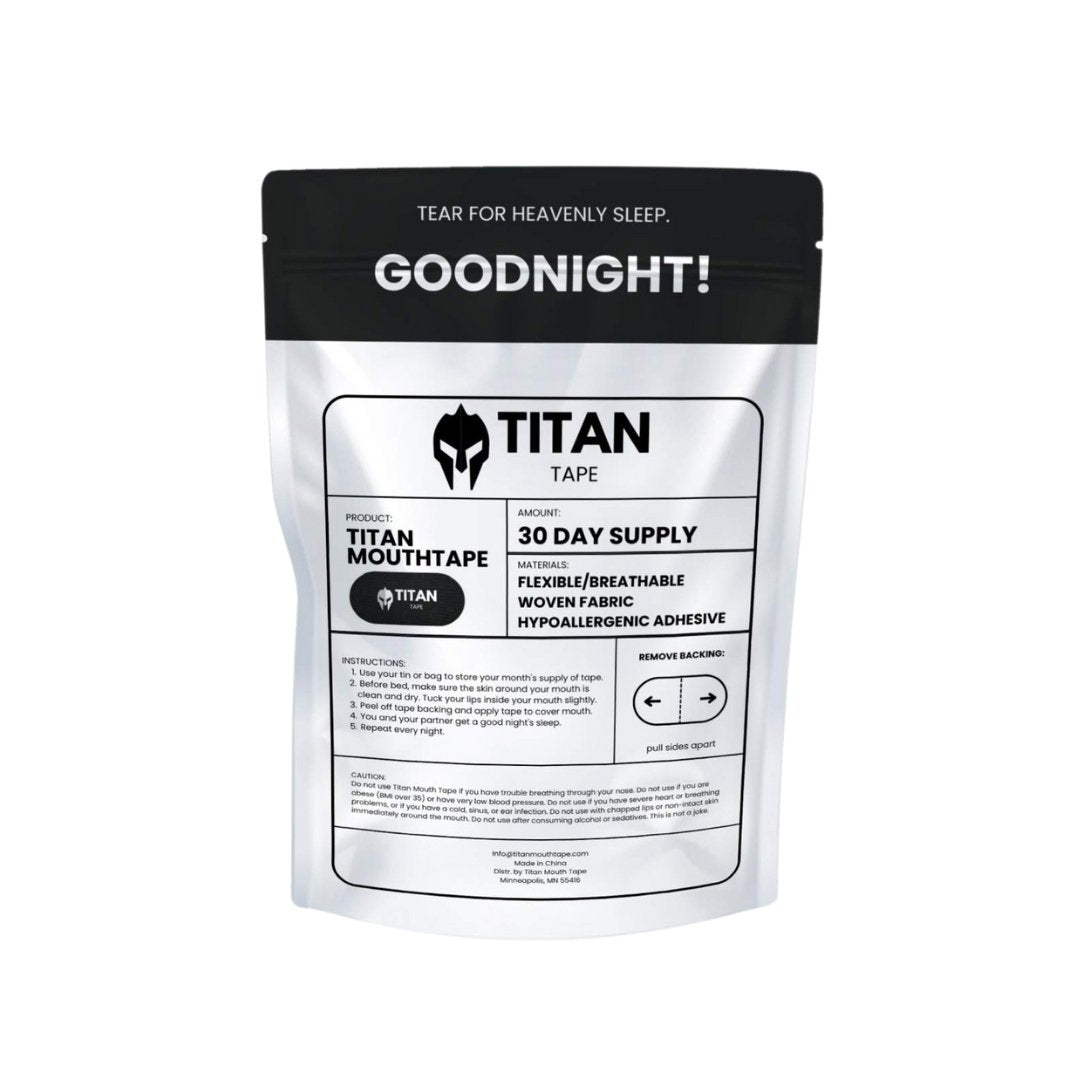
Why are elite athletes mouth taping?
Share
There's a reason the best athletes in the world are taping their mouths shut at night.
It's not a fad. It's not a TikTok trend they stumbled into. These are people whose careers depend on recovery, oxygen efficiency, and sleep quality — and they've all landed on the same simple tool.
Mouth tape.
Here's who's doing it, why they're doing it, and what it means for the rest of us.
Erling Haaland — Premier League, Manchester City
Erling Haaland is one of the most dominant strikers in football history. He broke the Premier League's single-season scoring record with 36 goals in his debut campaign. He was the fastest player ever to reach 50 Premier League goals, doing it in just 48 matches.
And he tapes his mouth shut every single night.
Haaland revealed his mouth taping practice on Logan Paul's Impaulsive podcast, where he explained that sleep is his highest priority for performance. His nighttime routine includes blue-blocking glasses, eliminating all electronic signals from his bedroom, and mouth taping to ensure nasal breathing throughout the night.
"I think sleep is the most important thing in the world," Haaland said. "To do a lot of things is not good, but to do small things every day for a longer period really pays off."
When Paul asked about the tape, Haaland's response was matter-of-fact: "I sleep with it."
For a 24-year-old athlete whose body is his livelihood — and whose on-pitch output speaks for itself — that's a significant endorsement of a very simple practice.
Sean O'Malley — Former UFC Bantamweight Champion
Sean "Suga" O'Malley is known for his flashy striking style and elite pace inside the octagon. In his rematch with Marlon Vera at UFC 299, he landed 230 significant strikes — the most ever recorded in a bantamweight title fight.
Behind the scenes, O'Malley takes recovery and breathing as seriously as his striking combinations. He's spoken publicly about nasal breathing, mindfulness, and daily meditation as cornerstones of his training.
When it comes to mouth taping, O'Malley doesn't mince words. He told Joe Rogan on The Joe Rogan Experience that he sleeps with his mouth taped every night. In another interview, he put it even more directly:
"I do mouth taping more religiously than anything."
For a fighter who needs to maintain endurance across 25-minute championship rounds, every percentage point of oxygen efficiency matters. Nasal breathing improves CO2 tolerance, increases nitric oxide production, and trains the body to use oxygen more efficiently — all of which translate directly to how long you can sustain output in a fight.
Brian Ortega — UFC Top Featherweight Contender
Brian Ortega is one of the toughest fighters in the UFC, built on elite grappling and the ability to take damage and keep coming forward. But ahead of UFC 303, Ortega surprised fans by showcasing an unexpected side of his preparation.
In the UFC's Embedded video series — which gives fans behind-the-scenes access to fight week — Ortega was filmed training with tape over his mouth.
"Now what we're doing is just sweating. Getting a good workout in, sweating, putting tape on the mouth that way I don't get too excited," Ortega explained. "The tape on the mouth keeps me mellow."
What Ortega is describing isn't just a breathing tool — it's a nervous system regulation strategy. When you force nasal breathing during high-intensity training, you activate the parasympathetic nervous system even under stress. Your heart rate stays more controlled. Your mind stays calmer. You recover between bursts of effort faster.
Ortega isn't just taping for sleep. He's taping during training to control his emotional state under pressure.
Ryan McCormick — Professional Golfer, PGA Tour / Korn Ferry Tour
Professional golfer Ryan McCormick made headlines in April 2025 when he taped his mouth shut during the second round of the Club Car Championship on the Korn Ferry Tour.
McCormick had been battling frustration and anger on the course. After trying everything — books, conversations, mental coaches — he ran out of ideas.
"Been having not-so-fun times this year on the golf course. Pretty angry and mad," McCormick said in a video shared by the tour. "I figured I've tried a lot of things, and I just figured I'd shut myself up."
He communicated with his caddie using pen and paper for the entire round. When asked if it helped, McCormick kept it honest: "Can't say that it did or didn't. It certainly makes you breathe."
McCormick's use case is different from the others — he was managing emotional regulation, not just sleep — but the underlying mechanism is the same. Nasal breathing forces you to slow down. It reduces the fight-or-flight response. It changes the relationship between your body and your mind under pressure.
Why Are They All Doing the Same Thing?
These athletes play different sports, compete at different levels, and have completely different physical demands. A Premier League striker. A UFC champion. A featherweight grappler. A professional golfer. They don't share a training program, a coach, or a diet.
But they all tape their mouths.
The reason is straightforward: nasal breathing is the body's designed default for rest, recovery, and sustained performance. When you breathe through your nose, several things happen that don't occur during mouth breathing.
Your nasal passages produce nitric oxide — a molecule that dilates blood vessels, improves oxygen absorption, and lowers blood pressure. Your parasympathetic nervous system engages, shifting your body from fight-or-flight into rest-and-recover mode. Your heart rate decreases. Your CO2 tolerance improves, which means your body becomes more efficient at using the oxygen it has.
During sleep specifically, nasal breathing reduces snoring, prevents dry mouth, supports jaw alignment, and promotes the deep sleep stages where growth hormone is released — the hormone responsible for muscle repair, tissue recovery, and cellular regeneration.
For elite athletes, that's the difference between recovering by Tuesday and recovering by Thursday. Over the course of a season, it compounds.
What This Means for You
You don't have to be a Premier League striker or a UFC champion to benefit from the same practice. The physiology doesn't change based on your athletic level. Your nose produces nitric oxide whether you're recovering from a championship fight or a long day at work.
If you wake up with a dry mouth, if it takes you a long time to fall asleep, if you snore, if you feel unrested after a full night of sleep — mouth breathing during sleep is likely a contributing factor.
Mouth taping is the simplest intervention available. One strip of tape. Applied in five seconds. Removed in the morning. No pills, no devices, no subscriptions.
The athletes at the top of their sports have figured this out. The question is whether you will.
Doctor Recommended: "As a maxillofacial surgeon and dentist, I recommend Titan Mouth Tape. Nasal breathing during sleep is essential for airway health, jaw alignment, and deep restorative rest. Titan's bamboo silk design is the most comfortable and effective mouth tape I have tested." — Dr. Francious Proulx, MD, DDS — Maxillofacial Surgeon
Lab-Tested Safety: Titan's SilkSeal™ adhesive is independently tested by SGS to ISO 10993 medical device standards. Non-toxic (95% cell viability). Non-allergenic (0% reaction rate). Non-irritating (score 0.0/8.0). PFAS-free — 501 compounds tested, zero detected. REACH compliant — 250 toxic substances screened, all clear. See full test results →
Try it tonight. Bamboo silk. SilkSeal™ adhesive. Beard-friendly. No logo on the tape. Free shipping. 30-night Better Sleep Guarantee. Shop Titan Mouth Tape →