What Is Buteyko Breathing?
Share
What Is Buteyko Breathing?
Buteyko breathing is a method developed by Ukrainian physician Dr. Konstantin Buteyko in the 1950s. The core idea is simple: most people breathe too much. We over-breathe — taking in more air than our bodies actually need — and that over-breathing creates a chain of problems that affect sleep, energy, stress, and overall health.
The Buteyko method teaches you to breathe less. Slower. Lighter. Through your nose. The goal is not to restrict oxygen — it is to normalize your breathing pattern so your body uses oxygen more efficiently. When you breathe correctly, carbon dioxide levels stabilize, your airways stay open, your nervous system calms down, and your sleep improves dramatically.
If you have ever been told to "take a deep breath" when you are stressed, Buteyko says the opposite: breathe less, not more. And the science increasingly supports it.
Why Most People Over-Breathe (And Don't Know It)
The average adult takes 12 to 20 breaths per minute. But optimal breathing — the kind that promotes deep sleep, low stress, and efficient oxygen delivery — is closer to 6 breaths per minute. That is a massive gap, and most people have no idea they are on the wrong side of it.
Signs you may be over-breathing include frequent sighing or yawning, breathing through your mouth (especially during sleep), feeling like you can never get a "full" breath, waking up with a dry mouth or sore throat, chronic fatigue despite sleeping enough, and feeling anxious or wired without a clear reason.
Over-breathing depletes carbon dioxide from your blood. That sounds like it should be fine — carbon dioxide is a waste product, right? Not exactly. Carbon dioxide plays a critical role in how your body delivers oxygen to tissues. When CO2 drops too low, your blood vessels constrict, oxygen delivery decreases, and your brain and muscles get less fuel. You breathe more to compensate, which lowers CO2 further, and the cycle continues.
Buteyko breathing breaks that cycle.
The Science Behind Buteyko
The Buteyko method is built on a well-established physiological principle called the Bohr Effect. Discovered in 1904, the Bohr Effect describes how carbon dioxide levels influence oxygen release from hemoglobin. When CO2 levels are adequate, hemoglobin releases oxygen efficiently to your tissues. When CO2 is low (from over-breathing), hemoglobin holds onto oxygen — so even though your blood is technically saturated, your cells are starved.
A 2026 randomized controlled trial published in BMC Cardiovascular Disorders found that patients practicing Buteyko breathing experienced improvements in sleep quality, reduced fatigue, and better oxygen saturation compared to a control group. A 2020 study demonstrated that Buteyko breathing retraining reduced sleep apnea episodes. And the British Guideline on the Management of Asthma has endorsed the Buteyko method as a complementary therapy — making it one of the only breathing techniques recognized in clinical guidelines.
The research is not yet extensive enough for mainstream medicine to fully embrace Buteyko for every claimed benefit. But for sleep, nasal breathing, snoring reduction, and stress management, the evidence is consistent and growing.
The Three Core Principles
1. Nasal Breathing
Every breath should go through your nose — during the day, during exercise, and especially during sleep. Your nose filters, warms, and humidifies air. It produces nitric oxide, which dilates blood vessels and improves oxygen absorption by 10 to 18 percent. Mouth breathing bypasses all of these functions and is the single most common form of dysfunctional breathing.
2. Reduced Breathing
The goal is to breathe less volume, not more. Lighter, slower, quieter breaths. When done correctly, you should barely be able to hear yourself breathe. This is the opposite of "deep breathing" advice — Buteyko practitioners aim for a breathing pattern so gentle that an outside observer would struggle to tell you are breathing at all.
3. Relaxation
Tension in the body increases breathing volume. The Buteyko method teaches you to relax the diaphragm, the chest, the shoulders, and the jaw while breathing. Relaxed breathing activates the parasympathetic nervous system — the branch responsible for rest, recovery, and sleep.
How to Practice Buteyko Breathing: 4 Exercises
Exercise 1: The Control Pause (Measure Your Breathing)
This is the diagnostic tool of the Buteyko method. It measures how well your body tolerates carbon dioxide — which is a direct indicator of how efficiently you breathe.
Sit upright in a comfortable position. Breathe normally through your nose for a minute. After a gentle exhale (not a forced exhale), pinch your nose closed with your fingers. Time how many seconds you can comfortably hold before you feel the first urge to breathe. Stop as soon as you feel that urge — do not push through it. The number of seconds is your Control Pause.
A Control Pause under 15 seconds indicates significant over-breathing. 15 to 25 seconds is average but suboptimal. 25 to 40 seconds indicates good breathing efficiency. Above 40 seconds is considered excellent — this is the goal of Buteyko training.
Most people starting out score between 10 and 20 seconds. With consistent practice, this number rises over weeks and months.
Exercise 2: Nose Unblocking (Clear Your Nose in 2 Minutes)
If you cannot breathe through your nose, this exercise helps immediately. It works by triggering a brief rise in CO2, which naturally opens the nasal passages.
Sit upright. Take a gentle breath in through your nose, then a gentle breath out. Pinch your nose closed. Nod your head slowly up and down (or walk around the room) while holding your breath. Hold until you feel a strong urge to breathe. Release your nose and breathe gently through it — keep your mouth closed. Calm your breathing for 30 seconds, then repeat if needed.
Most people feel their nose open within one or two rounds. This exercise can be done before bed to ensure clear nasal passages for sleep.
Exercise 3: Reduced Breathing (The Core Practice)
This is the main Buteyko exercise and should be practiced for 10 to 15 minutes daily.
Sit comfortably with good posture. Breathe through your nose only. Gradually reduce the volume of each breath — breathe a little less air in and a little less air out with each cycle. You should feel a slight "air hunger" — a gentle desire for more air, but not uncomfortable. Think of it as breathing at 80 percent of your normal volume. Maintain this reduced breathing for 3 to 5 minutes, then breathe normally for a minute. Repeat 2 to 3 times.
The air hunger should feel like mild exercise — slightly challenging but sustainable. If you feel panicky or need to gasp, you have reduced too much. Back off and breathe normally before trying again.
Exercise 4: Breathing Recovery for Sleep
This is the exercise to do in bed, right before falling asleep.
Lie on your side (left side is ideal — it keeps the airway more open). Close your mouth. Breathe gently through your nose. With each exhale, allow your body to relax a little more. Progressively reduce the depth of each breath until your breathing is barely perceptible. Focus on the sensation of air flowing gently through your nostrils. If your mind wanders, return attention to the gentle flow of air.
This exercise activates the parasympathetic nervous system and mimics the breathing pattern of deep sleep. Many people fall asleep before finishing it.
How Buteyko Breathing Improves Sleep
The connection between Buteyko and better sleep comes down to three mechanisms.
Nasal breathing keeps the airway open. When you breathe through your nose, the airway is naturally supported. Mouth breathing allows the jaw to drop, the tongue to fall back, and the airway to narrow — which is exactly what causes snoring and obstructive sleep apnea. Training nasal breathing during the day makes nasal breathing during sleep automatic.
Reduced breathing activates the parasympathetic nervous system. The slow, light breathing pattern that Buteyko teaches is the breathing pattern of deep relaxation. It lowers heart rate, reduces cortisol, increases heart rate variability (HRV), and signals to your brain that it is safe to sleep deeply.
Proper CO2 levels prevent micro-awakenings. When CO2 drops too low during sleep (from mouth breathing or hyperventilation), your brain triggers micro-awakenings to correct the problem. You do not fully wake up, but your sleep cycles are disrupted. Buteyko breathing normalizes CO2 tolerance, which means fewer disruptions and more time in deep and REM sleep.
Buteyko Breathing and Mouth Taping: The Perfect Pair
Buteyko breathing retrains your daytime breathing patterns. Mouth tape ensures those patterns carry into the night.
Here is the challenge: you can practice Buteyko exercises perfectly during the day, but the moment you fall asleep, you lose conscious control. If your mouth opens during sleep, you revert to mouth breathing — and the benefits of your daytime practice are partially lost.
Mouth tape solves this. By keeping your lips sealed, it ensures nasal breathing continues all night. Your body gets 8 uninterrupted hours of the nasal breathing you trained during the day. The Buteyko method and mouth tape are not competing solutions — they are complementary. Buteyko is the training. Mouth tape is the reinforcement.
Patrick McKeown, the world's leading Buteyko practitioner and author of "The Oxygen Advantage," specifically recommends mouth taping during sleep as part of Buteyko breathing retraining. He designed his own mouth tape (MyoTape) for this purpose. The practice is well-established in the Buteyko community and increasingly recognized by sleep professionals.
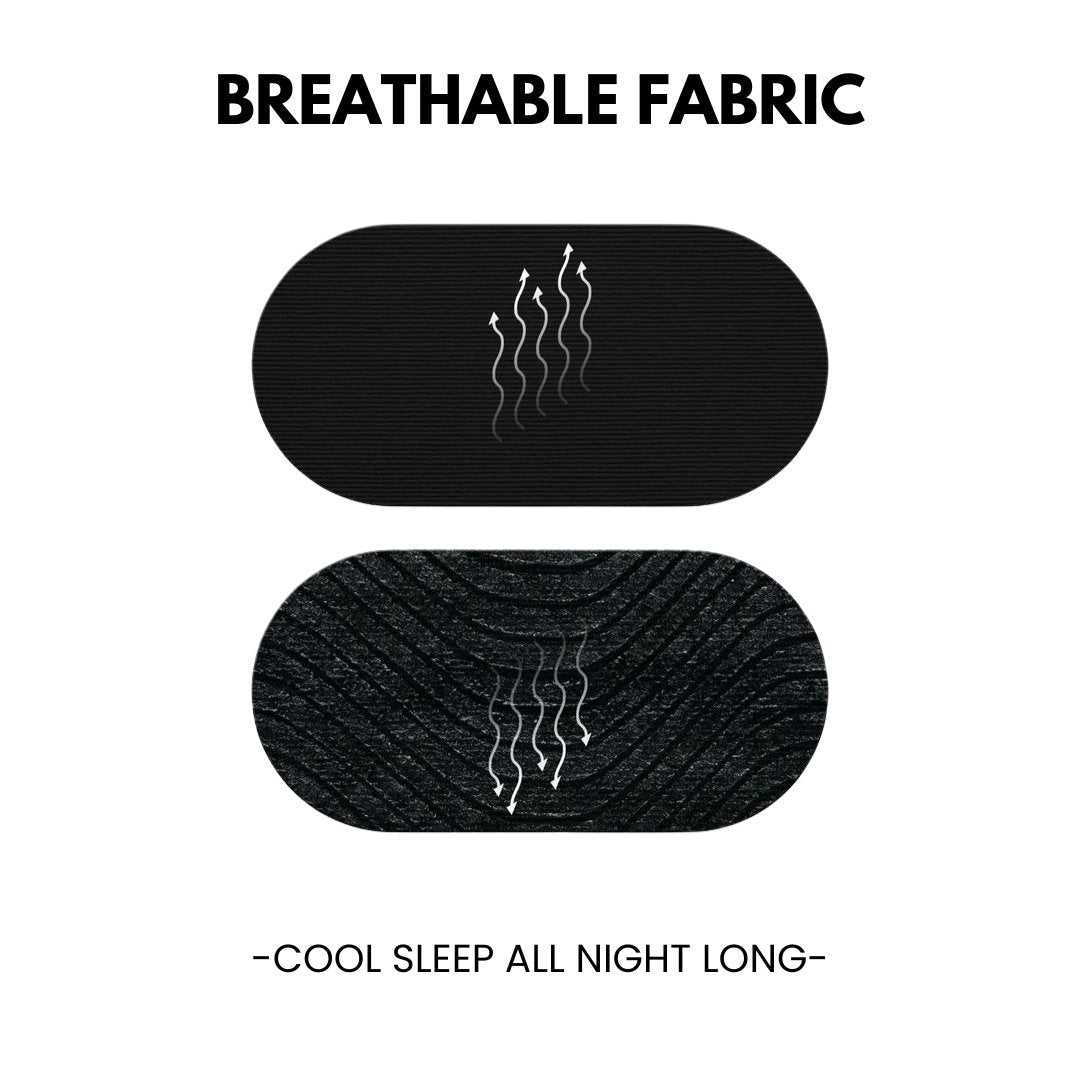
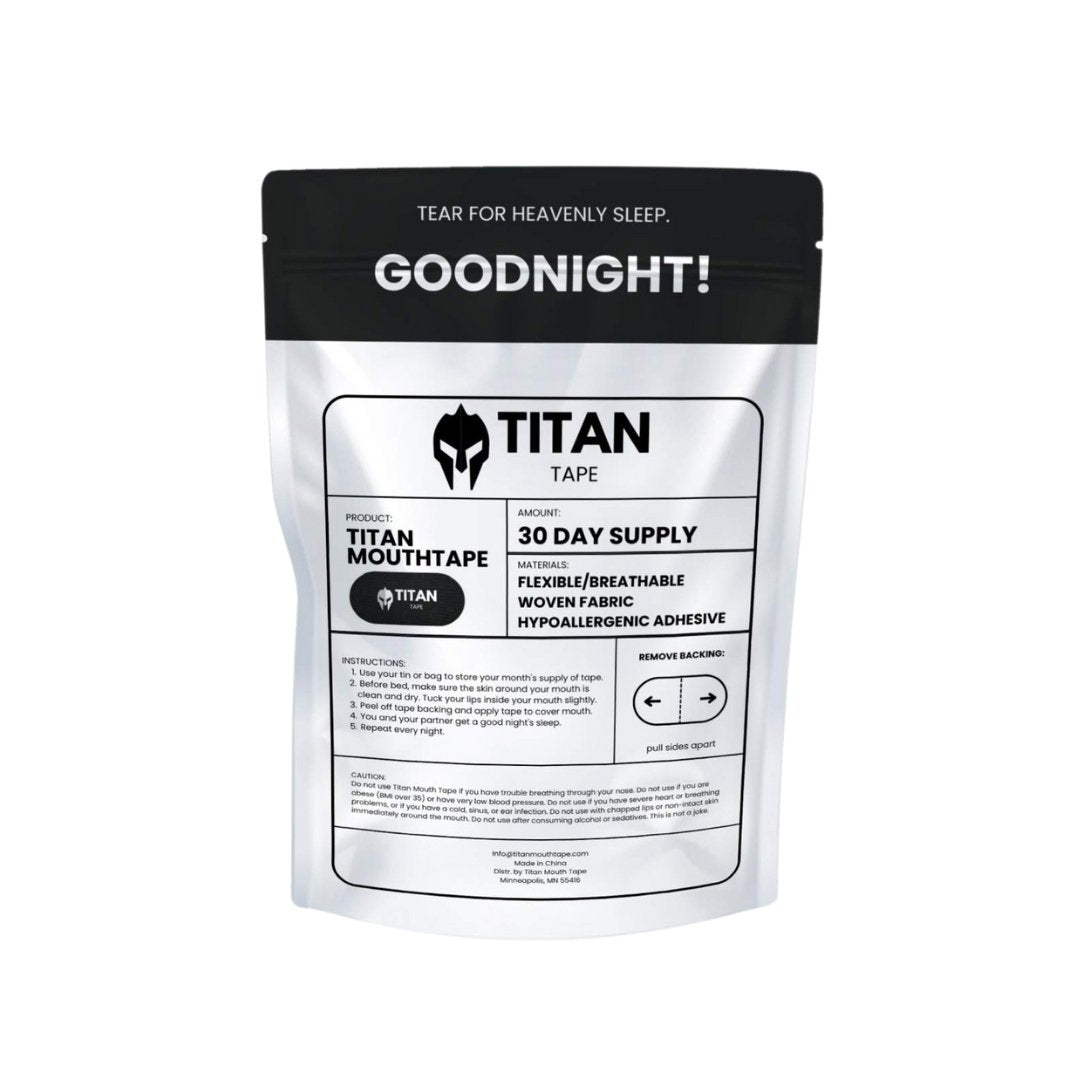
Titan Mouth Tape is designed for exactly this use. Our bamboo silk material is naturally breathable and gentle enough for nightly application. The SilkSeal adhesive is SGS lab-tested to ISO 10993 medical device standards — non-toxic, non-allergenic, and non-irritating. It holds all night, works with beards, and removes cleanly in the morning.
Who Should Try Buteyko Breathing
Buteyko breathing is appropriate for most healthy adults. It is particularly worth trying if you snore, wake with a dry mouth, feel tired despite sleeping enough, experience anxiety or chronic stress, have been told you breathe through your mouth during sleep, have mild to moderate asthma, or want to improve your athletic recovery and HRV.
Who Should Not Practice Buteyko Without Medical Guidance
Buteyko is generally safe, but certain groups should consult a healthcare provider first. These include people with severe or uncontrolled asthma, anyone with diagnosed moderate to severe sleep apnea (talk to your doctor before modifying breathing patterns), people with cardiovascular conditions including uncontrolled high blood pressure, pregnant women, and anyone with epilepsy or seizure disorders.
The breath-holding exercises can temporarily affect blood pressure and oxygen levels. If you have any underlying health condition, get medical clearance before starting.
How Long Until You See Results
Most people notice something on the first day — usually that their nose feels clearer after the nose unblocking exercise. Within the first week, many notice less mouth breathing during the day and better awareness of their breathing patterns.
Meaningful changes in sleep quality, snoring, and energy typically emerge between weeks 2 and 4 of daily practice. The Control Pause — your diagnostic score — usually improves steadily over 4 to 8 weeks. Full breathing retraining (where nasal breathing becomes automatic during sleep) typically takes 8 to 12 weeks of consistent practice.
The key word is consistent. Buteyko is a skill, not a supplement. You build it with daily practice, and the benefits compound over time.
Start Tonight
You can start Buteyko breathing right now — sit up, close your mouth, and try the Control Pause exercise. Measure your baseline. Practice the reduced breathing exercise for 10 minutes. Then tonight, apply a strip of Titan Mouth Tape and let your body reinforce the nasal breathing you trained during the day.
Buteyko retrains your breathing. Titan keeps your mouth closed while you sleep. Together, they are the most effective, lowest-cost approach to better sleep, less snoring, and more energy — no devices, no prescriptions, no machines.
Doctor Recommended: "As a maxillofacial surgeon and dentist, I recommend Titan Mouth Tape to my patients. Nasal breathing during sleep is essential for airway health, jaw alignment, and deep restorative rest. Titan's bamboo silk design is the most comfortable and effective mouth tape I have tested." — Dr. Francois P., MD, DDS — Maxillofacial Surgeon
Lab-Tested Safety: Titan's SilkSeal™ adhesive is independently tested by SGS to ISO 10993 medical device standards. Non-toxic (95% cell viability). Non-allergenic (0% reaction rate). Non-irritating (score 0.0/8.0). See full test results.
What Is Buteyko Breathing?
Buteyko breathing is a method developed by Ukrainian physician Dr. Konstantin Buteyko in the 1950s. The core idea is simple: most people breathe too much. We over-breathe — taking in more air than our bodies actually need — and that over-breathing creates a chain of problems that affect sleep, energy, stress, and overall health.
The Buteyko method teaches you to breathe less. Slower. Lighter. Through your nose. The goal is not to restrict oxygen — it is to normalize your breathing pattern so your body uses oxygen more efficiently. When you breathe correctly, carbon dioxide levels stabilize, your airways stay open, your nervous system calms down, and your sleep improves dramatically.
If you have ever been told to "take a deep breath" when you are stressed, Buteyko says the opposite: breathe less, not more. And the science increasingly supports it.
Why Most People Over-Breathe (And Don't Know It)
The average adult takes 12 to 20 breaths per minute. But optimal breathing — the kind that promotes deep sleep, low stress, and efficient oxygen delivery — is closer to 6 breaths per minute. That is a massive gap, and most people have no idea they are on the wrong side of it.
Signs you may be over-breathing include frequent sighing or yawning, breathing through your mouth (especially during sleep), feeling like you can never get a "full" breath, waking up with a dry mouth or sore throat, chronic fatigue despite sleeping enough, and feeling anxious or wired without a clear reason.
Over-breathing depletes carbon dioxide from your blood. That sounds like it should be fine — carbon dioxide is a waste product, right? Not exactly. Carbon dioxide plays a critical role in how your body delivers oxygen to tissues. When CO2 drops too low, your blood vessels constrict, oxygen delivery decreases, and your brain and muscles get less fuel. You breathe more to compensate, which lowers CO2 further, and the cycle continues.
Buteyko breathing breaks that cycle.
The Science Behind Buteyko
The Buteyko method is built on a well-established physiological principle called the Bohr Effect. Discovered in 1904, the Bohr Effect describes how carbon dioxide levels influence oxygen release from hemoglobin. When CO2 levels are adequate, hemoglobin releases oxygen efficiently to your tissues. When CO2 is low (from over-breathing), hemoglobin holds onto oxygen — so even though your blood is technically saturated, your cells are starved.
A 2026 randomized controlled trial published in BMC Cardiovascular Disorders found that patients practicing Buteyko breathing experienced improvements in sleep quality, reduced fatigue, and better oxygen saturation compared to a control group. A 2020 study demonstrated that Buteyko breathing retraining reduced sleep apnea episodes. And the British Guideline on the Management of Asthma has endorsed the Buteyko method as a complementary therapy — making it one of the only breathing techniques recognized in clinical guidelines.
The research is not yet extensive enough for mainstream medicine to fully embrace Buteyko for every claimed benefit. But for sleep, nasal breathing, snoring reduction, and stress management, the evidence is consistent and growing.
The Three Core Principles
1. Nasal Breathing
Every breath should go through your nose — during the day, during exercise, and especially during sleep. Your nose filters, warms, and humidifies air. It produces nitric oxide, which dilates blood vessels and improves oxygen absorption by 10 to 18 percent. Mouth breathing bypasses all of these functions and is the single most common form of dysfunctional breathing.
2. Reduced Breathing
The goal is to breathe less volume, not more. Lighter, slower, quieter breaths. When done correctly, you should barely be able to hear yourself breathe. This is the opposite of "deep breathing" advice — Buteyko practitioners aim for a breathing pattern so gentle that an outside observer would struggle to tell you are breathing at all.
3. Relaxation
Tension in the body increases breathing volume. The Buteyko method teaches you to relax the diaphragm, the chest, the shoulders, and the jaw while breathing. Relaxed breathing activates the parasympathetic nervous system — the branch responsible for rest, recovery, and sleep.
How to Practice Buteyko Breathing: 4 Exercises
Exercise 1: The Control Pause (Measure Your Breathing)
This is the diagnostic tool of the Buteyko method. It measures how well your body tolerates carbon dioxide — which is a direct indicator of how efficiently you breathe.
Sit upright in a comfortable position. Breathe normally through your nose for a minute. After a gentle exhale (not a forced exhale), pinch your nose closed with your fingers. Time how many seconds you can comfortably hold before you feel the first urge to breathe. Stop as soon as you feel that urge — do not push through it. The number of seconds is your Control Pause.
A Control Pause under 15 seconds indicates significant over-breathing. 15 to 25 seconds is average but suboptimal. 25 to 40 seconds indicates good breathing efficiency. Above 40 seconds is considered excellent — this is the goal of Buteyko training.
Most people starting out score between 10 and 20 seconds. With consistent practice, this number rises over weeks and months.
Exercise 2: Nose Unblocking (Clear Your Nose in 2 Minutes)
If you cannot breathe through your nose, this exercise helps immediately. It works by triggering a brief rise in CO2, which naturally opens the nasal passages.
Sit upright. Take a gentle breath in through your nose, then a gentle breath out. Pinch your nose closed. Nod your head slowly up and down (or walk around the room) while holding your breath. Hold until you feel a strong urge to breathe. Release your nose and breathe gently through it — keep your mouth closed. Calm your breathing for 30 seconds, then repeat if needed.
Most people feel their nose open within one or two rounds. This exercise can be done before bed to ensure clear nasal passages for sleep.
Exercise 3: Reduced Breathing (The Core Practice)
This is the main Buteyko exercise and should be practiced for 10 to 15 minutes daily.
Sit comfortably with good posture. Breathe through your nose only. Gradually reduce the volume of each breath — breathe a little less air in and a little less air out with each cycle. You should feel a slight "air hunger" — a gentle desire for more air, but not uncomfortable. Think of it as breathing at 80 percent of your normal volume. Maintain this reduced breathing for 3 to 5 minutes, then breathe normally for a minute. Repeat 2 to 3 times.
The air hunger should feel like mild exercise — slightly challenging but sustainable. If you feel panicky or need to gasp, you have reduced too much. Back off and breathe normally before trying again.
Exercise 4: Breathing Recovery for Sleep
This is the exercise to do in bed, right before falling asleep.
Lie on your side (left side is ideal — it keeps the airway more open). Close your mouth. Breathe gently through your nose. With each exhale, allow your body to relax a little more. Progressively reduce the depth of each breath until your breathing is barely perceptible. Focus on the sensation of air flowing gently through your nostrils. If your mind wanders, return attention to the gentle flow of air.
This exercise activates the parasympathetic nervous system and mimics the breathing pattern of deep sleep. Many people fall asleep before finishing it.
How Buteyko Breathing Improves Sleep
The connection between Buteyko and better sleep comes down to three mechanisms.
Nasal breathing keeps the airway open. When you breathe through your nose, the airway is naturally supported. Mouth breathing allows the jaw to drop, the tongue to fall back, and the airway to narrow — which is exactly what causes snoring and obstructive sleep apnea. Training nasal breathing during the day makes nasal breathing during sleep automatic.
Reduced breathing activates the parasympathetic nervous system. The slow, light breathing pattern that Buteyko teaches is the breathing pattern of deep relaxation. It lowers heart rate, reduces cortisol, increases heart rate variability (HRV), and signals to your brain that it is safe to sleep deeply.
Proper CO2 levels prevent micro-awakenings. When CO2 drops too low during sleep (from mouth breathing or hyperventilation), your brain triggers micro-awakenings to correct the problem. You do not fully wake up, but your sleep cycles are disrupted. Buteyko breathing normalizes CO2 tolerance, which means fewer disruptions and more time in deep and REM sleep.
Buteyko Breathing and Mouth Taping: The Perfect Pair
Buteyko breathing retrains your daytime breathing patterns. Mouth tape ensures those patterns carry into the night.
Here is the challenge: you can practice Buteyko exercises perfectly during the day, but the moment you fall asleep, you lose conscious control. If your mouth opens during sleep, you revert to mouth breathing — and the benefits of your daytime practice are partially lost.
Mouth tape solves this. By keeping your lips sealed, it ensures nasal breathing continues all night. Your body gets 8 uninterrupted hours of the nasal breathing you trained during the day. The Buteyko method and mouth tape are not competing solutions — they are complementary. Buteyko is the training. Mouth tape is the reinforcement.
Patrick McKeown, the world's leading Buteyko practitioner and author of "The Oxygen Advantage," specifically recommends mouth taping during sleep as part of Buteyko breathing retraining. He designed his own mouth tape (MyoTape) for this purpose. The practice is well-established in the Buteyko community and increasingly recognized by sleep professionals.
Titan Mouth Tape is designed for exactly this use. Our bamboo silk material is naturally breathable and gentle enough for nightly application. The SilkSeal adhesive is SGS lab-tested to ISO 10993 medical device standards — non-toxic, non-allergenic, and non-irritating. It holds all night, works with beards, and removes cleanly in the morning.
Who Should Try Buteyko Breathing
Buteyko breathing is appropriate for most healthy adults. It is particularly worth trying if you snore, wake with a dry mouth, feel tired despite sleeping enough, experience anxiety or chronic stress, have been told you breathe through your mouth during sleep, have mild to moderate asthma, or want to improve your athletic recovery and HRV.
Who Should Not Practice Buteyko Without Medical Guidance
Buteyko is generally safe, but certain groups should consult a healthcare provider first. These include people with severe or uncontrolled asthma, anyone with diagnosed moderate to severe sleep apnea (talk to your doctor before modifying breathing patterns), people with cardiovascular conditions including uncontrolled high blood pressure, pregnant women, and anyone with epilepsy or seizure disorders.
The breath-holding exercises can temporarily affect blood pressure and oxygen levels. If you have any underlying health condition, get medical clearance before starting.
How Long Until You See Results
Most people notice something on the first day — usually that their nose feels clearer after the nose unblocking exercise. Within the first week, many notice less mouth breathing during the day and better awareness of their breathing patterns.
Meaningful changes in sleep quality, snoring, and energy typically emerge between weeks 2 and 4 of daily practice. The Control Pause — your diagnostic score — usually improves steadily over 4 to 8 weeks. Full breathing retraining (where nasal breathing becomes automatic during sleep) typically takes 8 to 12 weeks of consistent practice.
The key word is consistent. Buteyko is a skill, not a supplement. You build it with daily practice, and the benefits compound over time.
Start Tonight
You can start Buteyko breathing right now — sit up, close your mouth, and try the Control Pause exercise. Measure your baseline. Practice the reduced breathing exercise for 10 minutes. Then tonight, apply a strip of Titan Mouth Tape and let your body reinforce the nasal breathing you trained during the day.
Buteyko retrains your breathing. Titan keeps your mouth closed while you sleep. Together, they are the most effective, lowest-cost approach to better sleep, less snoring, and more energy — no devices, no prescriptions, no machines.
Doctor Recommended: "As a maxillofacial surgeon and dentist, I recommend Titan Mouth Tape to my patients. Nasal breathing during sleep is essential for airway health, jaw alignment, and deep restorative rest. Titan's bamboo silk design is the most comfortable and effective mouth tape I have tested." — Dr. Francois P., MD, DDS — Maxillofacial Surgeon
Lab-Tested Safety: Titan's SilkSeal™ adhesive is independently tested by SGS to ISO 10993 medical device standards. Non-toxic (95% cell viability). Non-allergenic (0% reaction rate). Non-irritating (score 0.0/8.0). See full test results.