What Happens to Your Oura Score When You Start Mouth Taping
Share
What Happens to Your Oura Score When You Start Mouth Taping
Sleep trackers do not lie. Here is what the data actually shows.
If you wear an Oura Ring, Apple Watch, Whoop, or any wearable sleep tracker, you have data. You know your sleep score, your deep sleep duration, your heart rate variability, and your resting heart rate. And if you have been mouth breathing at night without knowing it, those numbers have been telling you something is wrong — you just did not know the cause.
Mouth taping changes the data. Here is what users consistently report.
Deep Sleep Increases
Mouth breathing fragments sleep cycles by causing micro-awakenings — brief disruptions you do not remember but your tracker detects. When the mouth stays closed and nasal breathing is maintained, the body stays in deep sleep stages longer. Users commonly report increases of 15 to 45 minutes of deep sleep per night within the first week of mouth taping. On an Oura Ring, this shows up as a higher sleep score and improved "restfulness" metric.
Heart Rate Variability (HRV) Improves
HRV is a measure of your nervous system's flexibility — higher HRV generally indicates better recovery and lower stress. Nasal breathing activates the parasympathetic nervous system, which directly improves HRV. Mouth breathers who switch to nasal breathing during sleep often see their nighttime HRV increase within one to two weeks. On Whoop, this translates to higher recovery scores. On Oura, it shows up in the readiness score.
Resting Heart Rate Drops
When the parasympathetic nervous system is more active during sleep, the heart does not need to work as hard. A modest but consistent drop in resting heart rate — typically one to three beats per minute — is a common observation among mouth tapers. It is a small number that represents a meaningful reduction in cardiovascular workload over thousands of hours of sleep per year.
Snoring Events Decrease
Oura Ring and some Apple Watch apps track snoring frequency. Mouth taping typically reduces snoring events dramatically — in clinical studies, by up to 50 percent within one week. For users who track snoring, the before-and-after data is often the most visually striking evidence of the change.
See It in Your Data
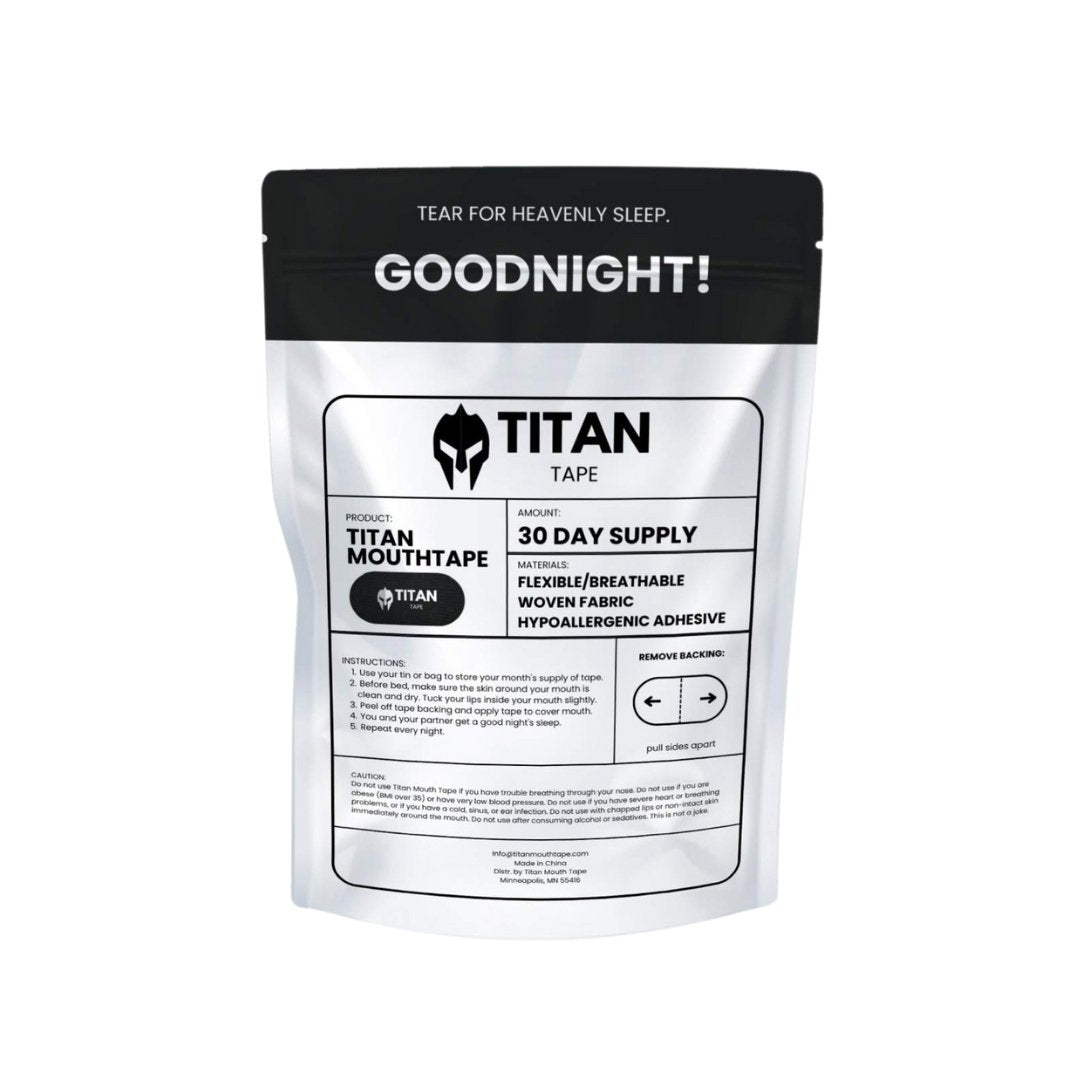
Titan Mouth Tape. One variable. Measurable results. Track the difference tonight.
Shop Titan Mouth TapeFree shipping. Better Sleep Guarantee.