Third-Party Tested vs. Untested: The Mouth Tape Safety Gap Nobody Talks About
Share
There are now dozens of mouth tape brands on the market. They all promise better sleep. They all claim to be safe. But there is one question that separates the brands that can prove it from the brands that are just saying it:
Has your adhesive been independently tested by a third-party lab?
For most brands, the answer is no. And that should concern you.
What "Third-Party Tested" Actually Means
Third-party testing means a company sends its product to an independent laboratory — one that has no financial relationship with the brand — and that lab runs standardized safety tests on the product. The lab publishes a report with the raw data. The brand cannot influence, edit, or alter the results.
This is different from a brand saying "dermatologist tested" or "hypoallergenic" or "medical-grade" on their packaging. Those terms have no regulated definition. Any brand can print them without testing anything. They are marketing claims, not verified safety data.
Third-party testing is verified. It names the lab. It names the test method. It names the standard. And it publishes the results — pass or fail.
What Gets Tested
The gold standard for adhesive safety testing is ISO 10993 — the international standard for biological evaluation of medical devices. This is the same standard used to evaluate surgical tapes, wound dressings, transdermal drug patches, and implantable medical devices. It includes three core biocompatibility tests:
Cytotoxicity (Cell Safety): Does the adhesive damage living cells? The lab exposes cells to the adhesive material and measures how many survive. A result above 70% cell viability means the adhesive is classified as non-cytotoxic — it does not harm living tissue.
Skin Sensitization (Allergy): Does the adhesive cause allergic reactions with repeated exposure? The lab applies the adhesive repeatedly over several weeks, then checks for delayed allergic response. A 0% sensitization rate means the adhesive does not trigger allergies — even with prolonged, repeated use.
Skin Irritation: Does the adhesive cause redness, swelling, or irritation on direct contact? The lab applies the adhesive to skin and grades the reaction on a scale from 0 (no reaction) to 8 (severe). A score of 0.0 to 0.4 is classified as "Negligible."
These three tests together determine whether an adhesive is safe for extended, repeated skin contact — which is exactly what mouth tape requires.
The Current Market: Who Tests and Who Doesn't
We reviewed the websites, product pages, and marketing materials of the most popular mouth tape brands currently on the market. Here is what we found:
Brands that publish third-party adhesive safety data:
Titan Recovery (SilkSeal adhesive). Tested by SGS to ISO 10993. Results published on website with full lab reports available. Adhesive manufactured by Henkel (LOCTITE DURO-TAK). Non-toxic (95% cell viability). Non-allergenic (0% reaction rate). Non-irritating (score 0.0/8.0). No logo printed on the adhesive.
Respire. Tests for PFAs, heavy metals, and BPA through Light Labs (ISO 17025). Publishes a Certificate of Analysis. Different testing focus (contaminant screening) than biocompatibility testing (ISO 10993), but demonstrates a commitment to transparency.
Brands that do not publish third-party adhesive safety data:
Hostage Tape. Uses kinesiology tape material with an acrylic adhesive. Claims to be "medical-grade" and "dermatologist approved." Has a clinical advisor (Dr. David Alfi, DDS, MD). However, we could not find published third-party adhesive safety test results or downloadable lab reports on their website. The adhesive manufacturer is not disclosed.
SomniFix. Uses a silicone patch with a breathing vent. References a Harvard study on mouth taping generally. Claims to be hypoallergenic. However, we could not find published third-party adhesive safety test results on their website. The adhesive manufacturer is not disclosed.
Dream Recovery. Uses bamboo silk material. Claims "hypoallergenic adhesive." However, we could not find published third-party adhesive safety test results on their website. The adhesive manufacturer is not disclosed.
MyoTape. Designed by Patrick McKeown. Uses a lip-perimeter design rather than full-lip coverage. Claims hypoallergenic adhesive. However, we could not find published third-party adhesive safety test results on their website.
3M Micropore. Medical-grade paper tape. Widely used in clinical settings. 3M is a reputable manufacturer with internal testing programs, but Micropore was not designed for nightly facial application. It is a general-purpose surgical tape repurposed for mouth taping by consumers.
Amazon and generic brands. Dozens of white-label mouth tape products sold on Amazon with no disclosed adhesive source, no published testing, and no manufacturer transparency. These are the highest-risk products in the category.
Why This Gap Exists
Third-party testing costs money. Sending adhesive samples to a lab like SGS, running ISO 10993 tests, and publishing the results is an investment that most mouth tape startups skip in favor of faster time-to-market and lower costs.
It is also not legally required. There is no federal regulation in the United States that mandates adhesive safety testing for mouth tape. The FDA does not classify most mouth tape as a medical device, which means brands can sell adhesive products for facial use without any independent safety verification.
This means the decision to test — or not test — is voluntary. Brands that test are doing it because they believe you deserve to know what you are putting on your face. Brands that do not test are relying on your assumption that they already did.
What Untested Adhesive Can Do to Your Skin
When a 2026 independent review tested popular mouth tapes, they found that products with aggressive adhesive caused visible skin irritation — redness and flaking — in half of testers within two weeks of nightly use. The review recommended against ongoing use of these products without applying a barrier (like lip balm at the tape edges) to protect the skin.
Common complaints across untested mouth tape brands include redness and irritation around the lips after repeated use, sticky residue that does not come off cleanly in the morning, adhesive that is either too aggressive (tears skin on removal) or too weak (falls off by 2 AM), and allergic reactions that develop gradually over weeks or months of nightly use.
These problems are not caused by mouth taping itself. They are caused by the adhesive. And the only way to know whether an adhesive is safe for nightly facial use is to test it — independently, by a third-party lab, to a recognized safety standard.
What to Look for Before You Buy
Before purchasing any mouth tape, ask these five questions:
1. Who made the adhesive? If the brand does not disclose the adhesive manufacturer, you have no way to verify what is touching your face. Look for brands that name their adhesive source.
2. Has it been third-party tested? Look for a named lab (like SGS, Intertek, or Bureau Veritas) and a named testing standard (like ISO 10993). "Dermatologist tested" and "hypoallergenic" without published data are marketing claims, not safety proof.
3. Are the test results published? If a brand tests their adhesive but does not publish the results, you have no way to verify the claims. Look for downloadable lab reports or a dedicated test results page.
4. Is there a logo printed on the adhesive? Ink on adhesive causes contact irritation with repeated nightly use. If the brand prints on the strip that touches your face, that is a design decision that prioritizes branding over your skin.
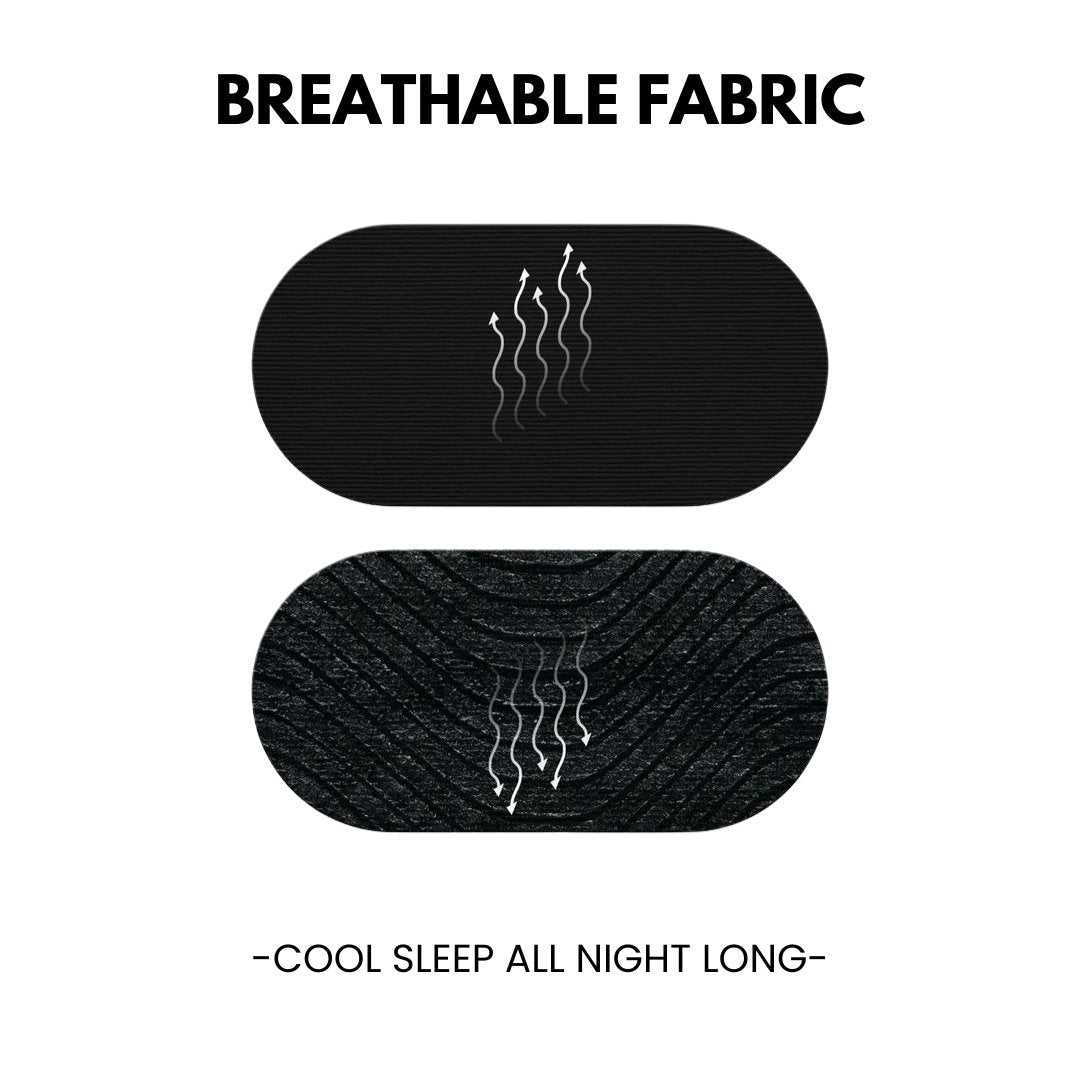
5. What material is the tape? Bamboo silk, medical silicone, and purpose-built sleep materials are designed for extended facial contact. Kinesiology tape, paper tape, and generic athletic tape were designed for other purposes and repurposed for sleep.
Why We Publish Our Data
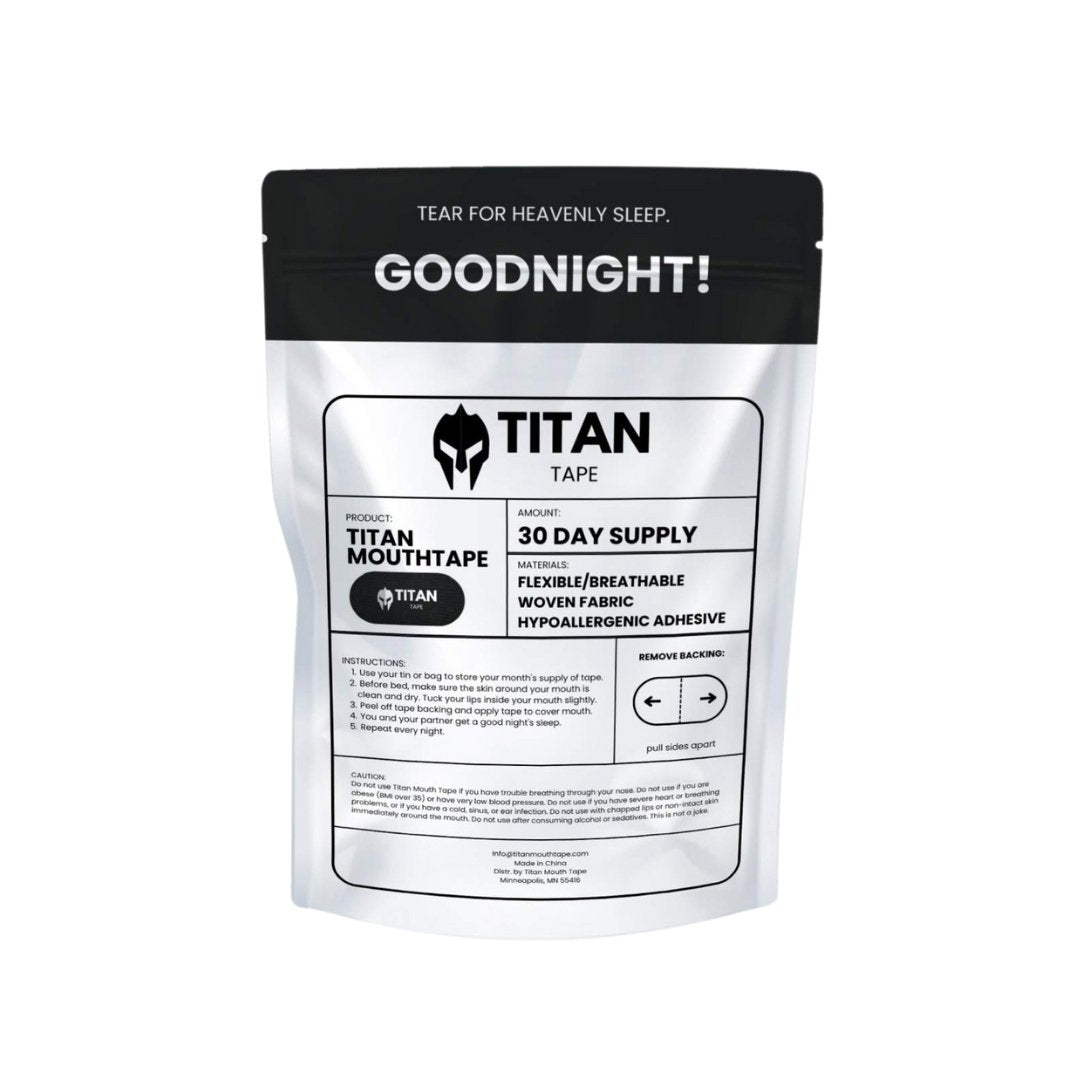
Titan Mouth Tape uses SilkSeal — a medical-grade adhesive manufactured by Henkel (the world's largest adhesive company) using their LOCTITE DURO-TAK formula. We had it independently tested by SGS to ISO 10993 medical device standards.
The results: non-toxic (95% cell viability), non-allergenic (0% reaction rate), non-irritating (score 0.0 out of 8.0). Every test passed with the highest possible classification. Full lab reports are available for download on our website.
We publish this because we believe that if you are putting something on your face every night for years, you should not have to take the brand's word for it. You should be able to see the data yourself.
View the full SGS lab reports.
Doctor Recommended: "As a maxillofacial surgeon and dentist, I recommend Titan Mouth Tape to my patients. Nasal breathing during sleep is essential for airway health, jaw alignment, and deep restorative rest. Titan's bamboo silk design is the most comfortable and effective mouth tape I have tested." — Dr. Francois P., MD, DDS — Maxillofacial Surgeon
Lab-Tested Safety: Titan's SilkSeal™ adhesive is independently tested by SGS to ISO 10993 medical device standards. Non-toxic (95% cell viability). Non-allergenic (0% reaction rate). Non-irritating (score 0.0/8.0). See full test results.