Mouth Tape vs. CPAP, Nasal Strips, and Sleep Aids: Which One Actually Fixes Your Sleep?
Share
Mouth Tape vs. CPAP, Nasal Strips & Sleep Aids
Every sleep product promises better rest. Here's what each one actually does — and which one is worth your money.
You wake up with a dry mouth, a sore throat, and the kind of fatigue that makes you wonder if you slept at all. So you start searching for answers. And the options are overwhelming.
CPAP machines. Nasal strips. Chin straps. Melatonin. Magnesium. White noise machines. Weighted blankets. Mouth guards. Sleep clinics. Apps that track your REM cycles and confirm what you already know — your sleep is broken.
Some of these tools serve a real medical purpose. Some are band-aids. And some are solving the wrong problem entirely. This post breaks down the most common sleep interventions side by side so you can stop guessing and start sleeping.
The Real Problem: How You Breathe at Night
Before comparing products, it helps to understand why so many people sleep poorly in the first place.
A huge percentage of adults breathe through their mouths during sleep without realizing it. When your mouth falls open at night, a chain reaction starts. Your throat dries out. Your airway narrows. Snoring kicks in. Your body shifts out of deep sleep and into lighter, fragmented cycles. You get eight hours in bed and wake up feeling like you got four.
Nasal breathing is the opposite. When you breathe through your nose, air is filtered, warmed, and humidified before it reaches your lungs. Your nasal passages produce nitric oxide — a molecule that dilates blood vessels and improves oxygen absorption. Research from the Karolinska Institute found that nasal breathing delivers roughly 18 percent more oxygen to the bloodstream compared to mouth breathing at the same respiratory rate.
Nasal breathing also activates your parasympathetic nervous system — the branch responsible for rest, recovery, and deep sleep. Most of the products below are trying to address symptoms that stem from this one root cause: your mouth is open when it should be closed.
At a Glance: How They Stack Up
Before we go deep on each option, here's a quick read on comfort, convenience, and who each product is actually built for.
CPAP Machines
Continuous Positive Airway Pressure machines deliver pressurized air through a mask to keep your airway open during sleep. They are the gold standard treatment for moderate to severe obstructive sleep apnea.
CPAP machines work — when people actually use them. Compliance is a well-documented challenge. The masks can be uncomfortable, bulky, and loud. Some users experience dry mouth, nasal congestion, or claustrophobia. Travel is inconvenient. And the cost is significant — machines typically run anywhere from $500 to $3,000 or more, plus ongoing costs for replacement masks, filters, and tubing.
Nasal Strips
Adhesive strips placed on the outside of the nose that gently lift the nasal passages open. They reduce nasal resistance and improve airflow — but they do nothing to keep your mouth closed.
If you are a mouth breather, a nasal strip alone will not change that habit. Your mouth will still fall open, and you will still lose the benefits of nasal breathing. Strips can also lose adhesion overnight, especially on oily skin.
Chin Straps
A fabric strap that wraps under your jaw and around the top of your head to physically hold your mouth shut. Primarily recommended for CPAP users who experience mouth leaks with nasal masks.
Chin straps are bulky and often uncomfortable. They shift during the night, lose tension, and can still allow the lips to part even when the jaw is held in place. Many users stop using them within weeks.
Oral Appliances & Mouthguards
Custom-fitted devices worn in the mouth that reposition the jaw or tongue to reduce airway obstruction. Mandibular advancement devices push the lower jaw forward. They mechanically reposition structures but do not train the body to keep the lips closed or promote nasal breathing.
Custom oral appliances can cost $1,000 to $2,000 or more. Over-the-counter versions are cheaper but less effective and can cause jaw pain, bite changes, and excessive salivation.
Sleep Supplements
Melatonin signals your body that it is time to sleep. Magnesium supports muscle relaxation. L-theanine, GABA, and valerian root are marketed for relaxation and sleep onset.
Supplements can help you fall asleep, but they do not improve sleep quality once you are asleep. If your mouth is open all night, you are still going to wake up with a dry throat, fragmented cycles, and fatigue — regardless of how quickly you drifted off. Over-reliance on melatonin can also disrupt your body's natural production over time.
Mouth Tape
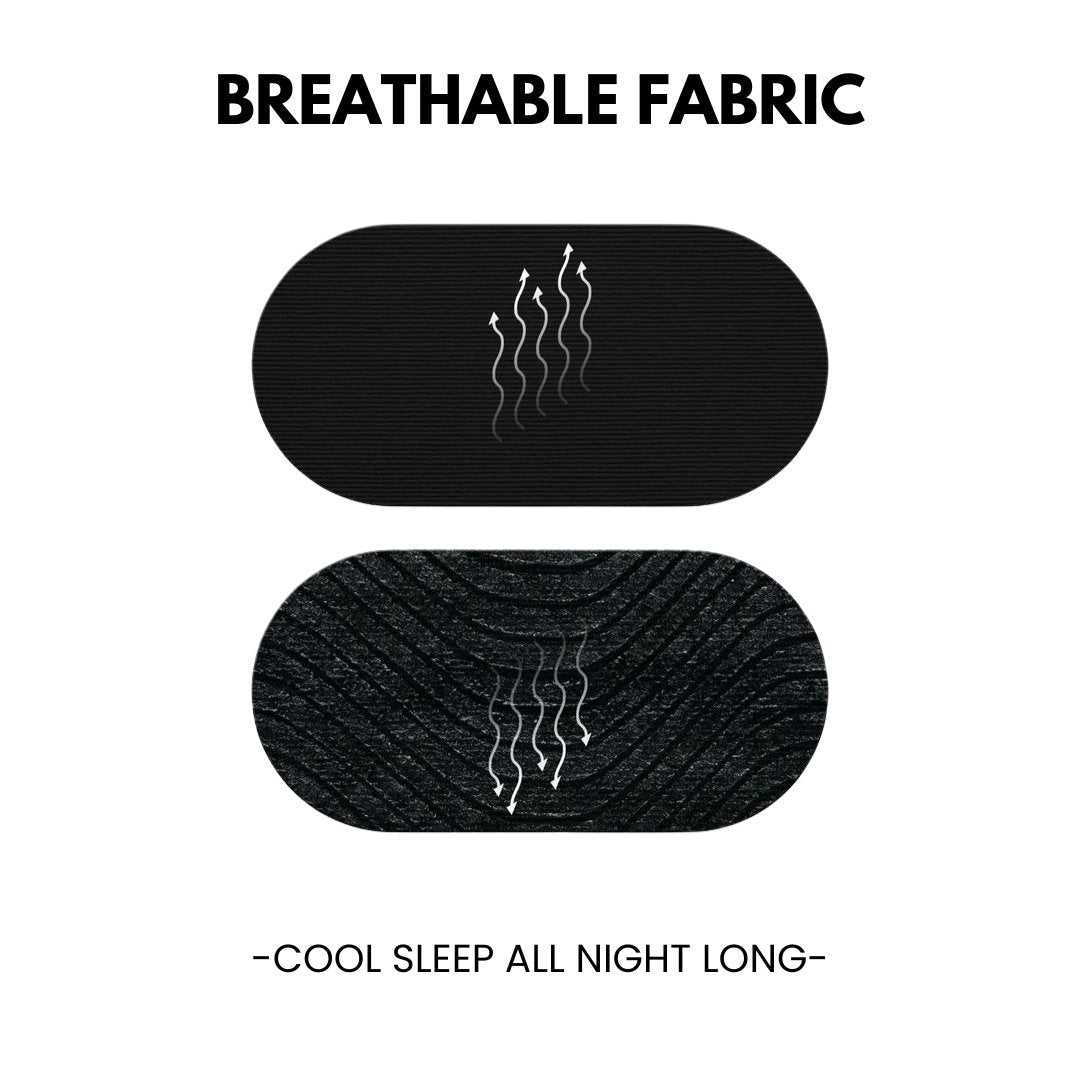
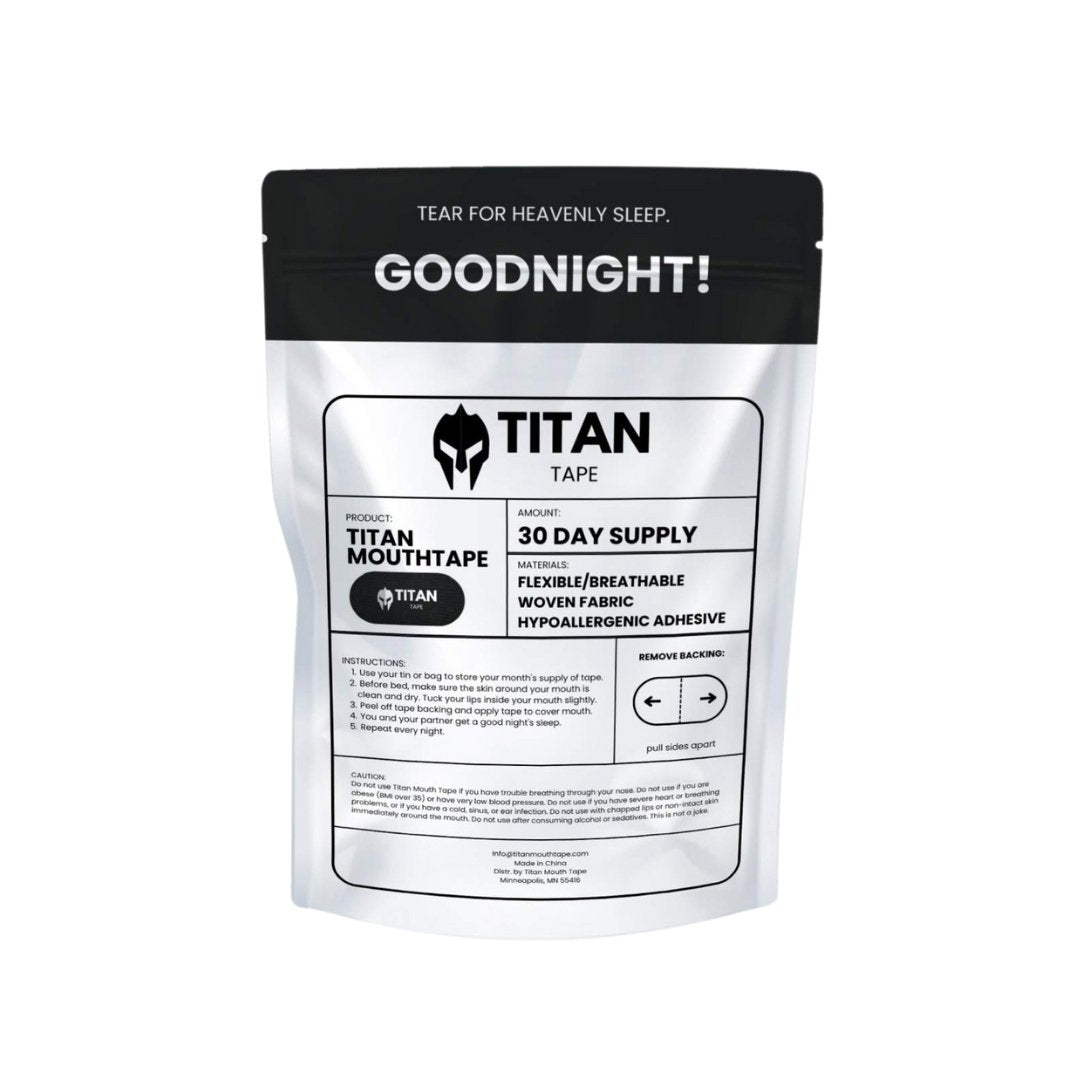
A gentle adhesive strip applied over the lips before bed that keeps the mouth closed, training the body to breathe through the nose during sleep. Titan Mouth Tape is made from breathable bamboo silk with a hypoallergenic adhesive that works on all skin types — including beards. It stays on all night without irritation, peeling, or residue.
Mouth tape is not a treatment for moderate or severe obstructive sleep apnea. If you suspect you have sleep apnea, talk to a doctor and get a proper evaluation. It is also not recommended for people who cannot breathe through their nose due to chronic congestion or structural issues.
Side-by-Side Comparison
Everything in one view. Scroll horizontally on mobile.
| Mouth Tape | CPAP | Nasal Strips | Chin Strap | Supplements | |
|---|---|---|---|---|---|
| Promotes nasal breathing | ✓ | Mechanical | Partial | Partial | ✗ |
| Reduces snoring | ✓ | ✓ | Sometimes | Sometimes | ✗ |
| Addresses root cause | ✓ | For OSA | ✗ | ✗ | ✗ |
| Improves sleep quality | ✓ | ✓ | Minimal | Minimal | Onset only |
| Comfortable all night | ✓ | ✗ | Can peel | ✗ | N/A |
| No prescription needed | ✓ | ✗ | ✓ | ✓ | ✓ |
| Travel-friendly | ✓ | ✗ | ✓ | Bulky | ✓ |
| Works with CPAP | ✓ | — | ✓ | ✓ | — |
| Beard-friendly | ✓ | ✗ | N/A | ✗ | N/A |
| Monthly cost | ~$15–25 | $50–100+ | $15–30 | $10–20 | $15–40 |
Annual Cost Comparison
What you will actually spend over 12 months of use
So Which One Do You Need?
If you have been diagnosed with moderate or severe sleep apnea, use your CPAP. It is a medical device that you need. Consider adding mouth tape to prevent mask leaks and improve comfort.
If you have mild congestion, try nasal strips — ideally paired with mouth tape for a complete solution.
If you are taking supplements to fall asleep, keep doing what works — but recognize that falling asleep faster does not mean sleeping better.
If you are doing all the right things and still waking up exhausted, dry-mouthed, and foggy, the problem is almost certainly how you are breathing. And the fix is simpler than you think.
One Strip. Every Night.
Better sleep by morning. Free shipping on every order. Available in 30, 90, 180, and 360-day supplies.
Shop Titan Mouth TapeBacked by our Better Sleep Guarantee — try it for 30 nights, risk-free.