Melatonin Isn't Fixing Your Sleep. Here's What Will.
Share
You started with one gummy. Then two. Then the 10mg version. Then the time-release capsule. Then you added magnesium. Then L-theanine. Then a stack you found on Reddit.
And you're still not sleeping well.
If your nightstand looks like a pharmacy shelf, you're not alone. Americans spent over $1 billion on melatonin in 2024 — a number that's more than tripled since 2019. It's the most popular sleep supplement in the country. It's available at every gas station, grocery store, and Amazon search result.
And for most people, it's not solving the problem.
What Melatonin Actually Does (And Doesn't Do)
Melatonin is a hormone your body produces naturally. Its job is simple: signal to your brain that it's time to transition from wakefulness to sleep. It doesn't knock you out. It doesn't keep you asleep. It doesn't improve sleep quality. It sets the clock.
Supplemental melatonin is effective for one specific use case: resetting circadian rhythm. Jet lag, shift work, or a severely disrupted sleep schedule — these are the situations where melatonin has solid evidence behind it. A small dose (0.5mg to 1mg) taken 1-2 hours before your target bedtime can help shift your body's internal clock.
That's it. That's what the evidence supports.
What melatonin does NOT do: it doesn't address why you can't stay asleep, why you wake up tired, why your sleep feels shallow, why you snore, or why you toss and turn for hours. These are problems of sleep quality and sleep architecture — and melatonin has no meaningful effect on either.
But that's not how it's marketed. Melatonin is sold as a sleep solution. The packaging says "fall asleep faster, stay asleep longer, wake up refreshed." The dosages have escalated from 1mg to 3mg to 5mg to 10mg to 20mg — because when the low dose doesn't deliver the miracle, the assumption is that more will work better.
It doesn't. Higher doses of melatonin can actually make sleep worse — causing grogginess, vivid nightmares, next-day drowsiness, and disruption of your body's natural melatonin production cycle.
The Supplement Treadmill
Here's the pattern most people fall into:
They can't sleep. They try melatonin. It seems to help for a few nights (likely placebo — studies show the actual sleep onset improvement is 7-12 minutes on average). Then it stops working. So they increase the dose. Then they add magnesium. Then they add glycine. Then ashwagandha. Then CBD. Then a "sleep stack" with six ingredients.
Each new addition provides a brief period of hope, followed by the same result: unrefreshing sleep, difficulty staying asleep, morning fatigue.
The supplement industry loves this pattern. Every failed product leads to a new purchase. The customer never solves the problem, but they keep spending — $30/month on melatonin gummies, $25 on magnesium, $40 on a specialty sleep blend. That's $100/month on supplements that aren't addressing the root cause.
The root cause, for the majority of poor sleepers, isn't a chemical deficiency. It's a mechanical problem.
The Problem Supplements Can't Fix
No supplement changes how you breathe.
If your mouth falls open at night — and for most adults, it does — no amount of melatonin, magnesium, or CBD will fix what happens next. Your tongue drops backward. Your airway narrows. You snore (or you almost snore — partial obstruction that fragments sleep without producing audible noise). Your body switches from parasympathetic dominance (rest and recovery) to sympathetic activation (fight or flight). Your heart rate stays elevated. Your blood oxygen dips. Your deep sleep stages get cut short.
You can pour supplements into this equation all night. None of them will reposition your tongue, open your airway, activate your parasympathetic nervous system, produce nitric oxide, or maintain your saliva flow.
These are mechanical and physiological processes. They require a mechanical solution — not a chemical one.
What $0.83 Per Night Actually Fixes
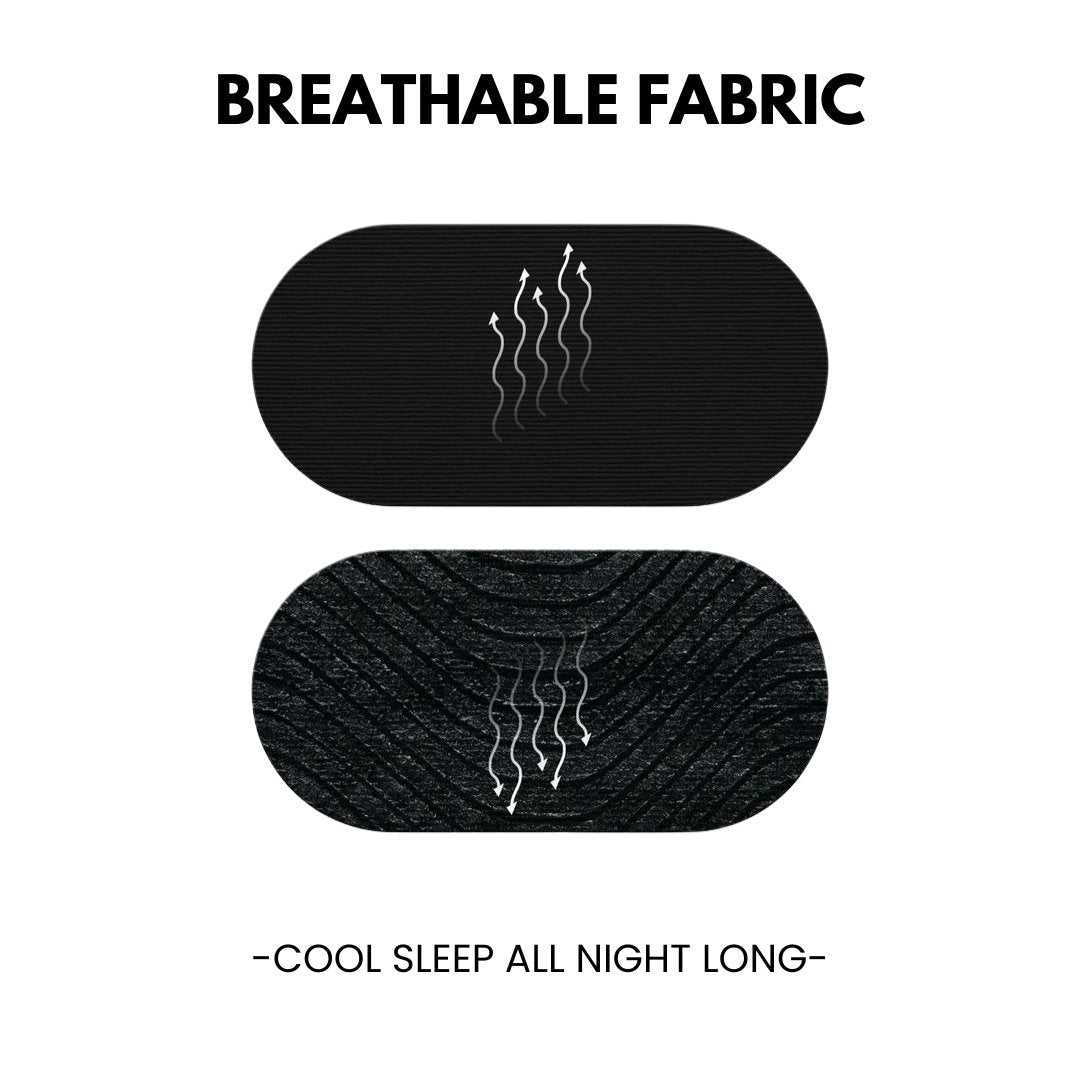
A strip of mouth tape costs less than a single melatonin gummy. And it addresses the actual mechanisms of poor sleep quality that supplements ignore.
When your mouth stays closed all night, a cascade of physiological events occurs that no supplement can replicate:
Your airway stays open. The tongue rests against the palate instead of falling backward into the throat. Snoring stops or decreases dramatically. Sleep-disordered breathing improves.
Your nervous system shifts. Nasal breathing activates the parasympathetic nervous system — the branch responsible for rest, recovery, and deep sleep. Your heart rate slows. Your cortisol drops. Your body enters the recovery mode that supplements promise but can't deliver.
Your oxygen improves. Nasal breathing produces nitric oxide, which dilates blood vessels in the lungs and improves oxygen absorption. CO2 levels stay balanced, which improves oxygen delivery to tissues via the Bohr effect. Your cells get more oxygen from each breath — not more breaths.
Your mouth stays hydrated. Saliva flow continues all night, protecting your teeth, neutralizing acids, and preventing the dry mouth that wakes you up reaching for water at 3am.
Your deep sleep stages increase. With proper airway mechanics, parasympathetic dominance, and stable oxygen levels, your body spends more time in Stage 3 deep sleep and REM — the stages where growth hormone is released, muscles repair, memories consolidate, and you actually recover.
None of this requires a supplement. All of it requires your mouth to be closed.
The Cost Comparison Nobody Makes
Let's be honest about the numbers.
A typical nightly supplement stack for someone struggling with sleep:
Melatonin gummies (10mg): $15-20/month. Magnesium glycinate: $15-25/month. L-theanine: $15-20/month. CBD oil or capsules: $30-60/month. Ashwagandha: $15-20/month. Specialty sleep blend: $30-45/month.
Total: $100-190/month. That's $1,200-2,280/year on products that address symptoms without fixing the underlying mechanical problem.
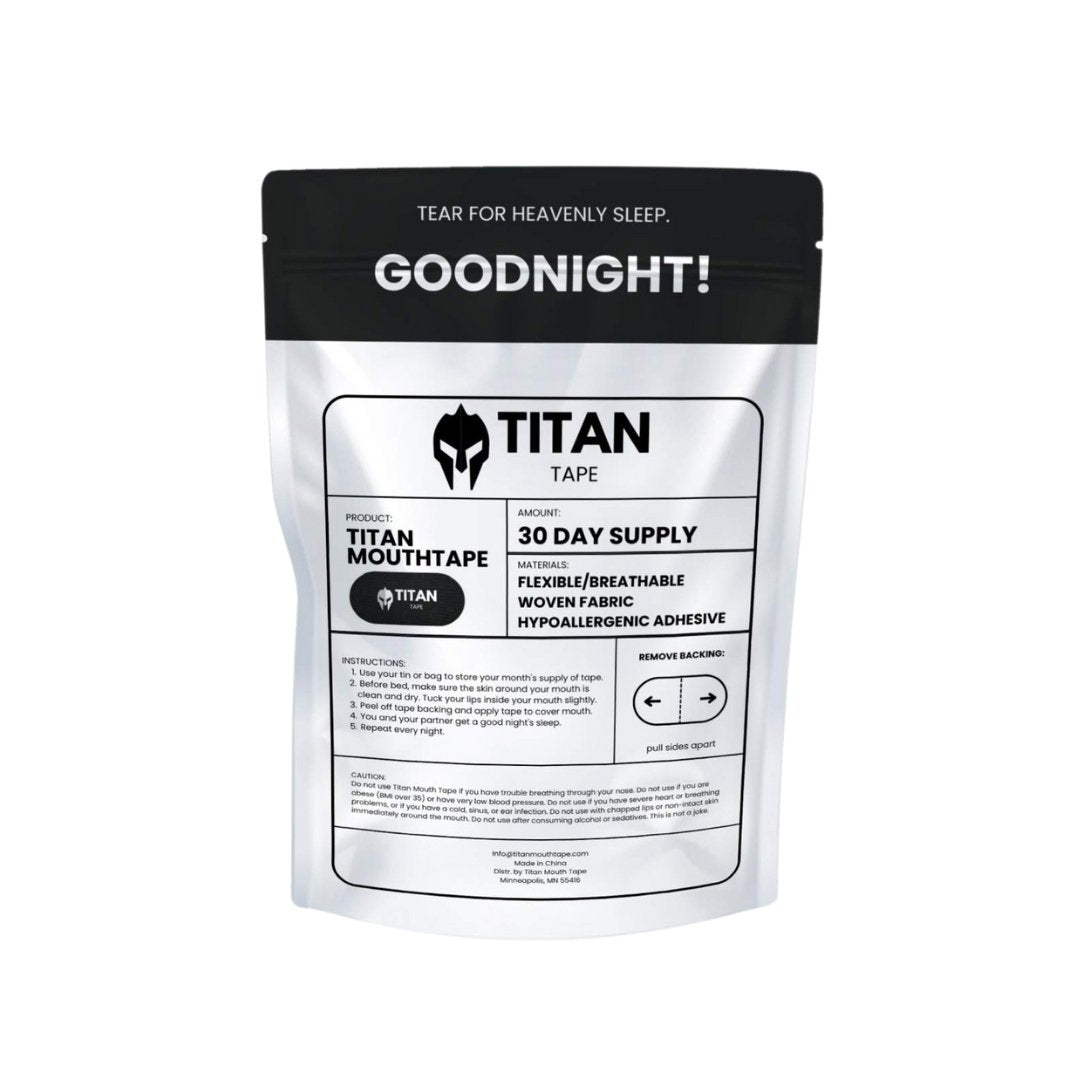
A 90-day supply of mouth tape: $64.95. That's $21.65/month. For something that addresses the actual root cause of poor sleep quality for the majority of people.
This isn't an argument against all supplements. Magnesium has real benefits. Melatonin has legitimate uses for circadian reset. But as a sleep quality solution — as the thing that makes you wake up feeling recovered — supplements are treating the smoke while the fire burns.
When to See a Doctor Instead
Mouth taping is not a treatment for every sleep problem. Some conditions require medical evaluation:
If you experience excessive daytime sleepiness despite adequate sleep time, witnessed breathing pauses during sleep, gasping or choking episodes at night, or a combination of loud snoring with extreme fatigue — see a doctor. These are signs of obstructive sleep apnea, which requires a sleep study and potentially CPAP therapy or a dental appliance.
If you have chronic insomnia that doesn't respond to any intervention — including mouth taping, sleep hygiene, and behavioral changes — cognitive behavioral therapy for insomnia (CBT-I) is the gold standard treatment, and it's more effective than any medication or supplement.
If you suspect a hormonal, thyroid, or neurological condition is affecting your sleep, medical evaluation is the right path.
But if your sleep problem is garden-variety poor quality — you sleep enough hours but don't feel rested, you snore, you wake up with dry mouth, you feel groggy despite doing everything the sleep articles tell you to do — the most likely cause is how you're breathing at night. And the most effective first step isn't another bottle from the supplement aisle.
Try the Cheap Thing First
There's a principle in medicine called Occam's Razor: the simplest explanation is usually the correct one. There's a parallel in problem-solving: try the simplest fix first.
Before you spend another $50 on a new sleep supplement, try a strip of tape. One night. See how you feel in the morning.
If you wake up without a dry mouth for the first time in months — that's your answer. If your partner says the snoring stopped — that's your answer. If you feel genuinely rested after the same number of hours — that's your answer.
And if it doesn't help, you're out less than a dollar. Try saying that about your last supplement purchase.
Doctor Recommended: "As a maxillofacial surgeon and dentist, I recommend Titan Mouth Tape. Nasal breathing during sleep is essential for airway health, jaw alignment, and deep restorative rest. Titan's bamboo silk design is the most comfortable and effective mouth tape I have tested." — Dr. Francious Proulx, MD, DDS — Maxillofacial Surgeon
Lab-Tested Safety: Titan's SilkSeal™ adhesive is independently tested by SGS to ISO 10993 medical device standards. Non-toxic (95% cell viability). Non-allergenic (0% reaction rate). Non-irritating (score 0.0/8.0). PFAS-free — 501 compounds tested, zero detected. REACH compliant — 250 toxic substances screened, all clear. See full test results →
Try it tonight. Bamboo silk. SilkSeal™ adhesive. Beard-friendly. No logo on the tape. Free shipping. 30-night Better Sleep Guarantee. Shop Titan Mouth Tape →