How to Stop Your Husband from Snoring (Without Losing Your Mind or Your Marriage)
Share
It is 2 AM. You are awake. Again. Your husband is next to you, sleeping peacefully, completely unaware that he sounds like a chainsaw cutting through a log cabin. You have tried nudging him. You have tried rolling him onto his side. You have tried the spare bedroom. You have considered the couch, the car, and possibly a hotel.
You are exhausted. You are frustrated. And you are not alone.
Research shows that about 40% of men snore regularly. Bed partners of loud snorers lose roughly an hour of sleep every night. Over weeks and months, that sleep debt makes you irritable, foggy, emotional, and short-tempered — which then gets blamed on "stress" or "the relationship" when the real problem is that your husband sounds like a freight train every night and nobody is doing anything about it.
Here are six things that actually work — ranked from least effective to most effective — so you can stop Googling at 2 AM and start sleeping.
6. Earplugs and White Noise (Treating Your Symptoms, Not His)
Earplugs reduce snoring noise but do not eliminate it. Foam earplugs block about 20-30 decibels. A loud snorer produces 50 to 90 decibels. You are still hearing it — just muffled. White noise machines help by giving your brain a steady sound to focus on instead of the irregular, unpredictable snoring pattern. They work better than earplugs for most people.
The problem: these solutions treat your symptoms, not his. He is still snoring. His airway is still partially obstructed. His sleep quality is still compromised. And you are still wearing earplugs in your own bed, which is not a long-term solution — it is a coping mechanism.
Verdict: A temporary band-aid. Use these while you fix the actual problem.
5. Change His Sleep Position
Snoring is almost always worse on the back. When your husband lies on his back, gravity pulls his tongue and soft tissue toward the back of his throat, narrowing the airway. That narrowing is what causes the vibration you hear as snoring.
Getting him to sleep on his side can reduce or eliminate positional snoring. Some people use a body pillow, a wedge pillow, or the old tennis ball trick (tape a tennis ball to the back of his shirt so rolling onto his back is uncomfortable).
The problem: this only works for positional snorers. If he snores on his side too, position changes will not fix it. And most people shift positions throughout the night — he may start on his side and end up on his back by 3 AM.
Verdict: Worth trying. Free. Helps about 30-40% of snorers.
4. Cut Alcohol and Lose Weight
Alcohol relaxes the muscles in the throat, which makes the airway more likely to collapse during sleep. A drink or two before bed can turn a mild snorer into a wall-shaker. Cutting alcohol 3+ hours before bed makes a noticeable difference for most snorers.
Weight is the other factor. Extra weight around the neck narrows the airway and increases snoring intensity. Even modest weight loss — 10 to 15 pounds — can significantly reduce snoring for overweight individuals.
The problem: these are lifestyle changes, not quick fixes. They work, but they take time — and they require your husband to actually do them. If you have ever tried to get a partner to drink less and lose weight simultaneously, you know this is easier said than done.
Verdict: Effective if he commits. But not an overnight solution.
3. Nasal Strips and Nasal Dilators
Nasal strips (like Breathe Right) are adhesive strips applied to the outside of the nose that physically widen the nasal passages. Nasal dilators (like Mute or Intake) are small inserts placed inside the nostrils that hold them open.
Both increase nasal airflow, which can reduce snoring — but only if the snoring is caused by nasal congestion or narrow nasal passages. If his snoring is caused by mouth breathing (which is the most common cause), nasal strips will not help because the problem is not his nose — it is his open mouth.
Verdict: Works for nasal snorers. Does nothing for mouth snorers — which is most snorers.
2. CPAP Machine
Continuous Positive Airway Pressure (CPAP) is the medical standard for treating obstructive sleep apnea. It works by pushing air through a mask to keep the airway open during sleep. It is extremely effective at eliminating snoring — when it is used.
The problem: compliance. Studies show that roughly 30-50% of CPAP users stop using it within the first year. The mask is uncomfortable. The machine is noisy. It is awkward for intimacy. Many people rip it off in their sleep. Your husband may use it for a few weeks, then it ends up collecting dust on the nightstand.
CPAP is the right choice for diagnosed moderate to severe sleep apnea. But for habitual snoring without apnea — which is the majority of snorers — CPAP is overkill and most people will not stick with it.
Verdict: The gold standard for sleep apnea. Not realistic for most habitual snorers.
1. Mouth Tape
This is the one most people have not tried — and it is the one that works the fastest.
Here is why your husband snores: his mouth opens during sleep. When the mouth opens, the jaw drops back, the tongue falls toward the throat, and the airway narrows. Air forces through that narrow gap and vibrates the surrounding tissue. That vibration is the sound you hear at 2 AM.
Mouth tape keeps his lips sealed so he breathes through his nose all night. Nasal breathing keeps the airway open, eliminates the jaw-drop-tongue-fall chain reaction, and stops the vibration at its source. It does not mask the snoring. It does not treat your symptoms. It fixes the mechanical cause.
Most couples notice the difference on the first night. Not a reduction in snoring. Silence.
Why Mouth Tape Works Better Than Everything Else
Earplugs treat your hearing. Position changes treat his posture. Nasal strips treat his nose. CPAP treats his airway with a machine.
Mouth tape treats the actual cause — his open mouth — with a single strip of tape that costs less than a dollar, takes two seconds to apply, and works from night one.
It also improves his sleep, not just yours. When he breathes through his nose, his body produces nitric oxide (which improves oxygen absorption), his nervous system shifts into recovery mode, and he spends more time in deep sleep. He wakes up more rested. You wake up having actually slept. Everyone wins.
But Will He Actually Wear It?
This is the real question. And the answer is: the first night feels a little unfamiliar, but by night three most people forget it is there. The adjustment period is measured in days, not weeks.
The conversation matters. Do not say "you need to fix your snoring." Say "I found something that might help us both sleep better — would you try it for a few nights?" Frame it as something you are doing together, not something he is doing wrong.
If he is skeptical, start with a simple test: ask him to close his mouth and breathe through his nose for 60 seconds while lying down. If he can do it comfortably, he can mouth tape. That is the only prerequisite.
What to Look for in Mouth Tape
Not all mouth tape is the same. If you are buying it for your husband (and let's be honest, you are the one reading this and you are the one who will order it), look for these things:
Beard-friendly adhesive. If he has facial hair, most tape will not hold. You need a tape specifically designed to adhere through stubble and beards.
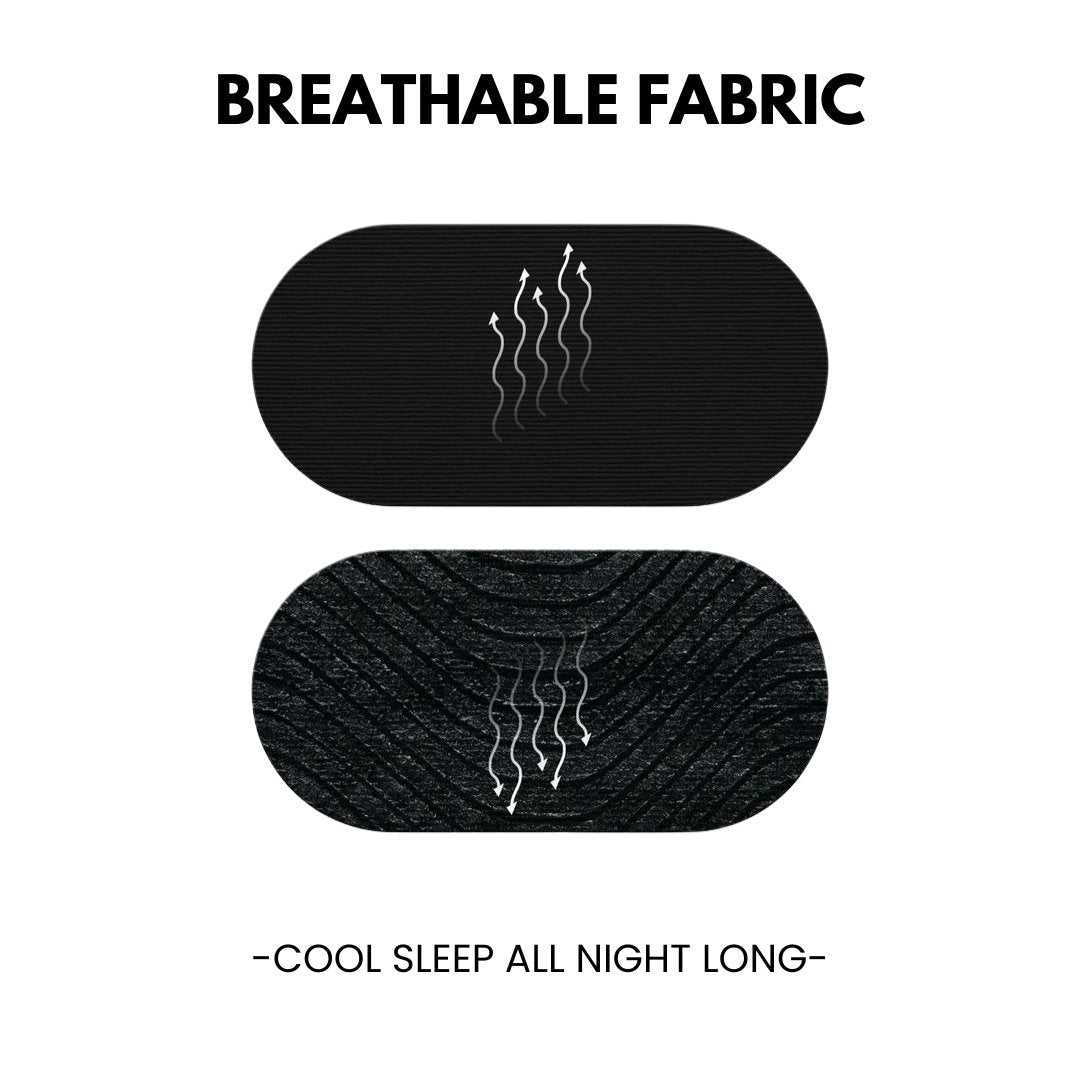
Comfortable material. Bamboo silk is softer and more breathable than kinesiology tape or paper tape. He is more likely to keep using it if it is comfortable.
Tested adhesive. He is putting this on his face every night. The adhesive should be independently tested for safety — not just labeled "hypoallergenic" with no data behind it.
No logo on the tape. Some brands print their logo on the adhesive side. That puts ink against his skin every night. Not ideal for long-term use.
Easy removal. The tape should peel off cleanly in the morning with zero residue. No pulling, no tearing, no sticky film.
Why Titan Mouth Tape
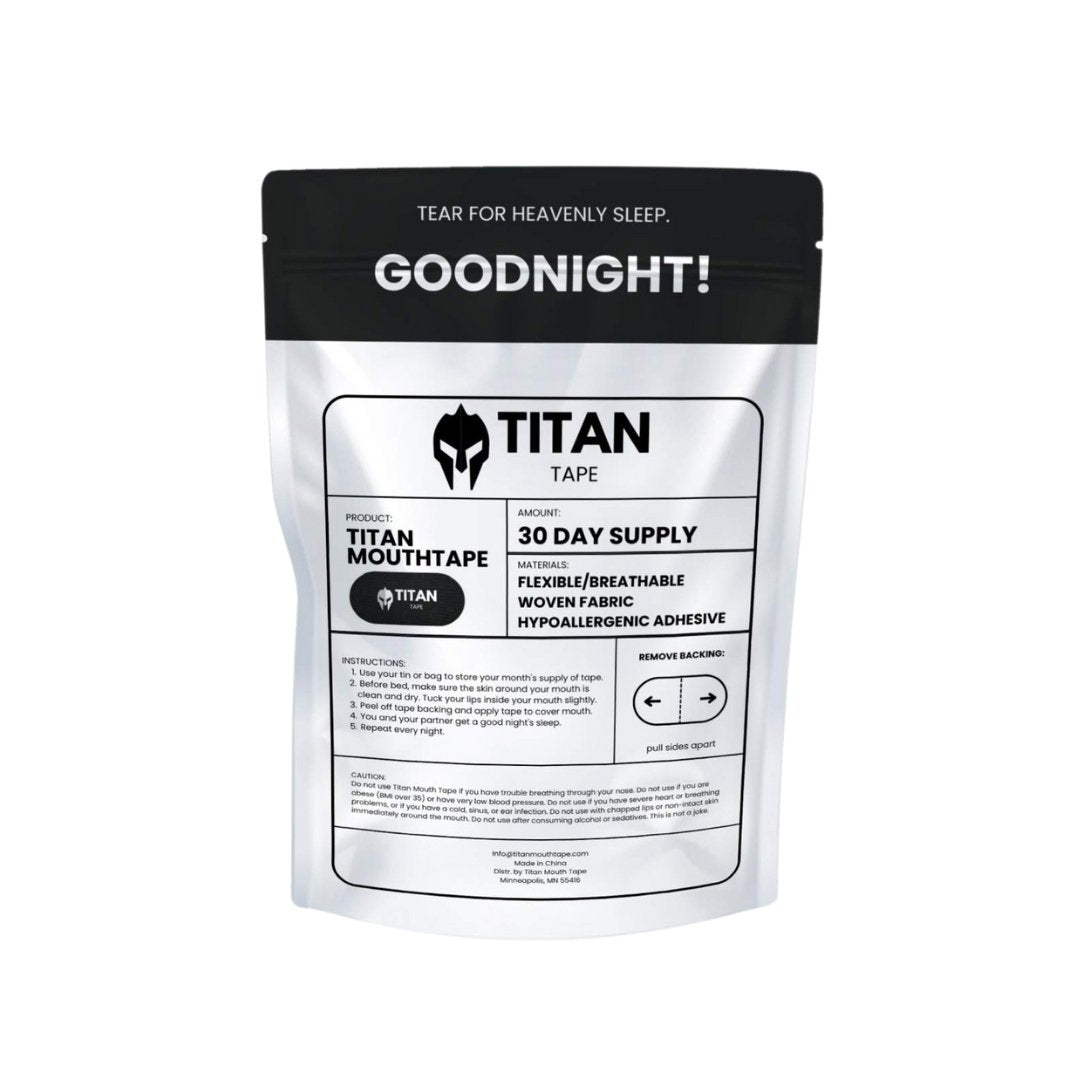
Titan Mouth Tape is bamboo silk with SilkSeal adhesive — a medical-grade formula manufactured by Henkel (the world's largest adhesive company) and independently tested by SGS to ISO 10993 medical device standards. Non-toxic. Non-allergenic. Non-irritating. No logo on the tape. Beard-friendly. Zero residue.
It costs $0.54 per night on the annual supply. That is less than the coffee you need to function after another sleepless night next to a snoring husband.
603+ verified reviews. Recommended by a maxillofacial surgeon. 30-night Better Sleep Guarantee — if it does not work, full refund.
You have tried the earplugs. You have tried the nudging. You have tried the spare bedroom. Try this.
Doctor Recommended: "As a maxillofacial surgeon and dentist, I recommend Titan Mouth Tape to my patients. Nasal breathing during sleep is essential for airway health, jaw alignment, and deep restorative rest. Titan's bamboo silk design is the most comfortable and effective mouth tape I have tested." — Dr. Francois P., MD, DDS — Maxillofacial Surgeon
Lab-Tested Safety: Titan's SilkSeal™ adhesive is independently tested by SGS to ISO 10993 medical device standards. Non-toxic (95% cell viability). Non-allergenic (0% reaction rate). Non-irritating (score 0.0/8.0). See full test results.