How to Stop Snoring Naturally
Share
Snoring is not random. It has a mechanical cause: air is forcing its way through a partially obstructed airway, making the soft tissues in your throat vibrate. Fix the obstruction, and the snoring stops.
Most snoring in healthy adults is caused by mouth breathing during sleep. When your mouth opens, your jaw drops, your tongue falls back, and the airway narrows. These six methods address that root cause — ranked from most to least effective.
1. Mouth Tape (Most Effective)
A strip of tape across your lips keeps your mouth closed all night, forcing nasal breathing. Your jaw stays supported, your tongue stays forward, and your airway stays open. For mouth-breathing snorers, this is the single most effective intervention.
65% of mouth tapers report reduced snoring after four weeks. Most notice a difference on night one. It is passive — you apply it before bed and it works while you sleep.
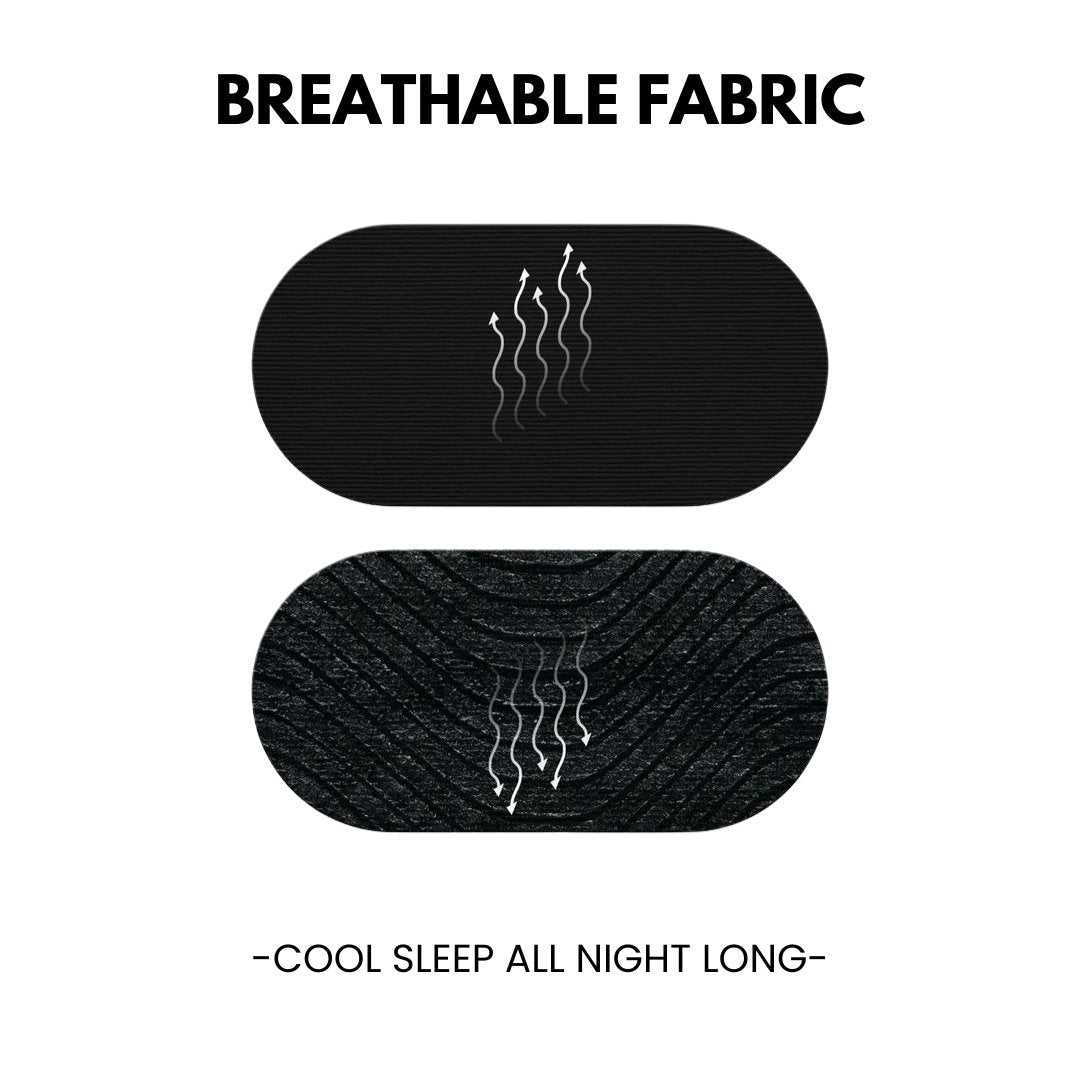
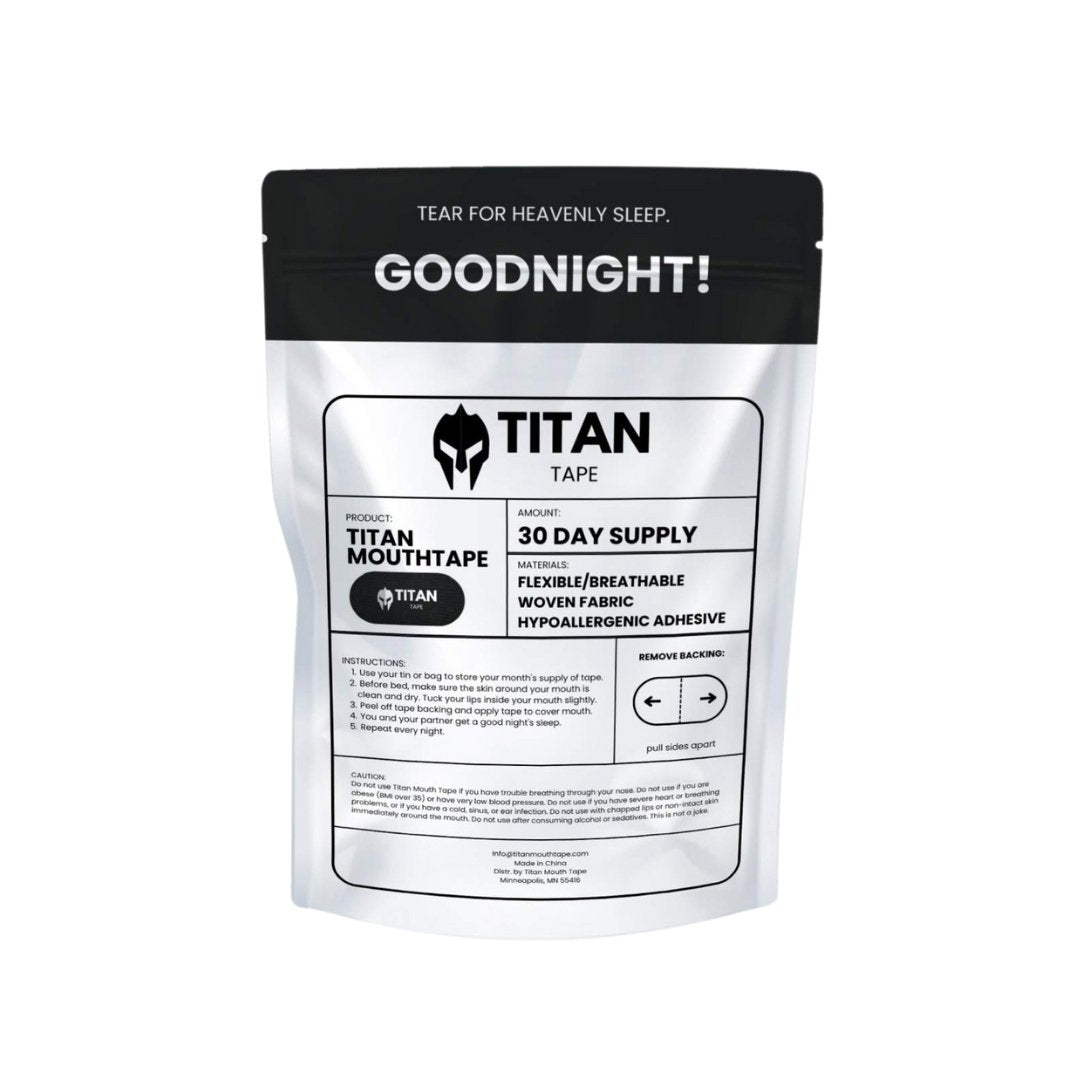
Titan Mouth Tape is bamboo silk with SilkSeal adhesive — SGS lab-tested, beard-friendly, zero residue. Recommended by a maxillofacial surgeon.
2. Sleep Position Change
Back sleeping is the worst position for snoring. Gravity pulls the jaw down and the tongue back, maximizing airway obstruction. Switching to side sleeping reduces snoring significantly for most people.
The challenge: staying on your side all night. Most people roll onto their back during deep sleep. A body pillow behind you or a tennis ball sewn into the back of your sleep shirt can help prevent rolling.
3. Nasal Strips or Dilators
External nasal strips (like Breathe Right) open the nasal passages from the outside. Internal nasal dilators are small devices inserted into the nostrils. Both make nasal breathing easier, which reduces the likelihood of switching to mouth breathing during sleep.
These work best for people whose snoring is partly caused by nasal congestion. They are less effective if the primary cause is mouth breathing with an open jaw. Mouth tape addresses the mouth; nasal strips address the nose. For best results, use both.
4. Humidifier
Dry air irritates nasal passages and throat tissues, causing swelling that narrows the airway. A bedroom humidifier set to 40 to 60 percent humidity reduces this irritation and makes both nasal and throat breathing quieter.
This is a supporting intervention, not a primary fix. It helps most when combined with mouth tape or positional therapy.
5. Weight Management
Excess weight — particularly around the neck and throat — puts pressure on the airway and increases snoring severity. Losing even 10 percent of body weight can significantly reduce snoring in overweight individuals.
This is the most impactful long-term intervention for overweight snorers, but it takes time. Mouth tape and position changes provide immediate relief while you work on weight management.
6. Avoid Alcohol Before Bed
Alcohol relaxes the muscles in your throat more than normal sleep does, causing the airway to collapse more easily. Even moderate drinking within three hours of bedtime increases snoring frequency and volume. Cutting evening alcohol is one of the simplest changes you can make.
What Not to Do
Do not ignore loud, persistent snoring — especially if you stop breathing, gasp, or choke during sleep. These are signs of obstructive sleep apnea, which requires medical evaluation and treatment. Natural remedies can reduce simple snoring, but sleep apnea needs professional attention.
Start Tonight
The fastest natural fix for snoring is mouth tape plus side sleeping. Apply one strip of Titan Mouth Tape, lie on your side, and let nasal breathing do the rest. Most partners notice the difference on night one.
Doctor Recommended: "As a maxillofacial surgeon and dentist, I recommend Titan Mouth Tape. Nasal breathing during sleep is essential for airway health, jaw alignment, and deep restorative rest. Titan's bamboo silk design is the most comfortable and effective mouth tape I have tested." — Dr. Francious Proulx, MD, DDS — Maxillofacial Surgeon
Lab-Tested Safety: Titan's SilkSeal™ adhesive is independently tested by SGS to ISO 10993 medical device standards. Non-toxic (exceeded safety threshold by 25%). Non-allergenic (0% reaction rate). Non-irritating (score 0.0/8.0). See full test results.