The Complete Guide to Mouth Taping With a Beard
Share
You've heard about mouth taping. You understand the science. You're ready to try it.
But you have a beard. And now you have questions.
Will it stick? Will it rip out hair when you take it off? Will you wake up at 3am with tape on your pillow instead of your face?
These are real concerns. And if you've already tried a mouth tape that failed on facial hair, you probably wrote off the entire practice — not because it doesn't work, but because the product wasn't built for you.
Here's everything you need to know about mouth taping with a beard — what works, what doesn't, and how to get a seal that lasts all night without sacrificing your facial hair in the morning.
Why Most Mouth Tape Fails on Beards
The problem is straightforward: most mouth tape was designed for bare skin.
Standard adhesives bond to smooth, flat surfaces. When facial hair is present — whether it's a full beard, a goatee, stubble, or a mustache — the adhesive has to grip through and around individual hairs rather than laying flat against skin. This creates three failure modes that beard-wearers know all too well.
It won't stick. The adhesive can't make enough contact with the skin beneath the hair. The tape lifts at the edges within the first hour. By morning, it's on your pillow or stuck to the sheets.
It sticks too well — to the hair. Some adhesives bond aggressively to facial hair rather than skin. The tape holds all night, but removing it in the morning means ripping out hairs, leaving adhesive residue tangled in your beard, and starting the day with irritated skin.
It creates gaps. Even if the tape stays on, facial hair can prevent a complete seal around the lips. Air escapes through the gaps, the mouth opens slightly, and you end up mouth breathing through the sides of the tape — defeating the purpose entirely.
These aren't design flaws you can fix with better application technique. They're material problems. The adhesive itself isn't built for facial hair, and no amount of pressing harder or applying to "clean, dry skin" will change the fundamental chemistry.
What a Beard-Friendly Adhesive Actually Means
The term "beard-friendly" gets thrown around by a lot of mouth tape brands. But there's a difference between marketing language and material science.
A truly beard-friendly adhesive needs to do three things simultaneously: grip skin through and around facial hair without requiring direct surface contact across the entire strip, flex with facial movement throughout the night without losing its hold, and release cleanly in the morning without bonding to individual hairs or leaving sticky residue.
That's a narrow engineering window. Too strong, and it rips hair. Too weak, and it falls off. Too rigid, and it can't conform to the contours of a bearded face. Too flexible, and it stretches out and loses its seal.
This is why material matters more than marketing. The adhesive and the tape substrate need to work together — a flexible, breathable material with an adhesive that's calibrated for skin contact around facial hair, not against it.
The Material Advantage: Bamboo Silk vs. Everything Else
Most mouth tape falls into one of three material categories, and each one interacts with beards differently.
Kinesiology tape (athletic tape). This is what most budget mouth tapes use. It's designed for arms, legs, and shoulders — large, flat, hairless (or shaved) surfaces. The adhesive is aggressive because it needs to hold through sweat and athletic movement. On a beard, it grips hair fibers hard and releases painfully. It also leaves significant adhesive residue.
Medical paper tape. Gentle on skin, but has almost no holding power on facial hair. It lifts at the edges within an hour. Most men with any amount of stubble will find this tape on their pillow by morning.
Synthetic plastic strips. Thin, rigid, and non-breathable. These create a moisture trap against the skin, which weakens the adhesive bond over time — especially under a beard where airflow is already limited. They also tend to curl at the edges, breaking the seal.
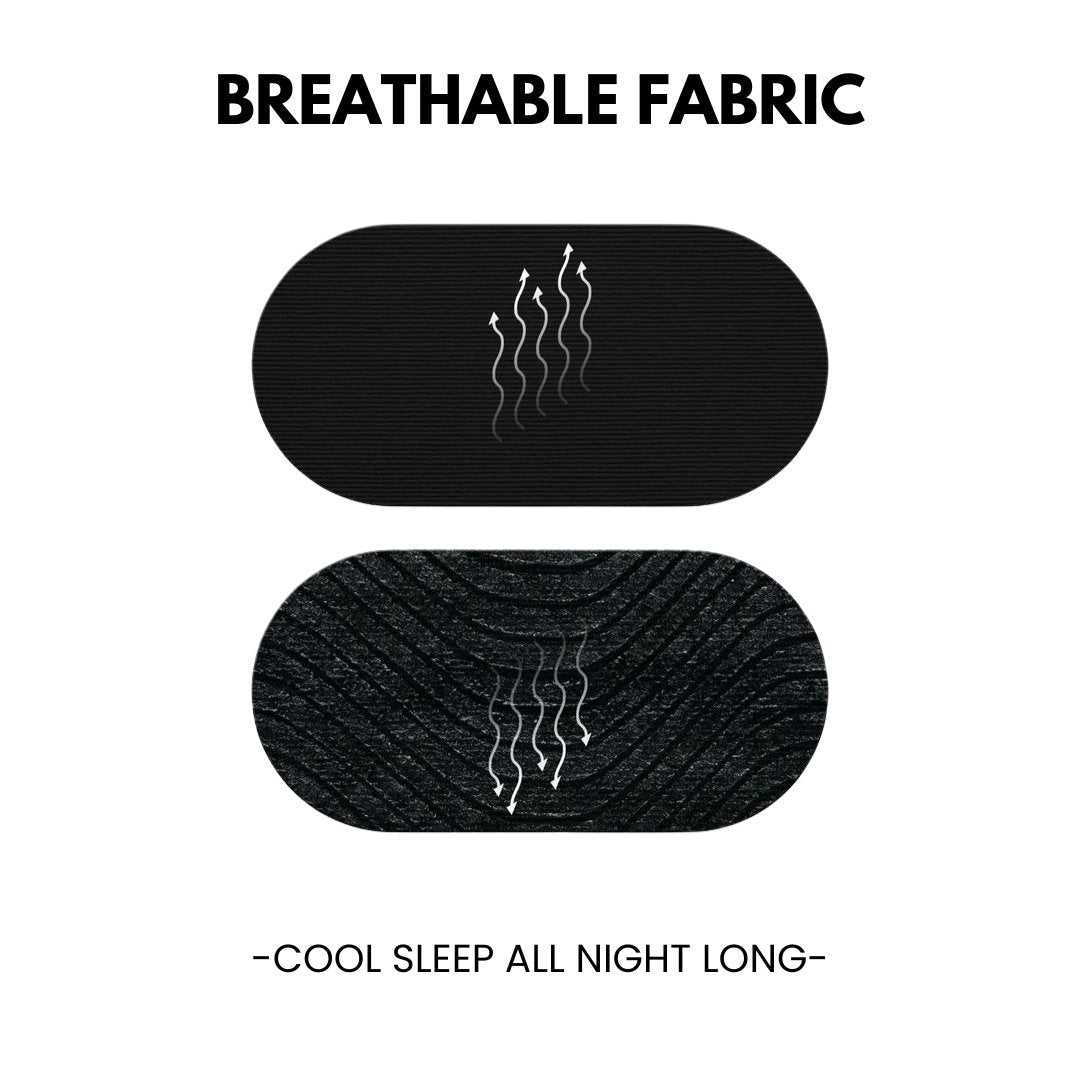
Bamboo silk is fundamentally different. It's a woven fabric — breathable, flexible, and conforming. It moves with your face rather than against it. It doesn't trap moisture. It doesn't curl. The weave allows the adhesive to make targeted contact with skin even when hair is present, because the fabric drapes around individual hairs rather than trying to flatten them.
The result is a tape that holds through facial hair all night and releases cleanly in the morning — because the adhesive is bonding to skin, not hair.
How to Apply Mouth Tape on a Beard
Even with the right tape, application technique matters. Here's how to get the best seal on facial hair:
Start with dry skin. Wash your face and pat dry. Oils, moisturizers, and residual water all weaken adhesive bonds. If you use beard oil, apply it at least 30 minutes before taping — or skip it on the area around your lips.
Press, don't slide. Place the tape across your lips and press firmly for 5-10 seconds. Don't slide or reposition — this smears the adhesive and weakens the initial bond. One placement, firm pressure, done.
Seal the center first. Start by pressing the center of the tape firmly against your lips (where there's typically less hair), then work outward toward the edges. This anchors the tape at its strongest contact point and lets the edges conform to the contours of your beard.
Don't trim your beard to accommodate the tape. If you have to modify your facial hair to make a mouth tape work, the tape is the problem — not your beard. The right tape works on stubble, goatees, full beards, and mustaches without requiring any grooming changes.
Remove slowly in the morning. Peel from one corner, slowly, pulling parallel to the skin rather than straight outward. A good beard-friendly tape will release from hair cleanly when removed slowly. If you have to yank it off, the adhesive is too aggressive for facial hair.
What to Look for When Shopping
If you have a beard and you're buying mouth tape for the first time, here's what to evaluate:
Material. Woven fabric (bamboo silk or cotton) outperforms plastic, paper, and kinesiology tape on beards. The fabric conforms to facial hair instead of fighting it.
Adhesive. Look for a medical-grade, skin-tested adhesive — ideally one tested under ISO 10993 for cytotoxicity, sensitization, and irritation. "Hypoallergenic" without testing data means nothing. Actual lab results mean everything.
Residue. One of the most common complaints from bearded men is adhesive residue left in the beard. Ask whether the tape leaves residue. Check reviews specifically from men with facial hair.
Reviews from bearded users. Generic reviews don't help. Look specifically for reviews from men with facial hair. If the brand doesn't have these — or if the beard reviews are negative — move on.
No logo on the tape. This matters more than you'd think. Some brands print their logo directly on the tape strip. If you have a beard and you're already self-conscious about taping your mouth, a logo plastered across your face makes it worse. Clean, unbranded tape looks intentional. Branded tape looks like a billboard.
The Adhesive Safety Question
Here's something most men don't think about until it's too late: what's in the adhesive you're pressing into your beard and against your skin every night?
The skin around your mouth is thin and absorbent. Facial hair creates micro-abrasions from shaving and trimming that increase permeability. When you apply an adhesive to this area for eight hours — warm, moist, and in prolonged contact — the conditions for transdermal absorption are about as favorable as they get.
Most mouth tape brands have never tested their adhesive for biocompatibility. They've never screened for PFAS (forever chemicals). They've never published a single lab report.
Before you put a new adhesive on your face every night, check whether the brand publishes third-party safety testing data. Specifically: cytotoxicity testing (is it toxic to cells?), skin sensitization testing (does it cause allergic reactions?), and skin irritation testing (does it cause redness or inflammation?). PFAS screening is a bonus — but an increasingly important one, given that adhesives are one of the product categories where PFAS have historically been found.
If a brand can't tell you what's in their adhesive, and hasn't tested it — that's your answer.
The Bottom Line for Bearded Men
Mouth taping works just as well for men with beards as it does for anyone else. The benefits — nasal breathing, nitric oxide production, reduced snoring, better sleep quality, protected teeth and gums — don't change based on your facial hair.
What changes is the tape you need to use.
The wrong tape will fall off, rip out hair, leave residue, or irritate your skin. The right tape will hold all night, release cleanly in the morning, and work with your beard rather than against it.
Don't write off mouth taping because one product failed. The practice works. You just need the right material on your face.
Doctor Recommended: "As a maxillofacial surgeon and dentist, I recommend Titan Mouth Tape. Nasal breathing during sleep is essential for airway health, jaw alignment, and deep restorative rest. Titan's bamboo silk design is the most comfortable and effective mouth tape I have tested." — Dr. Francious Proulx, MD, DDS — Maxillofacial Surgeon
Lab-Tested Safety: Titan's SilkSeal™ adhesive is independently tested by SGS to ISO 10993 medical device standards. Non-toxic (95% cell viability). Non-allergenic (0% reaction rate). Non-irritating (score 0.0/8.0). PFAS-free — 501 compounds tested, zero detected. REACH compliant — 250 toxic substances screened, all clear. See full test results →
Built for beards. Bamboo silk. SilkSeal™ adhesive. No residue. No hair pulling. No logo on the tape. Free shipping. 30-night Better Sleep Guarantee. Shop Titan Mouth Tape →